Normal view

El problema existencial de los sanchistas

13 June 2026 at 19:40

Conforme se acerca la derrota electoral y la salida del Gobierno, la angustia por su futuro se extiende entre los sanchistas. Es cierto que la esperanza es lo último que se pierde, pero todo indica que Sánchez cosechará un resultado en la línea de las últimas cuatro derrotas. A veces me sorprende que alguien crea que se puede remontar una situación tan desfavorable. Las cábalas son fascinantes e incluso en el centro derecha hay personas que son pesimistas. Por supuesto, es siempre un error caer en la euforia. Es lo que sucedió en las elecciones anteriores y había tantos candidatos a ministro que resultaba hilarante. A Sánchez no hay que atribuirle unos poderes que no tiene e incluso la operación de regalar la nacionalidad a centenares de miles de personas, tanto por la vía ordinaria como por la ley de memoria, una de las normas más lamentables y sectarias de la Historia del Derecho, no parece que esté dando buenos resultados si analizamos lo sucedido de Extremadura, Castilla y León, Aragón y Andalucía.

Es un error pensar que Sánchez actúa movido por un deseo de reparación histórica. No es más que un cálculo chapucero basado en que los nietos de los exiliados tienen que ser de izquierdas. Desde luego, si creyera en su utilidad se remontaría al Descubrimiento y nos convertiríamos en uno de los países más poblados del Mundo. Convertiría en españoles a todos los habitantes de América, Filipinas y otros territorios que formaron parte del Imperio Español. Tras esta ironía, es cierto que nada bueno podemos esperar del sanchismo que se encuentra en una situación agónica. Es una suerte que formemos parte de la Unión Europea, porque no olvidemos que está mostrando unas frágiles convicciones democráticas. Como es algo evidente y constatable no se puede sentir ofendido. A esto hay que añadir lo que estamos conociendo con el escándalo de las cloacas del PSOE o los permanentes ataques a los jueces que lanzan personajes como Puente y López, entre otros, para hacer méritos ante su señor. Las embajadas en Iberoamérica son parte importante de la estrategia monclovita para la reelección. A pesar de ello, no creo que el efecto sea relevante. No hay que temer por la cadena de custodia del voto por correo, porque el control es enorme. Es cierto que conociendo lo que conocemos serían capaces de hacerlo, pero no pueden. Lo mismo sucede con el sistema electrónico, ya que los partidos tienen las actas de las mesas y no pueden hacer un pucherazo. No vivimos en la Venezuela de Maduro.

Lo que sabemos seguro es que mantendrá la ofensiva contra jueces, fiscales, periodistas, medios de comunicación independientes y empresarios. Y será brutal. Las sentencias judiciales serán descalificadas y Conde-Pumpido está de guardia para blanquear todo aquello que le convenga al inquilino de La Moncloa. El CIS de Tezanos seguirá instalado en el mayor desprestigio, dando encuestas serviles para intentar, aunque sin éxito, confundir a los españoles y alegrar a su señor. El dinero público será utilizado para favorecer a los amigos mediáticos y la maquinaria monclovita producirá relatos para ayudarle. Los medios públicos del régimen serán los voceros de ese material destinado a intentar remontar esta situación catastrófica. Este despilfarro es una vergüenza, pero los integrantes del ecosistema sanchista se juegan la supervivencia. Esta es la clave de la angustia que viven los enchufados en la Administración General del Estado, sus empresas y organismos públicos, así como los lobistas que están ganando muchos millones gracias a las covachuelas del poder.

El sanchismo está formado por fieles, mercenarios y aprovechados. Hay que incluir, por supuesto, a su socio que tiene varios ministerios y centenares de colocados con buenos sueldos y despachos oficiales. Sumar es su perrito faldero, ya que no tiene ni personalidad ni autonomía para mostrar un proyecto diferenciado que no sea actuar como el apéndice del presidente del Gobierno. Es como los partidos satélites que existían en los Países del Este durante la dominación comunista o los que tiene Xi Jinping en China. No eran más que palmeros. En nuestro caso, en algún momento hacen alguna declaración crítica, pero siempre dentro de la servil dependencia del sanchismo. La situación es tan patética que ni siquiera tienen un líder o lideresa. El fracaso en Andalucía ha sido un duro golpe, pero no importa, porque los que tienen que cobrar sueldos públicos siguen recibiendo su nómina a final de mes.

Sánchez tiene el mérito de que ha conseguido domesticar a su partido y convertir en gregarios a sus socios y aliados. En este momento, miles de personas viven del sanchismo y, como mínimo, quieren que agote la legislatura. Al menos tendrán algunos meses para buscarse la vida, aunque no sea equivalente a los privilegios que tienen actualmente. Por supuesto, los que no consigan colocarse en las listas electorales sufrirán una mengua importante en su salario o tendrán que ir al paro. Los lobistas y las empresas afectas al régimen tendrán que incorporar, algunas ya lo hicieron en su día o lo están haciendo, a personas próximas al centro derecha para seguir llenándose los bolsillos. Hace unos días, uno de ellos me decía que no hay problema porque siempre es fácil encontrarlos o en otros casos se cambia los argumentos de las series para no atacar a la fachosfera. Nada que nos tenga que sorprender. Es cierto que a otros les preocupa la existencia de Vox, ya que recuerdan lo que sucedió con Aznar o Rajoy cuando se consideró que el PSOE había pagado en las urnas sus errores y había que ser, dicho irónicamente, compasivo. En este sentido, es bueno recordar que les fue muy bien tanto a los de la Zeja como a los periodistas que habían sido feroces enemigos de los gobiernos de centroderecha. Esperemos que Feijóo tenga buena memoria.

Francisco Marhuenda. Académico de número de la Real Academia de Jurisprudencia y Legislación de España y de la Real Academia de Doctores de España. Académico correspondiente de la Real Academia de la Historia. Catedrático de Derecho Público e Historia de las Instituciones (UNIE).

© PHOTOGRAPHERS

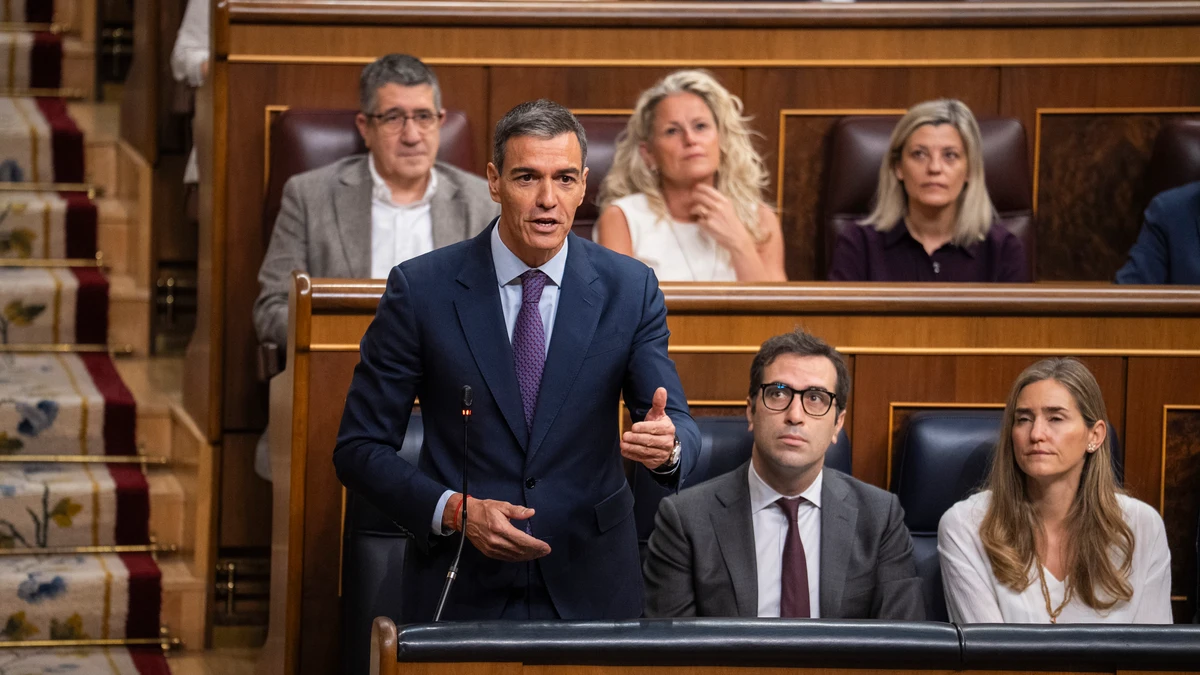
Pedro Sánchez, PSOE, en el Pleno del Congreso de los Diputados. David Jar

Latidos mundialistas: Messi y Cristiano unidos en calle mexicana

13 June 2026 at 19:35

Ciudad de México, 13 jun (Prensa Latina) El destino los ha convertido en una dualidad casi inseparable, en caldo de cultivo para el debate más apasionado, y una calle de México ha querido hermanar el argentino Lionel Messi y el portugués Cristiano Ronaldo.

The post Latidos mundialistas: Messi y Cristiano unidos en calle mexicana first appeared on Noticias Prensa Latina.

AI Is about to escape human control — and nobody has a plan

Anthropic has called for a global pause on the development of powerful AI systems, warning that they are slipping beyond human control and could have catastrophic consequences if not properly regulated.

AI Is about to escape human control — and nobody has a plan

13 June 2026 at 19:00
Anthropic has called for a global pause on the development of powerful AI systems, warning that they are slipping beyond human control and could have catastrophic consequences if not properly regulated.

Condenan en RDC violencia contra manifestantes de oposición

13 June 2026 at 18:38

Kinshasa, 13 jun (Prensa Latina) Varias voces se alzan hoy en República Democrática del Congo (RDC) para condenar la violencia contra una manifestación de la oposición, efectuada la víspera, y demandan una investigación independiente.

The post Condenan en RDC violencia contra manifestantes de oposición first appeared on Noticias Prensa Latina.

Desmentido de fake news, prórroga y acuerdos en semana de Venezuela

13 June 2026 at 15:58

Caracas, 13 jun (Prensa Latina) El desmentido de un supuesto diálogo entre la presidenta encargada y una dirigente opositora, una nueva prórroga parlamentaria, firma de acuerdos con empresas extranjeras y aprobaciones de leyes, marcaron en Venezuela la semana que concluye hoy.

The post Desmentido de fake news, prórroga y acuerdos en semana de Venezuela first appeared on Noticias Prensa Latina.

Post-Platner Democrats must ask: ‘Are we the baddies?’

13 June 2026 at 15:00
“Are we the baddies?” That line from a famous comedy sketch came to mind this week as Democrats struggled to embrace Graham Platner, the Nazi-tattooed, Hamas-praising, veteran-bashing, sex-texting, self-described Communist who was just nominated to be the next U.S. senator from Maine. The hilarious sketch from the British show “That Mitchell and Webb Look” portrays two Nazi soldiers…

Post-Platner Democrats must ask: ‘Are we the baddies?’

13 June 2026 at 15:00
“Are we the baddies?” That line from a famous comedy sketch came to mind this week as Democrats struggled to embrace Graham Platner, the Nazi-tattooed, Hamas-praising, veteran-bashing, sex-texting, self-described Communist who was just nominated to be the next U.S. senator from Maine. The hilarious sketch from the British show “That Mitchell and Webb Look” portrays two Nazi soldiers…

Voters are turning out against toxic pesticides. Will the Senate listen?

13 June 2026 at 14:00
Will the Senate continue subsidizing a chemical-intensive system that benefits a handful of corporations and keeps farmers dependent on their products, or will it invest in a healthier and more resilient food system for people and the planet?  

Voters are turning out against toxic pesticides. Will the Senate listen?

13 June 2026 at 14:00
Will the Senate continue subsidizing a chemical-intensive system that benefits a handful of corporations and keeps farmers dependent on their products, or will it invest in a healthier and more resilient food system for people and the planet?  

Frívolos y sentimentales: Shakira, un beso y lo que recordaremos del Mundial

12 June 2026 at 22:14
Mientras veía las imágenes de la ceremonia inaugural, pensé en cuánto se parecen 2010 y 2026. Recordé aquella noche con 30 años en que fuimos felices... Leer

Mientras veía las imágenes de la ceremonia inaugural, pensé en cuánto se parecen 2010 y 2026. Recordé aquella noche con 30 años en que fuimos felices...

The culture war isn’t a distraction. Trump really wants to win it.

13 June 2026 at 11:00

President Donald Trump got two reminders this week about the limits of his influence.

Despite serving two terms in the White House, remaking the Republican Party in his image and wielding powers that many of his predecessors never enjoyed, Trump encountered setbacks in his efforts to extend that dominance into the cultural sphere.

The most visible moment came at Madison Square Garden, where the president was met with loud boos while attending Game 3 of the NBA Finals. Less dramatic but perhaps equally symbolic was a federal judge’s decision to reverse an effort to add Trump’s name to the Kennedy Center, forcing the institution to remove it from its branding.

The two episodes represented Trump’s attempts to influence both ends of the cultural spectrum — from the sporting event watched across the country to one of the nation’s premier cultural institutions in Washington.

A lot of people see these as distractions, an attempt to get voters riled up about a side issue while the real fights happen out of sight.

I don’t. I’ve said for years that the culture wars aren’t a distraction; they are the playbook.

Culture shapes identity. It shapes belonging. It shapes what people view as normal, acceptable and true. Long before elections are won or lost, culture helps shape the lens through which people understand politics itself.

Long before he got into politics, Trump sought that cultural legitimacy, making cameos in TV and movies, starring in pizza ads and whining when he didn’t win an Emmy. 

When he first became president, it sometimes seemed like he was more excited about the trappings of the office than the tremendous powers at his command. But even as he’s learned to flex those powers in his second term, he still seems to crave cultural legitimacy. 

That helps explain the fight over the Kennedy Center.

The battle was never really about a building. It was about what the institution represents. The Kennedy Center occupies a unique place in American civic life, and association with it carries a kind of prestige and legitimacy that politics alone cannot provide.

The same dynamic is visible in America’s upcoming 250th anniversary celebration.

This should be a moment for the country. A chance for Americans to reflect on our history, our triumphs, our failures and the unfinished work of our democracy.

Instead, the line between celebrating the nation and celebrating the president is becoming increasingly blurred.

That is not accidental.

If you can shape the symbols, institutions and narratives that define national identity, you gain influence that extends beyond any election cycle.

And the pursuit of that influence does not stop with sports, celebrities or national celebrations — it extends to the institutions that help Americans make sense of public life.

It’s no coincidence that Trump’s attempts to inject himself into the nation’s cultural discourse are happening as so many of its institutions are under attack, from CBS News to the Smithsonian to our most prestigious colleges. 

Trump may have his own personal reasons for craving this legitimacy, but the movement behind him understands its power.

If a political movement can control which facts are reported as news, whose history is highlighted in our museums and what perspectives we’re taught at our colleges, it will have control over our culture itself. 

That control is ultimately about determining whose story gets told. Who gets to define what is considered true and what is treated as normal. Who gets heard, and who does not.

Don’t forget to subscribe to “MS NOW Presents: Clock It,” Symone Sanders Townsend’s new podcast series with Eugene Daniels on the latest political news, the catchiest cultural moments and how they converge. Listen to the latest episode here.

The post The culture war isn’t a distraction. Trump really wants to win it. appeared first on MS NOW.

GOP voters pick Trump over Epstein victims

13 June 2026 at 11:00

“On July 17, 2025, at around 6 o’clock in the evening, President Trump’s top officials filed into the White House Situation Room.” Thus begins the latest article based on New York Times correspondents Maggie Haberman’s and Jonathan Swan’s upcoming book about the Trump White House. The officials, according to the Times’ reporting, did not use the Situation Room to discuss a terrorist threat or a looming war, but “a very different kind of crisis threatening to engulf the presidency: the Epstein files.” Haberman and Swan chronicle how many senior Trump officials thought the issue would blow over with his MAGA base, only for Trump to reluctantly sign a bill ordering the files’ release.

The same day the Times published Haberman and Swan’s article, Rep. Nancy Mace, one of just a few Republicans who forced a vote on that bill, finished fifth in the South Carolina gubernatorial primary. Republican voters may have convinced the White House last year that they wanted to see some accountability regarding Epstein, but their actions since have shown considerably less interest in justice.

A new Reuters/Ipsos poll found 66% of Republicans agreed that “the federal government is hiding information about the clients of accused sex trafficker Jeffrey Epstein.”

Drawing from hundreds of interviews conducted for the book, Haberman and Swan report that “senior officials, including [White House chief of staff Susie] Wiles and [then-deputy chief of staff James] Blair, were initially unconvinced about the reach of the Epstein crisis.” They believed the story was “amplified by noisy online influencers who didn’t represent a meaningful bloc of voters.” Others, like Vice President JD Vance and FBI Director Kash Patel, insisted the story carried far more weight.

The latter group was correct. First, then-Attorney General Pam Bondi’s handout of binders to conservative influencers backfired when it turned out almost all of the binders’ contents had been previously released. A July 2025 Justice Department memo attempting to close the case made things even worse. “By late summer,” Haberman and Swan write, “it was plainly apparent to the president’s top aides that the Epstein saga was not the same as the countless other crises they had weathered during their service to Trump.” In November, a discharge petition for a House bill to force the release of the files reached 218 signatures – 214 Democrats and four Republicans. Within a week, Trump reluctantly signed the bill.

“The Epstein crisis had exposed something that some of Trump’s closest advisers spent months refusing to see,” Haberman and Swan conclude. “He could not, it turned out, make Jeffrey Epstein disappear.” The Justice Department released millions of documents, with embarrassing revelations for Trump and Commerce Secretary Howard Lutnick. Just this week, a new Reuters/Ipsos poll found 66% of Republicans agreed that “the federal government is hiding information about the clients of accused sex trafficker Jeffrey Epstein,” while 82% agreed the files “show that powerful people in the U.S. are rarely held accountable for their actions.”

But Mace will not be in the next Congress; she says her push for the Epstein files bill cost her Trump’s endorsement. Nor will Rep. Thomas Massie, R-Ky., the main GOP mover behind the discharge petition; he lost to a Trump-backed opponent in the most expensive primary in House history. A third signer, former Rep. Marjorie Taylor Greene, R-Ga., resigned earlier this year. Only Rep. Lauren Boebert, R-Col., will remain – but not for lack of trying of Trump’s part. The president threatened to withdraw his endorsement of Boebert after she campaigned with Massie, but the filing deadline for Colorado’s primaries has passed.

Each of the three departures, in isolation, can be blamed on factors besides the Epstein files. Massie frequently broke with his party on many issues, and pro-Israel groups spent millions against him. Greene clashed with Trump on tariffs and foreign policy, and by the end seemed most interested in securing her congressional pension. Mace faced difficult odds in the gubernatorial primary, and public incidents like a confrontation with Charleston International Airport staffers did not help her campaign.

Does that mean Trump will weather this storm? It’s too early to say.

Taken together, though, the pattern is impossible to ignore. Meanwhile, more than two million Epstein files are still unreleased — and lawmakers have questioned the extensive redactions to the 3.5 million that have been released. And in the same Reuters/Ipsos poll where 66% of Republican voters say the federal government is currently concealing information about Epstein’s clients, 69% agree that “it’s time for the country to move on from talking about the Epstein files.”

For months, it seemed that the files might be the rare instance where the Republican base broke with the president. But the primaries suggest otherwise.

Does that mean Trump will weather this storm? It’s too early to say: Democrats are likely to take at least one house of Congress this year, and the investigative powers that come with the majority. But Republican voters are happy to let him captain the ship, even if it sinks.

The post GOP voters pick Trump over Epstein victims appeared first on MS NOW.

Democrats seem to be missing the point of ‘No Kings’

13 June 2026 at 11:00

The Tea Party movement in the early 2010s was, at its core, a lot of things — some noble, some embarrassing, and some that involved people dressed as colonial militia members in an Applebee’s parking lot shouting about the Federal Reserve. But beneath the tricorn hats and misspelled protest signs was a genuine constitutional anxiety: that President Barack Obama was accumulating executive power in ways that should frighten anyone who had read past the preamble.

When Obama left office, The New York Times noted he had “sought to reshape the nation with a sweeping assertion of executive authority and a canon of regulations that have inserted the United States government more deeply into American life.”

The authors observed Obama had resorted to “bureaucratic bulldozing,” and “once Mr. Obama got the taste for it, he pursued his executive power without apology, and in ways that will shape the presidency for decades to come.”

Now we have “No Kings,” and the wheel has turned. The same energy that had conservatives dressing up as founding fathers 16 years ago is now manifesting as progressive protesters holding signs with crowns crossed out in red. And, again, there is a real constitutional anxiety underneath it — there is no doubt President Donald Trump’s behavior is genuinely more lawless, more contemptuous of institutional constraints, and more brazenly self-interested than what Obama or Biden were doing. But it also has deep roots in the administrations of Democratic presidents of yore.

So both sides are right about the problem. They are just selectively right about it.

Obama’s use of executive action to, for example, grant effective legal status to millions of undocumented immigrants through DACA was not a law passed by Congress — it was a president deciding that certain laws simply would not be enforced against certain people. His administration’s aggressive use of “guidance documents” to effectively rewrite federal regulations without going through the notice-and-comment process that actual rulemaking requires was a deliberate end run around legislative accountability. Tea Partiers screamed about this constantly, and then proceeded to nominate and elect Trump, who immediately demonstrated that the executive pen Obama had wielded could also be used to make policy more to their liking.

But here is the problem that the No Kings movement has yet to answer: if consolidating power in the executive branch is the definition of “king-like” behavior, why is the proposed Democratic remedy more consolidation?

Both sides are right about the problem. They are just selectively right about it.

President Joe Biden used executive action to cancel hundreds of billions of dollars in student loan debt — a massive transfer of wealth that Congress never authorized, affecting tens of millions of people — enacted entirely by presidential decree. When the Supreme Court told him he couldn’t do this, his supporters treated the ruling as an outrage rather than as the constitutional system functioning as designed. The logic for the past three presidents has been uniform: Congress won’t act, so the president must. That is not a constitutional principle. It is an argument for whatever executive you happen to prefer.

The problem is that presidential power is a ratchet. Each turn is very difficult to reverse. When Obama normalized the use of DACA-style executive action, he didn’t create a policy — he created a template. Trump used that template. Biden used it again. And now, as Democrats begin assembling their 2028 primary field, the candidates positioned to lead the party are not running on restoring congressional authority. They will run on promising to do more of everything, faster, by executive action, because the legislative process is slow and the opposition is obstructionist and there are problems to solve right now.

They will promise, in other words, to be better kings.

Take, for instance, Gavin Newsom, who, as governor of California, issued executive orders banning gasoline cars, regulating AI data centers to protect the state’s workers, and directing cities to clean up homeless encampments. The man knows his way around a unilateral order.

This is the trap that the No Kings energy is in danger of walking directly into. The movement’s implicit theory seems to be that executive power is acceptable when deployed for acceptable ends — forgiving debt, protecting immigrants, expanding benefits — and becomes tyrannical only when deployed by someone with different values. This is not a principle. This is a preference dressed up as a principle, which is exactly what the Tea Party was doing when they decided Obama’s phone and pen were an imperial scepter (though conservatives stayed mostly silent as Bush expanded surveillance and presidential war powers in the years prior).

If No Kings is going to be more than a slogan — if it is going to be the genuine constitutional reckoning that this moment arguably requires — it has to mean something beyond “no kings who disagree with me.” It has to mean reducing the power of the office itself, restoring congressional authority, and accepting that the policies you want might have to actually pass through the legislature to become law.

Otherwise, you’re not opposing the throne. You’re just auditioning for it.

The post Democrats seem to be missing the point of ‘No Kings’ appeared first on MS NOW.

❌