
Normal view

German company that already supplies Ukraine with drones has unveiled Shahed-hunter aircraft with four weapons categories on single airframe

11 June 2026 at 18:41

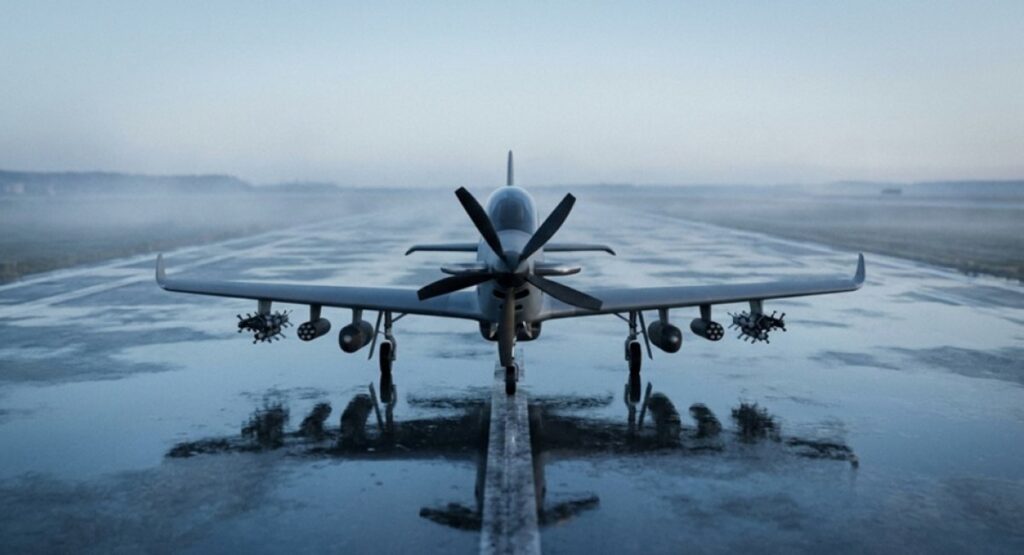
Render of the Pulse P19 multi-purpose optionally piloted aircraft. Source: Quantum Systems

Germany's Quantum Systems has unveiled the Pulse P19, an optionally-piloted aircraft designed to hunt drones and repel massed drone attacks, per Defense Express. The technology company already supplies Vector reconnaissance drones to Ukraine. 

The Pulse P19's primary mission profile, which is hunting drones and repelling massed drone attacks, addresses exactly the Russian Shahed threat that Ukraine has been responding to.

Ukraine is now intercepting 95% of incoming Russian Shaheds, using a layered defense system that includes Patriot, NASAMS, IRIS-T, naval-platform interceptors, helicopter-based interceptors, Ukrainian-made Bullet interceptors, and autonomous drone-on-drone systems.

The Pulse P19 would add a dedicated, optionally piloted drone-hunter platform to this layered defense,  though the aircraft is currently in early design stages, with only renders released.

What does Pulse P19 carry, and how would it hunt? 

For air-target detection and tracking, the Pulse P19 can be equipped with an active electronically scanned array (AESA) radar and an electro-optical targeting station.

The aircraft's armament options are unusually broad. The Pulse P19 is designed to carry interceptor drones, loitering munitions, missiles with semi-active laser homing heads (APKWS class), pod-mounted machine guns, and additional weapons that may be developed in the future.

The interceptor drones referenced in the Quantum Systems presentation are likely the same systems being integrated onto the Airbus U145 helicopter, which Quantum Systems also unveiled at ILA Berlin 2026 with anti-drone armament.

Specifications: small, fast, with significant payload

The Pulse P19 has a maximum speed of 556 km/h and a service ceiling of 7,620 meters. The aircraft's empty weight is approximately 1,700 kg, while it can carry up to 2,500 kg of payload and armament.

The payload-to-empty-weight ratio is unusually high. This indicates the design is built around the requirement to carry multiple weapons systems simultaneously. The 556 km/h maximum speed places the Pulse P19 in the slow-to-mid-tier of fixed-wing combat aircraft, but adequate for the Shahed-pursuit mission, given that Shahed-136 drones typically cruise at 180 km/h.

Development status: renders only, timeline undisclosed

Quantum Systems has presented only renders of the Pulse P19. The project's development stage has not been disclosed. The aircraft is likely still in early design phases. No first-flight timeline has been published.

The aircraft's specifications and weapons configuration represent design intent rather than current operational capability. Ukrainian defense procurement officials would likely engage with Quantum Systems on the Pulse P19 trajectory once the aircraft reaches the flight-test stage, given Quantum Systems' established relationship with Ukraine and the operational fit between the Pulse P19's mission profile and Ukraine's defensive needs.
“Fourth house. Blue doors”: Four years ago three Ukrainians changed global warfare forever (VIDEO)

11 June 2026 at 10:04

Screenshot

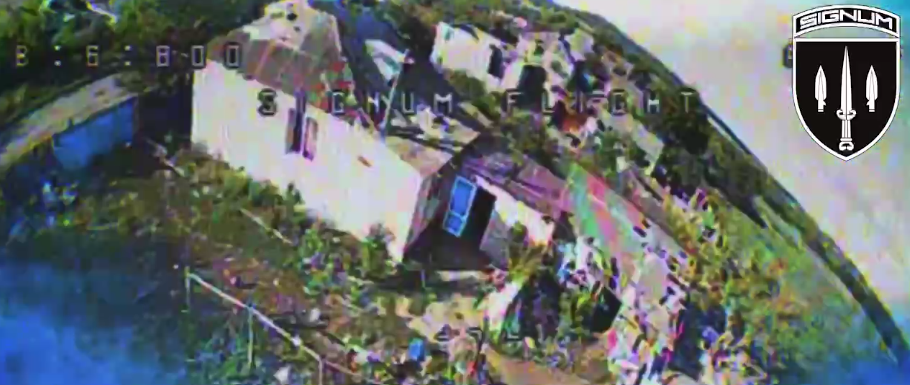
On 10 June 2022, the world's first successful FPV drone combat strike was carried out by Ukrainian Armed Forces fighters from the SIGNUM battalion. The three operators with call signs "Turyst," "Shvaiger," and "Bagdad" fired the strike against a Russian target, an advisor to the Defense Minister, Serhii Sterneko, recalls

The footage of the strike has become a defining artifact of the Russo-Ukrainian war. Four years later, Ukraine's Unmanned Systems Forces (SBS) has struck nearly $40 billion worth of Russian targets and grown into a full branch of the Armed Forces with its own doctrine and eleven combat units.

The 10 June 2022 FPV strike is recognized as the moment that changed not only the Russo-Ukrainian war but the broader rules of armed conflict. The combat application of a commercial-grade quadcopter against a moving Russian target opened a new category of warfare that has since been replicated by militaries worldwide.

Ukraine remains the operational pioneer in this category, with the SBS now leading the Logistics Lockdown program targeting Russian rear-area logistics, deploying $113 million in mid-strike drones.

"Fourth house. Blue doors" 

The footage of the 10 June 2022 strike captures Ukrainian SIGNUM battalion fighters operating an FPV drone against a Russian target on the frontline.

The radio call "Fourth house. Blue doors." — used by the operators to identify the target — has become one of the most recognizable phrases from the early war.

The day that changed military doctrine worldwide: On 10 June 2022, Ukraine carried out the world's first FPV drone combat mission

As a result, Ukraine established Unmanned Systems Forces, helping save thousands of Ukrainian lives
📹Sternenko pic.twitter.com/kbk5KphZBG

— Euromaidan Press (@EuromaidanPress) June 11, 2026

From battlefield improvisation to separate branch of armed forces

The 10 June 2022 strike was an act of battlefield improvisation. Ukrainian forces were using commercial drone technology adapted for combat, with no formal doctrine, no procurement pipeline, and no command structure for FPV operations.

Three years later, on 11 June 2025, Ukraine formally established the Unmanned Systems Forces (SBS) as a dedicated grouping within the Armed Forces.

SBS now has eleven combat units and its own military doctrine. President Volodymyr Zelenskyy on 10 June 2026 signed a decree establishing the Day of Unmanned Systems Forces as an annual commemorative day, to be observed each 11 June.

Robert "Madiar" Brovdi: from volunteer to branch commander

The SBS commander is Major Robert Brovdi with a call sign "Madiar". Brovdi is a Hero of Ukraine, the founder of the "Madiar's Birds" unit, and one of the originators and leading practitioners of innovations in unmanned systems for combat applications.

He traveled the path from volunteer to commander of a separate branch of the Armed Forces. The trajectory is consistent with the SBS's broader institutional history, which began with battlefield improvisation in places like the 10 June 2022 SIGNUM strike, and has developed into a formal military structure with doctrine, procurement, and command.

The footage of the strike has become a defining artifact of the Russo-Ukrainian war. Four years later, Ukraine's Unmanned Systems Forces (SBS) has struck nearly $40 billion worth of Russian targets and grown into a full branch of the Armed Forces with its own doctrine and eleven combat units.
❌