Normal view

The biggest scandal in college sports is brought to you by a Texas judge

10 June 2026 at 20:20

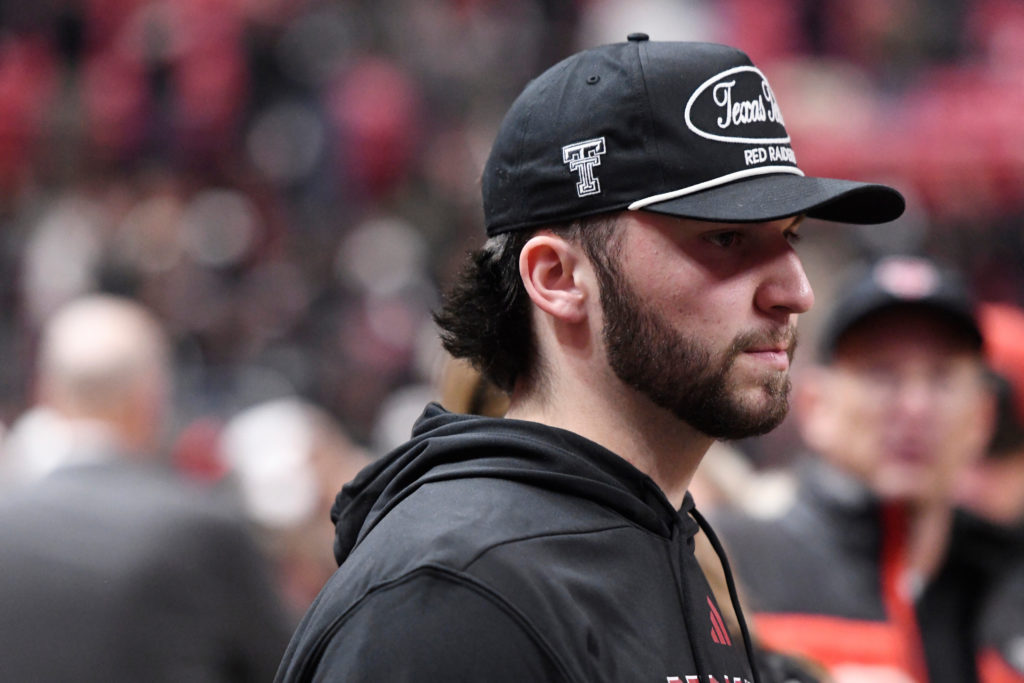
If there were anything like justice in college sports, Brendan Sorsby would never play another down of football. It’s a tough thing to say about someone only 22 years old, and under most circumstances, I’d never argue that misdeeds should end an athlete’s career before they hit the professional ranks.

But Sorsby, Texas Tech’s star quarterback, isn’t an average college kid who made a mistake. He bet at least $90,000 on sports — including on games involving the Indiana Hoosiers when he was on that team’s roster as a freshman in 2022. For obvious reasons, the NCAA frowns upon such behavior and rightly issued a permanent ban when it discovered what Sorsby did. Sorsby says he’s been diagnosed with a gambling addiction.

Sorsby says he’s been diagnosed with a gambling addiction.

But on Monday, retired Texas judge Ken Curry, appointed to the case after another judge recused himself, gave Sorsby a pass with a temporary injunction that will allow him to play this season. Curry reasoned that the injunction was necessary to avoid “probable, imminent and irreparable injury” to the quarterback’s college football career. But the judge is mischaracterizing the consequences of Sorsby’s actions as injury.

Those who have watched college football scandals over the decades should be especially incensed by the judge’s ruling that Sorsby should play. His transgressions are exponentially worse than those of Reggie Bush, who was forced to forfeit his Heisman Trophy in 2010 for rules violations he allegedly committed while at the University of Southern California, and exponentially worse than Ohio State University’s Terrelle Pryor, who was suspended for receiving free tattoos and selling his memorabilia. Granted, those punishments were imposed in a bygone era when the NCAA still stood on the farce that players, the labor in its multibillion-dollar enterprise, were amateurs and all but forced them to the black market to profit from their work.

Those infractions from Bush and Pryor were metaphorical misdemeanors relative to the near-treasonous offense Sorsby committed against the NCAA. The integrity of the games, or at least the appearance thereof, are crucial for the association’s survival. Thus, its strict prohibition against gambling and its promise of a kind of death penalty (a lifetime ban) for athletes who gamble anyway.

Sorsby acknowledged a gambling addiction, a serious mental health issue that warrants professional treatment, and to his credit, he reports that he recently sought a 35-day rehab at an inpatient clinic in Arizona. Gambling addiction can cause immense harm to the afflicted and those around them. It’s also a compulsion whose victims often relapse, which isn’t something someone in Sorsby’s position can afford, even once.

It’s not something the NCAA can afford, either. In this instance, the NCAA saw a problem — the starting quarterback at a Power Conference school has a gambling problem that makes him vulnerable to compromise — and it took that problem out at the knees. Sorsby, who is discussed as a rising NFL prospect, had every right to try to enter the league’s supplemental draft or to seek a free agent tryout. Obviously, any NFL general manager with common sense would think long and hard before adding him to the roster, which means he’d be risking not being able to play in college or the pros. But such are the wages of his sin. The predicament he put himself in doesn’t warrant the judge forcing the NCAA to let him play after he flouted its rules and violated the integrity of its sport.

To the extent that he’s seriously contrite, Sorsby deserves credit for taking accountability, which he did in a social media post last month. But contrition doesn’t erase consequences, and accountability often demands them. Yet here we have a judge forcing the NCAA to let Sorsby play alongside other young men who have every right to question their teammate’s motives. Other college programs have responded by vowing not to play any games against Texas Tech.

Sorsby embodies two overlapping problems involving sports and gambling: the increasing prevalence of gambling addiction among young adults, teenagers and even preteens and the seemingly growing number of instances of athletes themselves betting on games. Just last week, an arbitrator ruled that NBA free agent Terry Rozier must forfeit most of his $26.6 million salary for the 2025-26 season after he was alleged to have taken a bribe to withdraw from a game early when he was playing for the Charlotte Hornets. Rozier has pleaded not guilty to the gambling accusations.

If Sorsby ever makes it to the NFL, one wonders how he will fare in a league that prohibits its players from gambling but has rich partnership deals with FanDuel, DraftKings and Caesars Entertainment, its “official casino sponsor.” In the pros, nobody even pretends there’s a wall between the action on the field and the action the sportsbooks are taking in real time. Fans will be in the stadium, not just watching but placing bets. Whichever team signs Sorsby would be gambling too: that he won’t repeat the same offenses that put the NCAA and Texas Tech in a negative spotlight.

The post The biggest scandal in college sports is brought to you by a Texas judge appeared first on MS NOW.

Le lutteur sénégalais Reug Reug victorieux face à Boy Niang 2 mais suspendu pour maltraitance animale

10 June 2026 at 19:26
Oumar Kane, dit Reug Reug, s'est imposé dans un combat de lutte sénégalaise très attendu contre Boy Niang 2, dimanche 7 juin. Sauf qu'un élément est venu gâcher la fête : le gagnant a été accusé de maltraitance animale après avoir utilisé un bain avec des chatons pour ses préparatifs mystiques avant le combat. La Fédération sénégalaise de lutte a ainsi décidé de le sanctionner.

«Ils ne donnent pas de raison»: des supporters écossais interdits d'entrée aux États-Unis pour le Mondial 2026

By: RFI
10 June 2026 at 19:04
Les interdictions d'entrée sur le territoire américain se multiplient, alors que la Coupe du monde de football aux États-Unis, au Mexique et au Canada commence le 11 juin. Dernier cas en date : des supporters écossais ont vu, du jour au lendemain, leur autorisation de voyager vers les États-Unis révoquée.

Mondial 2026 : NBA, NFL, mode… Le rêve américain des stars du football

De Buff Donelli à Kylian Mbappé, les footballeurs et les États-Unis entretiennent une histoire d'amour depuis près d’un siècle. Alors que les stars du ballon rond s'affichent dans les salles de la NBA et deviennent ambassadeurs du football américain, le mariage entre ces deux mondes n'a jamais semblé aussi pertinent.

Refoulé des États-Unis, acclamé en Somalie, l'arbitre Omar Artan est déjà un des symboles du Mondial 2026

10 June 2026 at 18:01
Après s'être vu refuser l'entrée aux États-Unis, alors qu'il devait y officier en tant qu'arbitre pour la Coupe du monde de football, Omar Artan a été accueilli comme un héros de la nation en Somalie à son retour, mercredi 10 juin. Son cas a mis en lumière la politique migratoire américaine, devenue un véritable problème pour l'organisation du Mondial.

As a fan, I’m excited for the World Cup. As a doctor, I’m worried.

10 June 2026 at 17:10

The 2026 FIFA World Cup, which begins this week, is expected to bring millions of visitors from dozens of countries to the United States. I have tickets to the World Cup finals next month, and I’m finding it hard to contain my excitement at my opportunity to watch what I know will be the pinnacle of competition in a sport loved by billions of fans worldwide.

But as a doctor, I can’t help but think about how dangerously unprepared the United States is to meet the public health demands of hosting the largest sporting event in U.S. history. The World Cup will bring with it significant public health risks, bringing people from all corners of the world together, where infectious diseases can easily travel and become amplified in enclosed, semiconfined spaces such as stadiums, bars and restaurants.

As a doctor, I can’t help but think about how dangerously unprepared the United States is.

I know firsthand how infectious diseases spread in mass gatherings. As a Muslim performing the Hajj in Mecca, I saw some people contract meningitis, and I was one of the countless others on that spiritual pilgrimage who became infected with an upper respiratory infection. Mass gatherings of the size of the Hajj or the World Cup provide ideal conditions for infectious diseases, heat illness, crowd injuries and foodborne outbreaks to occur.

As a practicing physician who writes and speaks about public health, I have little confidence that the U.S. is prepared for the part of its World Cup-hosting duties that includes ensuring the safety of the health of millions of visitors.

The World Cup comes to a United States that remains scarred by the Covid-19 pandemic. There’s rising mistrust of vaccines, worsening healthcare staff shortages and the re-emergence of infectious diseases that had been eliminated. More than 2,000 cases of measles in the U.S. this year serve as a reminder of what happens when public health information officials such as Health and Human Services Secretary Robert F. Kennedy Jr. traffic in misinformation instead of work to preserve public health. Thanks in no small part to Kennedy, vaccine hesitancy is on the rise, and the kindergarten rate of vaccination is below the 95% rate necessary to confer protection upon the larger community.

Although a recent hantavirus outbreak on a cruise ship on the Atlantic posed a low risk to the general American public, if it had gotten out of hand, the U.S. would not have been prepared. If cases had spread across the country, we would not have been able to sufficiently test and identify cases because the lab test that detects the virus is only available at a handful of special laboratories throughout the country. And the silence from HHS and the Centers for Disease Control and Prevention was worrisome. Because public health only succeeds when and where there is clear, transparent communication, officials at those agencies should have held a national press briefing to answer the public’s questions. But they didn’t. According to an Annenberg Public Policy Center poll from March, only 43% of Americans trust public health communications from federal agencies.

The pillars of a strong public health infrastructure are early recognition of diseases, clear communication and trust, all of which appear to have been eroded lately. That’s why it seems unlikely that the U.S. could respond effectively to a major public health threat on our soil during the World Cup or at any time in the near future.

There’s little evidence that the U.S. implemented a proactive approach to the World Cup.

Our public health infrastructure has been underfunded for decades, surveillance systems have been gutted, and hundreds of critical CDC and HHS workers have been laid off. The greatest threats to a successful World Cup, then, may not be terrorism or violence, but an inability to manage predictable health emergencies at scale.

There’s little evidence that the U.S. implemented a proactive approach to the World Cup. To the contrary, it appears the country will react passively if havoc occurs. A proactive approach would have included strengthening infectious disease monitoring at airports, improving hospital surge planning, investing in public health infrastructure such as vaccine research, and rebuilding trust through transparency.

When I look at my World Cup tickets, I am filled with excitement, but I can’t shake the feeling that our country isn’t prepared for public health crises that may occur in the coming weeks.

The post As a fan, I’m excited for the World Cup. As a doctor, I’m worried. appeared first on MS NOW.

UFC champion says he has been banned from White House fight over criticisms of Trump

Sean Strickland claims he was not cleared to attend the UFC event because he ‘made fun of Israel and Epstein’

The only current men’s US UFC champion says he has been barred from Sunday’s fight card on the south lawn of the White House because he dared to criticize Donald Trump, Israel and Jeffrey Epstein.

On Tuesday night, middleweight champion Sean Strickland wrote on X that he had been informed by the Ultimate Fighting Championship that he had not been cleared to attend the event by the White House.

Continue reading...

© Photograph: Dan Himbrechts/EPA

© Photograph: Dan Himbrechts/EPA

© Photograph: Dan Himbrechts/EPA

Mondial 2026 : pourquoi les joueurs sénégalais ont été contrôlés sur un tarmac américain

10 June 2026 at 14:19
Après la diffusion, sur les réseaux sociaux, d'une vidéo montrant la fouille des joueurs et du staff sénégalais sur le tarmac de l'aéroport de Raleigh (Caroline du Nord) mardi, la Fédération sénégalaise de football a apporté des précisions sur les contrôles de sécurité imposés à la délégation.

Mondial 2026 : Donnarumma, Foden, Camavinga… un 11 des absents qui ferait trembler les favoris

10 June 2026 at 07:22
Une équipe de joueurs magnifiques mais qui ne prendra pas part à la fête. Entre les joueurs non qualifiés, forfaits et les choix forts des sélectionneurs, France 24 imagine l’équipe type des grands absents de la Coupe du monde 2026 - une équipe alléchante qui aurait pu effectuer un beau parcours au moins jusqu’en demi-finale.

Texas Tech ruling ignites debate on sports betting and gambling addiction

A judge's ruling in Texas is sending shockwaves through college sports. Texas Tech quarterback Brendan Sorsby, who wagered $90,000 on sports games, was banned from the sport. But he and the school appealed, arguing he has a gambling addiction and anxiety issues. The judge agreed, and Sorsby will most likely play this year. William Brangham discussed more with Danny Funt.

Roger Bennett on what to expect at the World Cup

The countdown is on to the start of the World Cup. The tournament is the biggest in the event's history, with 48 teams competing across the United States, Canada and Mexico. But organizers have faced criticism over ticket prices and geopolitical tensions have complicated travel for some teams and their supporters. Geoff Bennett discussed more with Roger Bennett of Men in Blazers.

Tennis: Serena Williams, de retour à 44 ans, gagne son premier match en double au Queen's

9 June 2026 at 22:17
L'ex-reine du tennis, de retour presque quatre ans après son dernier match, s'est imposée mardi 9 juin pour son retour sur les courts. L'Américaine Serena Williams l'a emporté en double, avec la Canadienne Victoria Mboko, au premier tour du tournoi londonien du Queen's. « C'était vraiment chouette », a-t-elle commenté.

❌