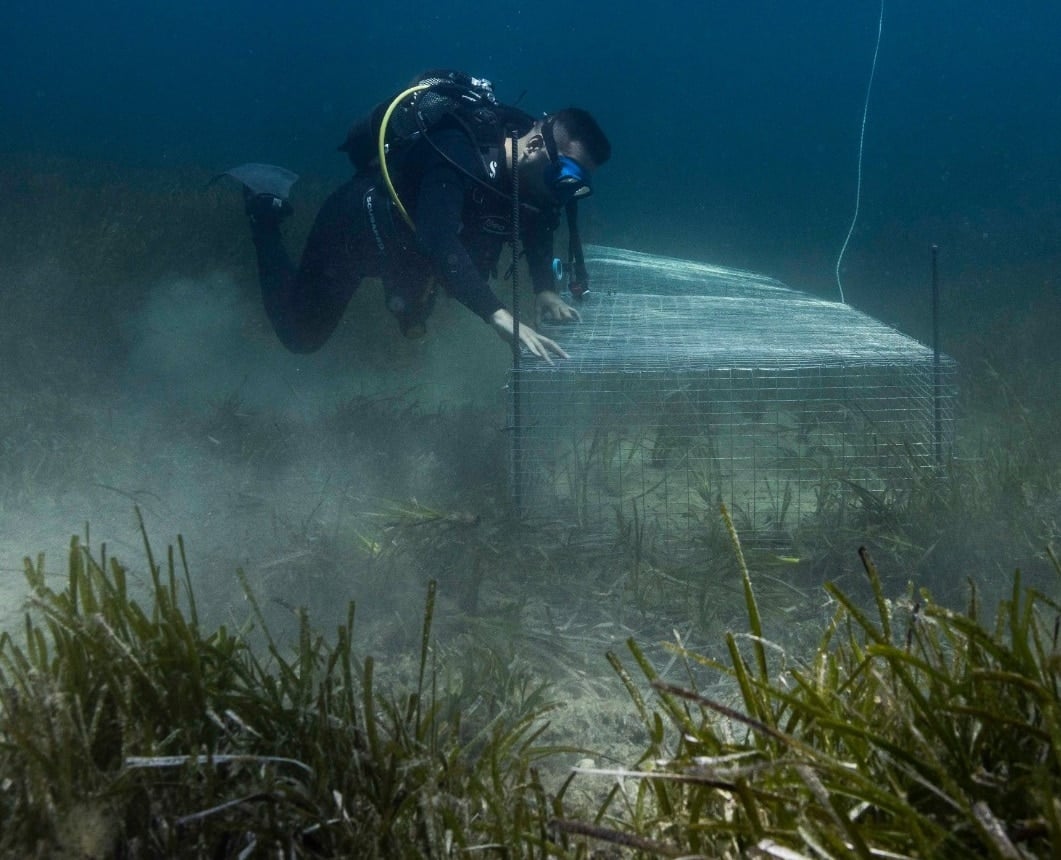
The Posidonia sanctuary holds over 270,000 tons of stored carbon dioxide. Credit: iSea
The environmental organization iSea, in collaboration with the Hellenic Ornithological Society and the Municipality of Lemnos, has launched an ambitious project to restore the Eastern Mediterranean’s largest marine meadow—a 140-square-kilometer Posidonia sanctuary off the coast of Lemnos, widely known as the region’s “Amazon.”
This massive underwater ecosystem serves as a vital carbon sink, holding over 270,000 tons of stored carbon dioxide and effectively absorbing the annual emissions produced by the vehicles of an entire small city.
To mark World Environment Day 2026, the project partners are celebrating the completion of the initiative’s pilot phase under the “Reviving Lemnos” program, which successfully transplanted more than 250 posidonia shoots.
A Vital Marine Ecosystem
Posidonia oceanica is not an algae, but a flowering marine plant (seagrass) that forms dense underwater meadows. These meadows act as a crucial sanctuary for an abundance of marine life. While most people recognize it from the long, brown “seaweed” leaves that wash ashore, its true value lies beneath the surface.
The Lemnos marine meadow thrives at depths of up to 30 meters and stretches over 20 kilometers long, extending beyond the boundaries of the Natura 2000 Protected Area and into international waters. According to data from iSea, this single ecosystem hosts more than 66 species of marine organisms.
Looking Ahead: The “Reviving Lemnos” Project
During this pilot phase, the transplanted shoots have been secured inside protective metal cages to shield them until they mature, and they will remain under close scientific monitoring.
This initial phase sets the foundation for a much larger effort: restoring more than 10,000 posidonia rhizomes across a 400-square-meter area over the coming years.
“The knowledge gained from monitoring this pilot application will provide a valuable roadmap for completing our restoration actions and ensuring the long-term success of ecosystem conservation in Lemnos,” said Nikoletta Sidiropoulou, Project Manager at iSea.
The “Reviving Lemnos” project is one of seven large-scale initiatives funded by the international Endangered Landscapes & Seascapes Programme.
A Greek archaeologist says it is crucial to avoid broad generalizations about women in ancient Greece, given the differences across regions and centuries. Credit: Egisto Sani, CC BY-NC-SA 2.0/Flickr
In ancient Greece, the experiences of women varied dramatically from Athens to Sparta. While the prevailing image often portrays women as largely “invisible” in public life, a closer examination reveals a striking contrast between the lives of Athenian and Spartan women.
As archaeologist Evi Pini emphasized in speaking recently to the Athens-Macedonia News Agency (AMNA), it is crucial to avoid broad generalizations about women in ancient Greece, given the vast differences across regions and centuries.
Pini’s research, which focuses on the classical period in Athens and Sparta, illuminates how these two prominent societies treated women in fundamentally distinct ways, revealing that invisibility was far from a universal reality.
Women in ancient Athens: The “invisibles of history”
Domestic chores of Athenian women are portrayed on a vase at the Archaeological Museum of Athens. Credit: Marsyas, Creative Commons BY-SA 2.5/Wikipedia
For the most part, Athenian society aimed for women to be unseen and unheard. The ideal Athenian woman was confined to the home, managing the household and raising legitimate children. Their public presence was minimal, and their lives were largely dictated by their male relatives.
As Pini notes, there were specific primary obstacles women in ancient Athens confronted, as indicated below.
Limited legal rights
Athenian women had no legal right to inherit property directly. Their dowry, while providing some security in case of divorce, remained largely under the control of their husband or father.
If a woman was the sole heir to her father’s property (an epikleros kore), she was legally obligated to marry her closest male relative, even if it meant divorcing her current husband. This highlights a system in which women were often pawns in the preservation of family property and lineage.
Marriage and love
Conventional wisdom, often derived from ancient male writers, suggests that Athenian marriages were devoid of emotional connection, serving primarily the purpose of procreation. Love was supposedly reserved for concubines and courtesans.
However, Pini challenges this stereotype, pointing out the economic impracticality for most men in maintaining multiple partners and citing funerary monuments as evidence of genuine affection between spouses.
High mortality in childbirth
Childbirth posed a significant danger for women, contributing to high female mortality rates. This was a grim reality for women across ancient societies, including Athens.
Sole area of distinction
The primary public role for Athenian women was in priesthood. Their participation in religious ceremonies and rituals was crucial. Beyond this, opportunities for distinction were virtually nonexistent.
Women in ancient Athens and Sparta: A striking contrast
According to Greek archaeologists, in stark contrast to Athens, Spartan society granted women a much more prominent and respected position.
While not entirely equal to men, their social status, legal rights, and public recognition were remarkably progressive for the time.
High social status and public honor
Spartan women, especially mothers, held high social standing and were not shy about expressing their opinions publicly. They were even honored with public praise, a stark difference from the Athenian ideal of female silence.
Numerous “Lakaean aphorisms” attributed to Spartan women attest to their wit and influence.
Economic power and inheritance
Spartan women possessed significant economic power. Unlike their Athenian counterparts, they could inherit property from their parents and manage it independently. Due to high male mortality in warfare, Spartan women controlled approximately two-fifths of the land by the 4th century BC.
This economic independence was so unusual that other Greeks, including Aristotle, reportedly viewed Spartans as “womanizers” because of it, misinterpreting their women’s power.
Physical education and health
Spartans prioritized the physical training of girls from a young age, believing that strong bodies would lead to healthier offspring who could better cope with the rigors of childbirth.
They also married their daughters off at an older age (18-20) than Athenians (15-16), considering physical maturity beneficial for motherhood.
Absence of dowry and adultery laws
Spartan law prohibited dowries, ensuring that even less fortunate girls could marry. Furthermore, the concept of adultery as a punishable offense largely didn’t exist in the same way as in Athens.
Consensual extramarital relations, often for the purpose of procreation and to ensure strong offspring for the state, were acceptable and not kept secret. While secret affairs might have occurred, they didn’t lead to the severe penalties and social ostracism faced by Athenian women caught committing adultery.
“Secret” weddings
Spartan weddings involved a ritualistic “secret abduction” of the bride, a haircut, and disguise.
While Plutarch offered a practical, though likely inaccurate, explanation for these “secret” marriages (testing for offspring), Pini suggests they were more likely ancient customs signifying a transition from one state to another, a young woman “disappearing” to reappear as a married woman with a new identity.
Distinction in arts and philosophy
Beyond their domestic roles, Spartan women, alongside women from other Dorian and Aeolian cities and colonies, could achieve distinction as poets and philosophers.
Stereotypes about women in ancient Athens and Sparta to break down
Evi Pini’s insights reveal several crucial stereotypes pertaining to women in Greek antiquity that need to be challenged, as indicated below.
The monolithic “ancient Greek woman”
It’s a significant oversimplification to generalize about “women in antiquity.” The vast differences between Athenian and Spartan societies, among others, demonstrate the diverse realities of women’s lives across different regions and periods. The notion of a single, universal experience for women in ancient Greece is inaccurate.
Absence of marital love
The stereotype that emotional bonds were absent in Athenian marriages, with love reserved for concubines and courtesans, is largely unfounded. Economic realities for most Athenians would have made supporting multiple partners impossible.
Furthermore, evidence from funerary monuments suggests genuine affection and grief existed between spouses.
Universal invisibility
While Athenian women were indeed largely “invisible” in public life, Spartan women were far from it.
Their economic power, social standing, and public voice demonstrate that invisibility was not a universal experience for women in all Greek societies.
Adultery as a universal sin
The draconian Athenian laws surrounding adultery, including the husband’s right to kill the adulterer, are often projected onto all of Greek antiquity.
Sparta’s approach, where consensual extramarital relations for procreation were accepted and “adultery” as a concept barely existed, shows a dramatically different cultural norm.
By examining the nuances of different Greek city-states, particularly the contrasting experiences of Athenian and Spartan women, we gain a much richer and more accurate understanding of women’s roles, rights, and visibility in Greek antiquity, dismantling simplistic and often misleading generalizations.
Observed every year on June 5, World Environment Day is the United Nations’ main global platform for raising awareness and mobilizing action to protect the natural world. Credit: Greek Reporter
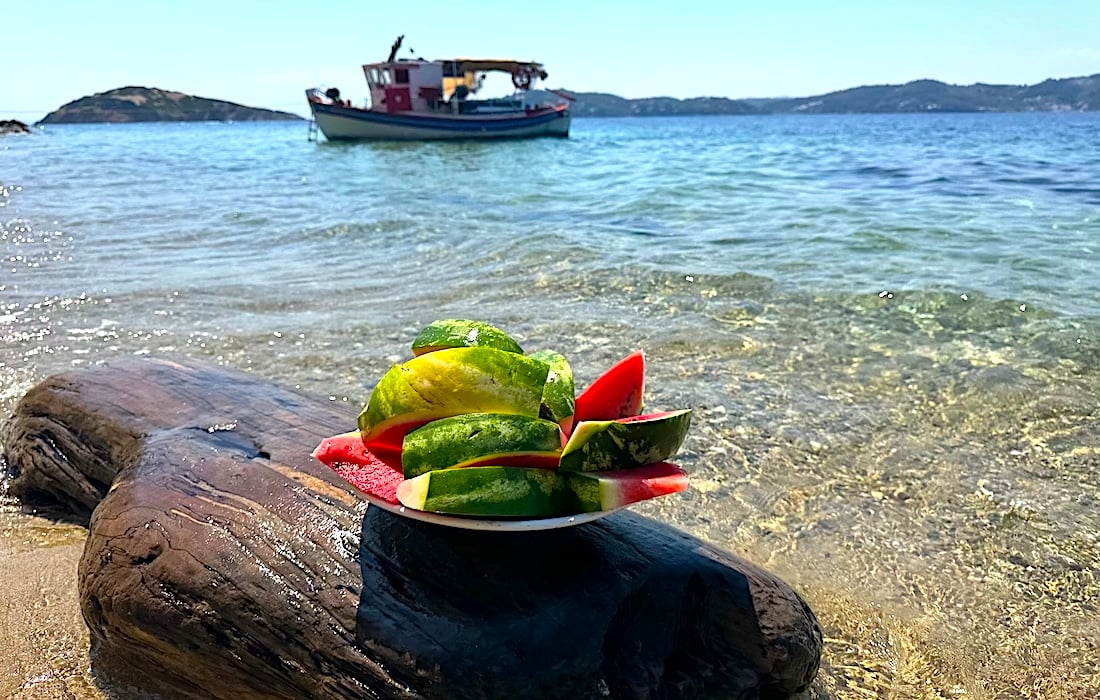
Greece is marking World Environment Day 2026 with a nationwide program of events that brings the global call for climate action down to the local level—from protected areas and wetlands to city galleries, museums, and island beaches.
Observed every year on June 5, World Environment Day is the United Nations’ main global platform for raising awareness and mobilizing action to protect the natural world. First celebrated in 1973, the day has grown into an international campaign involving governments, organizations, schools, communities and citizens around the world.
In Greece, the Natural Environment and Climate Change Agency, NECCA, is at the center of the program, organizing 65 events across the country. Activities include guided nature walks, biodiversity recording, wildlife observation, educational games, workshops, public information events and volunteer cleanups, many of them in or near protected areas.
Greece’s government highlights achievements on World Environment Day
Greece’s Minister of Environment and Energy, Stavros Papastavrou, highlighted some of the government’s environmental policies and key achievements over the past seven years.
Expanded Marine Protection: Moving forward from commitments made at global ocean conferences (2024 in Athens and 2025 at the UN), Greece is establishing two new large National Marine Parks in the Ionian and South Aegean seas. This will double protected waters to 36% of territorial waters, surpassing the EU’s 30% target well ahead of 2030.
Banning Industrial Fishing: Greece is pioneering marine conservation internationally by completely banning bottom trawling in all national marine parks.
Renewable Energy Zoning Restrictions: New regulations prohibit the installation of solar farms in all Natura areas, forests, and woodlands, and ban wind farms at altitudes above 1,200 meters (3,937 ft).
“Untrodden” Landscapes: Greece has introduced pioneering designations for strict ecological preservation, establishing thirteen “Untrodden Mountains” and 250 highly protected “Untrodden Beaches” to limit human development in sensitive ecosystems.
Targeted Species & Habitat Conservation: Twelve National Action Plans have been launched to protect endangered species (including the brown bear, Mediterranean monk seal, Loggerhead sea turtle, and bearded vulture). Additionally, all major wetlands (Ramsar sites) and Key Biodiversity Areas are now placed under strict legislative protection.
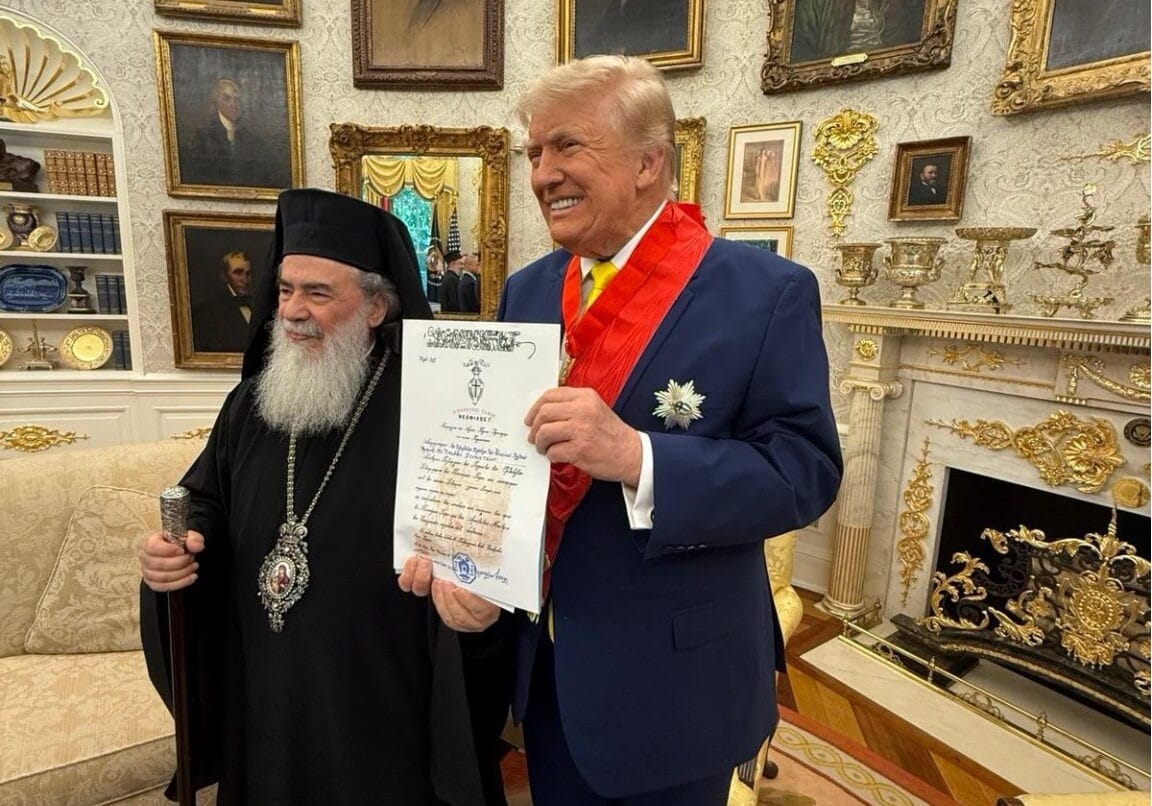
Patriarch Theophilos expressed deep concern over the vulnerability of the Christian communities. Credit: White House
Patriarch Theophilos III of Jerusalem met with US President Donald Trump at the White House on Thursday afternoon, June 4. The forty-minute discussion focused heavily on protecting Christian communities across the Middle East and safeguarding freedom of worship in the Holy Land.
The meeting comes at a time of severe regional instability, as Christian populations in Lebanon, Syria, and the Holy Land face mounting pressures and security challenges. During the talks, Patriarch Theophilos expressed deep concern over the vulnerability of these communities, emphasizing that their protection is vital not only for religious reasons but as a cornerstone for regional stability, coexistence, and peace.
“In recent years, Christian communities in the Middle East have faced a harsh reality of instability, growing threats, and rising pressures,” the Patriarch of Jerusalem stated in an official release. “We see ancient communities asking for something fundamentally basic: to continue living in safety, to preserve their faith, and to protect their freedom of worship.”
Safeguarding religious freedom
Addressing President Trump, His Beatitude noted that “safeguarding religious freedom and maintaining open access to the Holy Land is more than a spiritual matter; it is a prerequisite for stability, coexistence, and peace throughout the entire region.”
During the encounter, Patriarch Theophilos honored Donald Trump with the “Grand Cross” of the Order of the Knights of the Holy Sepulchre, one of the highest distinctions bestowed by the Greek Orthodox Patriarchate of Jerusalem.
According to the Patriarchate, the meeting builds upon the established relationship between the Patriarch and the Trump family, serving as a continuation of the US President’s landmark 2017 visit to Jerusalem and the Church of the Holy Sepulchre.
As one of the world’s oldest Christian institutions, the Greek Orthodox Patriarchate of Jerusalem holds a historic role in guarding holy sites, including the Church of the Holy Sepulchre in Jerusalem and the Church of the Nativity in Bethlehem. Patriarch Theophilos III, who has held the patriarchal throne since 2005, has frequently been involved in global religious events, including the consecration of the holy oil used in the coronation of King Charles III.
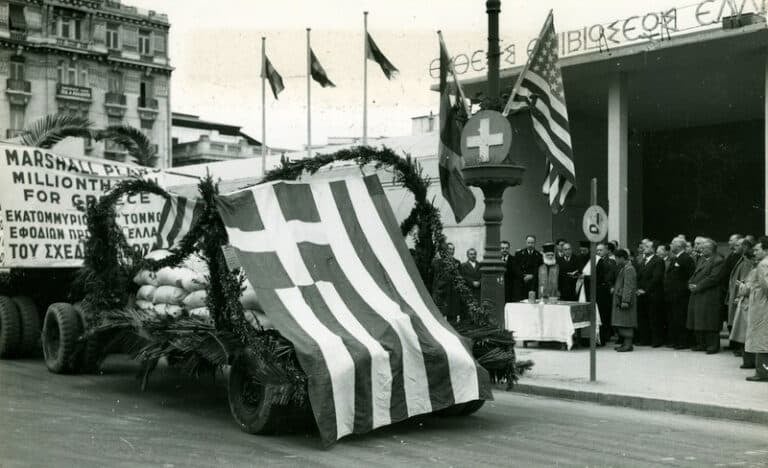
Between 1947 and 1951, Greece received roughly $2 billion in Marshall Aid and related Truman Doctrine funds—an astronomical sum worth more than $21 billion today. Credit: Public Domain
On June 5, 1947, US Secretary of State George C. Marshall stood before a Harvard University commencement crowd. He proposed a radical blueprint for the survival of post-war Europe—the European Recovery Program, famously known as the Marshall Plan.
Conceived in a climate of escalating Cold War anxieties, Marshall famously declared:
“Our policy is directed not against any country or doctrine but against hunger, poverty, desperation and chaos. Its purpose should be the revival of a working economy in the world so as to permit the emergence of political and social conditions in which free institutions can exist.”
While the resulting Marshall Plan is celebrated globally for sparking Western Europe’s golden age of growth, its application in Greece was uniquely volatile. It acted as an economic accelerator for a nation on the brink of collapse. Still, the cure arrived with heavy-handed strings that permanently altered Greek sovereignty, escalated an internal civil war, and drew fierce resistance from the country’s left-wing factions.
Greece in ruins
Legendary Hollywood actor Kirk Douglas actively supported the US aid efforts for Greece in the midst of the Civil War in the late 1940s. Credit: Public Domain
By 1947, Greece was a landscape of absolute ruin. The brutal wartime Axis occupation had destroyed its railways, burned hundreds of villages, and decimated the merchant marine fleet. Infrastructure such as the vital port of Piraeus serving Athens and the three-mile-long Corinth Canal lay unusable.
Compounding this physical tragedy was a bitter, bloody civil war between the royalist government and communist-led insurgents of the Democratic Army of Greece (DSE).
Starvation was an immediate threat. Appealing to Congress for immediate intervention, President Harry S. Truman painted a grim picture of the Greek reality: “Greece is today without funds to finance the importation of those goods which are essential to bare subsistence…the people of Greece cannot make progress in solving their problems of reconstruction. Greece is in desperate need of financial and economic assistance to enable it to resume purchases of food, clothing, fuel, and seeds.”
The American response was unprecedented. Between 1947 and 1951, Greece received roughly $2 billion in Marshall Aid and related Truman Doctrine funds—an astronomical sum worth more than $21 billion today. At its peak, US aid financed 67% of all Greek imports and constituted a staggering 25% of the nation’s gross national product.
Marshall plan rebuilds Greece’s infrastructure
The economic injection quite literally rebuilt the country’s shattered spine. Over 6.5 million tons of American food, clothing, and medical supplies flooded into Greek ports, staving off a humanitarian catastrophe.
American engineers and funding dredged and reopened the blockaded Corinth Canal, completely reconstructed the Port of Piraeus, and paved thousands of miles of modern highways that connected isolated rural provinces to urban markets.
In the fields and factories, the money drove rapid modernization. Thousands of American tractors, advanced irrigation pumps, and high-yield seeds were imported, shifting Greek agriculture from primitive subsistence farming to a competitive export industry.
Furthermore, the plan financed the establishment of the Public Power Corporation (DEI), laying the initial brickwork for a unified national electrical grid.
The cost and institutional decay
Yet, this massive economic lifeline had a darker, counterproductive underside. Unlike in Great Britain or France, where aid was managed by robust local governments, the United States viewed the unstable, war-torn Greek administration with deep suspicion.
Consequently, Washington established the American Mission for Aid to Greece (AMAG), an oversight apparatus that wielded extraordinary, direct control over the country’s domestic affairs. Dwight Griswold, the head of AMAG, made it very clear to the Greek government that the money came with absolute American leverage: “We are here to help Greece, but we must be sure that the help is used effectively. If the Greek government does not take the necessary steps to stabilize its economy and clean up its administration, we will have to reconsider our position.”
American administrators held functional veto power over the Greek state budget, tax legislation, and currency issuance. Greek cabinet ministers routinely had to clear basic administrative policies with US advisers. This heavy-handed intervention saved the state from collapsing into communist hands—Washington’s primary geopolitical goal—but it severely eroded Greek political autonomy.
Prominent Greek intellectual and novelist Giorgos Theotokas captured the growing local resentment in his diary during the late 1940s: “The Americans have become our true masters. Ministers do not dare make a move without asking the permission of some American adviser. We have been saved from the rebels, but we have lost our independence.”
Furthermore, because aid was distributed through a centralized state apparatus during a civil war, funds and import licenses were frequently weaponized. Capital was often allocated based on political loyalty to the right-wing government rather than economic merit, inadvertently reinforcing a rigid system of political patronage and favoritism.
Konstantinos Karamanlis, a rising political figure who would later become Prime Minister, looked back on how the rush of money warped the country’s institutional health:
“The aid was a blessing, but the way it was managed taught Greeks to look to the state for salvation rather than their own productivity. It fed a system of dependency and favoritism that outlived the docks and roads we built with it.”
Marshall plan opponents in Greece
Because Marshall Aid was fundamentally tied to Washington’s anti-communist containment strategy, it faced fierce, violent opposition from the Greek Left, primarily spearheaded by the Greek Communist Party (KKE) and its military wing, the DSE.
To the communists, the Marshall Plan was not a humanitarian gesture but a textbook example of “American imperialism” designed to turn Greece into a strategic military outpost for the United States. KKE propaganda aggressively painted the American administrators as the “new conquerors,” succeeding the German occupiers.
They argued that the economic restructuring pushed by AMAG was explicitly designed to restrict Greek industrial self-sufficiency, forcing the nation to remain a dependent market for American manufactured goods and agricultural surpluses.
This opposition extended far beyond rhetorical propaganda into active physical resistance and domestic warfare. Communist circles actively orchestrated plans to paralyze American reconstruction work. Guerrilla cells launched targeted bombings and acts of sabotage against critical infrastructure projects, focusing on the newly restored Piraeus docks and the Corinth Canal to disrupt the flow of American supplies.
An ambiguous legacy
Ultimately, the Marshall Plan in Greece achieved its immediate, vital objectives. It prevented mass starvation, facilitated the defeat of the communist insurgency, and laid the concrete physical foundations for the country’s mid-century economic expansion.
However, the sheer velocity and volume of the aid left a profoundly ambiguous legacy. It demonstrated how foreign aid can simultaneously rescue a nation’s people from chaos, while binding its political institutions and sovereign decision-making to the strategic whims of an external superpower.
The ideological battle over the economic recovery is captured visually in the following historical archival footage, which illustrates the intersection of American material aid and public relations efforts during the height of the reconstruction program. The “Story of Koula” Marshall Plan Film demonstrates how the US government utilized media to promote the agricultural modernization of the Greek countryside during this volatile era.

 Login
Login