Login
Login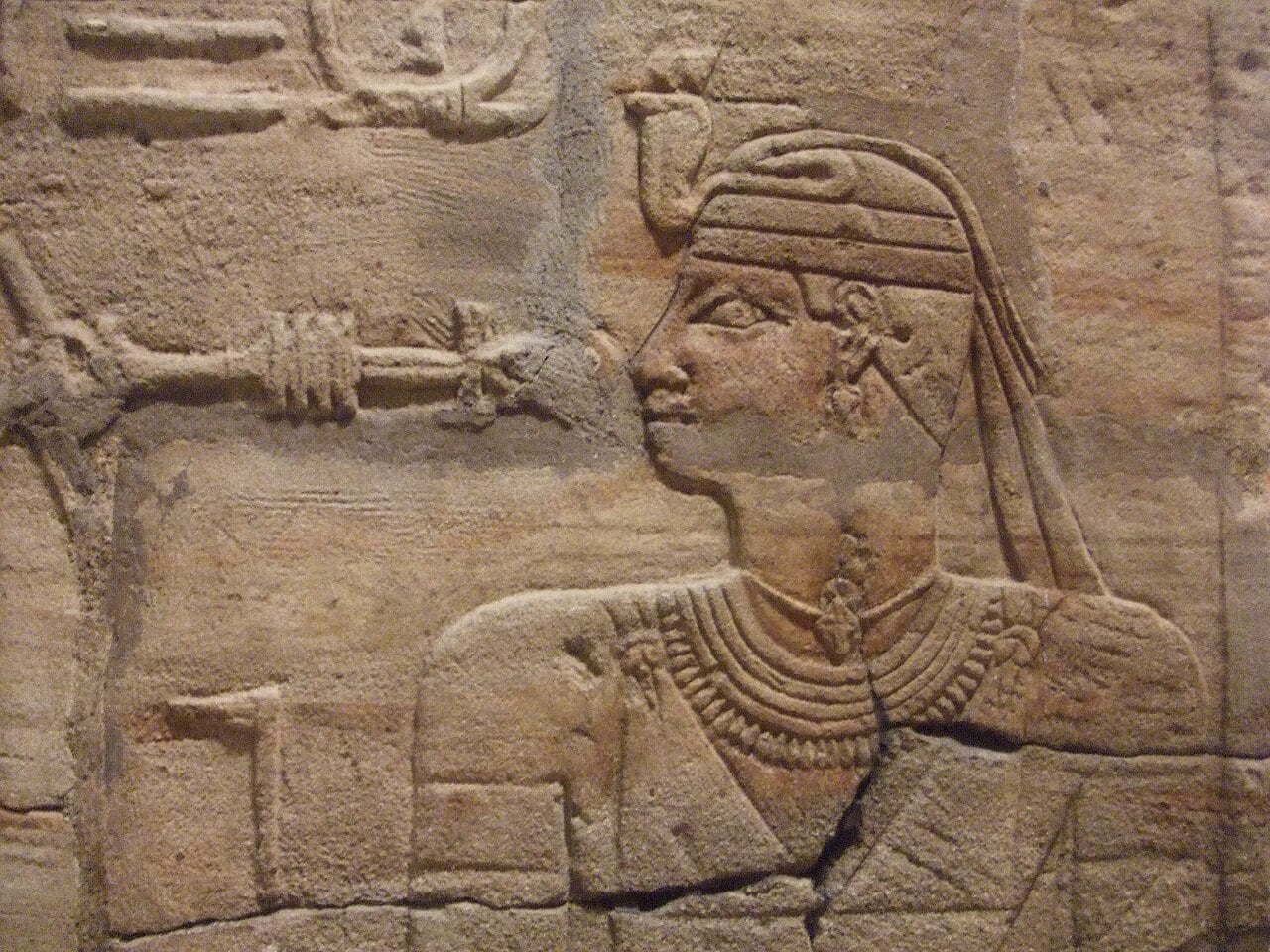

Tearko: The Ethiopian King of Ancient Egypt Who Conquered Anatolia

For some time, Ancient Egypt was ruled by a dynasty of Ethiopian kings. According to legend, one of them was so powerful that he conquered Anatolia, across the Mediterranean from Egypt. Could such a conquest have really occurred, and if not, then what led to this legend of an Ethiopian king of Egypt who was said to have conquered Anatolia?
Strabo’s legend of the Ethiopian king of Egypt who conquered Anatolia
The source for this legend comes from one particular document. This is Strabo’s Geography, written in the first century BC. Strabo mentions a particularly notable Ethiopian king twice. In the first instance, he mentions him alongside other notable conquerors of the ancient world, writing:
“Nor yet for the most part are the expeditions of their chiefs, for instance, Madys the Scythian, Tearko the Ethiopian, Cobus of Trerus, Sesostris and Psammeticus the Egyptians.”
Without going into details, the context of this reference makes it clear that Tearko the Ethiopian was supposed to have set out on a major expedition or conquest. He is grouped together with other famous conquerors of antiquity, such as Sesostris.
The next mention of Tearko provides additional information. Here, Strabo calls him “Tearco.” Referring to the claims of an earlier historian called Megasthenes, he wrote:
“Sesostris, the Aegyptian, he adds, and Tearco the Aethiopian advanced as far as Europe; and Nabocodrosor, who enjoyed greater repute among the Chaldaeans than Heracles, led an army even as far as the Pillars. Thus far, he says, also Tearco went; and Sesostris also led his army from Iberia to Thrace and the Pontus.”
According to this legend, Tearco the Ethiopian conquered as far as the Pillars, meaning the Pillars of Hercules. However, how is this associated with Anatolia, and why have we called this Ethiopian ruler a king of Egypt?
Who was Tearco the Ethiopian?
To understand the answer to these questions, we first need to understand who Tearco actually was. It is necessary to take a look at the context in which Strabo places him. In the first reference to him, Strabo grouped him together with figures such as Madys the Scythian, known to modern historians as Madyes, his contemporary king Cobus, and Psammeticus of Egypt. These were figures of the seventh century BC.
In the second reference to Tearco, Strabo groups him together with Nabocodrosor of the Chaldaeans, known to historians as Nebuchadnezzar of Babylon, and Sesostris of Egypt, probably the historical Shebitku. These were also figures of that same era. Furthermore, immediately after the quoted passage, Strabo mentions Idanthyrsus, a Scythian king of the sixth century BC.
Therefore, based on the context in which Tearco is mentioned, it is obvious that we should be looking for an Ethiopian king who ruled at some point within that same era. For this reason, the mainstream conclusion among scholars is that Strabo’s Tearco is the historical Taharqa.
Taharqa was a member of the Ethiopian dynasty that ruled Egypt for much of the eighth and seventh centuries BC. Chronologically, he fits in perfectly with the other figures mentioned by Strabo, and his name is a linguistic match as well. We know, historically, that Taharqa became the ruler of Egypt, despite Strabo making no mention of this fact.
Understanding the legend
Now that it’s clear who Strabo was referencing, let us see if we can actually understand Strabo’s claim. It is easy to be confused by the reference to Tearco conquering as far as the Pillars. It might seem like Tearco was said to have conquered as far as Spain. After all, the Strait of Gibraltar is the standard location of the Pillars of Hercules.
For a king of Egypt, this might appear to make sense in the context of an exaggerated tale. It would mean that Tearco warred across the coast of North Africa until finally reaching the Strait of Gibraltar. However, this is illogical in the context of Strabo’s passage. As the quoted passage shows, Strabo states that both Nebuchadnezzar and Tearco reached the Pillars.
Given the reference to Nebuchadnezzar, Strabo may be referring to pillars that, according to Isocrates, were situated near the entrance of the Black Sea, at Troy, rather than the actual Pillars of Hercules at Gibraltar. While Nebuchadnezzar never historically got as far as Troy, he did conquer parts of Anatolia.
Furthermore, Strabo associates the event with Sesostris’ campaigns as far as Thrace and the Pontus (the Black Sea). This reinforces the point that Strabo was referring to pillars by the entrance to the Black Sea rather than the Pillars at the Strait of Gibraltar. Incidentally, the reference to Iberia in association with Sesostris must point to the Caucasian Iberia, as it is often called by modern historians, on the eastern end of the Black Sea region.
Conclusively, Tearco the Ethiopian, the historical Taharqa king of Egypt, was said to have conquered all across the Levant and right through Anatolia.
Is the legend of the Ethiopian king who conquered Anatolia actually true?
If an Ethiopian king of Egypt really did conquer Anatolia, we would definitely know about it. There would have been clear references to such an event in archaeological records. Nevertheless, that does not mean that this legend has no identifiable historical basis.
It is clear that the legend is not simply based on exaggerated accounts of Taharqa’s historical conquests. The reason is that Taharqa was, in reality, not a notable conqueror. Plenty of kings of Egypt engaged in far more impressive conquests than he ever did, yet no legends ever centered around them. Therefore, the true explanation must be something unique in his case.
The Bible provides the answer. In its account of Sennacherib of Assyria waging war against Jerusalem, the Bible mentions Taharqa. Using the spelling “Tirhakah,” it describes how this Ethiopian king went out to fight against Sennacherib. Historically, Taharqa was unable to secure a victory.
Nevertheless, we know that the Egyptians remembered it as a victory. Herodotus, in the fifth century BC, recorded an Egyptian legend about a king of Egypt named Sethos who successfully defeated the Assyrians. Scholars generally understand Sethos to be Shebitku. It appears that Shebitku was the senior king at the time of Sennacherib’s attack, with Taharqa as the junior king. Shebitku was the king of Egypt, while his relative Taharqa was the king of Ethiopia and the one who actually led the army against the Assyrians.
Hence, what appears to have occurred is that the Egyptians remembered the attack as a victory, regardless of the historical outcome. It was then exaggerated into tales of Tearco actually conquering the Assyrians. Since their territory extended far into Anatolia, this naturally led to the legend of Tearco, an Ethiopian king of Egypt, conquering as far away as Anatolia.