
Normal view

Byzantine Princess Anna Komnene Proved Medieval Women Weren’t Meant to Be Silent

10 June 2026 at 20:15
Anna Komenne and the Alexiad
Anna Komnene, the 11th-century Byzantine princess and historian, defied medieval norms by writing The Alexiad, a groundbreaking account of her father’s reign and the First Crusade. Credit: Wikimedia Commons, Public Domain, Greek Reporter collage

When you think of medieval princesses, what comes to mind is probably some beauty locked in a tower, waiting around for a prince to show up. Well, Anna Komnene would have rolled her eyes at that stereotype. This 11th-century Byzantine princess had better things to do than wait for rescue—she was busy writing one of history’s most important chronicles!

Born in 1083 to Emperor Alexios I Komnenos, Anna grew up in the heart of the Byzantine Empire during one of its most turbulent periods. Instead of learning needlework like most girls her age, she was reading Homer and studying philosophy. Her parents, surprisingly ahead of their time, decided their daughter deserved a real education, something that was normally reserved for the male offspring. And when we say education, we don’t mean just the basics—we’re talking about advanced studies in history, mathematics, medicine, and literature.

This education paid off in ways nobody could have predicted.

Anna Komnene was more than Daddy’s little Princess

Anna’s masterpiece, the Alexiad, is her marvellous creation that chronicles her father’s reign with the kind of detail that makes historians rub their eyes from tears of joy. She was there for everything: the First Crusade (imagine those rough Western knights showing up at your doorstep), the Norman invasions, the constant political drama and machinations that kept the empire on the verge of falling apart.

Now, let’s be honest, once someone reads her chronicle, it is more than obvious that Anna worshipped her father. Reading the Alexiad, you’d think Alexios could walk on water. But even accounting for her obvious bias, the work is incredibly valuable to us all today. She provides simply unparalleled insights into Byzantine court life, military strategy, and cultural dynamics.

Her descriptions of the Crusaders are particularly entertaining, too. She thought these Western “barbarians” were crude and uncivilized, but she also recognized their military effectiveness and value when it came to battlefields. It’s like getting a sophisticated gossip column about one of history’s most significant events. That’s what her Chronicles feels like to scholars.

Alexios I Komnenos
Emperor Alexios I Komnenos and Empress Irene Doukaina, the parents of Anna Komnene, championed education and imperial stability during a turbulent era in Byzantine history. Credit: Dumbarton Oaks, Wikimedia Commons, Public Domain

Anna Komnene wrote her way into history

What makes Anna truly remarkable isn’t that she wrote a good book—it’s that she dared to write it at all by herself. You see, medieval women weren’t supposed to be historians. They certainly weren’t supposed to have opinions about military campaigns or imperial policy.

Anna didn’t care about “supposed to.”

The Alexiad is bold, confident, and sometimes brutally honest about her era. She criticizes incompetent officials, praises effective leadership, and offers her analysis of complex political situations. It was serious scholarship demanding to be taken seriously, and it worked. The Alexiad became one of the most important sources for understanding this period of Byzantine history. Scholars today still cite her work, debate her interpretations, and marvel at her accomplishments.

Anna Komnene’s life wasn’t all intellectual triumph, though. After her father died, she found herself increasingly sidelined by those in court. She had hoped to see her husband become emperor, but politics didn’t work out in her favor. Writing the Alexiad partly became a way to preserve her family’s legacy and partly a way to assert her own importance in a world that preferred women to remain silent rather than take on the role of a protagonist in the Empire’s political affairs.

It is easy to understand her frustration coming through the text sometimes. Here was this brilliant, educated woman who understood imperial politics better than most of the men making decisions, and she was expected to just… fade into the background after her father passed away.

So, instead of remaining silent, she picked up her pen and made sure her voice would be heard for centuries.

John II
John II Komnenos, Anna Komnene’s younger brother and successor to the Byzantine throne, whose rise to power dashed her political ambitions and reshaped the imperial legacy she sought to preserve. Credit: Wikimedia Commons, Public Domain

Why Anna Komnene’s attitude is still relevant

Anna Komnene proved something that seems obvious now but was revolutionary at the time: women could be serious scholars, thoughtful historians, and compelling writers. She opened a door that had been firmly shut and wedged it open for everyone who came after. Every time a woman publishes a memoir, writes a historical analysis, or offers her perspective on current events, she follows the path that Anna Komnene created. Not that Anna gets credit for it—most people have never heard of her. But the precedent she set matters.

The Alexiad remains in print today, nearly 1,000 years later. Students still read it in history classes. Scholars still argue about her interpretations. That’s not bad for someone who was supposed to stay in her (luxurious) room and let the men handle the important issues.

She had something to say, and she said it. In a world that preferred women to stay silent, that was pretty revolutionary.
Greek Fire: The Powerful Weapon of the Byzantine Empire

9 June 2026 at 20:31
Greek fire helped Byzantium maintain its military might for centuries
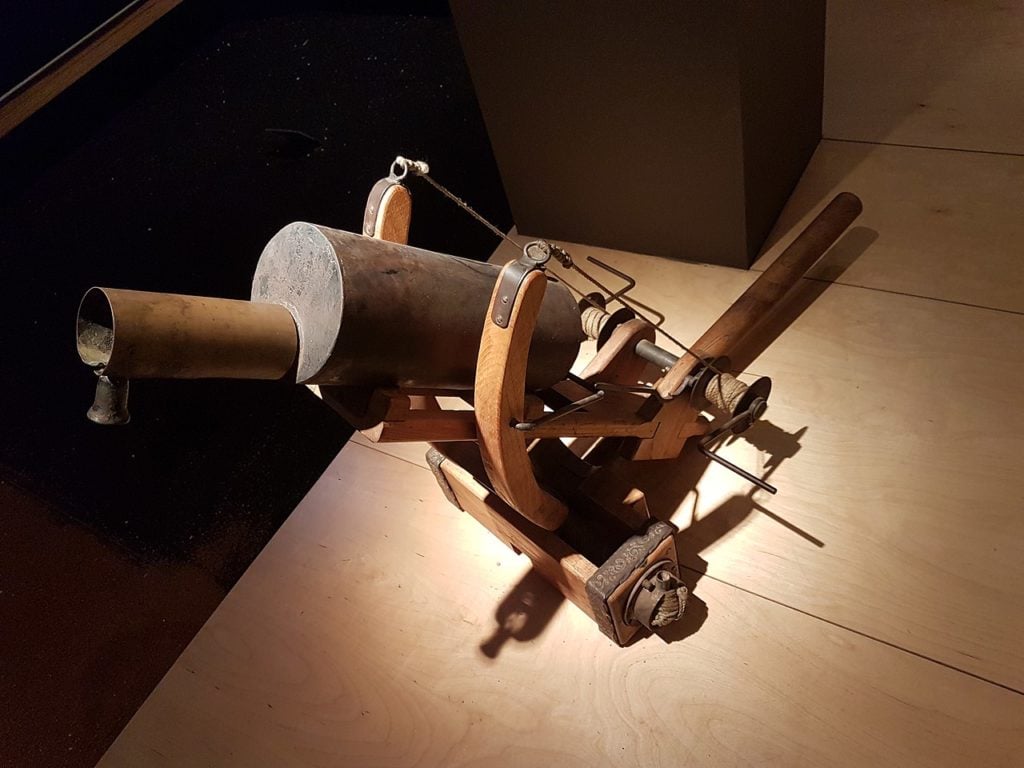
Arbalest flame-thrower spewing Greek fire, Byzantine Empire (reconstruction). Thessaloniki Technology Museum. Credit: Gts-tg/Wikimedia Commons CC BY-SA 4.0

Greek fire was the mysterious weapon used by the Byzantines to destroy enemies and prospective invaders, keeping the Empire strong and awe-inspiring.

The Byzantine liquid fire that protected the Empire was a terror-inspiring incendiary weapon that protected the Empire for centuries. Widely known as Greek Fire, this mighty weapon enabled the Byzantine Empire to survive and maintain its power through many attacks from various enemies.

The weapon could be compared to the modern day flame-thrower. To the enemy in Byzantine times, it looked like a machine spewing destructive fire from hell. However, its exact origin remains unclear, and the recipe for this formidable weapon is still unknown, puzzling scientists and historians.

Byzantine Greek fire
A Byzantine ship using Greek fire against a ship . On top, Greek alphabet in Byzantine form. Credit: Public Domain

Records suggest Greek fire contained a mix of petroleum, quicklime, and other unknown ingredients. This potent combination is believed to have made it one of the most flammable and dangerous substances of its time. What was truly amazing about the Byzantine liquid fire weapon was that it continued to burn on water and was practically impossible to put out with medieval means.

It helped the Empire maintain sovereignty over the mass land it occupied, spanning all of Southern Europe, North Africa, and Asia Minor. The weapon’s impact on the course of history is undeniable. It played a key role in the defense of Constantinople and the preservation of the Byzantine Empire.

A Brilliant Invention

Fire as a weapon had been used for centuries but never in such a sophisticated and destructive means  as the Greek fire (or Υγρόν πυρ – Hygron pyr, as it was referred to in Greek). It was the Crusaders who referred to it as Greek fire or “liquid fire,” “Roman fire,” or “sea fire.”  It was a significant weapon that never ceased to terrify the enemy.

This innovative weapon would fire massive flames in a continuous jet, burning a trail of destruction in its path that was nearly impossible to extinguish. When it came to naval warfare, it was a weapon that was impossible for the enemy to defend their ships from. Yet, the exact recipe for the liquid fire substances the Byzantines used remains a mystery to this day.

The Greek fire cannon-like machine was created in the seventh century. It most likely was the invention of Kallinikos of Heliopolis, a Jewish architect who fled from Syria to Constantinople. It was between 674 and 678 when the Byzantine Empire was attacked by the Islamic fleet of the Umayyad caliphate that had already taken over parts of Syria.

Concerned about an Islamic attack against Constantinople, Kallinikos experimented with a variety of materials until he discovered a mix for an incendiary weapon. Kallinikos sent the formula to the Byzantine emperor, and authorities developed a siphon that operated somewhat like a syringe, propelling the fiery concoction toward enemy ships.

Emperor Constantine IV reluctantly ordered the use of Greek fire to destroy the Umayyad fleet. However, the Byzantine weapon was very successful. According to historian Kelly DeVries and his book Medieval Military Technology, it was the first reported use of an incendiary weapon in battle.

Was Byzantine Liquid Fire a State Secret?

Some historians believe the reason the recipe for liquid fire remains unknown is because Byzantine emperors wanted to keep it a state secret, never to fall into the hands of the enemy. The vast Empire was surrounded by numerous enemies coveting its lands. Liquid fire was a potent deterrent to any army that would think of invading.

Constantine VII Porphyrogenitus warned his son Romanos II to not reveal the recipe “and not to prepare this fire but for Christians, and only in the imperial city.”

Anna Komnene, daughter of Emperor Alexios I Komnenos (r. 1081-1118) and a historian, wrote about the recipe for Greek fire:

This fire is made by the following arts: From the pine and certain such evergreen trees, inflammable resin is collected. This is rubbed with sulfur and put into tubes of reed, and is blown by men using it with violent and continuous breath. Then in this manner it meets the fire on the tip and catches light and falls like a fiery whirlwind on the faces of the enemies.

It was not that straight-forward, of course. Otherwise, it would be easy for the enemy to recreate the fiery weapon. It seems indeed that the Byzantines intended to keep the process of creating the liquid fire top secret, as no friend or enemy ever managed to gain insight into this so as to construct their own similar weapon.

The use of Greek fire in war helped the Byzantines maintain the empire for centuries
Use of a hand-siphon, a portable flame-thrower, from a siege tower. Detail from the medieval manuscript Codex Vaticanus Graecus 1605. Public Domain

Greek Fire in Battle

In his book, Devries explains that Greek fire can refer to three different weapons: firstly, a fiery liquid pumped out of a nozzle; secondly, a liquid weapon that was filled in small grenades; and thirdly, a solid incendiary probably based on gunpowder.

The third is impossible to have been used in Byzantium. Its reported use started in the fourteenth century in Western Europe. However, there are Byzantine era depictions of men carrying hand-held tubes spitting fire that look even more like modern flame-throwers.

In fact, Greek fire was rarely used except primarily in naval battles, as the apparatus was complicated and required technically equipped handlers. Furthermore, it was dangerous to have an incendiary mechanism on a wooden ship.

In 727, Emperor Leo sent a fleet to burn that of Hellas and Cyclades, who had been revolting against him. In 941, a Rus naval raid from Kiev across the Black Sea was stopped, and their fleet was annihilated by the Byzantines.

Reportedly, in the eleventh century, Viking Ingvar the Far Travelled encountered ships equipped with the weapon, which he described as “a brass (or bronze) tube and from it flew much fire against one ship, and it burned up in a short time so that all of it became white ashes…”

However, by the end of the twelfth century and the Angeloi emperors, the Empire started to decline, losing more and more land to the rising Ottoman Empire. As Byzantium began to fade, so did the use of Greek fire until it became but a simple chapter in the great history of the Byzantine Empire.

❌