
Normal view

South African Cave May Hold Oldest Evidence of Human Fire Use

8 June 2026 at 22:01
Neanderthals made first fire at a UK site
Ancient fire use. Credit: Steven Miller / Flickr / CC BY 2.0

Researchers studying a cave in South Africa have found evidence that could push the record of ancient fire use back hundreds of thousands of years.

The findings come from Wonderwerk Cave in South Africa’s Northern Cape Province, a site that has produced some of the oldest known evidence of human activity. The study was published in the journal PLOS One.

Researchers uncover evidence in a deeper cave layer

Previous excavations at Wonderwerk Cave revealed signs of fire use about one million years ago. Researchers based that conclusion on burnt animal bones, heat-altered stone tools, and burned sediments found in a layer known as Stratum 10.

In the new study, archaeologists examined an older layer called Stratum 11. There, they found small mammal bones that showed signs of exposure to heat.

To determine the age of the deposits, researchers analyzed cave sediments using magnetostratigraphy and cosmogenic burial dating. Together, the two methods indicated that the remains were deposited between 1.07 million and 1.79 million years ago.

If confirmed, the discovery could represent the oldest evidence yet found for the use of fire by early humans.

New technique helps identify burned bones

Researchers used a method known as bone luminescence to confirm that the fossils had been exposed to fire.

The technique involves shining high-energy blue light onto fossilized bones under a microscope. Burned bones respond by glowing bright red when viewed through a specialized filter. This allows scientists to detect evidence of heating that may not be visible through traditional examination methods.

Researchers at South Africa's Wonderwerk Cave have uncovered burned animal bones dating between 1.07 and 1.79 million years ago. If confirmed, the discovery could represent the oldest known evidence of fire use by early humans.#Archaeology #HumanEvolution #Anthropology #Science pic.twitter.com/PJX3doqUVa

— Tom Marvolo Riddle (@tom_riddle2025) June 8, 2026

The analysis showed that several of the bones from Stratum 11 had been subjected to high temperatures.

Researchers also ruled out wildfires as the likely source of the burning. The fossils were discovered about 30 meters (98 feet) from the cave entrance, deep inside the cave, and beyond the reach of flames from natural fires outside.

Findings suggest repeated fire use

The study does not show that early humans could make fire whenever they wanted. It also does not provide evidence for routine cooking. Instead, the findings suggest that groups occupying the cave may have repeatedly carried fire into the site and managed it there.

Researchers said the pattern and distribution of burned bones in both Stratum 10 and Stratum 11 point to multiple combustion events rather than a single accidental fire.

Because evidence of ancient fire use is often difficult to distinguish from natural burning, the question of when humans first controlled fire remains one of archaeology’s most debated topics. The new findings add important evidence to that discussion and provide a deeper look into the behavior of some of humanity’s earliest ancestors.
Alpi Apuane, stop alla riapertura della cava Cresta degli Amari: “Le aree rinaturalizzate non si toccano”

6 June 2026 at 07:58

“Le cave rinaturalizzate non possono essere interessate da attività estrattive né a cielo aperto né in sotterraneo”. Con queste parole nette, scritte il 12 febbraio 2026, ma rese pubbliche solo nei giorni scorsi, la Conferenza dei Servizi indetta per verificare la conformità alla normativa regionale dei Piani Attuativi dei Bacini Estrattivi (PABE) presentati dal Comune di Massa chiude il capitolo della riapertura della cava Cresta degli Amari, nel Parco delle Alpi Apuane. Anche se l’ufficialità arriverà solo al termine del procedimento di approvazione dei PABE, gioiscono gli ambientalisti che si erano schierati a difesa di questo clivo verde nell’area di Pian della Fioba del Parco delle Alpi Apuane, a pochi passi dalla falesia “Campaccio”, attrazione per gli appassionati di arrampicata che vi arrivano da ogni parte d’Italia. “È una vittoria della società civile contro la malapolitica che amministra il territorio, che vede nelle Apuane solo marmo da estrarre e non sa immaginare un futuro diverso per le nostre montagne” commenta a ilFattoquotidiano.it Andrea Ribolini, dell’Associazione Aquilegia, tra i promotori della mobilitazione a difesa della Cresta degli Amari e gestore del limitrofo Orto Botanico delle Alpi Apuane “Pellegrini-Ansaldi”.

L’amministrazione guidata da Francesco Persiani (Lega) ha provato a consentire l’escavazione sotterranea della cava che insisteva nel luogo, chiusa dal 1980, tramite il suo strumento urbanistico (i PABE), nonostante proteste pubbliche e osservazioni formalizzate da ambientalisti e operatori di quell’economia della valorizzazione e tutela della montagna che in quelle zone trovano continui ostacoli per l’inconciliabile convivenza con i siti estrattivi. Con il verbale del 12 febbraio 2026, la Conferenza dei Servizi ha messo la parola fine a queste ambizioni, benché il sindaco Persiani, in un comunicato ufficiale, cerchi di ridimensionare la questione sostenendo che “parlare oggi di bocciatura risulta improprio e fuorviante. Le osservazioni formulate dagli enti (nella Conferenza dei Servizi ndr) vengono analizzate dall’amministrazione proponente (ovvero il Comune di Massa ndr), che può recepirle integralmente, recepirle parzialmente apportando modifiche e approfondimenti al piano, oppure motivatamente non accoglierle”.

Eppure la Conferenza dei Servizi a guida Regione Toscana ha indicato chiaramente che la partita è chiusa e anzi doveva essere già chiusa il 18 dicembre 2023, quando “gli esiti del sopralluogo hanno portato a riconoscere tale cava (Cresta degli Amari ndr), non servita da alcuna viabilità di accesso, come una cava rinaturalizzata”, con la specificità ulteriore di essere “vicina al crinale” e con “sostanziale integrità del versante (…) motivi in più per inserirla tra le cave rinaturalizzate”.

Una bocciatura senza appello quindi, evidenziata anche dal Polo Progressista e di Sinistra di Massa (M5S, RC) guidato dalla consigliera Daniela Bennati, che ha reso pubblica la notizia del verbale. “La posizione della Conferenza dei Servizi ricalca esattamente quanto osservato in sede di approvazione da diverse associazioni e movimenti politici tra cui M5S, CAI e Associazione Aquilegia, bocciato dal Consiglio Comunale – chiarisce il Polo Progressista in un comunicato -. Le valenze paesaggistiche e ambientali delle nostre montagne non possono essere sottomesse al modello estrattivista. Le Apuane sono un bene comune che non può essere sottratto alla collettività per il beneficio di pochi”.

Il Comune di Massa, quindi, ha approvato in Consiglio Comunale a fine 2025 la riapertura della cava rinaturalizzata Cresta degli Amari, seppur per via sotterranea, nonostante la Conferenza dei Servizi ne avesse indicato l’impossibilità giuridica due anni prima. Il riconoscimento amministrativo della rinaturalizzazione delle cave, così come la necessità di evitare escamotage semantici per autorizzare l’attività estrattiva laddove è vietata, sono diventati ormai dirimenti negli iter di approvazione dei Piani Attuativi dei Bacini Estrattivi (PABE) proposti dai comuni apuani.

La stessa Conferenza dei Servizi del 12 febbraio 2026 ha indicato, ad esempio, la necessità di esplicitare come “naturalizzata” e non semplice “cava dismessa” anche un’altra area – cava Campo Fiorito – perché quest’ultima definizione avrebbe aperto spazi interpretativi impropri. Persino il simbolo della devastazione delle Apuane, il Monte Carchio, con la sua non cima, squadrata dall’attività estrattiva fino alla sua sommità e le frane di scarti lapidei sui crinali, ha trovato posto nella Conferenza dei Servizi, con una prescrizione: in tutti i documenti dev’essere indicato “non sono ammesse autorizzazioni all’escavazione sui suoi versanti”. Basterà?

L'articolo Alpi Apuane, stop alla riapertura della cava Cresta degli Amari: “Le aree rinaturalizzate non si toccano” proviene da Il Fatto Quotidiano.

17,100-Year-Old Cave Paintings in Wales Rewrite Britain’s Ancient History

4 June 2026 at 01:05
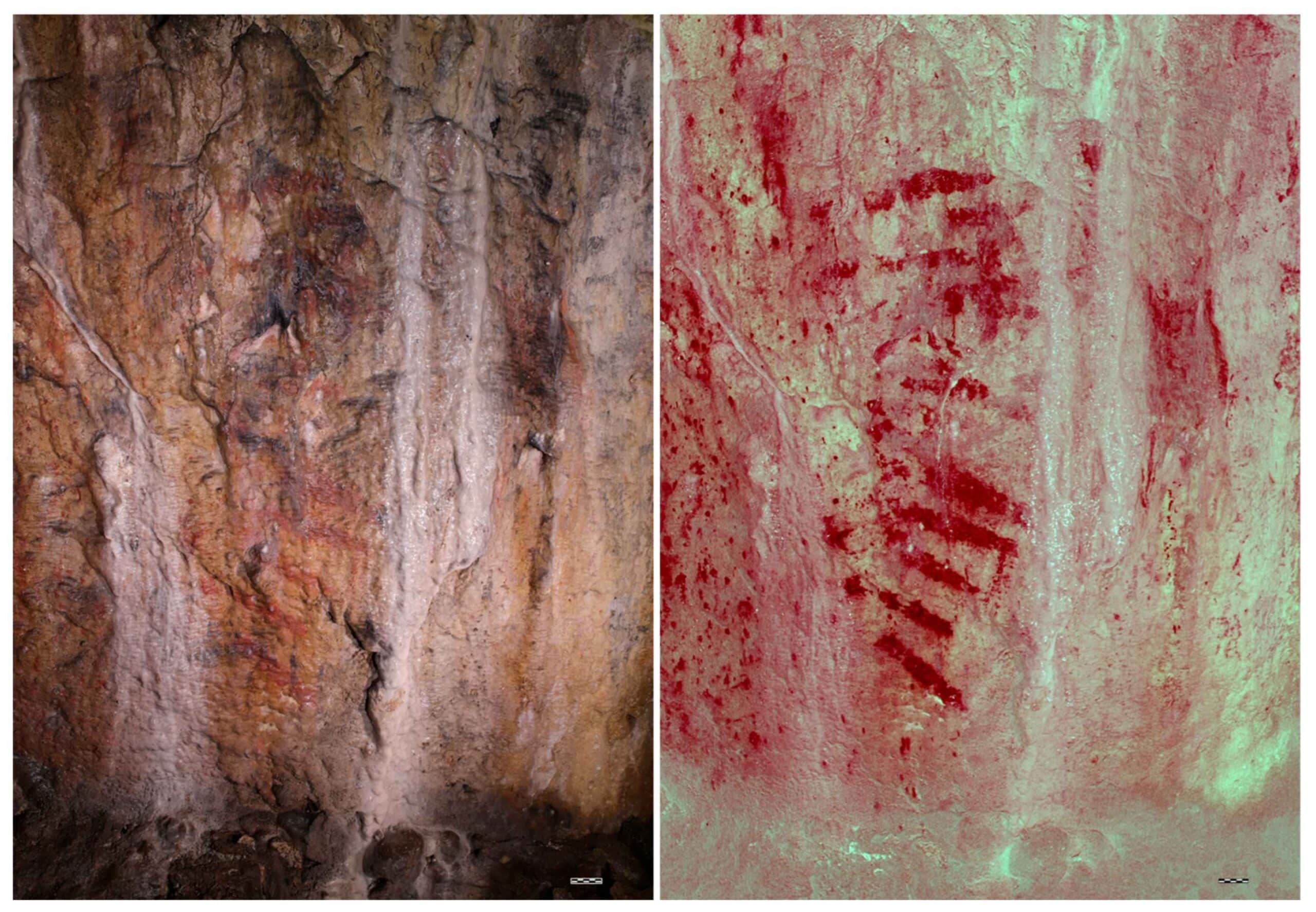
Red pigment markings at Bacon Hole Cave in Wales
Red pigment markings at Bacon Hole Cave in Wales. Credit: George H. Nash / CC BY 4.0

A series of red markings inside a cave in south Wales has been confirmed as the UK oldest cave art, ending decades of debate over whether the images were created by humans or formed naturally.

Researchers determined that the markings at Bacon Hole Cave near Mumbles were painted about 17,100 years ago during the Upper Paleolithic period. The discovery makes them the oldest known rock art in Britain and northwestern Europe. The findings overturn a conclusion that had stood since 1928, when experts dismissed the markings as natural mineral stains rather than prehistoric artwork.

Discovery revisited after more than a century

The markings were first reported in 1912 by professors William Sollas and Henri Breuil, who identified the red bands as prehistoric cave paintings. At the time, the discovery was described as the first example of Paleolithic cave art found in Britain.

A substantial breccia deposit is located around the current entrance area of the cave
A substantial breccia deposit is located around the current entrance area of the cave. Credit: George H. Nash / CC BY 4.0

That interpretation was later rejected. Researchers concluded that the red streaks were caused by iron-rich minerals seeping through the limestone walls, and the site gradually lost its significance as a prehistoric art location.

More than a century later, an international team led by prehistoric art specialist George Nash reexamined the markings using scientific methods unavailable to earlier researchers. The team’s findings, published in the journal Quaternary, confirmed that the red pigment was intentionally applied by humans around 17,100 years ago.

Scientific analysis confirms human origin

Researchers used uranium-thorium dating and archaeometric analysis to study the pigment and surrounding cave deposits. Laboratory tests identified a mixture of calcite and clay residues within the paint, indicating that the material had been deliberately prepared. Analysis also showed that the pigment was applied directly with a finger.

The painted lines appear as evenly spaced horizontal bands arranged in a structured pattern. Researchers said the design is inconsistent with natural geological processes and supports the interpretation originally proposed in 1912.

Part of the artwork may have been overlooked for decades because a local fisherman painted graffiti on a nearby section of the cave chamber in 1894, making the markings more difficult to interpret.

Life in Wales during the Ice Age

Eastern view of the cave entrance and the Bristol Channel
Eastern view of the cave entrance and the Bristol Channel. Credit: George H. Nash / CC BY 4.0

The artwork was created as Wales emerged from one of the coldest phases of the last Ice Age, known as the Devensian glaciation. At the time, the landscape around Bacon Hole was a cold, largely treeless environment. Researchers believe the area surrounding what is now the Bristol Channel attracted large grazing animals during seasonal migrations.

The cave and other nearby shelters along the Gower coastline would have provided suitable living spaces for hunter-gatherer groups moving through the region.

A significant addition to Britain’s prehistoric record

Bacon Hole Cave lies within the limestone cliffs of the Gower Peninsula overlooking the Bristol Channel. Although the area is recognized for its natural beauty, the cave is not currently protected as a scheduled monument.

Researchers argue that the site’s newly confirmed status as the UK oldest cave art strengthens the case for greater protection. The study was conducted by researchers from First Art, the University of Southampton, Swansea University and other institutions, with support from the National Trust and the Bradshaw Foundation.

The discovery adds to a small number of known examples of Upper Paleolithic rock art in Britain and provides rare evidence of artistic activity in the region more than 17,000 years ago.

❌