Two Times critics unpack the twin phenomenon of “Backrooms” and “Obsession” and what lessons should — and shouldn’t — be learned from their massive success.
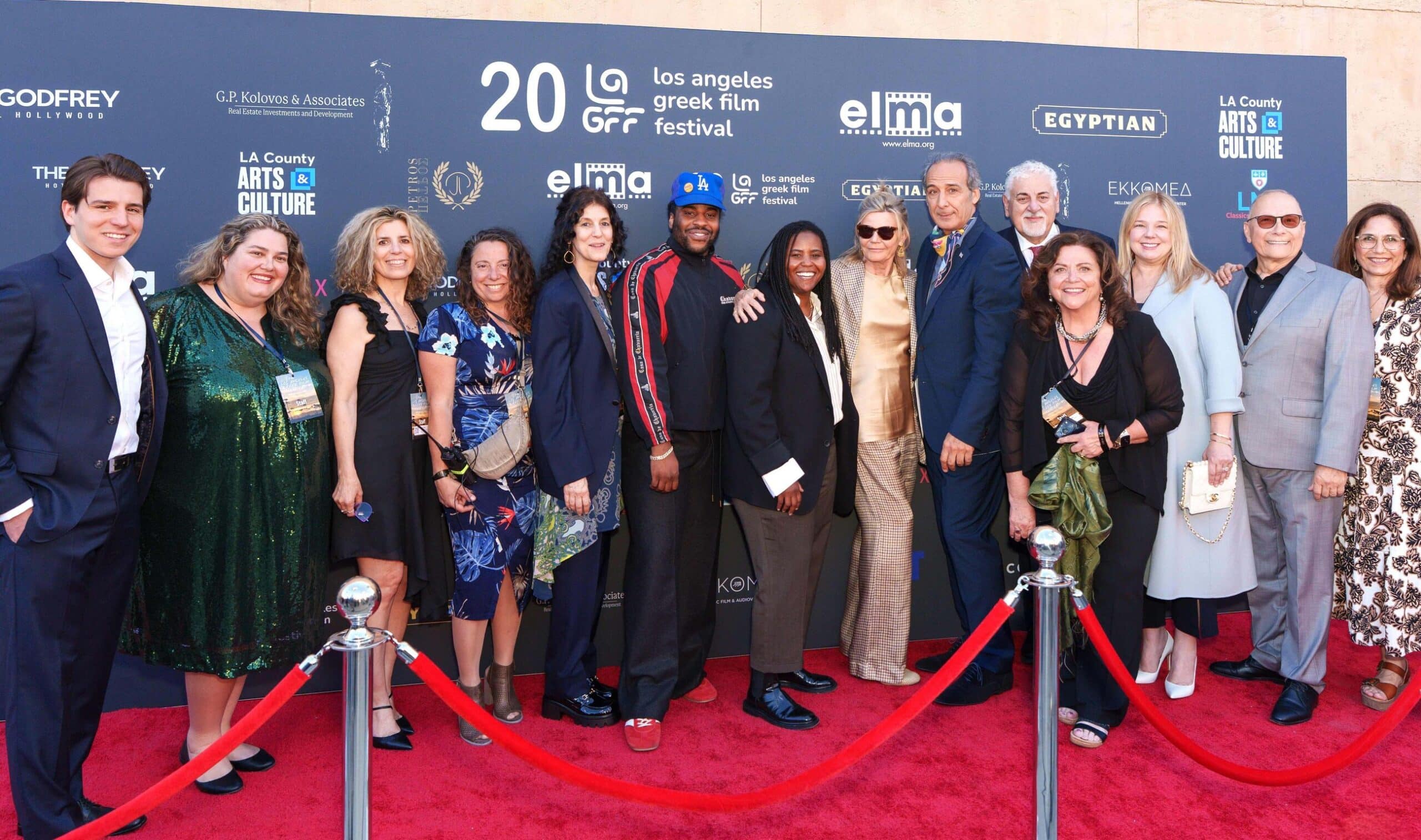
Guests and honorees gather on the red carpet during the 20th Los Angeles Greek Film Festival Closing Night and Orpheus Awards Ceremony at the Egyptian Theatre in Hollywood. Photo: UrbaniteLA
The Los Angeles Greek Film Festival marked its 20th edition in Hollywood with the Orpheus Awards Ceremony, honoring Greek and Cypriot filmmakers and paying tribute to Oscar-winning composer Alexandre Desplat.
The festival’s Closing Night Film and Orpheus Awards Ceremony took place on May 31 at the Egyptian Theatre, in collaboration with the American Cinematheque. This year’s edition brought together filmmakers, artists, industry professionals, and supporters of Greek cinema for a week of screenings, red carpet events, tributes, and awards. The festival’s virtual film program continues through June 14.
Founded in 2007, LAGFF has grown into one of the most important platforms for Greek and Cypriot cinema outside Greece. Over the past two decades, it has screened more than 800 films, hosted over 700 filmmakers, and reached an audience of more than 50,000.
Alexandre Desplat honored at closing night
One of the evening’s major highlights was the presentation of the Honorary Orpheus Award to Alexandre Desplat, one of the most acclaimed film composers working today.
Desplat, who won Academy Awards for his scores for The Grand Budapest Hotel and The Shape of Water, received the honor for his contribution to contemporary cinema. Filmmaker Malcolm Washington presented the award during the Closing Night ceremony, while Fay Lellios produced the tribute.
The evening also included a remembrance tribute to George Kolovos of G.P. Kolovos & Associates, a longtime benefactor of the Los Angeles Greek Film Festival.
“The 20th celebratory edition of LAGFF left indelible memories,” said Aristotle Katopodis, Artistic and Festival Director of LAGFF. “Feting Alexandre Desplat, remembering Dean Tavoularis, and paying respects to our 20-year-long benefactors, the Kolovos family, are images deeply etched in our hearts and souls.”
Katopodis also congratulated the filmmakers whose work was celebrated this year and thanked the festival’s supporters, sponsors, and team for championing Greek cinema.
Oscar-winning composer Alexandre Desplat and Solre Desplat attend the 20th Los Angeles Greek Film Festival Closing Night and Orpheus Awards Ceremony in Hollywood. Photo: UrbaniteLA
Hold onto me wins best feature film
The Closing Night Film, Hold Onto Me, directed by Myrsini Aristidou, won the Orpheus Award for Best Feature Film.
The film, which previously won the World Cinema Audience Award at Sundance, was one of the leading titles of this year’s festival. Following the screening, actor Michael Grant hosted a Q&A with Aristidou.
KNX Radio’s Vivianne Linou hosted the Orpheus Awards Ceremony.
2026 orpheus awards winners announced by the Los Angeles Greek film festival
In the animation category, Dream by Semiramis Mamata won the Orpheus Award for Best Animation Film. The Special Jury Award for Animation Film went to Poppy Flowers by Evridiki Papaiakovou.
The Orpheus Award for Best Short Film went to Prelude to a Supernova by Christos Artemiou, while the Special Jury Award for Short Film went to Gekas by Dimitris Moutsiakas.
In the feature film categories, Hold Onto Me by Myrsini Aristidou won Best Feature Film. Krysianna Papadakis and Stergios Dinopoulos received the Orpheus Award for Best Director for Bearcave, while Amerissa Basta received the Special Jury Award for Best Director for Life in a Beat.
The Orpheus Award for Best Performance went to Denise Fraga for Dreaming of Lions. Niovi Charalampous received the Special Jury Award for Best Performance for Smaragda – I Got Thick Skin and I Can’t Jump, while Vangelis Mourikis earned an honorable mention for Patty Is Such a Girly Name.
Audience awards and social justice honors
The Audience Award for Feature Film went to Best Friends Forever by Konstantinos Mousoulis. The Audience Award for Short Film went to The Smoker by Alexa Economacos.
The festival also presented its Social Justice Awards in partnership with Loyola Marymount University’s Bellarmine College of Liberal Arts, Department of Classics and Archaeology.
The Social Justice Award for Short Film went to The Wolves Return by Stelios Moraitidis, while the Social Justice Award for Feature Film went to Maysoon by Nancy Biniadaki.
Award presenters included animator Aliki Theofilopoulos, actor and author Patricia Kara, music composer George Kallis, and film distributor Bill Vergos.
The jury panel included Leo Behrens, Nora Bernard, Karen Cifarelli, Cheng Guo, Harrison James, Chieh-Chih Liao, Eric Nazarian, and Irene Soriano Saxon.
Honorary Orpheus Award recipient Alexandre Desplat with LAGFF Artistic and Festival Director Aristotle Katopodis at the 20th Los Angeles Greek Film Festival Closing Night in Hollywood. Photo: UrbaniteLA
Los Angeles Greek film festival celebrates orpheus awards at the Egyptian theatre
This year’s Closing Night continued LAGFF’s collaboration with the Egyptian Theatre, Netflix, and the American Cinematheque.
The Egyptian Theatre, one of Hollywood’s most historic movie palaces, opened in 1922 and helped shape the early history of film premieres in Los Angeles. Restored through a partnership between Netflix and the American Cinematheque, the venue now combines its historic character with modern projection capabilities.
For LAGFF, the setting offered a symbolic backdrop for a festival that has spent two decades connecting Greek and Cypriot cinema with the wider Los Angeles film community.
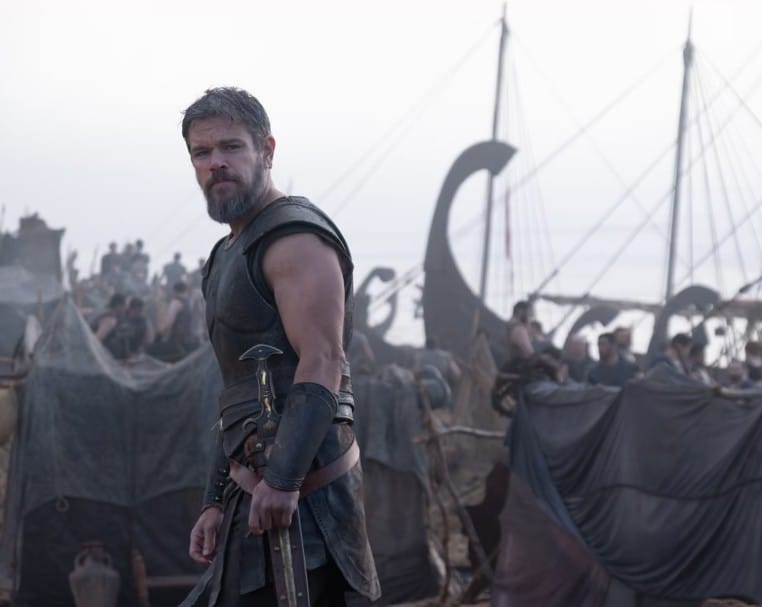
Matt Damon as Odysseus. Credit: Melinda Sue Gordon/Universal Pictures
In an insightful opinion piece published in The Guardian on June 3, 2026, titled “What the Hellenic! Why is Christopher Nolan’s new Greek epic entirely devoid of Greeks?”, author Chris Cotonou critiques the conspicuous lack of Greek actors in the director’s highly anticipated blockbuster, The Odyssey.
With an all-star ensemble featuring Matt Damon as Odysseus, alongside Zendaya, Charlize Theron, and Tom Holland, the film’s production team has repeatedly championed the cast as being meticulously chosen to “represent the world.” However, Cotonou points out a glaring irony: in the race to achieve universal global representation, the very country from which the story originates has been entirely unrepresented.
Cotonou highlights that while far-right culture warriors, including Elon Musk, have leveled bad-faith attacks against the casting of Black actor Lupita Nyong’o as Helen of Troy on the grounds of “authenticity,” they are focusing on the wrong target.
For the Greek community, both domestically and across the global diaspora, the frustration stems from a deeper cultural erasure. Cotonou notes that dinner-table debates from Patras to London have been flooded with alternative, Greek-inclusive casting ideas, with many left wondering why beloved diaspora stars like Billy Zane were bypassed entirely. To contextualize this frustration, Cotonou references Greece’s leading film critic, Thodoris Koutsogiannopoulos, who laments that Hollywood continues to perpetuate a “lazy cliché” that views Greekness through the simplistic lens of “Zorba rather than Achilles.”
Greeks secondary to their own story of Odyssey
More significantly, Cotonou argues that this complete omission carries a troubling broader implication. It suggests that Ancient Hellenic stories are viewed by Hollywood as part of a generic “shared Western inheritance,” rendering the actual Greek people incidental or secondary to their own history.
Cotonou draws a poignant parallel to the enduring geopolitical battle over the Parthenon Marbles, noting that the erasure feels as though modern Greeks are no longer viewed as worthy custodians of their ancestral mythology. While acknowledging that international audiences might dismiss the controversy under the guise that The Odyssey is merely fiction, Cotonou emphasizes how intimately interwoven these Homeric epics are with the modern Greek subconscious, identity, and sense of self.
He argues that excluding Greeks from The Odyssey is culturally equivalent to shutting out Hindus from an adaptation of the Mahabharata or stripping Polynesians from a film like Moana.
Ultimately, Cotonou connects the casting dispute back to the timeless, central theme of Homer’s poem: nostos, the deeply human yearning for homecoming after surviving grueling trials. In a Hollywood landscape that increasingly values diversity, Cotonou elegantly concludes that the Greek people are simply asking not to be written out of the journey.
To save his family and his world, Adam must join forces with his closest allies, Teela and Duncan/Man-At-Arms, and embrace his true destiny as He-Man, the most powerful man in
With the storm of the century fast approaching, the four friends are left to battle hypothermia, dehydration and the unrelenting elements in a fight for survival. As anxious families hold
The Amazing Digital Circus finale will hit more than 4,000 theaters around the world Thursday. Two weeks later it’ll be on YouTube, bucking Hollywood trends and testing the power of online fandom.

 Login
Login



.png)

