Login
Login

The Strange Ox Sacrifice Held at the Acropolis of Athens

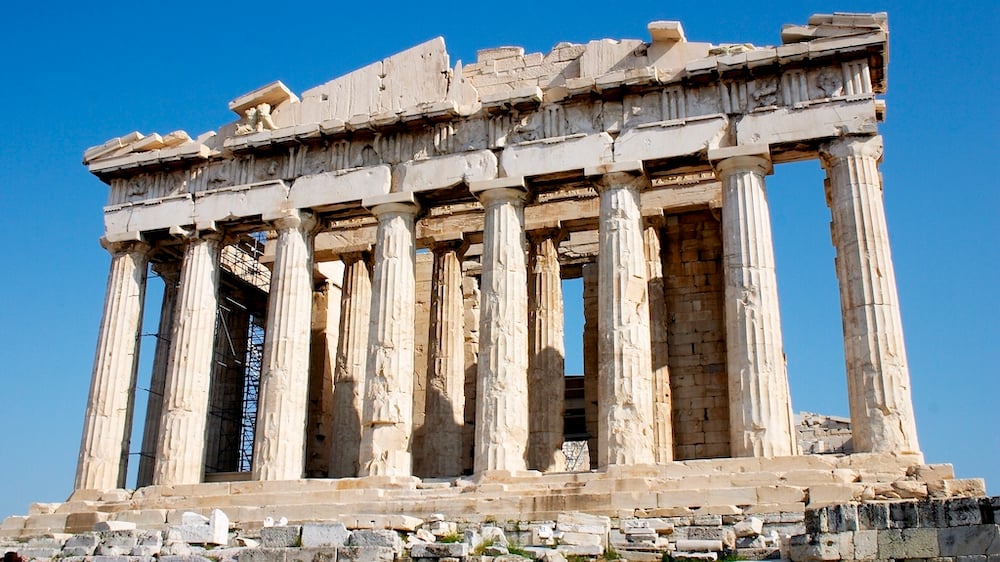
In ancient Greece, the killing of an ox was prohibited by law due to its vital role in daily life. However, a peculiar and ‘unlawful’ custom saw priests performing the sacrifice of an ox at the Sanctuary of Zeus, the king of the gods, located on the hill of the Acropolis, just a few meters from the Parthenon.
The Diipoleia, also known as Buphonia, was an ancient festival of the Athenians held towards the end of every June. It was also celebrated separately in other Greek cities during antiquity.
The Buphonia ritual and its origin
According to tradition, to justify the sacrifice, a group of oxen was led to the temple. There, the priest would place a type of bread offering made of wheat and barley on the altar. The first ox to eat from this area would be considered to have committed blasphemy, as it was believed to have consumed the offering meant for the god, and therefore had to be killed.
The priest chosen to perform the killing did so in isolation, without any witnesses present, and would then flee the city.
However, since ox sacrifices were forbidden at the time, an “investigation” was launched to identify the culprit. When the rest of the priests gathered to determine who had performed the sacrifice, the guilty priest was missing. In the end, the only evidence left would be the axe used for the killing, which would eventually be thrown into the sea.
How the ritual was performed
Ancient Greek geographer and traveler, Pausanias, provides further details in his account:
“There is a statue of Zeus—one by Leochares and another called Polieus. Concerning the established practices for the sacrifice and the reason said to justify them, I will not record them here.
For Zeus Polieus, they would place barley mixed with wheat on the altar without any kind of guard. The ox, which they have prepared for the sacrifice and kept under watch, approaches the altar and begins eating the grain. A member of the Thalonid family sacrifices the animal that eats from the sacred offerings with a double-headed axe.
They then summon a priest, called the ‘ox-slayer’ (buphonos), who kills the ox and, in accordance with the law, throws away the axe and flees. Since the identity of the person who committed the act remains unknown, they bring the axe to trial instead. Afterwards, they enter the temple that they call the Parthenon.”
The Buphonos and the trial of the axe
It was believed that the ancestor of the Thalonids, Thalon, was the first to strike the ox. Neoplatonic philosopher Porphyry, attributes the first buphonia to a foreigner named Sopater. He also provides a shorter version of the story, in which the priest of Zeus, Diomos, “murdered” the animal.The others then cut up the sacrificial victim and ate it.
Afterwards, they would hold a trial to determine the guilty party responsible for the killing. The buphonos (ox-slayer) did not appear, while those who participated in the sacrifice accused one another. They shifted responsibility for the killing from one man to the other.
The participants included the water carriers who brought water for the sacrificial tools, those who sharpened the knife and axe, as well as individuals responsible for carrying the tools.
Ultimately, they would accuse the knife, condemn it, and toss it into the sea. The ox’s hide was stuffed with straw and yoked to a plow. They did this to create the illusion that the animal was still alive.
The entire ritual permeated participants with intense feelings of guilt over the slaughter of the animal, and it was regarded as an act of murder.
Rituals, beliefs, and symbolism
It is noteworthy that, according to Porphyry, after the buphonos Sopater fled to Crete and before the establishment of the festival in Athens, a plague struck the city. The plague only ceased after Sopater’s return and the institution of the festival.
Additionally, as part of the measures to address the plague, the Oracle of Delphi deemed the establishment of the ritual involving the stuffing of the animal’s hide as necessary.
To avoid the pollution (miasma) of the murder, they made efforts to eliminate the act of murder itself. When this was not sufficient, they attempted to justify the act, for example, by claiming that the defilement resulted from impiety.
Finally, they shifted human responsibility by attributing the miasma to an inanimate tool, which became the scapegoat of the entire ritual. This object absorbed the miasma and was then removed from the city.
Spiritual significance and agricultural connections
According to ancient Greek philosopher Theophrastus, the remains of the ox were buried. Presumably, this was so as to prevent its spirit from seeking revenge on the city. It is important to note that, in this ritual, the value attributed to the spirit of the animal is equivalent to that given to a human.
British classical scholar and linguist Jane Harrison, connects the use of offerings to attract the animal to the altar with the rites of Dionysus Zagreus and Isodaites. Furthermore, the yoking of the stuffed hide of the ox to the plow associates the festival with fertility rituals, which pertain to chthonic deities.
This ritual of purification and averting evil was initially connected to the need to ensure an abundance of game in a pre-agricultural society. Later on, an agricultural society adopted it, shifting the focus to the fertility of the land.