As offshore wind farms expand rapidly in the global renewable energy transition, scientists are studying how these large marine infrastructure projects affect ecosystems beneath the waves. Research from Wageningen University & Research in the Netherlands suggests that offshore wind may bring both risks and benefits for sharks and rays, known collectively as Elasmobranchii, which are highly sensitive to electromagnetic fields (EMFs). A six-year project called “Elasmopower” examined how EMFs from subsea power cables in offshore wind farms affect bottom-dwelling sharks and rays. These species depend on natural electric and magnetic fields for key behaviors such as navigation, prey detection, habitat use and long-distance movement, particularly in low-visibility environments. The studies conducted as part of the Elasmopower project have been published in four papers, with three additional papers currently undergoing peer review. Sharks and rays have specialized electroreceptors called ampullae of Lorenzini. The jelly-filled sensory canals around the head and snout can detect even extremely weak EMFs from prey and predators, water movement, and the Earth’s geomagnetic field, Erwin Winter, a scientist at Wageningen, told Mongabay. This system is central to hunting and orientation, making Elasmobranchii especially relevant for studying EMF exposure from offshore energy infrastructure, Winter added. Erwin Winter, a researcher with the Elasmopower project, presented findings on offshore wind, electromagnetic fields and bottom-dwelling sharks and rays at the Sharks International 2026 conference in Colombo, Sri Lanka, in May. Image by Malaka Rodrigo for Mongabay. During a presentation on a summary of the Elasmopower research at the Sharks International 2026…This article was originally published on Mongabay
The existence of the “polluter pays” principle (PPP) in Bangladesh, at least on paper, dates back to 1992, ever since the country endorsed the Rio Declaration. However, Bangladesh has made little progress in implementing the principle so far. A statement by the incumbent minister for environment, forest and climate change, Abdul Awal Mintoo, saying that regulatory authorities recovered less than half of the total compensation imposed on polluters over the past 16 years, exposed the structural loopholes in environmental governance behind failures in implementing the principle. The minister pointed out that polluters can delay the compensation recovery by applying their right to appeal against the regulatory authorities’ orders. that Mongabay spoke to said that loopholes in the judicial system, weak evidence and economic analysis on pollution, and polluters’ influence must be addressed if the country really wants to implement the PPP. Environmentalist and Dhaka University’s zoology professor Mohammad Firoj Jaman told Mongabay, “Delays in implementation of laws against polluters aggravate environmental pollution, and the hope of reaping the benefits of environmental justice falls flat.” Shanties stand along the bank of Buriganga River in Hazaribagh, Dhaka district, Bangladesh. The area is known for tanneries, the waste from which fill the surrounding land and water. Image by Abir Abdullah/Asian Development Bank via Flickr (CC BY-NC-ND 2.0). Compensation recovery undermines the PPP The PPP binds polluters to bear the costs of managing and remedying the harm they have done to the environment. The concept of PPP was first mentioned in the recommendations of…This article was originally published on Mongabay
CHIRADZULU, Malawi — Diana Sitima’s farm on the outskirts of Malawi’s commercial capital, Blantyre, is both example and an exception. Where neighboring farmers have planted mostly maize for food and for sale in nearby markets, people drive out to buy sweet potato, pigeon peas and vegetables, bananas and avocado, and eggs produced on Sitima’s 3.5-hectare (8.6-acre) property. Sitima started farming in 1993. Unlike her neighbors, farming was a side hustle to begin with: she worked as an office assistant in Blantyre and her husband had a good job with a bank. Over the next seven years, she and her husband took out a series of micro-loans, renting small parcels of land and hiring people from the village to grow tomatoes for sale in the city. Sitima’s efforts went well, and because her family did not have to rely on their harvest for food or an income at that time, she was able to save the money she earned to take a next step. She quit her office job and acquired a farm of her own in Chiradzulu district, 15 kilometers (9 miles) east of the city. “That’s how I made money to be able to buy this land when it was put up for sale in 2006,” she says. While she was still a part-time farmer, Sitima attended several workshops, where she picked up ideas about agroecological farming — an approach combining crops, agroforestry, fish ponds, poultry and livestock, in a self-reinforcing system that protects soil health and reduces the…This article was originally published on Mongabay
Since May 23, more than 200 primates housed at the Lwiro Primates Rehabilitation Center (LPRC) in South Kivu province in the eastern Democratic Republic of Congo (DRC) have been placed under confinement due to the Ebola outbreak. This measure follows the death of a man who tested positive for the virus on May 21. This individual, a resident of Kahungu, located just 2 km (1.2 miles) from the town of Lwiro, where the center is situated, had traveled in early May to neighboring Ituri province. Ituri is the epicenter of the outbreak, which, as of May 27, is linked to more than 200 suspected deaths. A threat for humans and apes The LPRC houses at least 129 chimpanzees and 108 monkeys of various species, including olive baboons (Papio anubis), yellow baboons (Papio cynocephalus), L’Hoest’s monkeys (Cercopithecus l’hoesti), blue monkeys (Cercopithecus mitis), agile mangabeys (Cercocebus agilis) and others. Parrots, turtles and porcupines can also be found there. These primates, rescued from poaching and the illegal wildlife trade, are being kept in confinement even though “for the moment, no cases of Ebola virus transmission from a human to a great ape have been reported,” primatologist Liz Williamson explained in an email to Mongabay. According to the World Health Organization, the Ebola virus is transmitted to humans through close contact with the blood, secretions, organs or other bodily fluids of infected animals. A chimpanzee at the Lwiro Primates Rehabilitation Center, located in South Kivu province in the eastern Democratic Republic of Congo. Image…This article was originally published on Mongabay
Sat Born, 56, recalls freezing at the forest’s entrance when he first saw it. “Its head was this big,” he says, wide-eyed, spreading his hands to show the animal’s size. Recollecting that eventful morning in 2001, Born, who now farms bananas and durians, retraces his steps from his home in Trapeang Chheu Trav village in the rainforests of the Cardamom Mountains in southwestern Cambodia. As he walks up a hill rising above the forest canopy, he points to a spot on the road. “It’s over here. When I saw the tiger, it was 9 a.m.,” he says. “I was really shocked … I couldn’t tell if the tiger was coming towards me.” In 2007, just six years after this fleeting encounter, Cambodia’s last confirmed tiger sighting was logged by a camera trap. In the 1990s, the country was estimated to host hundreds of wild Indochinese tigers, but decades of poaching pressure took a heavy toll. In 2016, tigers (Panthera tigris) were formally declared extinct in Cambodia. That may be set to change with the imminent translocation of a small population of Bengal tigers from India. Although many reintroductions are success stories, this one raises some serious concerns. Why would Cambodia bring in a nonnative tiger? Have the people living in these areas been adequately consulted? Will these translocated tigers be able to adapt to this new habitat? Is there enough prey to sustain them, and if not, how will the government address predation when hungry cats feed on livestock? With…This article was originally published on Mongabay
Reprinted with permission from Trita Parsi’s Substack. “You’re fucking crazy. You’d be in prison if it weren’t for me. I’m saving your ass. Everybody hates you now. Everybody hates Israel because of this.” According to Axios, this is what Donald Trump said to Israeli Prime Minister Benjamin Netanyahu in “an expletive-laden call” earlier today. Trump […]
NATO partisans in both Europe and the United States are perpetual optimists about Ukraine’s prospective fortunes in its war against Russia. Lately, there has been yet another inundation of such accounts in Western news media outlets. Many of them emphasize that Moscow’s latest military offensive against Ukrainian ground forces has come to a halt with […]
Thomas Crowther begins his book with a snakebite that was not, in any conventional sense, dangerous. The danger came from interpretation. A misidentified species, a surge of fear, and a body that responded as if the threat were real: numbness spread, panic intensified, and the situation escalated until a second opinion dissolved it almost instantly. The episode is more than an anecdote. It sets the terms of Nature’s Echo, a book that treats cause and effect not as linear sequences so much as loops that can amplify themselves in either direction. Thomas Crowther That idea—feedback loops as the underlying architecture of the natural world—is the organizing principle of the book. Crowther traces it from cosmology to ecology to human psychology, moving across scales with considerable ambition. The early chapters move outward from the origin of matter, suggesting that the same reinforcing processes that allowed stars to form also underpin biological evolution and social behavior. It is an ambitious framing. At its best, it brings a sense of coherence to subjects that are often treated separately. At times, the scope of the framework requires readers to travel across very different domains and scales of thought. The structure reflects that expansiveness. The table of contents alone signals the range: from “Cause and Effect” and “Feedback Loops” through “Resilience and Tipping Points” and into “The Story We Tell Ourselves.” The progression is deliberate. Crowther starts with physical systems, moves into ecological stability, and then into the social and psychological domains where perception begins…This article was originally published on Mongabay
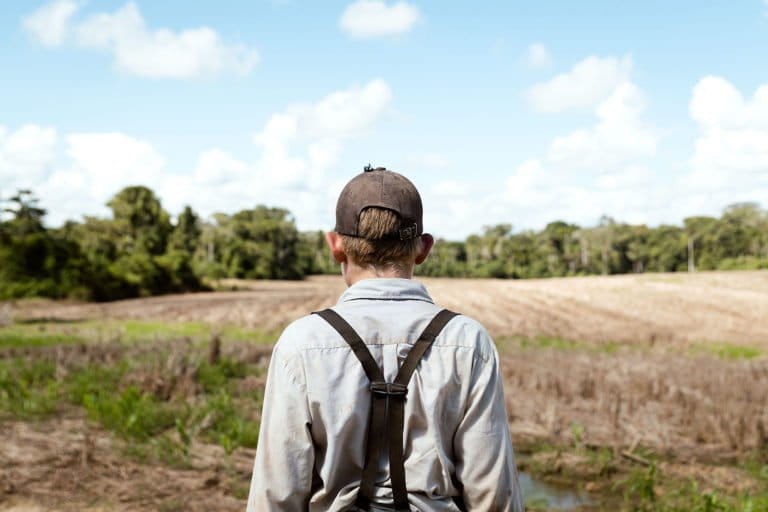
In the global debate over tropical deforestation, the usual cast of villains is well established: agribusiness, global supply chains, cattle ranchers, and governments granting land concessions for political support. One actor rarely appears in this narrative yet has played a consequential role in transforming the South American lowland frontier: The Mennonite agricultural colonist. For more than five decades, Mennonite communities have functioned as systematic agents of agricultural frontier expansion in the Gran Chaco and Andean Amazon, methodically clearing forests, draining wetlands, and catalyzing waves of deforestation that extend far beyond any individual colony. Mennonite communities operate within the law. They purchase land through formal channels, build permanent communities, and transfer agronomic knowledge to surrounding populations. Their values emphasize hard work, communal solidarity, and a theological relationship to land as stewardship. None of this changes the ecological outcome: Wherever a Mennonite colony is established, forests fall. Faith, mobility and colony formation Mennonites are an Anabaptist denomination rooted in the 16-century Reformation, distinguished by pacifism, communal life, and cultural separation from mainstream society. Conservative congregations — whose ancestors moved from Russia to Canada, then to Mexico, Belize and South America — are organized around a local congregation that functions simultaneously as a religious community, governance structure, credit cooperative and social welfare system. When a colony is established, it is an orderly community with collective decision-making, shared infrastructure, and a coherent plan for the future. Forest being cut, burned, and prepared by a Mennonite colony before planting crops. Image courtesy of Mario Silvero.…This article was originally published on Mongabay
The French government recently announced it has greenlit a plan to send its last captive cetaceans — two orcas and 12 dolphins — to zoos and entertainment parks in Spain. These cetaceans live in the Marineland Antibes park on the French Riviera, which closed in 2025. In 2021, France passed a law banning the breeding and keeping of cetaceans in captivity for entertainment shows, which will come into effect on Dec. 2, 2026. The orcas and dolphins at Marineland were the primary draw for visitors. The two orcas (Orcinus orca), Wikie, aged 25, and her son, Keijo, aged 12, were born at Marineland Antibes on the French Riviera and spent all their lives in concrete tanks and performing in display shows. They will now be moved to Loro Parque, a zoo and entertainment park in Tenerife on the Canary Islands. The dolphins will be split up between two parks in Valencia and Málaga on the Spanish mainland, with plans for some of them to return to France’s Beauval Zoo, when it’s ready to have them, according to reporting by Le Monde. A court-appointed expert team found in February 2026 that the concrete tanks in which the orcas lived at Marineland Antibes were in advanced structural decline, and if the mammals weren’t moved soon, they would have to be euthanized. “Faced with this emergency, we are acting to avert the worst,” Mathieu Lefèvre, France’s minister delegate for ecological transition, said in a statement, explaining the rationale for the decision. “Loro Parque…This article was originally published on Mongabay
Katelynn Delos Reyes thought she knew what to expect when Typhoon Sinlaku slammed into Saipan in April. As a lifelong resident of the island, Delos Reyes had survived frequent storms, including Super Typhoon Yutu, the second-strongest in U.S. history. Eight years ago, Yutu’s 274-kmph (about 170-mph) winds devastated her village in the southern end of Saipan. Just three years before that, she survived Typhoon Soudelor. But Sinlaku was different. “At the beginning, it was OK. But later on it wasn’t,” said Delos Reyes, who is Chamorro, Indigenous to the Mariana Islands. A few days before it hit the Commonwealth of the Northern Mariana Islands, or CNMI, on April 14, Sinlaku had tropical-storm winds. That made it what is known in the Marianas as a “banana typhoon” because such storms level banana trees but leave others standing. Then over the weekend, the typhoon rapidly intensified by 120 kmph (75 mph) in just 24 hours before becoming a 298-kmph (about 185-mph) monstrosity and the strongest storm on Earth so far this year. Delos Reyes and her family had done what they could to prepare. They boarded up the windows. They bought gallons of drinking water and filled plastic drums to use in the shower and toilet. Then the storm hit, and Delos Reyes grew scared. The winds, which had weakened to 240 kmph (about 150 mph), ripped the wood from a window. Rainwater gushed through the ceiling and soaked their belongings, including Delos Reyes’ mattress. She and her partner, her mother, her…This article was originally published on Mongabay
Portugal’s strategic location on Europe’s Atlantic coast has made it an increasingly important gateway for international drug trafficking networks seeking to move cocaine and other narcotics from South America into
The year 2011 marked the first time a land-use restriction order was enforced for the Ituna/Itatá Indigenous Territory, a swath of Brazilian Amazon roughly twice the size of Singapore and home to people living in voluntary isolation. The order was meant to protect the latter by prohibiting unauthorized individuals from entering — but rates of forest loss and invasions grew. In 2019, Ituna/Itatá was one of the Indigenous territories with the highest forest loss, primarily due to illegal land grabbers. In Brazil, land-use restriction orders exist to protect isolated Indigenous peoples and are a temporary tool in cases where the demarcation process to formalize the protected status and boundaries of Indigenous territories are not yet complete. But as recent Mongabay reporting has shown, they’re often renewed many times over for years while the formal land titling stalls, and aren’t always effective at protecting isolated peoples’ lands from invaders. Following one of the latest land-use restriction orders in 2022 for the Ituna/Itatá territory, the area lost 2,211 hectares (5,464 acres) of tree cover, or about 1.5% of its total area, according to satellite analysis by Mongabay. The most recent renewal was in 2025. Brazilian federal public prosecutor Daniel Luís Dalberto, head of the office for recently contacted Indigenous peoples and those living in voluntary isolation, told Mongabay in a recent interview that while the legal measure is important, it should have “a short time frame, until the Indigenous territory is demarcated as quickly as possible,” and should be accompanied by other…This article was originally published on Mongabay
The 2026 Bundibugyo Ebola outbreak in Central and East Africa has already left at least 49 people dead, with health authorities racing to stop the spread of the disease. What if they could have known ahead of time where it would begin? That’s the question behind a study published last year by Carson Telford and a group of researchers with the U.S. Centers for Disease Control (CDC). They wanted to know whether it would be possible to predict where Ebola outbreaks might start by looking at the characteristics of areas where the virus had already “spilled over” from an animal host into a human. Telford and his colleagues analyzed 24 outbreaks between 2001 and 2022, using variables like population density and forest cover to train their model. When they ran the analysis of where those outbreaks occurred, they found a high correlation with forest loss and fragmentation. The model they built with that data was strikingly accurate. It put a town in the Democratic Republic of Congo in its top 0.1% of risk areas — just a few months before an outbreak happened there in 2022. Another that followed in Uganda was in a district it had identified as being in the top 6% for that country. Mongabay’s Ashoka Mukpo spoke to Telford about the link between Ebola and deforestation, and how understanding it could help stop outbreaks early on. Medical staff carry an Ebola patient to a treatment center. Image by Moses Sawasawa via Associated Press. Mongabay: How would…This article was originally published on Mongabay
Jan Marco Müller, the European Commission official who drafted the EU’s new science diplomacy framework, just said the quiet part out loud: “Science diplomacy is not about being nice to each other.” Yes, it is, dumbass. That was the whole point. For centuries, science diplomacy worked precisely because it allowed ordinary human beings to humanize […]
The Donald seems to think he has all the time in the world to end the conflagration he and Bibi started in the Persian Gulf. Today he even told the mullahs to take a hike when they suspended any further negotiations owing to Bibi’s brutal strikes on civilian targets in southern Lebanon and continued violations […]
BUTEMBO, Democratic Republic of Congo — In the lush forests of North Kivu, Gangala Yafali Mangusa Jr. leads a forest patrol with members of his community. Together, they monitor human activity, identify threats and prevent damage to biodiversity, such as large-scale logging, unregulated timber harvesting and artisanal mining. “For example, once a month or once a quarter, we conduct inspections to check whether there are people in the community who are illegally hunting [protected] animals,” he explains. In his 30s, Mangusa Jr. leads the local management committee in the Bamasobha Local Community Forest Concession (CFCL), located in Lubero, a region threatened by terrorist attacks in eastern Democratic Republic of Congo. Composed of Indigenous Batwa, Bapiri and local communities, Mangusa Jr.’s team works together to protect this community forest, promote sustainable management of natural resources and strengthen coexistence between communities and the ecosystems on which they depend. According to him, this commitment is rooted in a personal history marked by tensions and, at times, violence experienced around the Maiko National Park — a sprawling park protecting endemic species such as eastern lowland gorillas, okapi, chimpanzees and forest elephants — after the 1970s. Aerial view of forest and river in North Kivu, Democratic Republic of Congo. Image by MONUSCO/Myriam Asmani via Wikimedia Commons (CC BY-SA 2.0). He recounts that, when the park was established, his family, like so many others, faced park rangers for several years who had been sent to enforce the new park boundaries, particularly in the Batike settlement, within…This article was originally published on Mongabay
At a time when climate politics in the United States and globally remain deeply polarized, Will Hackman, a climate advocate and political operative, argues that the climate movement needs a new language — one rooted less in doom, guilt and abstract planetary crisis, and more in people’s everyday lives, health, safety, costs and communities. In his new book, Radically Reframing Climate Change: A Guide to Saving Ourselves, he makes the case that climate advocates have too often spoken to those who already agree with them, while failing to reach people who may be cautious, doubtful or simply disconnected from the issue. The challenge, he says, is not only scientific or technological. It is political, cultural and communicative. In the United States, climate change remains politically polarized, with surveys showing that Republicans are less likely than Democrats to view it as an urgent threat, making climate messaging particularly challenging across ideological divides. Mongabay spoke with Hackman over video call about climate messaging, grassroots activism, fossil fuels, political polarization, and why he believes the climate movement must rebuild, creating a broader and more hopeful constituency. Mongabay: You write in your book that much of climate messaging has been framed around fear, guilt and apocalypse. Is that still the right way to talk about climate change? Will Hackman: I think the nature-based messages — polar bears, melting glaciers, “there is no planet B,” “save the planet,” “world on fire” — work for people who already care about climate change. But they do not…This article was originally published on Mongabay
Physicist Stephen Volz had been working with colleagues at the U.S.’s National Oceanic and Atmospheric Administration for nearly 10 years to produce a new generation of geostationary satellites — instruments that would provide critical observations about atmospheric conditions, climate patterns and weather. But when Donald Trump returned to office in January 2025, this long-term project was thrown into disarray. “This administration canceled three of the five instruments on that program,” Volz, the assistant administrator for NOAA’s National Environmental Satellite, Data, and Information Service, who has been on administrative leave since July 2025, told Mongabay. The cancellations applied to instruments that measured air pollutants, tracked lightning to forecast hurricanes and tornadoes, and monitored ocean color to detect events such as algal blooms, sargassum seaweed surges and salinity changes, according to Volz. “They said, ‘those are all wasted money, they’re climate alarmist, I don’t need air quality, I don’t need ocean color,’” Volz said about the administration’s decision. The axing of this project is just one example of what experts describe as a broad, long-term effort by the Trump administration to weaken NOAA. The long-standing scientific and regulatory agency within the U.S. Department of Commerce has historically been responsible for everything from forecasting the weather and monitoring the climate to managing fisheries and protecting marine mammals. The White House did not respond to Mongabay’s request for comment. NOAA’s GOES-19 satellite, which tracks hurricanes and tropical storms in the Atlantic Ocean basin, as well as monitor severe weather, atmospheric rivers, wildfires, volcanic eruptions…This article was originally published on Mongabay

 Login
Login