
 Login
Login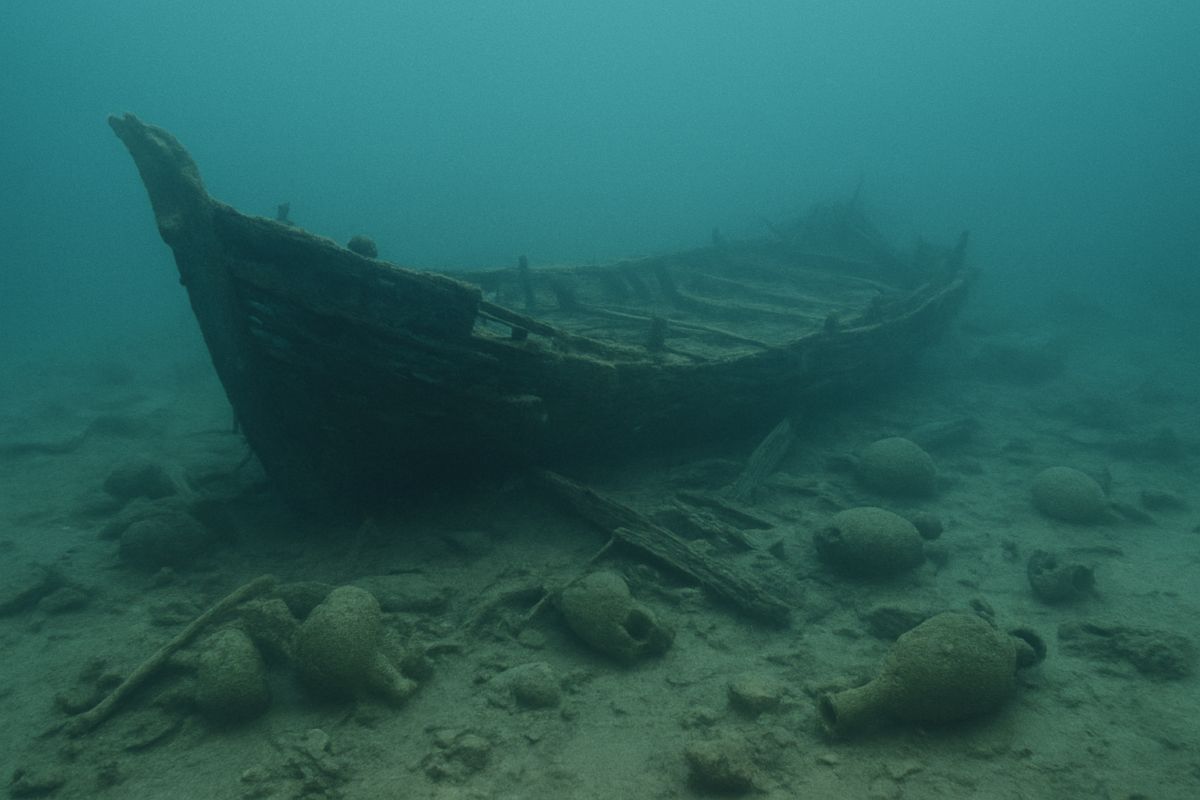

18th-Century Shipwreck Off Norway Reveals Chinese Porcelain Cargo

A deep-sea shipwreck in Norway, archaeologists call the “Porcelain Wreck,” has revealed hundreds of pieces of Chinese porcelain cargo and other luxury goods, offering a rare glimpse into trade networks that connected Europe and Asia during the 18th century.
The wreck was discovered about 600 meters (nearly 2,000 feet) below the surface in the Skagerrak, the body of water between Norway, Denmark, and Sweden. Researchers say the vessel and its cargo are among the best-preserved maritime finds ever recorded in Northern Europe.
Discovery beneath the seabed
The find began in September last year when professional diver Espen Saastad was conducting a routine seabed survey off the Norwegian coast. During a review of underwater footage, he noticed a shipwreck surrounded by stacks of porcelain resting on the seafloor.
The footage was sent to the Norwegian Maritime Museum, where researchers immediately recognized its significance.
“We thought it was an incredible wreck,” said Sven Ahrens, research director at the museum. “We often find cargo and freight, but it’s usually broken or covered by marine growth. Here, whole plates were lying in stacks on the seabed.”
Museum experts identified the cargo as 18th-century Chinese porcelain. The footage also revealed fragments of chandeliers, fine stemware, and other luxury items.
Rare evidence of global trade
Researchers believe the vessel was likely a galiot, a small cargo ship that operated within Northern Europe. While the ship probably never traveled to Asia, the Chinese porcelain cargo likely arrived through major trading centers such as Amsterdam, Copenhagen, or Gothenburg before being loaded onto the vessel.
The discovery provides evidence of the expanding trade networks and growing consumer culture that transformed Europe during the 18th century.
A remarkably preserved shipwreck discovered 600 meters beneath the waters off Norway has revealed hundreds of pieces of Chinese porcelain and other luxury goods dating to the 18th century. pic.twitter.com/nO5sL4SUfB
— Tom Marvolo Riddle (@tom_riddle2025) June 3, 2026
Unlike many shipwrecks found off the Norwegian coast that carried a single commodity, such as timber, fish, or iron, this vessel transported a diverse cargo of imported goods.
“The Porcelain Wreck is the first wreck we have found that demonstrates the breadth of interregional commercial activity in Northern Europe during the 18th century,” said maritime archaeologist Frode Kvalø, who leads the project.
Technology helps recover artifacts
Archaeologists have explored the wreck using a remotely operated vehicle, or ROV, controlled from a research vessel on the surface. The technology allowed researchers to create a detailed 3D model of the site and map the location of the ship and its cargo.
In May, the team recovered nearly 40 artifacts using a robotic arm equipped with specially designed suction cups. Most of the recovered objects were pieces of Chinese porcelain that appeared almost untouched despite spending centuries underwater.
One recovered brick from the ship’s galley carried a maker’s mark linked to Lübeck, Germany. Researchers are now examining historical Danish Sound Dues records in hopes of identifying the vessel and reconstructing its final voyage.
Thousands of artifacts remain
Only a small portion of the cargo has been recovered so far. Thousands of artifacts remain on the seabed, including unopened crates whose contents are still unknown.
Researchers hope the next phase of the project will involve a full archaeological excavation of the site. Such an effort could provide unprecedented insight into maritime trade, shipping practices, and daily life during a period when global commerce was rapidly expanding.
For archaeologists, the shipwreck of Norway represents more than a remarkable collection of Chinese porcelain. It offers a rare and largely untouched snapshot of the commercial world that linked continents centuries ago.

