In any serious system of accountability, the importance of a promise increases the obligation to keep it. In modern politics, however, the more consequential the promise, the less accountability seems to follow when it is broken.
Why is that?
If a business falsely advertises a product, it’s treated as a serious breach of trust. Let me give you an example:
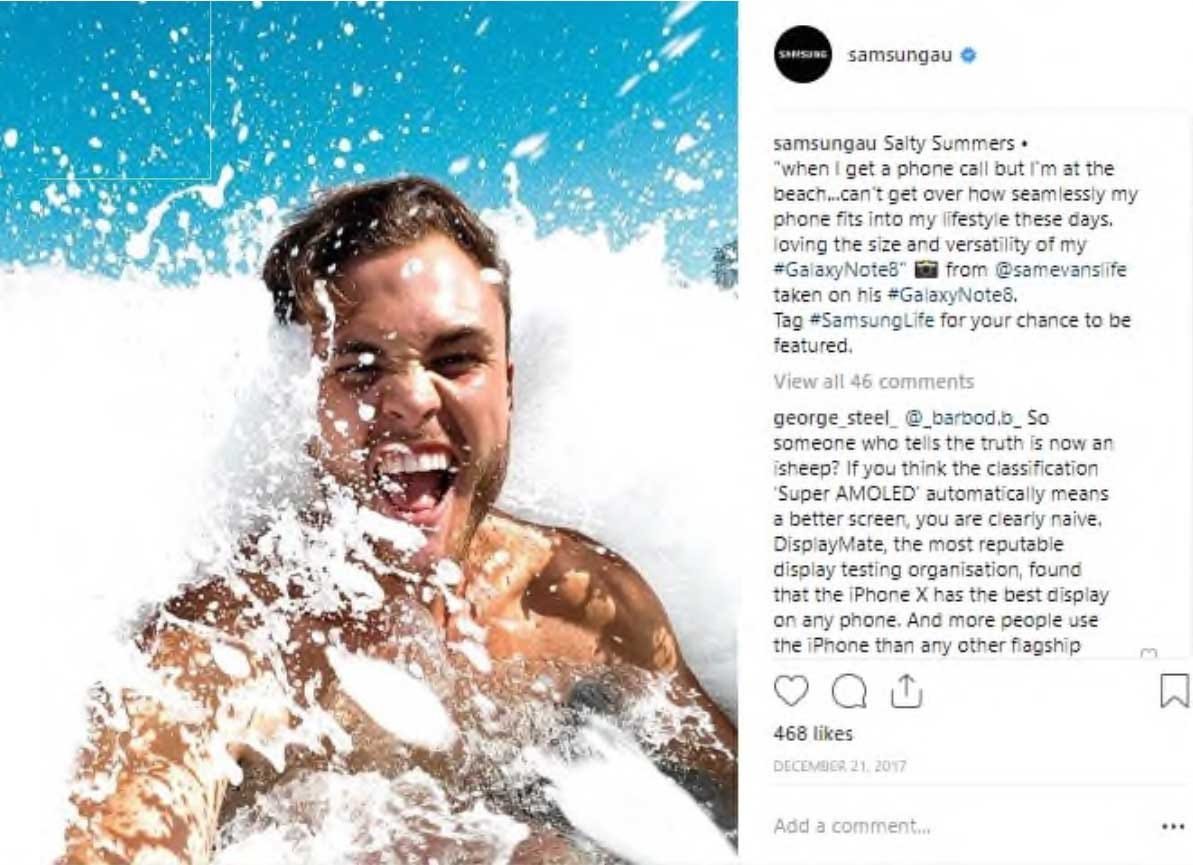
In 2022, Samsung published advertisements showing Galaxy phones being used in pools and seawater, suggesting they were suitable for such conditions. The ads featured activities like surfing and poolside use, accompanied by promotional claims about capturing beach adventures.
Here’s a sampling of advertisements used:
Example of Samsung’s advertisements from the Australian Competition & Consumer Commission’s website.
Example of Samsung’s advertisements from the Australian Competition & Consumer Commission’s website.
Example of Samsung’s advertisements from the Australian Competition & Consumer Commission’s website.
You get the idea. As a result, the company admitted its advertisements had misled consumers about the water resistance of its phones, and the Federal Court ordered Samsung Electronics Australia to pay $14 million in penalties.
But why is it, when it comes to political promises, which are far more consequential, that the standard is lowered, not raised? Shouldn’t it be the exact opposite?
Why do we hold Samsung—or even the local fish and chip shop!—to a higher standard than our own politicians?
A business can face severe penalties for misleading customers about a product, yet politicians can make promises that influence tax laws, affect the lives of millions, and alter the course of an entire nation, only to abandon those promises without consequence.
So, why are those entrusted with the greatest power often held to the lowest standard of accountability?
Today, broken commitments are brushed off as “just politics,” and the result is a strange social inversion where the more important the promise, the less accountability there appears to be for breaking it.
Make it make sense.
Little wonder that One Nation’s “Fire the Liar” fundraiser has reached $4 million in public donations. The campaign seems to be the best shot Australian citizens have at holding our lying politicians to account.
In any serious system of accountability, the importance of a promise increases the obligation to keep it. In modern politics, however, the more consequential the promise, the less accountability seems to follow when it is broken.
Why is that?
If a business falsely advertises a product, it’s treated as a serious breach of trust. Let me give you an example:
In 2022, Samsung published advertisements showing Galaxy phones being used in pools and seawater, suggesting they were suitable for such conditions. The ads featured activities like surfing and poolside use, accompanied by promotional claims about capturing beach adventures.
Here’s a sampling of advertisements used:
Example of Samsung’s advertisements from the Australian Competition & Consumer Commission’s website.
Example of Samsung’s advertisements from the Australian Competition & Consumer Commission’s website.
Example of Samsung’s advertisements from the Australian Competition & Consumer Commission’s website.
You get the idea. As a result, the company admitted its advertisements had misled consumers about the water resistance of its phones, and the Federal Court ordered Samsung Electronics Australia to pay $14 million in penalties.
But why is it, when it comes to political promises, which are far more consequential, that the standard is lowered, not raised? Shouldn’t it be the exact opposite?
Why do we hold Samsung—or even the local fish and chip shop!—to a higher standard than our own politicians?
A business can face severe penalties for misleading customers about a product, yet politicians can make promises that influence tax laws, affect the lives of millions, and alter the course of an entire nation, only to abandon those promises without consequence.
So, why are those entrusted with the greatest power often held to the lowest standard of accountability?
Today, broken commitments are brushed off as “just politics,” and the result is a strange social inversion where the more important the promise, the less accountability there appears to be for breaking it.
Make it make sense.
Little wonder that One Nation’s “Fire the Liar” fundraiser has reached $4 million in public donations. The campaign seems to be the best shot Australian citizens have at holding our lying politicians to account.
I want to have a bit of a discussion about some of my most controversial opinions and how they are received by different generations, particularly millennials and boomers. I think there are some important insights in this discussion.
My most controversial opinions, according to the responses I get, are, ironically, things that pretty much every previous generation of Christians agreed on, at least before the middle of the 19th century:
Men should provide.
Men should lead the home.
Women should keep the home.
All who believe in Jesus are true Israel.
There is no rapture.
Psychology is more harmful than good.
I find that many millennial men and women see the first three as personal attacks, or even attacks on their mental health and the mental health of others. They immediately frame the views as unfair, mean, or harmful. Millennials have been trained to see traditional biblical standards as causes of low self-esteem, sometimes severe mental breakdown, or other social ills. Pick the issue, and you will find millennials who will respond this way. I have identified a few here, but the same will be true of gender issues and a host of political issues.
The last three issues usually upset boomers. This generation, generally speaking, hears those positions as at least severely errant teaching, although some see them as basically apostasy. If you maintain these positions with determination and unapologetically, as every pastor should, they really can fly off the handle about it. Some boomers even see issues 4 and 5 as pillars around which the church should base its teaching and practice. Especially if Israel happens to currently be at war, which just happens to be a lot of the time.
The last point is usually seen as equally insulting to both most millennials and many boomers. Millennials were raised to see soul health as the sole providence of psychology (used collectively, including all its diverse branches; counselling, psychology, psychiatry, psychoanalysis, etc.). Many millennials see people who are sceptical of psychology as people who are in need of deep therapy themselves, and often as unsafe persons, or simply as people out of touch with modern developments.
They have placed psychology, in its various forms, as an authority in their lives, and one that people should submit to. I even know of people who refuse to engage with their own extended family over minor issues, because those family members have refused to go to therapy. These millennials see this as a reason to remove these people from their lives. Boomers were the generation that taught them that, though you will probably find more boomers who are still sceptical of the profession.
But the theological positions noted above are all really standard Christian positions. There is nothing historically controversial about them at all. They are all well established and widely held within Orthodoxy, and really well represented across the denominations. None of these positions would have even caused much controversy in the vast majority of the church prior to about 1960. Though the white-anting of these views all began in the middle of the 19th century, within a few years of each other…how interesting.
This is just more evidence of the inverted culture we live in. When Christians find orthodox, moderate, and standard Christian teaching offensive, and often feel like biblical truth is a personal attack on them, you know the church has come to place the Baals and Asherahs before the Lord in many areas of their life. But I’d like to process why this might be happening. Because this can give us insights into things that went wrong with these generations, which may help us correct them or help those coming up.
Why is this Happening?
One reason we see these kinds of responses is that people rarely evaluate a doctrine in isolation. They evaluate it through the lens of what they think the doctrine implies, especially about their identity and their worldview. For instance, “Men should provide” is often not heard as a statement about responsibility; it is instead heard as a statement about economic dependence, restricted opportunities, or unequal value. “Women should keep the home” is often not heard as a statement about vocation; it is instead heard as a statement about limiting women or confining them to a role.
Keeping the home is the most important role a woman can fulfil, but many people have been conditioned by decades of propaganda that has framed homemaking as a lesser role. “There is no rapture” is often not heard as an exegetical argument; it is heard as an attack on a theological system people have been taught for decades, an idea many of them have personally placed their hopes in and expect to be fulfilled in their lifetime. “Psychology is more harmful than good” is often not heard as a critique of a discipline; it is instead heard as an attack on people who received help through counselling or therapy. In other words, controversy often arises because people mentally attach emotional baggage to the proposition.
Another reason this happens is that many Christians today are formed by multiple authorities simultaneously: Scripture, church tradition, family culture, political ideology, therapeutic culture, and social media. They may say that biblical truth is their greatest concern, but they are thoroughly unaware of how they were raised in a form of Christian doctrine that is utterly alien to Church history and in many ways, actually opposes what Christianity historically was. Some have even been trained to see the Church throughout history as almost universally suspect, anyway, so appeals to history to evaluate their doctrine fall on deaf ears. This is a form of modern supremacy, or chronological snobbery, but those doing it are often unaware that is what they are doing.
So, when one of those authorities conflicts with another, the person often experiences tension. The doctrine then feels threatening because it threatens a larger worldview, not just a single belief. It becomes more than a disagreement; it becomes an attack on their identity. This is especially true today, in a society where identity is among the chief gods of modern culture.
Generally speaking, the different generations get upset about different historically Orthodox doctrines. There are obviously exceptions in each generation, but these generational divides provide us with interesting insight, so they are worth delving into.
Millennials
Millennials were formed during the triumph of therapy culture. Think about how therapy infused even pop culture in the 90’s. Star Trek: The Next Generation put a psychologist on its bridge. Shows like Fraser and The Sopranos were touchstones of the millennial generation, and both shows were explicitly centred around a psychological framework. Home Improvement, a prominent comedy of the 90’s, was presented as a masculine-centred family comedy, but if you rewatch it, you will see that it is a clever feminist reframing of men, based around psychology, and Tim ‘the tool man’ Taylor quits his job at the end of the show so his feminist wife can pursue her desired psychology career. This message was just dumped on this generation from every direction.
The dominant cultural message was not merely, “What is true?” but “What is healthy?” and often what feels harmful, hurtful or emotionally damaging. This message became a mantra of the millennial generation. As a result, many Millennials instinctively evaluate ideas according to psychological impact before they consider their theological accuracy. In other words, they immediately think about how the idea makes them feel, and they may never even get to evaluating its validity. That it makes them feel bad is enough for them to know it must be wrong. This is their guiding philosophy, at least for many.
This does not necessarily mean that they reject biblical authority. Rather, many in this generation have been trained to believe that biblical authority and psychological flourishing must always align in the way modern psychology defines flourishing. So, when they hear traditional teachings on family structure, they often ask questions like, “What effect does this have on people?” before asking, “Is it true?” That is a very different starting point from previous generations. And it blinds them to their ability to correctly identify rebellion against God on many issues. But they simultaneously often feel superior to previous generations while doing this at the same time.
We were taught about post-modernism and political correctness in schools. But many millennials did not realise they were being formed to live out these principles through therapy culture. Therapy culture cares more about “Your truth” rather than the truth. Therapy culture cares more about not offending someone than speaking what is true. Boomers pushed these ideas, but millennials were moulded by them. Many more than others.
Boomers
Boomers, on the other hand, were converted, discipled, or matured during the period when dispensationalism was highly influential, prophecy conferences were common, and evangelical publishing was dominated by futurist end times views. And you can understand why. They were born after the biggest, most apocalyptic-like war in history, then the founding of a country called Israel, the rise of the beast-like communist states, the invention of the nuclear threat, and more.
Their generation had many reasons to consider that the times and ages were coming to an end in their day. As a result, positions like a future ethnic-Israel focus or a pre-tribulation rapture can feel foundational to them rather than secondary. These ideas were in the air they breathed in many churches. When someone challenges those views, the challenge can feel larger than it actually is; it can feel existential.
These are generalisations, of course. Many boomers were strongly grounded in the secure walls of orthodox bible teaching and not drawn to the novel doctrines of their age. However, many, many were, and many of these people take criticism of their views not just personally, but as an attack on the foundations of Christianity itself. The rapture is not just a biblical possibility; it is part of a framework that places the country called Israel at the centre of world events and, in their eyes, confirms the validity of God’s word. This is a big deal for them, and you can understand why.
So, what is happening here is that people have been largely reshaped by the cultural zeitgeist of their days; they see authority quite differently. Millennials see affirming feelings as an intrinsic responsibility of any truth teller, and if he can’t do this, then he probably should not speak. Boomers see Israel as central to both world events, bible teaching and eschatological timelines; it is a linchpin, not just an idea. Imagine some young guy telling them they are wrong about fringe beliefs they thought were central and have held for most of their lives.
But as the power of millennials is rising in the church and society, I want to talk about the reasons for their response some more.
Therapyism Overtook Our Culture
Millennials were the first Christian generation raised almost entirely after the therapeutic revolution had become the dominant framework for understanding human beings. I watched a recent movie with my family during the Holidays called Anaconda. It is a self-aware remake of an old 90’s movie. And it is the most explicit exploitation of millennial tropes and ideas I have ever seen, and I thoroughly enjoyed it as a result. Especially, when one of the filmmakers noted they should make sure that “intergenerational trauma” was woven into the story. The movie is explicitly seeking to make millennials laugh at themselves. And making them laugh about how many feel hurt by their parents landed in a particularly savage but clever way, because it is true that many millennials are obsessed with these ideas.
Historically, Christians tended to ask questions like, What is true? What is righteous? What is sinful? What is my duty? What has God commanded? How should I obey? These questions were answered in a way that created objective boundaries within which people functioned and could often flourish in society. Even when Christians failed to obey, those categories generally remained intact.
Therapeutic culture rearranges the hierarchy of questions and places feelings as supreme: Is it healthy? Is it harmful? Is it affirming? Is it validating? Is it emotionally safe? Does it damage self-worth? Notice the very significant shift. The centre of gravity has moved from moral categories to psychological categories. This does not mean therapeutic culture abolishes morality. It simply relocates morality.
Sin is redefined as harm.
Virtue is redefined as wellness.
Wisdom is redefined as self-awareness.
Salvation is redefined as healing.
The saint becomes the therapist.
The confessional becomes the counselling room.
The pastor increasingly becomes a life coach.
Boomers and older Gen X remember a time when this was not the predominant culture. You see this in Gen X movies like Lethal Weapon, where the therapist is played for laughs by the damaged but entertaining Martin Riggs. But Millennials were, as we noted above, forged in this culture.
By the time Millennials were growing up, every institution spoke the language of therapy: schools, television, movies, universities, HR Departments, and especially churches. Churches took on board psychology as if it were a key to unlocking the New Testament. The culture’s views on psychology had changed so much that while in the early Lethal Weapon movies, the police psychologist was played as a joke, by the last movie, the best police officers had degrees in psychology. These themes were all over our society, everywhere. It is remarkable that as many millennials resisted this as they did, because most did not.
A millennial could spend twenty years being taught a therapeutic anthropology, at a popular level of course, before ever reading serious theology, if they even ever did. As a result, many Christians do not merely believe therapeutic assumptions; they experience them as self-evident reality. For example, older Christians might hear, “Take up your cross” and think that sounds difficult. Many millennials hear, “That sounds psychologically dangerous.”
Those are not the same reaction, not at all. Even more relevant to our topic, when a millennial woman hears “submit to your husband” she often hears this as a dangerous position to put herself in that questions her self-worth. When a millennial man hears, “husbands must provide”, and thinks about the fact that it is hard, he will often think that it is no wonder that so many men are breaking down, “That is too hard, man, too hard.” Too hard to achieve, and too harshly spoken at the same time. That is a common millennial response.
Feelings have become the ultimate authority. Even in young men and women, from whom you would not expect it. Because they were enculturated in a society that made them think that way.
This is why when you say, “Men should provide”, millennials do not hear that. They hear you say that women are being limited. Likewise, they do not hear, “Men should lead the home” as an obligation; they hear, “Someone’s autonomy is being restricted.” Why? Because therapy culture places autonomy near the top of the moral hierarchy.
In fact, therapy culture can be defined as “autonomy culture”, because that is really what it is. The worst thing that can happen to a person is not sin, it is the loss of self-expression. The highest good becomes authenticity, not honouring your obligations. Therefore, any doctrine that introduces hierarchy, authority, obligation, sacrifice, submission, or duty immediately sounds suspicious. Not because millennials have carefully refuted the doctrine, but because the doctrine collides with their deepest-held assumptions about human flourishing. They hear at the same time both the limitation on their desires, and also the lack of validation of their feelings, and these are the two greatest sins of this generation.
They would see this as traumatic, and this is why they will discuss these issues in the language of trauma. Originally, trauma referred to genuinely severe experiences. Things like combat, abuse, violence, or catastrophe. Today, the concept is often expanded to include experiences that previous generations would have categorised differently. The practical effect is that disagreement increasingly gets interpreted through therapeutic categories.
A doctrine is no longer simply wrong; it is harmful. “Your teaching on women in the bible hurts women!” A sermon is no longer merely mistaken; it is damaging. “I am afraid of the effect on my family if you don’t affirm my strict interpretation of this passage.” A command is no longer difficult; it is traumatising. “You can’t tell me to obey my husband, what right do you have to do that?”
This creates a situation where theological disagreement feels like psychological violence. That is why some reactions seem wildly disproportionate. The person is not experiencing an intellectual debate; they believe they are experiencing actual harm. And I mean, they believe it. They really do believe that is what is happening to them.
And, what is worse, is that churches took this on board probably more than any other institution. It is important to note that millennials did not create this; boomers did. Millennials were forged in this changed outlook. Many churches slowly shifted from centring their teaching around repentance, holiness, obedience, and self-denial, toward things like healing, wholeness, recovery, or emotional health. None of those latter things is inherently bad, but they do become bad when they are made to become primary.
Theological disagreements are no longer debates over objective reality. There are situations in which emotional harm and damage can be done. They hamper someone’s healing, they delay their recovery, they have a negative effect on their emotional health. Therapy culture has neutered most of an entire generation, who now wince like vampires when a window is opened at noon, when they hear a long-held Christian belief that disagrees with their identity and affects their emotional state.
Underneath the surface of these discussions is often this deeper conflict between two rival anthropologies:
The biblical view is that man’s fundamental problem is sin and his fundamental need is reconciliation to God.
The therapeutic view that man’s fundamental problem is psychological injury and his fundamental need is healing of the self.
Once those two systems are distinguished, many otherwise puzzling reactions begin to make sense.
I think it is for this reason that millennials will be easily surpassed by upcoming generations. Firstly, boomers are holding power for so long that many millennials will never get the opportunity to wield it. But secondly, many of the younger generations can see how soft this has made millennial men and how aggressive it has made millennial women. They recognise the errors of the boomer and millennial generations and are reacting to them.
Just watch younger people mock millennial feelings-based writing in movies, or millennial social justice writing in video games. They despise the therapy generation in many ways. Though they will have their own floors, it is yet to be seen what they are - maybe their relentless rejection of the real world in favour of online spaces?
Would love to hear your thoughts on these issues.
As a cultural touch point, I think this is the theme song of the millennial generation:
I want to have a bit of a discussion about some of my most controversial opinions and how they are received by different generations, particularly millennials and boomers. I think there are some important insights in this discussion.
My most controversial opinions, according to the responses I get, are, ironically, things that pretty much every previous generation of Christians agreed on, at least before the middle of the 19th century:
Men should provide.
Men should lead the home.
Women should keep the home.
All who believe in Jesus are true Israel.
There is no rapture.
Psychology is more harmful than good.
I find that many millennial men and women see the first three as personal attacks, or even attacks on their mental health and the mental health of others. They immediately frame the views as unfair, mean, or harmful. Millennials have been trained to see traditional biblical standards as causes of low self-esteem, sometimes severe mental breakdown, or other social ills. Pick the issue, and you will find millennials who will respond this way. I have identified a few here, but the same will be true of gender issues and a host of political issues.
The last three issues usually upset boomers. This generation, generally speaking, hears those positions as at least severely errant teaching, although some see them as basically apostasy. If you maintain these positions with determination and unapologetically, as every pastor should, they really can fly off the handle about it. Some boomers even see issues 4 and 5 as pillars around which the church should base its teaching and practice. Especially if Israel happens to currently be at war, which just happens to be a lot of the time.
The last point is usually seen as equally insulting to both most millennials and many boomers. Millennials were raised to see soul health as the sole providence of psychology (used collectively, including all its diverse branches; counselling, psychology, psychiatry, psychoanalysis, etc.). Many millennials see people who are sceptical of psychology as people who are in need of deep therapy themselves, and often as unsafe persons, or simply as people out of touch with modern developments.
They have placed psychology, in its various forms, as an authority in their lives, and one that people should submit to. I even know of people who refuse to engage with their own extended family over minor issues, because those family members have refused to go to therapy. These millennials see this as a reason to remove these people from their lives. Boomers were the generation that taught them that, though you will probably find more boomers who are still sceptical of the profession.
But the theological positions noted above are all really standard Christian positions. There is nothing historically controversial about them at all. They are all well established and widely held within Orthodoxy, and really well represented across the denominations. None of these positions would have even caused much controversy in the vast majority of the church prior to about 1960. Though the white-anting of these views all began in the middle of the 19th century, within a few years of each other…how interesting.
This is just more evidence of the inverted culture we live in. When Christians find orthodox, moderate, and standard Christian teaching offensive, and often feel like biblical truth is a personal attack on them, you know the church has come to place the Baals and Asherahs before the Lord in many areas of their life. But I’d like to process why this might be happening. Because this can give us insights into things that went wrong with these generations, which may help us correct them or help those coming up.
Why is this Happening?
One reason we see these kinds of responses is that people rarely evaluate a doctrine in isolation. They evaluate it through the lens of what they think the doctrine implies, especially about their identity and their worldview. For instance, “Men should provide” is often not heard as a statement about responsibility; it is instead heard as a statement about economic dependence, restricted opportunities, or unequal value. “Women should keep the home” is often not heard as a statement about vocation; it is instead heard as a statement about limiting women or confining them to a role.
Keeping the home is the most important role a woman can fulfil, but many people have been conditioned by decades of propaganda that has framed homemaking as a lesser role. “There is no rapture” is often not heard as an exegetical argument; it is heard as an attack on a theological system people have been taught for decades, an idea many of them have personally placed their hopes in and expect to be fulfilled in their lifetime. “Psychology is more harmful than good” is often not heard as a critique of a discipline; it is instead heard as an attack on people who received help through counselling or therapy. In other words, controversy often arises because people mentally attach emotional baggage to the proposition.
Another reason this happens is that many Christians today are formed by multiple authorities simultaneously: Scripture, church tradition, family culture, political ideology, therapeutic culture, and social media. They may say that biblical truth is their greatest concern, but they are thoroughly unaware of how they were raised in a form of Christian doctrine that is utterly alien to Church history and in many ways, actually opposes what Christianity historically was. Some have even been trained to see the Church throughout history as almost universally suspect, anyway, so appeals to history to evaluate their doctrine fall on deaf ears. This is a form of modern supremacy, or chronological snobbery, but those doing it are often unaware that is what they are doing.
So, when one of those authorities conflicts with another, the person often experiences tension. The doctrine then feels threatening because it threatens a larger worldview, not just a single belief. It becomes more than a disagreement; it becomes an attack on their identity. This is especially true today, in a society where identity is among the chief gods of modern culture.
Generally speaking, the different generations get upset about different historically Orthodox doctrines. There are obviously exceptions in each generation, but these generational divides provide us with interesting insight, so they are worth delving into.
Millennials
Millennials were formed during the triumph of therapy culture. Think about how therapy infused even pop culture in the 90’s. Star Trek: The Next Generation put a psychologist on its bridge. Shows like Fraser and The Sopranos were touchstones of the millennial generation, and both shows were explicitly centred around a psychological framework. Home Improvement, a prominent comedy of the 90’s, was presented as a masculine-centred family comedy, but if you rewatch it, you will see that it is a clever feminist reframing of men, based around psychology, and Tim ‘the tool man’ Taylor quits his job at the end of the show so his feminist wife can pursue her desired psychology career. This message was just dumped on this generation from every direction.
The dominant cultural message was not merely, “What is true?” but “What is healthy?” and often what feels harmful, hurtful or emotionally damaging. This message became a mantra of the millennial generation. As a result, many Millennials instinctively evaluate ideas according to psychological impact before they consider their theological accuracy. In other words, they immediately think about how the idea makes them feel, and they may never even get to evaluating its validity. That it makes them feel bad is enough for them to know it must be wrong. This is their guiding philosophy, at least for many.
This does not necessarily mean that they reject biblical authority. Rather, many in this generation have been trained to believe that biblical authority and psychological flourishing must always align in the way modern psychology defines flourishing. So, when they hear traditional teachings on family structure, they often ask questions like, “What effect does this have on people?” before asking, “Is it true?” That is a very different starting point from previous generations. And it blinds them to their ability to correctly identify rebellion against God on many issues. But they simultaneously often feel superior to previous generations while doing this at the same time.
We were taught about post-modernism and political correctness in schools. But many millennials did not realise they were being formed to live out these principles through therapy culture. Therapy culture cares more about “Your truth” rather than the truth. Therapy culture cares more about not offending someone than speaking what is true. Boomers pushed these ideas, but millennials were moulded by them. Many more than others.
Boomers
Boomers, on the other hand, were converted, discipled, or matured during the period when dispensationalism was highly influential, prophecy conferences were common, and evangelical publishing was dominated by futurist end times views. And you can understand why. They were born after the biggest, most apocalyptic-like war in history, then the founding of a country called Israel, the rise of the beast-like communist states, the invention of the nuclear threat, and more.
Their generation had many reasons to consider that the times and ages were coming to an end in their day. As a result, positions like a future ethnic-Israel focus or a pre-tribulation rapture can feel foundational to them rather than secondary. These ideas were in the air they breathed in many churches. When someone challenges those views, the challenge can feel larger than it actually is; it can feel existential.
These are generalisations, of course. Many boomers were strongly grounded in the secure walls of orthodox bible teaching and not drawn to the novel doctrines of their age. However, many, many were, and many of these people take criticism of their views not just personally, but as an attack on the foundations of Christianity itself. The rapture is not just a biblical possibility; it is part of a framework that places the country called Israel at the centre of world events and, in their eyes, confirms the validity of God’s word. This is a big deal for them, and you can understand why.
So, what is happening here is that people have been largely reshaped by the cultural zeitgeist of their days; they see authority quite differently. Millennials see affirming feelings as an intrinsic responsibility of any truth teller, and if he can’t do this, then he probably should not speak. Boomers see Israel as central to both world events, bible teaching and eschatological timelines; it is a linchpin, not just an idea. Imagine some young guy telling them they are wrong about fringe beliefs they thought were central and have held for most of their lives.
But as the power of millennials is rising in the church and society, I want to talk about the reasons for their response some more.
Therapyism Overtook Our Culture
Millennials were the first Christian generation raised almost entirely after the therapeutic revolution had become the dominant framework for understanding human beings. I watched a recent movie with my family during the Holidays called Anaconda. It is a self-aware remake of an old 90’s movie. And it is the most explicit exploitation of millennial tropes and ideas I have ever seen, and I thoroughly enjoyed it as a result. Especially, when one of the filmmakers noted they should make sure that “intergenerational trauma” was woven into the story. The movie is explicitly seeking to make millennials laugh at themselves. And making them laugh about how many feel hurt by their parents landed in a particularly savage but clever way, because it is true that many millennials are obsessed with these ideas.
Historically, Christians tended to ask questions like, What is true? What is righteous? What is sinful? What is my duty? What has God commanded? How should I obey? These questions were answered in a way that created objective boundaries within which people functioned and could often flourish in society. Even when Christians failed to obey, those categories generally remained intact.
Therapeutic culture rearranges the hierarchy of questions and places feelings as supreme: Is it healthy? Is it harmful? Is it affirming? Is it validating? Is it emotionally safe? Does it damage self-worth? Notice the very significant shift. The centre of gravity has moved from moral categories to psychological categories. This does not mean therapeutic culture abolishes morality. It simply relocates morality.
Sin is redefined as harm.
Virtue is redefined as wellness.
Wisdom is redefined as self-awareness.
Salvation is redefined as healing.
The saint becomes the therapist.
The confessional becomes the counselling room.
The pastor increasingly becomes a life coach.
Boomers and older Gen X remember a time when this was not the predominant culture. You see this in Gen X movies like Lethal Weapon, where the therapist is played for laughs by the damaged but entertaining Martin Riggs. But Millennials were, as we noted above, forged in this culture.
By the time Millennials were growing up, every institution spoke the language of therapy: schools, television, movies, universities, HR Departments, and especially churches. Churches took on board psychology as if it were a key to unlocking the New Testament. The culture’s views on psychology had changed so much that while in the early Lethal Weapon movies, the police psychologist was played as a joke, by the last movie, the best police officers had degrees in psychology. These themes were all over our society, everywhere. It is remarkable that as many millennials resisted this as they did, because most did not.
A millennial could spend twenty years being taught a therapeutic anthropology, at a popular level of course, before ever reading serious theology, if they even ever did. As a result, many Christians do not merely believe therapeutic assumptions; they experience them as self-evident reality. For example, older Christians might hear, “Take up your cross” and think that sounds difficult. Many millennials hear, “That sounds psychologically dangerous.”
Those are not the same reaction, not at all. Even more relevant to our topic, when a millennial woman hears “submit to your husband” she often hears this as a dangerous position to put herself in that questions her self-worth. When a millennial man hears, “husbands must provide”, and thinks about the fact that it is hard, he will often think that it is no wonder that so many men are breaking down, “That is too hard, man, too hard.” Too hard to achieve, and too harshly spoken at the same time. That is a common millennial response.
Feelings have become the ultimate authority. Even in young men and women, from whom you would not expect it. Because they were enculturated in a society that made them think that way.
This is why when you say, “Men should provide”, millennials do not hear that. They hear you say that women are being limited. Likewise, they do not hear, “Men should lead the home” as an obligation; they hear, “Someone’s autonomy is being restricted.” Why? Because therapy culture places autonomy near the top of the moral hierarchy.
In fact, therapy culture can be defined as “autonomy culture”, because that is really what it is. The worst thing that can happen to a person is not sin, it is the loss of self-expression. The highest good becomes authenticity, not honouring your obligations. Therefore, any doctrine that introduces hierarchy, authority, obligation, sacrifice, submission, or duty immediately sounds suspicious. Not because millennials have carefully refuted the doctrine, but because the doctrine collides with their deepest-held assumptions about human flourishing. They hear at the same time both the limitation on their desires, and also the lack of validation of their feelings, and these are the two greatest sins of this generation.
They would see this as traumatic, and this is why they will discuss these issues in the language of trauma. Originally, trauma referred to genuinely severe experiences. Things like combat, abuse, violence, or catastrophe. Today, the concept is often expanded to include experiences that previous generations would have categorised differently. The practical effect is that disagreement increasingly gets interpreted through therapeutic categories.
A doctrine is no longer simply wrong; it is harmful. “Your teaching on women in the bible hurts women!” A sermon is no longer merely mistaken; it is damaging. “I am afraid of the effect on my family if you don’t affirm my strict interpretation of this passage.” A command is no longer difficult; it is traumatising. “You can’t tell me to obey my husband, what right do you have to do that?”
This creates a situation where theological disagreement feels like psychological violence. That is why some reactions seem wildly disproportionate. The person is not experiencing an intellectual debate; they believe they are experiencing actual harm. And I mean, they believe it. They really do believe that is what is happening to them.
And, what is worse, is that churches took this on board probably more than any other institution. It is important to note that millennials did not create this; boomers did. Millennials were forged in this changed outlook. Many churches slowly shifted from centring their teaching around repentance, holiness, obedience, and self-denial, toward things like healing, wholeness, recovery, or emotional health. None of those latter things is inherently bad, but they do become bad when they are made to become primary.
Theological disagreements are no longer debates over objective reality. There are situations in which emotional harm and damage can be done. They hamper someone’s healing, they delay their recovery, they have a negative effect on their emotional health. Therapy culture has neutered most of an entire generation, who now wince like vampires when a window is opened at noon, when they hear a long-held Christian belief that disagrees with their identity and affects their emotional state.
Underneath the surface of these discussions is often this deeper conflict between two rival anthropologies:
The biblical view is that man’s fundamental problem is sin and his fundamental need is reconciliation to God.
The therapeutic view that man’s fundamental problem is psychological injury and his fundamental need is healing of the self.
Once those two systems are distinguished, many otherwise puzzling reactions begin to make sense.
I think it is for this reason that millennials will be easily surpassed by upcoming generations. Firstly, boomers are holding power for so long that many millennials will never get the opportunity to wield it. But secondly, many of the younger generations can see how soft this has made millennial men and how aggressive it has made millennial women. They recognise the errors of the boomer and millennial generations and are reacting to them.
Just watch younger people mock millennial feelings-based writing in movies, or millennial social justice writing in video games. They despise the therapy generation in many ways. Though they will have their own floors, it is yet to be seen what they are - maybe their relentless rejection of the real world in favour of online spaces?
Would love to hear your thoughts on these issues.
As a cultural touch point, I think this is the theme song of the millennial generation:
One of the most persistent myths in the modern world is the idea of neutrality.
We’re told our governments can be neutral. That our institutions can be neutral. That our schools can be neutral. That our courts can be neutral. That our media organisations, bureaucracies, and entertainment can all function from a position of value-free objectivity. Nothing but the brute facts.
But neutrality is a myth, and not a thing in the world that cloaks itself in neutrality is the absence of a worldview with values, ideals, and beliefs.
Every institution is built on a foundation of assumptions about truth, human nature, morality, and authority. So, the question is not whether a thing is biased, but whether the assumptions behind that thing are hidden or acknowledged.
When any society declares its public institutions are “neutral,” as many in the Western world now do, what it often means in practice is that a particular worldview has been so thoroughly normalised that it no longer appears ideological at all.
In other words, it becomes the air people breathe. It is invisible, but it is still everywhere, and in everything. And then anything that challenges it is immediately perceived as an assault on neutrality, which in turn is immediately labelled “biased.”
This is how the modern myth of neutrality functions. It’s not a genuine absence of religion and ideological conviction, but rather, the dominance of one set of convictions that refuses to admit its own existence.
Perhaps nowhere is this more evident than in the modern education system.
Government schools are often described as neutral spaces where children are simply taught “critical thinking,” free of ideological indoctrination and religious assumptions. But critical thinking does not and cannot exist in a vacuum. It always operates within a framework of assumptions about what counts as knowledge, what counts as evidence, and what counts as acceptable reasoning.
As such, students are not simply learning brute facts about the universe. They’re being formed into a way of viewing the world. They’re being given a worldview—that is, glasses through which all of life is to be viewed and interpreted.
The same is true of the media, politics, law, and every other institution and organisation that claims to operate free of ideological input.
Now, you might think it’s all just semantics. But there’s more at stake here than just a squabble about appropriate words and labels. This is because the claim to neutrality has become a form of authority in itself. It doesn’t merely describe reality; it defines the boundaries and limits of acceptable reality.
To question the dominant assumptions is not simply to disagree with the prevailing narrative. It is to be marked as biased, extreme, or even dangerous.
In this sense, the myth of neutrality operates as an ideological shield, assumed to be impartial, unbiased, and therefore, the fairest of all options amongst a world of competing ideologies.
Thus, by its amorphous and elusive definition, “neutrality” effectively transcends any and all criticism, as every critique can be dismissed as fundamentally biased.
But no society can maintain this illusion indefinitely. Sooner or later, the blind assumptions of the “neutral” institutions are revealed—in what they teach, what they punish, and what they celebrate.
And so, the question is not whether there is a bias, but what that bias is. It’s not whether a worldview will shape public life, but which worldview is being assumed. And this is exactly why the myth of neutrality has been so powerful. It persuades people to stop asking that question.
But every society must decide what it considers true, what it considers good, and what it is willing to defend, protect, and preserve.
There is no neutral ground on which to avoid that question. Only the false appearance of it.
One of the most persistent myths in the modern world is the idea of neutrality.
We’re told our governments can be neutral. That our institutions can be neutral. That our schools can be neutral. That our courts can be neutral. That our media organisations, bureaucracies, and entertainment can all function from a position of value-free objectivity. Nothing but the brute facts.
But neutrality is a myth, and not a thing in the world that cloaks itself in neutrality is the absence of a worldview with values, ideals, and beliefs.
Every institution is built on a foundation of assumptions about truth, human nature, morality, and authority. So, the question is not whether a thing is biased, but whether the assumptions behind that thing are hidden or acknowledged.
When any society declares its public institutions are “neutral,” as many in the Western world now do, what it often means in practice is that a particular worldview has been so thoroughly normalised that it no longer appears ideological at all.
In other words, it becomes the air people breathe. It is invisible, but it is still everywhere, and in everything. And then anything that challenges it is immediately perceived as an assault on neutrality, which in turn is immediately labelled “biased.”
This is how the modern myth of neutrality functions. It’s not a genuine absence of religion and ideological conviction, but rather, the dominance of one set of convictions that refuses to admit its own existence.
Perhaps nowhere is this more evident than in the modern education system.
Government schools are often described as neutral spaces where children are simply taught “critical thinking,” free of ideological indoctrination and religious assumptions. But critical thinking does not and cannot exist in a vacuum. It always operates within a framework of assumptions about what counts as knowledge, what counts as evidence, and what counts as acceptable reasoning.
As such, students are not simply learning brute facts about the universe. They’re being formed into a way of viewing the world. They’re being given a worldview—that is, glasses through which all of life is to be viewed and interpreted.
The same is true of the media, politics, law, and every other institution and organisation that claims to operate free of ideological input.
Now, you might think it’s all just semantics. But there’s more at stake here than just a squabble about appropriate words and labels. This is because the claim to neutrality has become a form of authority in itself. It doesn’t merely describe reality; it defines the boundaries and limits of acceptable reality.
To question the dominant assumptions is not simply to disagree with the prevailing narrative. It is to be marked as biased, extreme, or even dangerous.
In this sense, the myth of neutrality operates as an ideological shield, assumed to be impartial, unbiased, and therefore, the fairest of all options amongst a world of competing ideologies.
Thus, by its amorphous and elusive definition, “neutrality” effectively transcends any and all criticism, as every critique can be dismissed as fundamentally biased.
But no society can maintain this illusion indefinitely. Sooner or later, the blind assumptions of the “neutral” institutions are revealed—in what they teach, what they punish, and what they celebrate.
And so, the question is not whether there is a bias, but what that bias is. It’s not whether a worldview will shape public life, but which worldview is being assumed. And this is exactly why the myth of neutrality has been so powerful. It persuades people to stop asking that question.
But every society must decide what it considers true, what it considers good, and what it is willing to defend, protect, and preserve.
There is no neutral ground on which to avoid that question. Only the false appearance of it.
One Nation’s “Fire the Liar” fundraiser is close to reaching $3.5 million within 48 hours.
Although the donations have been described by 2GB as “Anti-Albo,” they are more broadly a vote against the arrogance of the Australian Labor Party.
Put simply, One Nation handed Labor their “fight the far right” clown hat back.
As I explained in the Daily Declaration on Friday, One Nation’s campaign was a quick counter-punch to Labor’s “Stop One Nation” far-right fearmongering.
What the Marxian Woke Labor Party seemed to assume would be a straightforward political win became a public relations embarrassment.
In damage control, Labor even rolled out Rudd-Gillard treasurer Wayne Swan to downplay evidence of the seismic socio-political culture shift.
Swan danced around the One Nation fundraising phenomenon by dishing out some classic DARVO to try and save face.
Visibly rattled by the massive response to “Fire the Liar”, Swan smeared One Nation as the “billionaires’ party.”
He told the Today show’s Sarah Abo, “they’re pretending they’re run on small donations, yet they’re running on money from Gina Rienheart, among others at the top end of town.”
Showing the desperation, Swan went as far as accusing One Nation of “going to [Donald Trump] Mar-a-Lago to raise funds.”
This runs parallel with Anthony Albanese’s denials.
When asked by reporters about One Nation, the career politician PM implied that Pauline Hanson was making it all up.
In reply, One Nation ran an independent audit. The result vindicated Hanson by exposing yet more of Labor’s lies.
These lies span two elections and include 13 broken pledges that have significantly weakened the country, alongside undermining Team Albanese’s delivery rate.
For example:
After declaring a commitment to the LNP’s stage 3 tax cuts, Albo ditched them.
Labor walked away from a national reduction of $275 off power bills per household. This is despite Albo promising on 90-plus occasions that a vote for Labor was a vote for cheaper energy.
Albo also promised that “all you need is a Medicare card, not a credit card,” to see a doctor. Yet, out-of-pocket doctor bills increased, while bulk billing decreased.
Labor denied knowing about how corrupt militant unions such as the CFMEU were, even though Albo and the upper echelon had been warned about the organisations’ behaviour since 2014 (see here).
Budget 2026 backflips on promises not to touch negative gearing and capital gains taxation. Albanese repeatedly told reporters in 2025 that Labor had no intention of tampering with the system.
The same applies to superannuation. Labor promised no new taxes, then wacked a 30% tax on balances over $3 million.
Cost of living salvation deflated by government-induced inflation. Families are worse off under Labor, contradicting Albo’s core election promises.
By boosting collective bargaining under the “Secure Jobs, Better Pay Act 2022,” the Albanese government reneged on a commitment to protect the employee/employer relationship.
Labor abandoned protections for whistleblowers and Albanese’s promise to establish better government transparency. Illustrating this backflip is the failed push to make access to Freedom of Information harder.
10. Albo reintroduced the Cashless Debit Card system (albeit in a different form) after repeatedly virtue-signalling during the election about ending the program’s “paternalism.” The system was reintroduced following protests about rising crime in vulnerable communities.
11. Labour talked big about creating an Environmental Protection Agency (EPA) then quietly scuttled the plan. This was thanks to pressure from within. Specifically, Labor’s Western Australian Premier, Roger Cook. He had concerns about potential hits to government revenue from mining.
12. Housing and immigration made the list because it is one of the most blatant examples of Labor’s lies. Forgoing yet another nation-saving election commitment, Labor has neither reduced immigration nor increased housing availability. This includes a massive decrease in housing affordability.
13. Probably the second most alarming is Labor’s flip-flopping over Australia’s national defence. Gaps exist in operational readiness and capability thanks to funding cuts that Team Albo said Labor would never make.
This isn’t just a trickle of inconsistency for the sake of national security; it’s a flood of say one thing, do another—such as the Royal Commission into the COVID-19 response.
Labor lied about ensuring accountability for “two weeks to flatten the curve”, turning into totalitarianism, allegedly because it would indict Labor premiers.
Albo reneged on a 2022 commitment to “a royal commission or some form of inquiry.”
While a report was produced in 2023, it was toothless and largely tokenistic.
Circa criticism from the Human Rights Commission, the report failed to put Labor premiers at the time under the spotlight.
One Nation’s phenomenal political success isn’t so much a result of political genius, as it is tangible proof Australians have had enough.
Hanson: One. Albo: none.
“If we say we have fellowship with him while we walk in darkness, we lie and do not practice the truth.”1 John 1:6.
“Take no part in the unfruitful works of darkness, but instead expose them.”Ephesians 5:11.
One Nation’s “Fire the Liar” fundraiser is close to reaching $3.5 million within 48 hours.
Although the donations have been described by 2GB as “Anti-Albo,” they are more broadly a vote against the arrogance of the Australian Labor Party.
Put simply, One Nation handed Labor their “fight the far right” clown hat back.
As I explained in the Daily Declaration on Friday, One Nation’s campaign was a quick counter-punch to Labor’s “Stop One Nation” far-right fearmongering.
What the Marxian Woke Labor Party seemed to assume would be a straightforward political win became a public relations embarrassment.
In damage control, Labor even rolled out Rudd-Gillard treasurer Wayne Swan to downplay evidence of the seismic socio-political culture shift.
Swan danced around the One Nation fundraising phenomenon by dishing out some classic DARVO to try and save face.
Visibly rattled by the massive response to “Fire the Liar”, Swan smeared One Nation as the “billionaires’ party.”
He told the Today show’s Sarah Abo, “they’re pretending they’re run on small donations, yet they’re running on money from Gina Rienheart, among others at the top end of town.”
Showing the desperation, Swan went as far as accusing One Nation of “going to [Donald Trump] Mar-a-Lago to raise funds.”
This runs parallel with Anthony Albanese’s denials.
When asked by reporters about One Nation, the career politician PM implied that Pauline Hanson was making it all up.
In reply, One Nation ran an independent audit. The result vindicated Hanson by exposing yet more of Labor’s lies.
These lies span two elections and include 13 broken pledges that have significantly weakened the country, alongside undermining Team Albanese’s delivery rate.
For example:
After declaring a commitment to the LNP’s stage 3 tax cuts, Albo ditched them.
Labor walked away from a national reduction of $275 off power bills per household. This is despite Albo promising on 90-plus occasions that a vote for Labor was a vote for cheaper energy.
Albo also promised that “all you need is a Medicare card, not a credit card,” to see a doctor. Yet, out-of-pocket doctor bills increased, while bulk billing decreased.
Labor denied knowing about how corrupt militant unions such as the CFMEU were, even though Albo and the upper echelon had been warned about the organisations’ behaviour since 2014 (see here).
Budget 2026 backflips on promises not to touch negative gearing and capital gains taxation. Albanese repeatedly told reporters in 2025 that Labor had no intention of tampering with the system.
The same applies to superannuation. Labor promised no new taxes, then wacked a 30% tax on balances over $3 million.
Cost of living salvation deflated by government-induced inflation. Families are worse off under Labor, contradicting Albo’s core election promises.
By boosting collective bargaining under the “Secure Jobs, Better Pay Act 2022,” the Albanese government reneged on a commitment to protect the employee/employer relationship.
Labor abandoned protections for whistleblowers and Albanese’s promise to establish better government transparency. Illustrating this backflip is the failed push to make access to Freedom of Information harder.
10. Albo reintroduced the Cashless Debit Card system (albeit in a different form) after repeatedly virtue-signalling during the election about ending the program’s “paternalism.” The system was reintroduced following protests about rising crime in vulnerable communities.
11. Labour talked big about creating an Environmental Protection Agency (EPA) then quietly scuttled the plan. This was thanks to pressure from within. Specifically, Labor’s Western Australian Premier, Roger Cook. He had concerns about potential hits to government revenue from mining.
12. Housing and immigration made the list because it is one of the most blatant examples of Labor’s lies. Forgoing yet another nation-saving election commitment, Labor has neither reduced immigration nor increased housing availability. This includes a massive decrease in housing affordability.
13. Probably the second most alarming is Labor’s flip-flopping over Australia’s national defence. Gaps exist in operational readiness and capability thanks to funding cuts that Team Albo said Labor would never make.
This isn’t just a trickle of inconsistency for the sake of national security; it’s a flood of say one thing, do another—such as the Royal Commission into the COVID-19 response.
Labor lied about ensuring accountability for “two weeks to flatten the curve”, turning into totalitarianism, allegedly because it would indict Labor premiers.
Albo reneged on a 2022 commitment to “a royal commission or some form of inquiry.”
While a report was produced in 2023, it was toothless and largely tokenistic.
Circa criticism from the Human Rights Commission, the report failed to put Labor premiers at the time under the spotlight.
One Nation’s phenomenal political success isn’t so much a result of political genius, as it is tangible proof Australians have had enough.
Hanson: One. Albo: none.
“If we say we have fellowship with him while we walk in darkness, we lie and do not practice the truth.”1 John 1:6.
“Take no part in the unfruitful works of darkness, but instead expose them.”Ephesians 5:11.
In October 2024, a British court convicted a man of praying silently. Not out loud. In his head. Three minutes of it, on a public street, standing behind a tree with his back to an abortion clinic, thinking about the son he’d lost to abortion twenty-two years earlier.
The police questioned him about the nature of his prayers. The local council — then being warned it was heading for bankruptcy — spent more than £90,000 of public money to secure the conviction. They made him pay another £9,000 in costs.
It was the first conviction for silent prayer in British history.
Here’s the thing you need to understand before anything else: that’s not the worst case. It’s one of the mild ones. I’m starting with the mild ones on purpose, because the strength of the pattern isn’t in the outrages — it’s in how ordinary the targets are.
Four people who broke no reasonable rule
A charity worker in Birmingham, December 2022. She’d spent twenty years volunteering with women in crisis pregnancies. Police arrested her on a public street after she said she “might” be silently praying. Acquitted February 2023. Arrested *again* in March. Paid £13,000 in compensation by West Midlands Police in August 2024. Charged a third time in December 2025 under new buffer-zone law. For standing on a footpath, possibly thinking.
Jordan Peterson, August 2023. Ontario’s Divisional Court ruled that the College of Psychologists could order him into mandatory social-media re-education — at his own expense — or lose his licence. The trigger was tweets about contested political topics. The Court of Appeal refused to hear it. The Supreme Court of Canada refused the final appeal.
Dr My Le Trinh, a Sydney GP of twenty-seven years with not one prior complaint. Suspended in September 2021 on the basis of an anonymous “John Smith” complaint whose email bounced, whose phone was disconnected, whose address was blank — and which the regulators wouldn’t confirm was real. The evidence attached was a prescription she’d left at her local pharmacy, which the pharmacy says was collected directly by the regulator’s own agents. “John Smith” had no lawful way to get that document. Which means the complainant was inside the regulator. The case went ahead anyway.
None of these people said or did anything a reasonable person would call threatening, harassing, violent, or dangerous. None had any criminal history. And every power used against them — the protection orders, the licensing boards, the buffer-zone laws — was sold to the public on a promise. The promise was that these powers would be aimed at genuine threats. Real harm. Public order.
The architecture was sold as protection against serious harm. It is being used against silent prayer, social-media posts, and people expressing religious belief on a street corner. The gap between what it was sold as and what it actually does — that’s the thing to be explained.
It’s not four cases. It’s the whole machine.
If it were four cases, you could call it bad luck. It isn’t four cases.
Australia’s Section 18C bans speech that “offends” or “insults” on racial grounds. Thirty years on, its biggest scalps are a conservative columnist (Andrew Bolt), some university students who objected to being told to leave a computer lab because of their race, and a cartoonist (Bill Leak) for a drawing about parental responsibility. It has never been turned on an academic department hostile to Anglo students, Islamic extremists, or on any left-wing publication’s editorial line.
Britain’s Public Order Act and Communications Act now generate around thirty arrests a day for things people said — roughly twelve thousand a year, up from 7,734 in 2019. A parallel system of “non-crime hate incidents” has logged over 133,000 citizens in police files since 2014, including children too young to be charged with anything. These same laws have not come down with equal weight on marchers openly chanting for the death of Jews, or clerics preaching execution for leaving Islam, or academics calling to dismantle “whiteness.”
Canada’s old Section 13 tribunal, before it was repealed in 2013, became an instrument used almost entirely against right-wing speech — with a near-perfect conviction rate.
Australia’s ABC operates under a legal charter requiring impartiality. Review after review has found systemic editorial drift on climate, immigration, Indigenous policy, Israel-Palestine. The charter isn’t enforced. It’s interpreted — by an institution staffed almost entirely from one side.
And it keeps going: charity commissions, registration boards, university discipline panels, platform moderation, immigration discretion, the curriculum authority in every English-speaking country. Same direction, every time.
Two things are happening at once
Most people who notice this reach for one of two explanations. Either “they’re operating in bad faith, and we’re playing fair” — the moral story. Or “vague rules always get captured by whoever staffs the enforcement” — the structural story. Both have something to them. Neither, on its own, is enough.
What’s actually happening is two separate asymmetries running at the same time, and feeding each other.
The first is about motivation, and you can see it just by reading the news. One coalition treats getting and using institutional power as the whole point. The other — for reasons of temperament, internal disagreement, fear of the press, or genuine principle — mostly doesn’t. So even when conservatives hold the offices, they don’t drive them the way their opponents do.
The second runs underneath, and it’s the one almost nobody talks about. Vague rules have to be interpreted. Interpretation needs interpreters. And the people who fill those interpretive jobs — the tribunal members, the ombudsmen, the commissioners, the senior officials — come out of credentialing pipelines that have leaned one way for two generations, into an information world that leans the same way across journalism, the universities, the professional bodies, and the NGOs. So even the sincere ones, the genuinely fair-minded ones, produce one-directional results. Their whole sense of what counts as fair, neutral, harmful, or legitimate was shaped by an environment that filtered out one set of starting assumptions before they ever sat down to decide.
These two don’t pull against each other. They compound. The motivational gap means nobody pushes back. The structural gap means the baseline output is already tilted before anyone would push. Fix one and leave the other, and the machine keeps producing exactly what it produces now.
The rule book looks neutral. The referees are not.
That’s the whole problem in one line, and it’s why writing another column about hypocrisy changes nothing. Hypocrisy isn’t the mechanism. Structure is.
So the real question isn’t “why are they so brazen?” It’s two questions, and they have different answers. Why does one side never use the power it holds? And why does the machine tilt even when the person operating it is honest?
Part 2 takes the first one: why conservatives, handed the same levers, keep declining to pull them — and why the rare moments they do (Florida under DeSantis, Washington under Trump) get treated as the end of democracy rather than as someone finally playing by the established rules.
This is Part 1 of a four-part series adapted from the Prothean Institute brief “Nothing Left to Conserve.”
In October 2024, a British court convicted a man of praying silently. Not out loud. In his head. Three minutes of it, on a public street, standing behind a tree with his back to an abortion clinic, thinking about the son he’d lost to abortion twenty-two years earlier.
The police questioned him about the nature of his prayers. The local council — then being warned it was heading for bankruptcy — spent more than £90,000 of public money to secure the conviction. They made him pay another £9,000 in costs.
It was the first conviction for silent prayer in British history.
Here’s the thing you need to understand before anything else: that’s not the worst case. It’s one of the mild ones. I’m starting with the mild ones on purpose, because the strength of the pattern isn’t in the outrages — it’s in how ordinary the targets are.
Four people who broke no reasonable rule
A charity worker in Birmingham, December 2022. She’d spent twenty years volunteering with women in crisis pregnancies. Police arrested her on a public street after she said she “might” be silently praying. Acquitted February 2023. Arrested *again* in March. Paid £13,000 in compensation by West Midlands Police in August 2024. Charged a third time in December 2025 under new buffer-zone law. For standing on a footpath, possibly thinking.
Jordan Peterson, August 2023. Ontario’s Divisional Court ruled that the College of Psychologists could order him into mandatory social-media re-education — at his own expense — or lose his licence. The trigger was tweets about contested political topics. The Court of Appeal refused to hear it. The Supreme Court of Canada refused the final appeal.
Dr My Le Trinh, a Sydney GP of twenty-seven years with not one prior complaint. Suspended in September 2021 on the basis of an anonymous “John Smith” complaint whose email bounced, whose phone was disconnected, whose address was blank — and which the regulators wouldn’t confirm was real. The evidence attached was a prescription she’d left at her local pharmacy, which the pharmacy says was collected directly by the regulator’s own agents. “John Smith” had no lawful way to get that document. Which means the complainant was inside the regulator. The case went ahead anyway.
None of these people said or did anything a reasonable person would call threatening, harassing, violent, or dangerous. None had any criminal history. And every power used against them — the protection orders, the licensing boards, the buffer-zone laws — was sold to the public on a promise. The promise was that these powers would be aimed at genuine threats. Real harm. Public order.
The architecture was sold as protection against serious harm. It is being used against silent prayer, social-media posts, and people expressing religious belief on a street corner. The gap between what it was sold as and what it actually does — that’s the thing to be explained.
It’s not four cases. It’s the whole machine.
If it were four cases, you could call it bad luck. It isn’t four cases.
Australia’s Section 18C bans speech that “offends” or “insults” on racial grounds. Thirty years on, its biggest scalps are a conservative columnist (Andrew Bolt), some university students who objected to being told to leave a computer lab because of their race, and a cartoonist (Bill Leak) for a drawing about parental responsibility. It has never been turned on an academic department hostile to Anglo students, Islamic extremists, or on any left-wing publication’s editorial line.
Britain’s Public Order Act and Communications Act now generate around thirty arrests a day for things people said — roughly twelve thousand a year, up from 7,734 in 2019. A parallel system of “non-crime hate incidents” has logged over 133,000 citizens in police files since 2014, including children too young to be charged with anything. These same laws have not come down with equal weight on marchers openly chanting for the death of Jews, or clerics preaching execution for leaving Islam, or academics calling to dismantle “whiteness.”
Canada’s old Section 13 tribunal, before it was repealed in 2013, became an instrument used almost entirely against right-wing speech — with a near-perfect conviction rate.
Australia’s ABC operates under a legal charter requiring impartiality. Review after review has found systemic editorial drift on climate, immigration, Indigenous policy, Israel-Palestine. The charter isn’t enforced. It’s interpreted — by an institution staffed almost entirely from one side.
And it keeps going: charity commissions, registration boards, university discipline panels, platform moderation, immigration discretion, the curriculum authority in every English-speaking country. Same direction, every time.
Two things are happening at once
Most people who notice this reach for one of two explanations. Either “they’re operating in bad faith, and we’re playing fair” — the moral story. Or “vague rules always get captured by whoever staffs the enforcement” — the structural story. Both have something to them. Neither, on its own, is enough.
What’s actually happening is two separate asymmetries running at the same time, and feeding each other.
The first is about motivation, and you can see it just by reading the news. One coalition treats getting and using institutional power as the whole point. The other — for reasons of temperament, internal disagreement, fear of the press, or genuine principle — mostly doesn’t. So even when conservatives hold the offices, they don’t drive them the way their opponents do.
The second runs underneath, and it’s the one almost nobody talks about. Vague rules have to be interpreted. Interpretation needs interpreters. And the people who fill those interpretive jobs — the tribunal members, the ombudsmen, the commissioners, the senior officials — come out of credentialing pipelines that have leaned one way for two generations, into an information world that leans the same way across journalism, the universities, the professional bodies, and the NGOs. So even the sincere ones, the genuinely fair-minded ones, produce one-directional results. Their whole sense of what counts as fair, neutral, harmful, or legitimate was shaped by an environment that filtered out one set of starting assumptions before they ever sat down to decide.
These two don’t pull against each other. They compound. The motivational gap means nobody pushes back. The structural gap means the baseline output is already tilted before anyone would push. Fix one and leave the other, and the machine keeps producing exactly what it produces now.
The rule book looks neutral. The referees are not.
That’s the whole problem in one line, and it’s why writing another column about hypocrisy changes nothing. Hypocrisy isn’t the mechanism. Structure is.
So the real question isn’t “why are they so brazen?” It’s two questions, and they have different answers. Why does one side never use the power it holds? And why does the machine tilt even when the person operating it is honest?
Part 2 takes the first one: why conservatives, handed the same levers, keep declining to pull them — and why the rare moments they do (Florida under DeSantis, Washington under Trump) get treated as the end of democracy rather than as someone finally playing by the established rules.
This is Part 1 of a four-part series adapted from the Prothean Institute brief “Nothing Left to Conserve.”
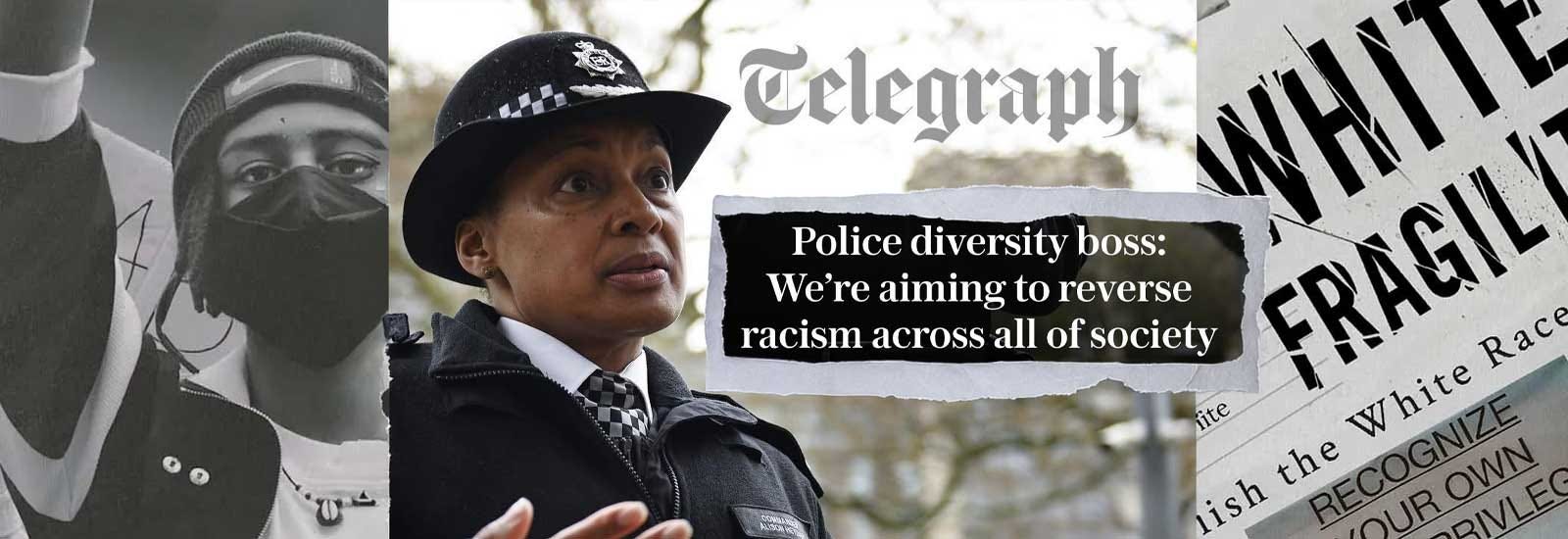
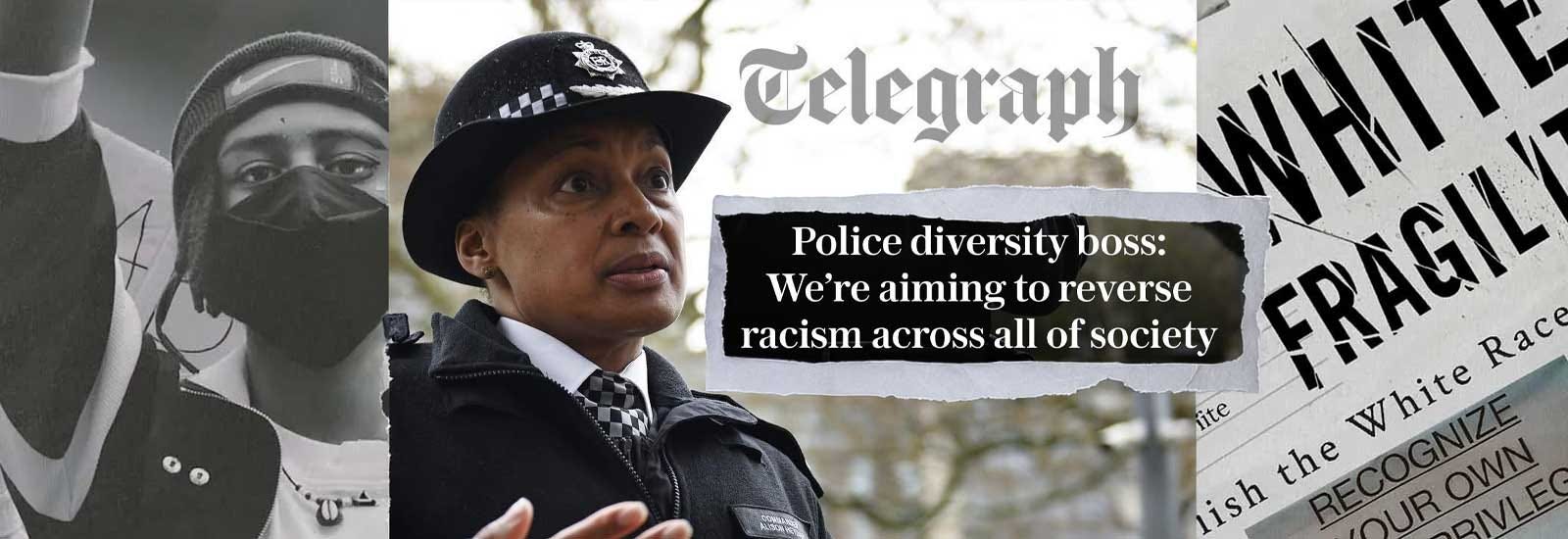
Have you noticed that so-called “anti-racism” campaigns, supposedly designed to end racism, sound admirable in theory, but almost always function the same way in practice?
While cloaked in the euphemistic language of diversity, equity, and inclusion, these sorts of things often smuggle in assumptions drawn from the failed and fraudulent ideologies of Marxism and Critical Race Theory.
Rather than treating “racism” as an individual issue, they reframe society as the struggle between the oppressor and the oppressed, and that, largely defined by race. As a result, “anti-racism” initiatives often appear less concerned with eliminating racial discrimination than with redistributing it.
This is because, at the heart of their worldview, racism is not primarily understood as an individual vice but as a systemic condition. Beneath this lies an implicitly Lockean view of human nature: that people are fundamentally the same, and that the differences we observe between individuals and groups are ultimately the product of environment, upbringing, and social circumstances rather than any deeper distinctions.
As such, because Western institutions were historically built and governed by White-majority populations, those institutions are presumed to be inherently racist, as it is argued, every institution disproportionately favours its founding group—especially if that founding group is White.
Thus, any and all disparity in outcomes between racial groups is often treated as evidence of discrimination and racial inequality. And yet, if unequal representation is automatically assumed proof of prejudice, then the same logic could be applied to virtually any visible characteristic—not just racial heritage.
If people with brown hair occupied a disproportionate number of leadership positions, would that prove society systematically favoured brunettes? Most people would reject this as absurd. And yet, whenever race is involved, many are expected to accept precisely the same argument.
That’s why so many of these “anti-racist” initiatives appear less interested in raising people up than cutting successful people down.
The influence of this worldview can also be seen throughout our public institutions. Policymakers, bureaucrats, academics, and senior officials frequently argue that disparities between racial groups are evidence of systemic injustice and that institutions must actively work to correct those imbalances.
In recent decades, concepts such as “institutional racism,” “intergenerational trauma,” “White privilege,” and “systemic discrimination” have become embedded in the language of government agencies, police forces, universities, and large corporations. The assumption underlying these initiatives is that historical injustices continue to shape present-day outcomes and that race-conscious policies are therefore necessary to achieve equity.
Concepts such as “White privilege,” “White fragility,” and “systemic racism” are often deployed within an anti-White framework that interprets social and political life through the relationship between dominant and subordinate groups. As such, their practical effect is to encourage institutions to judge people less as individuals and more as members of racial categories that can be reduced to two: White and non-White.
What this approach does, however, is shift society away from equal treatment under the law and towards differential treatment based on group identity. Once institutions begin viewing individuals primarily through the lens of “oppressed” and “oppressing” race, the Christian principle of impartiality becomes impossible to maintain.
As such, so-called “anti-racism” campaigns often resemble efforts to impose equal misery rather than eliminate imagined discrimination. Instead of judging individuals according to their own merit, they assign collective guilt and collective innocence, and seek to treat people based on law and policy.
While it is sold as an effort to “level the playing field,” in practice, it does the opposite. It doesn’t balance the scales; it disproportionately disadvantages White men under the guise of racial equality—its propagators admit as much when they use terms like “reverse racism.”
Reversing racism is not synonymous with ending racism. To reverse racism is to discriminate against those deemed responsible for racism, or against those said to benefit from it. And of course, under the dominant anti-White narrative of our age, that category consists exclusively of White people.
For decades, we’ve been told that society is built around systems that favour Whites. We’ve heard endless warnings about White privilege, White supremacy, White fragility, White power, and every other variation of the same.
So, if the problem is a system that allegedly benefits White people, then “reversing” that system necessarily means disadvantaging White people. It’s just legitimising and legalising the mistreatment of White people in their own homelands.
That is what many anti-racist policies increasingly amount to—not equality before the law, but race-conscious discrimination justified in the name of historical correction.
History offers little reason for optimism whenever societies begin sorting citizens into categories of collective guilt and collective innocence. These systems do not reduce division—they deepen it.
And this is what we are seeing across the Western world today. Across Britain, Europe, North America, Australia, and New Zealand, anti-White policies are becoming increasingly common in public institutions, corporations, and educational systems.
But it’s not only that these policies are unjust, many have also warned they’re creating the very conditions for future conflict. The irony here is that what is introduced in the name of racial harmony may very well end up producing the opposite effect. When institutions openly favour some groups and disadvantage others on the basis of their race, resentment will inevitably accumulate. When that bleeds into law enforcement, the resentment is intensified.
People will tolerate many things, but they rarely put up with unequal treatment indefinitely. History offers us little reason to believe these arrangements end peacefully. In fact, we know that societies become profoundly unstable when citizens are divided into categories of collective guilt and collective innocence, privileged and oppressor. So, far from healing supposed racial tensions, “anti-racism” policies risk intensifying resentment.
Once collective guilt and collective victimhood become the organising principles of public life, racial division becomes a certainty. The path being pursued across much of the Western world is therefore not one of reconciliation but of increasing racial division, suspicion, grievance, and resentment—on all parts.
It is a dangerous experiment, and it’s one that risks turning Western nations into powder kegs and leaving future generations just one spark away from the devastating consequences—if it holds out that long.
Have you noticed that so-called “anti-racism” campaigns, supposedly designed to end racism, sound admirable in theory, but almost always function the same way in practice?
While cloaked in the euphemistic language of diversity, equity, and inclusion, these sorts of things often smuggle in assumptions drawn from the failed and fraudulent ideologies of Marxism and Critical Race Theory.
Rather than treating “racism” as an individual issue, they reframe society as the struggle between the oppressor and the oppressed, and that, largely defined by race. As a result, “anti-racism” initiatives often appear less concerned with eliminating racial discrimination than with redistributing it.
This is because, at the heart of their worldview, racism is not primarily understood as an individual vice but as a systemic condition. Beneath this lies an implicitly Lockean view of human nature: that people are fundamentally the same, and that the differences we observe between individuals and groups are ultimately the product of environment, upbringing, and social circumstances rather than any deeper distinctions.
As such, because Western institutions were historically built and governed by White-majority populations, those institutions are presumed to be inherently racist, as it is argued, every institution disproportionately favours its founding group—especially if that founding group is White.
Thus, any and all disparity in outcomes between racial groups is often treated as evidence of discrimination and racial inequality. And yet, if unequal representation is automatically assumed proof of prejudice, then the same logic could be applied to virtually any visible characteristic—not just racial heritage.
If people with brown hair occupied a disproportionate number of leadership positions, would that prove society systematically favoured brunettes? Most people would reject this as absurd. And yet, whenever race is involved, many are expected to accept precisely the same argument.
That’s why so many of these “anti-racist” initiatives appear less interested in raising people up than cutting successful people down.
The influence of this worldview can also be seen throughout our public institutions. Policymakers, bureaucrats, academics, and senior officials frequently argue that disparities between racial groups are evidence of systemic injustice and that institutions must actively work to correct those imbalances.
In recent decades, concepts such as “institutional racism,” “intergenerational trauma,” “White privilege,” and “systemic discrimination” have become embedded in the language of government agencies, police forces, universities, and large corporations. The assumption underlying these initiatives is that historical injustices continue to shape present-day outcomes and that race-conscious policies are therefore necessary to achieve equity.
Concepts such as “White privilege,” “White fragility,” and “systemic racism” are often deployed within an anti-White framework that interprets social and political life through the relationship between dominant and subordinate groups. As such, their practical effect is to encourage institutions to judge people less as individuals and more as members of racial categories that can be reduced to two: White and non-White.
What this approach does, however, is shift society away from equal treatment under the law and towards differential treatment based on group identity. Once institutions begin viewing individuals primarily through the lens of “oppressed” and “oppressing” race, the Christian principle of impartiality becomes impossible to maintain.
As such, so-called “anti-racism” campaigns often resemble efforts to impose equal misery rather than eliminate imagined discrimination. Instead of judging individuals according to their own merit, they assign collective guilt and collective innocence, and seek to treat people based on law and policy.
While it is sold as an effort to “level the playing field,” in practice, it does the opposite. It doesn’t balance the scales; it disproportionately disadvantages White men under the guise of racial equality—its propagators admit as much when they use terms like “reverse racism.”
Reversing racism is not synonymous with ending racism. To reverse racism is to discriminate against those deemed responsible for racism, or against those said to benefit from it. And of course, under the dominant anti-White narrative of our age, that category consists exclusively of White people.
For decades, we’ve been told that society is built around systems that favour Whites. We’ve heard endless warnings about White privilege, White supremacy, White fragility, White power, and every other variation of the same.
So, if the problem is a system that allegedly benefits White people, then “reversing” that system necessarily means disadvantaging White people. It’s just legitimising and legalising the mistreatment of White people in their own homelands.
That is what many anti-racist policies increasingly amount to—not equality before the law, but race-conscious discrimination justified in the name of historical correction.
History offers little reason for optimism whenever societies begin sorting citizens into categories of collective guilt and collective innocence. These systems do not reduce division—they deepen it.
And this is what we are seeing across the Western world today. Across Britain, Europe, North America, Australia, and New Zealand, anti-White policies are becoming increasingly common in public institutions, corporations, and educational systems.
But it’s not only that these policies are unjust, many have also warned they’re creating the very conditions for future conflict. The irony here is that what is introduced in the name of racial harmony may very well end up producing the opposite effect. When institutions openly favour some groups and disadvantage others on the basis of their race, resentment will inevitably accumulate. When that bleeds into law enforcement, the resentment is intensified.
People will tolerate many things, but they rarely put up with unequal treatment indefinitely. History offers us little reason to believe these arrangements end peacefully. In fact, we know that societies become profoundly unstable when citizens are divided into categories of collective guilt and collective innocence, privileged and oppressor. So, far from healing supposed racial tensions, “anti-racism” policies risk intensifying resentment.
Once collective guilt and collective victimhood become the organising principles of public life, racial division becomes a certainty. The path being pursued across much of the Western world is therefore not one of reconciliation but of increasing racial division, suspicion, grievance, and resentment—on all parts.
It is a dangerous experiment, and it’s one that risks turning Western nations into powder kegs and leaving future generations just one spark away from the devastating consequences—if it holds out that long.
It’s been said, “The Left will always win because they have something the Right doesn’t: unity.”
It’s true. The so-called “Left” is more than happy to align itself with Islamists, Hindus, refugees, immigrants, environmentalists, atheists, radical feminists, LGBTQAI++ activists, abortionists, trade unions, anti-capitalists, globalists, and countless other groups that often share little in common beyond one crucial point—a point that makes all the difference.
One clear reason the Left can appear more unified than the Right is that it is often bound together not by a coherent shared vision for some ideal good, but rather by a shared hatred. That is, by a common sense of what or who constitutes the central social problem to be confronted, dismantled, and defeated.
The Right, on the other hand, is generally more united around ideals, principles, and standards. While a wide range of varying groups can all agree on what they oppose, finding agreement on what should replace it is much more difficult. And that is how those on the Right often define themselves, not merely by what they are against, but what they seek to establish or restore.
On the other hand, when dismantlement and destruction become the chief purpose, there’s no shortage of potential allies. That is why the Left has so little problem siding with those who would fundamentally oppose them in any other context.
Of course, they don’t have the same ultimate vision of the world, but they share a common foe and a common hurdle that is preventing them from ever reaching their desired outcome. Whatever their “eutopian vision” of the world may be, Western civilisation—or more precisely, Christianity stands in their way.
There are countless ways to dismantle or undermine a Christian society, and that creates broad opportunities for cooperation between groups that otherwise would have very little in common. Differences are put aside, provided they are all working in some way to the same destructive end.
We often mock the unity of our opponents with memes like “Chickens for KFC,” but if both the chickens and the restaurant become convinced they share a common enemy, then the old saying proves true: “The enemy of my enemy is my friend.”
On the Right, the dispute usually centres on the remedy. Even when there's agreement that cultural decline exists, there's often significant disagreement about the primary cause and the necessary cure.
As a result, the Right tends to be far more fragmented than the Left. While their standards may differ on the Right, and even if, only to a small degree, each faction generally believes its own standards are higher—and that the abandonment of those standards is the chief cause of the cultural and social decline they seek to reverse.
This is the reality in which we operate—and, whether it’s a good thing or not, it leaves the Right at a significant disadvantage. “Divided we fall,” as it’s said. The more pressing question, then, is not whether differences exist or even whether they matter, but whether they can be properly ordered, and at times, overlooked for the greater good?
If there is genuine agreement on the nature of the cultural crisis, then the first task is not to resolve every internal disagreement we might have, but to recognise what is at stake in failing to act in unity at all. Movements rarely succeed by achieving perfect ideological harmony in advance. They succeed by identifying a shared measure of concern that compels cooperation despite remaining differences.
On that basis, the issue is not whether all factions of the Right can or should become identical in outlook, but whether they are capable of subordinating secondary disputes to a more immediate and common task.
We don’t need to put aside internal debate; it simply cannot be allowed to become so paralysing that we are virtually ineffective. It would just be ensuring our own death by a thousand factions.
Perhaps the better way to think about it is what comes first. What issues must be dealt with together now, and what disagreements can wait until later without putting at risk the civilisation, culture, and institutions that all factions say they want to preserve?
It’s been said, “The Left will always win because they have something the Right doesn’t: unity.”
It’s true. The so-called “Left” is more than happy to align itself with Islamists, Hindus, refugees, immigrants, environmentalists, atheists, radical feminists, LGBTQAI++ activists, abortionists, trade unions, anti-capitalists, globalists, and countless other groups that often share little in common beyond one crucial point—a point that makes all the difference.
One clear reason the Left can appear more unified than the Right is that it is often bound together not by a coherent shared vision for some ideal good, but rather by a shared hatred. That is, by a common sense of what or who constitutes the central social problem to be confronted, dismantled, and defeated.
The Right, on the other hand, is generally more united around ideals, principles, and standards. While a wide range of varying groups can all agree on what they oppose, finding agreement on what should replace it is much more difficult. And that is how those on the Right often define themselves, not merely by what they are against, but what they seek to establish or restore.
On the other hand, when dismantlement and destruction become the chief purpose, there’s no shortage of potential allies. That is why the Left has so little problem siding with those who would fundamentally oppose them in any other context.
Of course, they don’t have the same ultimate vision of the world, but they share a common foe and a common hurdle that is preventing them from ever reaching their desired outcome. Whatever their “eutopian vision” of the world may be, Western civilisation—or more precisely, Christianity stands in their way.
There are countless ways to dismantle or undermine a Christian society, and that creates broad opportunities for cooperation between groups that otherwise would have very little in common. Differences are put aside, provided they are all working in some way to the same destructive end.
We often mock the unity of our opponents with memes like “Chickens for KFC,” but if both the chickens and the restaurant become convinced they share a common enemy, then the old saying proves true: “The enemy of my enemy is my friend.”
On the Right, the dispute usually centres on the remedy. Even when there's agreement that cultural decline exists, there's often significant disagreement about the primary cause and the necessary cure.
As a result, the Right tends to be far more fragmented than the Left. While their standards may differ on the Right, and even if, only to a small degree, each faction generally believes its own standards are higher—and that the abandonment of those standards is the chief cause of the cultural and social decline they seek to reverse.
This is the reality in which we operate—and, whether it’s a good thing or not, it leaves the Right at a significant disadvantage. “Divided we fall,” as it’s said. The more pressing question, then, is not whether differences exist or even whether they matter, but whether they can be properly ordered, and at times, overlooked for the greater good?
If there is genuine agreement on the nature of the cultural crisis, then the first task is not to resolve every internal disagreement we might have, but to recognise what is at stake in failing to act in unity at all. Movements rarely succeed by achieving perfect ideological harmony in advance. They succeed by identifying a shared measure of concern that compels cooperation despite remaining differences.
On that basis, the issue is not whether all factions of the Right can or should become identical in outlook, but whether they are capable of subordinating secondary disputes to a more immediate and common task.
We don’t need to put aside internal debate; it simply cannot be allowed to become so paralysing that we are virtually ineffective. It would just be ensuring our own death by a thousand factions.
Perhaps the better way to think about it is what comes first. What issues must be dealt with together now, and what disagreements can wait until later without putting at risk the civilisation, culture, and institutions that all factions say they want to preserve?
A petition calling for the arrest of the police officers who handcuffed 18-year-old Henry Nowak after he was stabbed has attracted more than 200,000 signatures since its launch.
The petition states, that on December 3, 2025, officers arriving at the scene failed to recognise that Nowak, an accountancy student at the University of Southampton, was the real victim and instead placed him in handcuffs as he lay critically wounded.
Police body camera footage captured Nowak telling officers that he had been stabbed, to which one officer can be heard responding, “I don’t think you have, mate.”
The petition claims police instead accepted the account given by Nowak’s attacker at the scene, who accused Nowak of being “racist,” an accusation later rejected in court.
The court found Vickrum Digwa guilty of Nowak’s murder and sentenced him to life imprisonment. The petition argues that the verdict has established that Nowak was innocent and that the officers who attended the scene failed in their duty to provide assistance.
“The lie [Digwa] told that night has been completely rejected by a jury and a judge,” the petition states. “Henry was innocent. He was the victim. And the officers who were supposed to help him failed him completely.”
While the incident is under investigation by the Independent Office for Police Conduct (IOPC), the petition notes that the officers who handcuffed Nowak are being treated as witnesses rather than suspects. It also claims that one officer has resigned while three others remain in active service.
Campaigners say this is inadequate and are calling for criminal proceedings against the officers involved in the arrest. The petition urges the Crown Prosecution Service and the Home Secretary to consider charges of manslaughter, criminal negligence, and dereliction of duty.
Signatories are also demanding that the IOPC publish its final report in full, without redactions.
The petition also cites Nowak’s father, Mark Nowak, who said his family should no longer have to fight for answers.
“Henry’s father, Mark, has said his family should not have to fight for the truth anymore,” the petition states. “He’s right. They shouldn’t.”
A petition calling for the arrest of the police officers who handcuffed 18-year-old Henry Nowak after he was stabbed has attracted more than 200,000 signatures since its launch.
The petition states, that on December 3, 2025, officers arriving at the scene failed to recognise that Nowak, an accountancy student at the University of Southampton, was the real victim and instead placed him in handcuffs as he lay critically wounded.
Police body camera footage captured Nowak telling officers that he had been stabbed, to which one officer can be heard responding, “I don’t think you have, mate.”
The petition claims police instead accepted the account given by Nowak’s attacker at the scene, who accused Nowak of being “racist,” an accusation later rejected in court.
The court found Vickrum Digwa guilty of Nowak’s murder and sentenced him to life imprisonment. The petition argues that the verdict has established that Nowak was innocent and that the officers who attended the scene failed in their duty to provide assistance.
“The lie [Digwa] told that night has been completely rejected by a jury and a judge,” the petition states. “Henry was innocent. He was the victim. And the officers who were supposed to help him failed him completely.”
While the incident is under investigation by the Independent Office for Police Conduct (IOPC), the petition notes that the officers who handcuffed Nowak are being treated as witnesses rather than suspects. It also claims that one officer has resigned while three others remain in active service.
Campaigners say this is inadequate and are calling for criminal proceedings against the officers involved in the arrest. The petition urges the Crown Prosecution Service and the Home Secretary to consider charges of manslaughter, criminal negligence, and dereliction of duty.
Signatories are also demanding that the IOPC publish its final report in full, without redactions.
The petition also cites Nowak’s father, Mark Nowak, who said his family should no longer have to fight for answers.
“Henry’s father, Mark, has said his family should not have to fight for the truth anymore,” the petition states. “He’s right. They shouldn’t.”
Liz Truss, branded by the BBC as Britain’s shortest-serving Prime Minister, isn’t fading into obscurity the way the bloated bureaucracy might have hoped.
Truss became PM in 2022 after once-conservative all-star Boris Johnson was booted by his party, allegedly due to multiple scandals.
The biggest of which was Johnson’s supposed COVID-19 lockdown breaches. Something he often refers to as “Partygate.”
Johnson has since quit politics entirely, insinuating that he was usurped.
If Liz Truss’s own 10 Downing Street experience is on the level, Johnson’s claim isn’t outside the realm of probability.
Speaking with TalkTV’s Jeremy Kyle last month, Truss dropped a proverbial bomb on the bureaucracy, stating, “When you are a junior minister or a cabinet minister, you do not have that much power to change things.”
You either go along to get along, she explained, or you resign.
For instance, she said, “I argued against all the net-zero stuff. I argued against all the environmental regulation stuff.”
Truss was (and still is) opposed to Environmental Social Governance (ESG) policies, solely because they’re damaging Britain.
She also pushed for bigger defence budgets and reduced migration, only to be strong-armed by what Truss has labelled elsewhere as “Treasury Orthodoxy”.
The “officials in the Treasury, the unelected bureaucrats, are incredibly powerful,” Truss told Kyle.
“When I was Prime Minister, I wanted to restrain welfare spending. I wanted to get fracking.
“I thought that when/if I get to be PM, I can call the shots.”
Not so, Truss continued.
“I then discovered, actually, I can’t. Because there are people there determined to continue with the same failed ideology.”
Sheepish, if not opposing her policies outright, Truss said, the bureaucrats “created a deliberate narrative, saying, ‘She’s got the wrong ideas. She’s done things too quickly.”
They considered her budget too “chaotic.”
It wasn’t, Truss asserted. They just didn’t like it.
Being undermined from within, Truss recalled, wasn’t something she found out about until she was no longer in office.
There was no time to investigate it all, she clarified.
Most of her opponents, Truss said, were people who wanted Rishi Sunak (then a backbencher at the time) to run the country.
They wanted Rishi. The goal was to push through policies like “mass migration, net zero etc.”
The enemy was within.
“I had two different forces I was fighting,” Truss said.
“One was the permanent bureaucracy (something Nigel Farage calls ‘the blob’ – swamp; deep state), and the other was people in the conservative party, who didn’t actually support Conservative policies.”
They used the Bank of England tripping market chaos at the time to undermine confidence in her leadership and “get rid of me”, Truss added.
Describing the unelected bureaucracy as permanent bureaucrats, she said, “That’s the way they operated.
“The only thing I’d done wrong was actually underestimate just how vicious and conniving they are.”
In the case of the current Labour Government, Truss described Keir Starmer as a “weak individual.”
“The decision-making is driven by the permanent bureaucrats in Britain, and you can see that on everything. It’s in the foreign office, the home office, and the treasury.”
Truss then stated that the last one is the “most powerful of the lot.”
Citing scandals, she said, “These people aren’t elected. That is the deep system problem we have in Britain.
“These people are ideologically opposed to the kind of change Britain needs,” Truss explained.
“The problems are deeper than just the political parties.
“We need a mass movement that wants to change the country to take on the blob that has been ruining Britain.”
Adding to her argument, Truss said, “It’s not just about parties, it’s about ideas.”
Talking about the need for “bold leadership.”
“I’m seeing too much status quoism.”
Stating that she knew there was a problem with the bureaucracy (blob), she just didn’t know it was that bad, Truss explosively declared:
“That’s what I discovered at 10 Downing Street. The elected Prime Minister is not the most powerful person in the country.”
Liz Truss, branded by the BBC as Britain’s shortest-serving Prime Minister, isn’t fading into obscurity the way the bloated bureaucracy might have hoped.
Truss became PM in 2022 after once-conservative all-star Boris Johnson was booted by his party, allegedly due to multiple scandals.
The biggest of which was Johnson’s supposed COVID-19 lockdown breaches. Something he often refers to as “Partygate.”
Johnson has since quit politics entirely, insinuating that he was usurped.
If Liz Truss’s own 10 Downing Street experience is on the level, Johnson’s claim isn’t outside the realm of probability.
Speaking with TalkTV’s Jeremy Kyle last month, Truss dropped a proverbial bomb on the bureaucracy, stating, “When you are a junior minister or a cabinet minister, you do not have that much power to change things.”
You either go along to get along, she explained, or you resign.
For instance, she said, “I argued against all the net-zero stuff. I argued against all the environmental regulation stuff.”
Truss was (and still is) opposed to Environmental Social Governance (ESG) policies, solely because they’re damaging Britain.
She also pushed for bigger defence budgets and reduced migration, only to be strong-armed by what Truss has labelled elsewhere as “Treasury Orthodoxy”.
The “officials in the Treasury, the unelected bureaucrats, are incredibly powerful,” Truss told Kyle.
“When I was Prime Minister, I wanted to restrain welfare spending. I wanted to get fracking.
“I thought that when/if I get to be PM, I can call the shots.”
Not so, Truss continued.
“I then discovered, actually, I can’t. Because there are people there determined to continue with the same failed ideology.”
Sheepish, if not opposing her policies outright, Truss said, the bureaucrats “created a deliberate narrative, saying, ‘She’s got the wrong ideas. She’s done things too quickly.”
They considered her budget too “chaotic.”
It wasn’t, Truss asserted. They just didn’t like it.
Being undermined from within, Truss recalled, wasn’t something she found out about until she was no longer in office.
There was no time to investigate it all, she clarified.
Most of her opponents, Truss said, were people who wanted Rishi Sunak (then a backbencher at the time) to run the country.
They wanted Rishi. The goal was to push through policies like “mass migration, net zero etc.”
The enemy was within.
“I had two different forces I was fighting,” Truss said.
“One was the permanent bureaucracy (something Nigel Farage calls ‘the blob’ – swamp; deep state), and the other was people in the conservative party, who didn’t actually support Conservative policies.”
They used the Bank of England tripping market chaos at the time to undermine confidence in her leadership and “get rid of me”, Truss added.
Describing the unelected bureaucracy as permanent bureaucrats, she said, “That’s the way they operated.
“The only thing I’d done wrong was actually underestimate just how vicious and conniving they are.”
In the case of the current Labour Government, Truss described Keir Starmer as a “weak individual.”
“The decision-making is driven by the permanent bureaucrats in Britain, and you can see that on everything. It’s in the foreign office, the home office, and the treasury.”
Truss then stated that the last one is the “most powerful of the lot.”
Citing scandals, she said, “These people aren’t elected. That is the deep system problem we have in Britain.
“These people are ideologically opposed to the kind of change Britain needs,” Truss explained.
“The problems are deeper than just the political parties.
“We need a mass movement that wants to change the country to take on the blob that has been ruining Britain.”
Adding to her argument, Truss said, “It’s not just about parties, it’s about ideas.”
Talking about the need for “bold leadership.”
“I’m seeing too much status quoism.”
Stating that she knew there was a problem with the bureaucracy (blob), she just didn’t know it was that bad, Truss explosively declared:
“That’s what I discovered at 10 Downing Street. The elected Prime Minister is not the most powerful person in the country.”
Sergeant Benedict Bryant, the Sydney police officer found guilty of dangerous driving causing death after an Indigenous teenager riding a stolen motorcycle collided with his parked police vehicle, has been sentenced to a two-year Intensive Corrections Order (ICO), including 500 hours of community service.
An ICO allows eligible offenders to serve a prison sentence of up to two years in the community under strict supervision.
Every ICO demands that the offender commit no new offences and submit to strict supervision by a Community Corrections officer. Under these rules, the offender must report to their supervisor as directed and strictly obey all instructions regarding where they live, who they associate with, what jobs they hold, and any mandatory rehabilitation or drug and alcohol testing.
What’s more, courts must attach at least one extra condition—such as a curfew, home detention, electronic monitoring, or up to 750 hours of community service work—making an ICO a highly restrictive community-based sentence.
Judge Jane Culver handed down the sentence for the death of 16-year-old Jai Kalani Wright. In her ruling, Judge Culver found that Bryant ought to have known the teenager would ride in a dangerous manner to avoid apprehension.
However, she also noted that Bryant “honestly but mistakenly” believed the teen could not travel beyond the end of the bike lane. The judge acknowledged that Bryant’s intention was to intercept the rider and that he had “no idea” Wright was going to strike the bollard at the end of the lane.
Judge Culver further noted that Bryant is of good character, has a limited criminal and traffic history, and has served the community over several decades.
Speaking outside court following Friday’s sentencing, Bryant’s lawyer, Paul McGirr, confirmed the decision would be appealed and said “a lot of police and members of the community will be shaking their heads at this decision”.
“This decision fails the pub test,” he said.
“I don’t want to add grief to the family, a life has been lost. … I’m not trying to rub salt to the wounds, (but) if people were at home not doing home invasions and stealing vehicles, we wouldn’t be here.
“This matter is far from over and my client … (is) going to fight for justice to be delivered.”
Following the sentencing, an active police officer told Caldron Pool the outcome could have far-reaching consequences for frontline policing.
According to the officer, the decision may discourage police from responding to incidents under lights and sirens or pursuing offenders in stolen vehicles.
“Who will want to do either,” the officer said, “if, when things go wrong, you’re the one who ends up with a prison sentence?”
The officer argued that the ruling could affect not only individual officers but the broader culture of policing in Australia.
“Nurses and teachers go on strike for better pay and conditions,” the officer added. “Should police go on strike too, so they don’t risk being sent to prison for doing their job? How would the public feel about that?”
Bryant has served on Sydney’s frontline since 1999 and has been stationed at Redfern since 2008. During that time, he has worked with vulnerable members of the community, mentored younger officers, and responded to situations many would find confronting.
The legal proceedings have already placed a significant financial burden on Bryant and his young family. Bryant supports his wife, two children, and his mother-in-law, who suffers from advanced dementia. He has personally spent approximately $130,000 on legal expenses, with appeals and potential retrials expected to cost many thousands more.
Following the initial sentencing, a fundraiser was established to assist Bryant and his family with mounting legal costs. The campaign was launched by retired NSW Police Chief Inspector Paul Fownes APM OAM.
It is the second fundraiser Fownes has organised on Bryant’s behalf. The first campaign, which raised more than $57,000, was removed by the hosting platform within 24 hours, and all donations were refunded.
According to the platform, the fundraiser breached its Terms of Service, specifically Section 8.10, which prohibits fundraising for the legal defence of criminal offences, including murder, assault, and offences against minors.
Sergeant Benedict Bryant, the Sydney police officer found guilty of dangerous driving causing death after an Indigenous teenager riding a stolen motorcycle collided with his parked police vehicle, has been sentenced to a two-year Intensive Corrections Order (ICO), including 500 hours of community service.
An ICO allows eligible offenders to serve a prison sentence of up to two years in the community under strict supervision.
Every ICO demands that the offender commit no new offences and submit to strict supervision by a Community Corrections officer. Under these rules, the offender must report to their supervisor as directed and strictly obey all instructions regarding where they live, who they associate with, what jobs they hold, and any mandatory rehabilitation or drug and alcohol testing.
What’s more, courts must attach at least one extra condition—such as a curfew, home detention, electronic monitoring, or up to 750 hours of community service work—making an ICO a highly restrictive community-based sentence.
Judge Jane Culver handed down the sentence for the death of 16-year-old Jai Kalani Wright. In her ruling, Judge Culver found that Bryant ought to have known the teenager would ride in a dangerous manner to avoid apprehension.
However, she also noted that Bryant “honestly but mistakenly” believed the teen could not travel beyond the end of the bike lane. The judge acknowledged that Bryant’s intention was to intercept the rider and that he had “no idea” Wright was going to strike the bollard at the end of the lane.
Judge Culver further noted that Bryant is of good character, has a limited criminal and traffic history, and has served the community over several decades.
Speaking outside court following Friday’s sentencing, Bryant’s lawyer, Paul McGirr, confirmed the decision would be appealed and said “a lot of police and members of the community will be shaking their heads at this decision”.
“This decision fails the pub test,” he said.
“I don’t want to add grief to the family, a life has been lost. … I’m not trying to rub salt to the wounds, (but) if people were at home not doing home invasions and stealing vehicles, we wouldn’t be here.
“This matter is far from over and my client … (is) going to fight for justice to be delivered.”
Following the sentencing, an active police officer told Caldron Pool the outcome could have far-reaching consequences for frontline policing.
According to the officer, the decision may discourage police from responding to incidents under lights and sirens or pursuing offenders in stolen vehicles.
“Who will want to do either,” the officer said, “if, when things go wrong, you’re the one who ends up with a prison sentence?”
The officer argued that the ruling could affect not only individual officers but the broader culture of policing in Australia.
“Nurses and teachers go on strike for better pay and conditions,” the officer added. “Should police go on strike too, so they don’t risk being sent to prison for doing their job? How would the public feel about that?”
Bryant has served on Sydney’s frontline since 1999 and has been stationed at Redfern since 2008. During that time, he has worked with vulnerable members of the community, mentored younger officers, and responded to situations many would find confronting.
The legal proceedings have already placed a significant financial burden on Bryant and his young family. Bryant supports his wife, two children, and his mother-in-law, who suffers from advanced dementia. He has personally spent approximately $130,000 on legal expenses, with appeals and potential retrials expected to cost many thousands more.
Following the initial sentencing, a fundraiser was established to assist Bryant and his family with mounting legal costs. The campaign was launched by retired NSW Police Chief Inspector Paul Fownes APM OAM.
It is the second fundraiser Fownes has organised on Bryant’s behalf. The first campaign, which raised more than $57,000, was removed by the hosting platform within 24 hours, and all donations were refunded.
According to the platform, the fundraiser breached its Terms of Service, specifically Section 8.10, which prohibits fundraising for the legal defence of criminal offences, including murder, assault, and offences against minors.

 Login
Login