Login
Login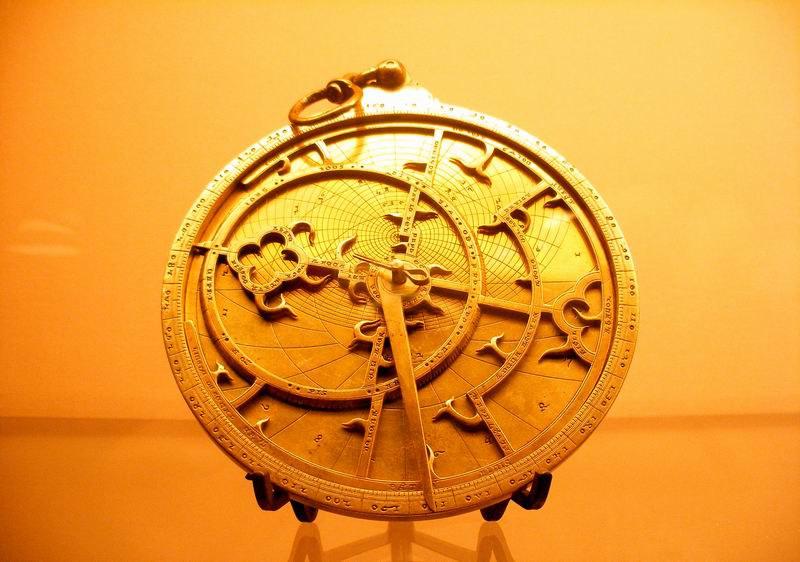

Fascinating Ancient Mechanisms Ahead of Their Time

Across history, ancient civilizations crafted prototypes for many of the modern mechanisms that have become integral to contemporary life. From the compass’s early forms that transformed navigation to the predecessors of today’s vending machines, these ancient artifacts offer insights into the roots of modern technology.
Although some of these ancient mechanisms were lost over time, their hidden potential was eventually revealed by subsequent generations, shedding light on the remarkable foresight of the ancient inventors.
Baghdad Battery
Baghdad Battery
found near Baghdad,considered galvanic cell that was created 2,000 years before A.Volta was born.The "battery"was a 13-centimeter vessel.Its neck was filled with bitumen an iron rod passed through it.Inside the vessel was a copper cylinder with an iron rod in it pic.twitter.com/zpPi36yxs7
— Truthseeker (@Xx17965797N) November 1, 2022
An ancient artifact, which became known as the Baghdad Battery, has fascinated the minds of scientists for the last century. According to chemist Dr. Von Handorf, this find allows to believe that “an ancient tinkerer could have invented an electroplating process.”
Discovered in 1938 by a German archaeologist Wilhelm Konig, the Baghdad Battery is potentially around 2,000 years old. It comprises a clay jar, a copper cylinder, and an iron rod. When filled with a mild acid, such as vinegar, this assembly generates approximately 1-2 volt of electricity.
Attention to the mechanism arose with new force after the Second World War. American scientist Willard Gray conducted experiments in the post-war period, making copies and demonstrating that the device could generate two volts of electricity when filled with electrolyte. German researchers in the 1970s replicated this setup and successfully used it to electroplate a thin layer of silver, proving its potential as a battery.
Several theories have been proposed regarding the purpose of the Baghdad Battery. One hypothesis suggests that its primary use was for therapeutic purposes, drawing inspiration from the ancient Greek practice of using electricity to relieve pain. Another theory suggests that the batteries could have been hidden inside religious statues or idols. Dr. Paul T Craddock suggested that those who touched the statues would “experience a little shock with a small, mysterious flash of blue light.”
However, this mystery is likely destined to remain unsolved, since the artifact was stolen from the National Museum of Iraq in 2003.
The Lycurgus Cup
This 1600-year-old cup has a feature that proves that the ancient Romans were pioneers of nanotechnology. The perfectly preserved artifact amazed minds with its ability to change color depending on position and lighting.
Since the 1950s, the Lycurgus Cup has been in the British Museum. It received its name because of the masterfully depicted king of Thrace, Lycurgus. According to ancient Greek legends, he was at enmity with the god of wine Dionysus and is depicted on a cup entangled in a trap of grapevines.
When lit from the front, the cup appears jade green, but changes color to a rich blood red when lit from behind. This unusual and extremely modern property for that era has amazed scientists for decades.
Subsequently, scientists still managed to solve the mystery of the ancient mechanism behind the cup. They examined the glass under a microscope and discovered that Roman artisans had impregnated it with particles of silver and gold. These grains were so small that their size was less than one thousandth of a grain of table salt. Researcher Ian Freestone from University College London called the painstaking work of the ancient craftsmen “an amazing feat.”
The operation of the color changing mechanism has also found its explanation. When hit by light, the electrons belonging to the metal particles vibrate in such a way that they change color depending on the position of the observer. Gan Logan Liu, a professor at the University of Illinois at Urbana-Champaign, said that when the cup was filled with liquid, it changed the way the vibrating electrons in the glass interacted. He underlined that the romans “knew how to make and use nanoparticles for beautiful art.” Consequently, the color of the cup also changes.
This ancient technology is reflected in the modern world. Thus, home pregnancy tests use nanoparticles that turns the white line into pink.
South-Pointing Chariot, Ancient Mechanism Before Compass
The prototype of a navigational instrument, this Chinese south-pointing chariot became an ancient analogue of the compass. The history of this ancient mechanism dates back to approximately 5th century BC.
The chariot was described as a horse-drawn cart indicating the southern direction. It featured a figure that consistently pointed south, irrespective of the cart’s orientation. Employing differential gears, the mechanism comprised four wooden gears and additional gearing connecting the differential to the wheels. As the wheels turned, the gears rotated the figure to maintain its southern alignment. Notably, the chariot necessitated manual adjustment at the start of every journey, unlike a compass, which aligns automatically.
Chinese scientists rapidly developed their technologies and learned to magnetize iron needles back in the 7th–8th centuries AD. However, for several more centuries they did not use magnetic compasses and continued to produce chariots. It is believed that they went out of use only around the year 1300.
First Vending Machine
Vending machines are older than you might think.
The first such machine was designed and produced by Heron of Alexandria in the 1st century BC.
It dispensed holy water in exchange for coins. pic.twitter.com/t4O8GqFIx8
— Inquisitive (@curious_va) March 1, 2023
Vending machines, which have become a common attribute of modern life, owe their appearance to the ancient Greek scientist Heron. One of the best ancient mathematicians and inventors, he lived and worked in Alexandria. Heron developed many remarkable ancient mechanisms, and even the first steam engine of its kind.
His vending machine was a very modern mechanism for dispensing holy water. To use it, a person had to insert a coin into a special slot. Then it fell onto a tray connected to a lever. The weight of the coin opened the valve, from which water flowed out for the liars. Eventually, a coin would then slide off the tray, causing the lever to return to its place.
Astrolabe, Ancient Mechanism that Could Measure Time
Alexandria was home to another brilliant ancient inventor, Ptolemy, who invented a mechanism that could measured time.
This ancient instrument for timekeeping and celestial observation included the planispheric type, allowing astronomers to compute the positions of the Sun and stars relative to the horizon and meridian.
Originating in the 6th century, astrolabes gained prominence in the early Middle Ages across Europe and the Islamic world. It become crucial for maritime navigation by the mid-15th century before the emergence of sextants. Ranging from 3 to 18 inches, the typical planispheric astrolabe was predominantly crafted from brass or iron. It featured the base plate with celestial coordinates, the open-pattern disk illustrating stellar maps, and the alidade used for celestial sightings.
The astrolabe’s intricate construction and widespread usage underscored its significance as a multifunctional scientific tool in the medieval period. Its application extended beyond astronomy, finding utility in fields such as geography, timekeeping, and surveying.