Login
Login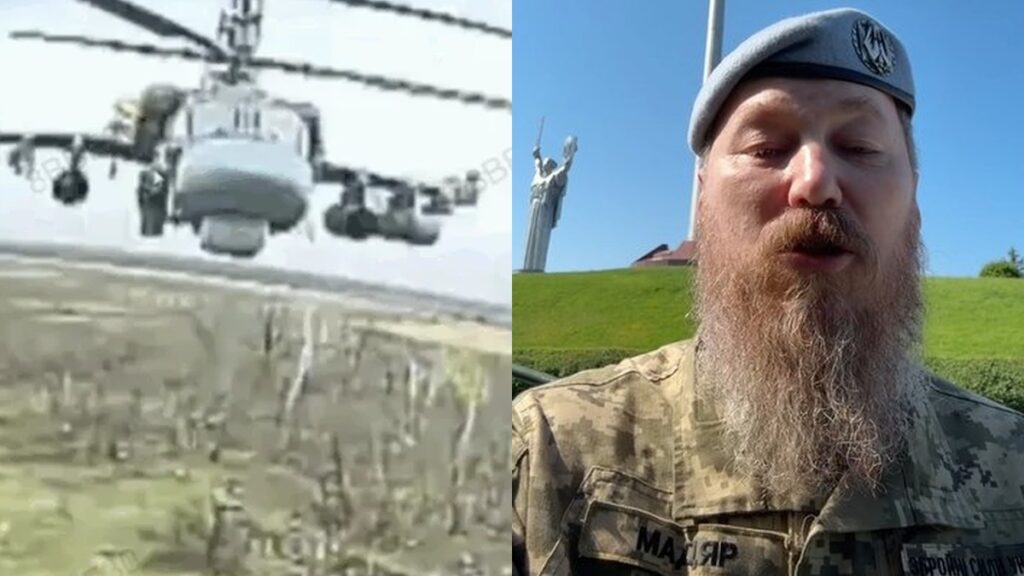

Ukraine’s drone commander says his branch killed or wounded 102,000 Russians in 12 months. It started with a grenade taped to drone that filmed weddings

Major Robert "Madiar" Brovdi marked Ukraine's first official Day of Unmanned Systems Forces on 11 June 2026 with a single number. His drone branch claims 102,000 Russian soldiers killed or wounded over twelve months, alongside 360,000 enemy targets hit and 1.7 million combat sorties flown, the commander said in a Telegram address.
The number translates four years of homemade weaponry into industrial output. By Brovdi's own reckoning, drones from his Unmanned Systems Forces (SBS) now account for one in every three Russian soldiers falling on the battlefield, and at a unit cost he prices in hundreds of dollars apiece.
"We exchange the plastic and metal of a drone worth a few hundred dollars for the carcass of an occupier. And that is the best exchange rate in the world," Brovdi said.
"Birds changed both plan and course"
Brovdi narrated the four-year arc of Ukrainian drone warfare in a single Telegram thread. In 2022, he said, the starting slogan was "artillery, shovel, drone" to locate, correct, hide. Then, in spring 2022, he taped a grenade to a commercial quadcopter and pushed video of the drop to social media.
"No weapon in human history has evolved so quickly. A wedding drone, no joke, performed well at the front, fundamentally and forever changing world doctrine," he revealed.
The unit he founded that month — Madiar's Birds — has since grown from platoon to brigade to a separate branch of the armed forces. The 414th brigade tripled in size in late 2024. On 3 June 2025, President Volodymyr Zelenskyy made Brovdi commander of the entire SBS, replacing Colonel Vadym Sukharevskyi.
Four targets, 2,000 kilometers deep
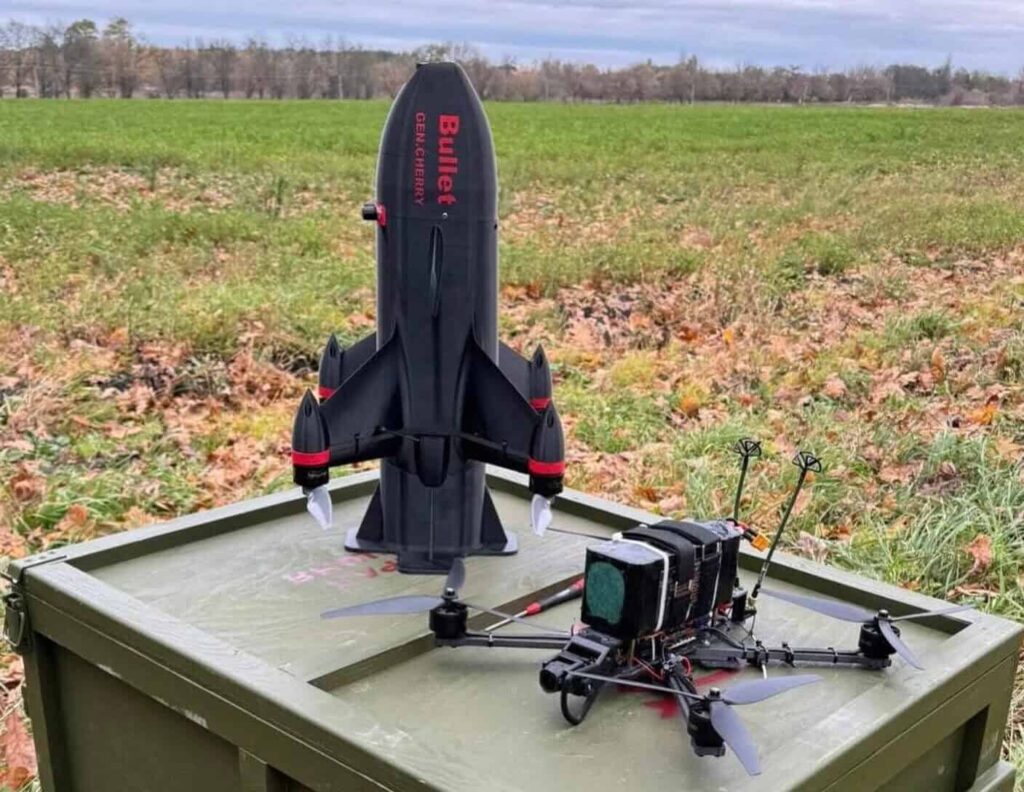
Madiar listed four target priorities for the year ahead: enemy manpower, sources of war financing, weapons production, and Russian air defense. The branch's reach now extends from frontline FPV strikes to deep-strike platforms confirmed beyond 1,700 kilometers inside Russia.
"The birds changed both the plan and the course," Madiar said.
Art-collecting commander
Russian state TV calls him a "terrorist." A Russian court sentenced him in absentia to life in prison in March 2026 on charges of organizing a terrorist attack. Russian prosecutors have filed 46 counts against him in total.
The Center for European Policy Analysis calls him "a bearded talisman of Ukraine's defense" — a "swashbuckling, plain-spoken" commander whose journey ran from "besuited grain trader" to the top of the world's first dedicated drone branch.
Madiar's biography reads like Carpathian Tony Stark's: an ethnic Hungarian from Uzhhorod who ran one of Ukraine's largest grain traders, served on the Zakarpattia Regional Council from 2010 to 2015, and funded contemporary Ukrainian art through his BrovdiArt Foundation before walking into a recruitment office at the start of the full-scale war.
He closed his anniversary speech in his usual register: "And now to work, ladies and gentlemen, at all available depths, across all the hated enemy. The way we know how, with what we have, where we are."