Normal view

Ancient Clay Figurine in Guatemala May Reveal One of the Oldest Number Marks in the Americas

12 June 2026 at 18:26
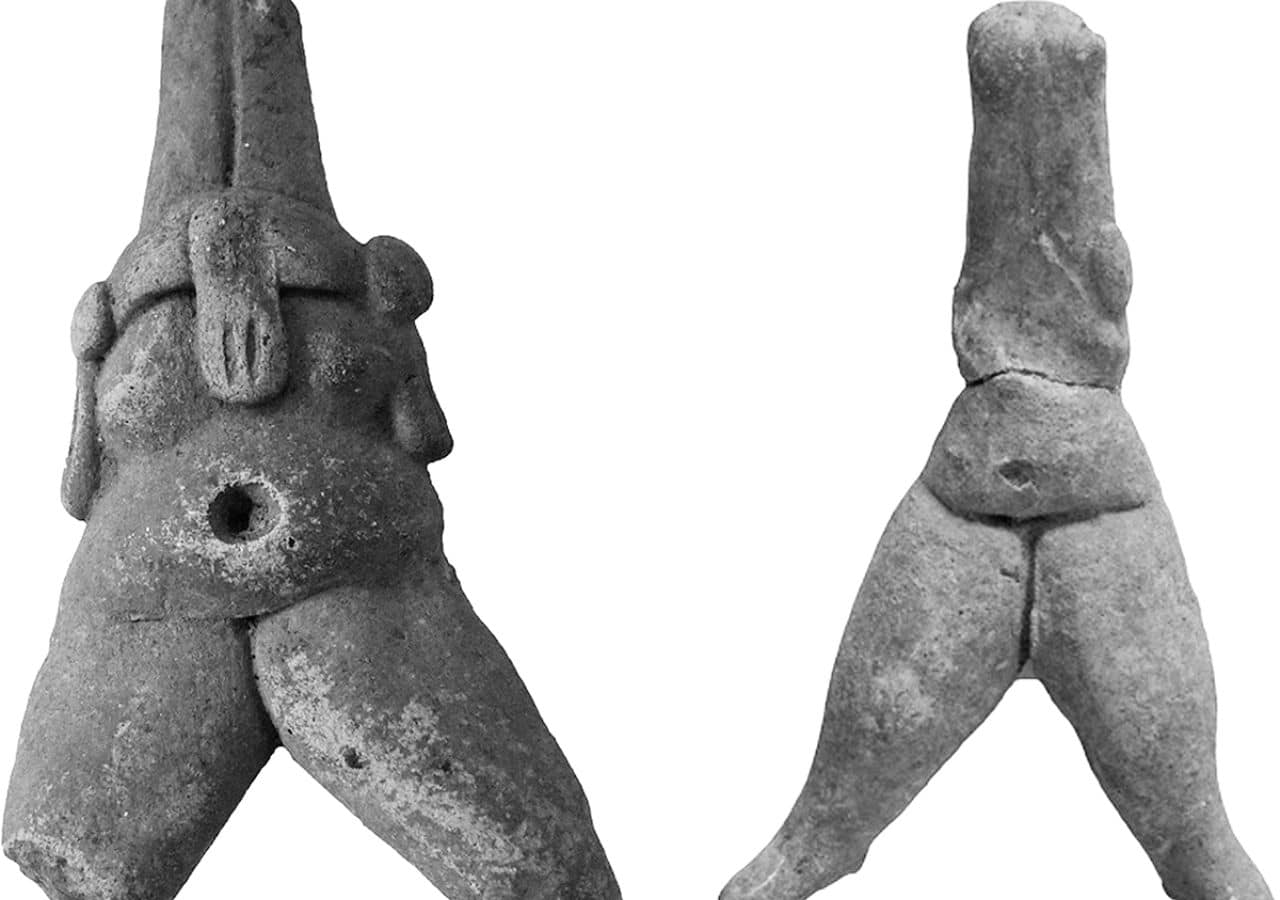
“Tab” figurines at La Blanca
“Tab” figurines at La Blanca. Credit: Julia Guernsey / CC BY 4.0

A small clay figurine, broken and seemingly unremarkable, may hold one of the earliest known examples of numerical notation in the ancient world. Researchers studying a Guatemala figurine have found what appears to be an early form of Mesoamerican writing on its surface, potentially pushing back the timeline of symbolic notation in the region by centuries.

The artifact comes from the Middle Preclassic site of La Blanca in San Marcos, Guatemala. It dates to roughly 750 to 650 BC and features 11 small dots arranged into three vertical columns on what appears to be its headdress.

Julia Guernsey of the University of Texas at Austin led the study, published in Latin American Antiquity. Researchers argue these dots may represent the number 11 in an early dot-based numerical system.

La Blanca was once a major urban center on the Pacific Coast of Guatemala, reaching its peak between 1000 and 900 BC. It controlled a large regional system and was marked by significant social stratification and some of the largest Middle Preclassic architecture in Mesoamerica.

Eleven dots on ancient artifact hint at number system

The artifact belongs to what researchers call the “tab” type, a recurring form at La Blanca in which a tapered, abstract projection replaces a naturalistic human head.

More than 300 such figurines have been found at the site. What sets this one apart is the presence of 11 impressed dots, split into one column of three and two columns of four.

Ceramic “tab” figurine with headdress band and potential dot numeration
Ceramic “tab” figurine with headdress band and potential dot numeration. Credit: Julia Guernsey / CC BY 4.0

Guernsey notes that the dots were pressed into the clay before the figurine was fired, pointing to deliberate planning by the maker. Their placement in the head region also carries meaning.

Across ancient Mesoamerica, the head and headdress served as the primary space for conveying identity. Symbols placed there often carried names, calendar dates, or other markers tied to personhood.

Guatemala figurine pushes back the timeline of Mesoamerican writing

Numbers were deeply connected to the human body in ancient Mesoamerican cultures. The K’iche’ Maya word for “person” also means 20, a reflection of the 10 fingers and 10 toes at the core of their counting system. Calendar dates at birth often determined a person’s destiny and character, according to the study.

Guernsey argues the figurine from Guatemala stands as the earliest securely dated example of potential dot-based Mesoamerican writing or numeration found anywhere in the region.

While the dots lack an accompanying calendar glyph, their odd total and deliberate grouping hint at numerical intent.

Purely decorative motifs in early Mesoamerican art typically favored symmetry and even numbers, making this arrangement difficult to dismiss as mere decoration.
Rare Cuneiform Tablets Reveal Final Days of 4,000-Year-Old City in Iraq

11 June 2026 at 22:35
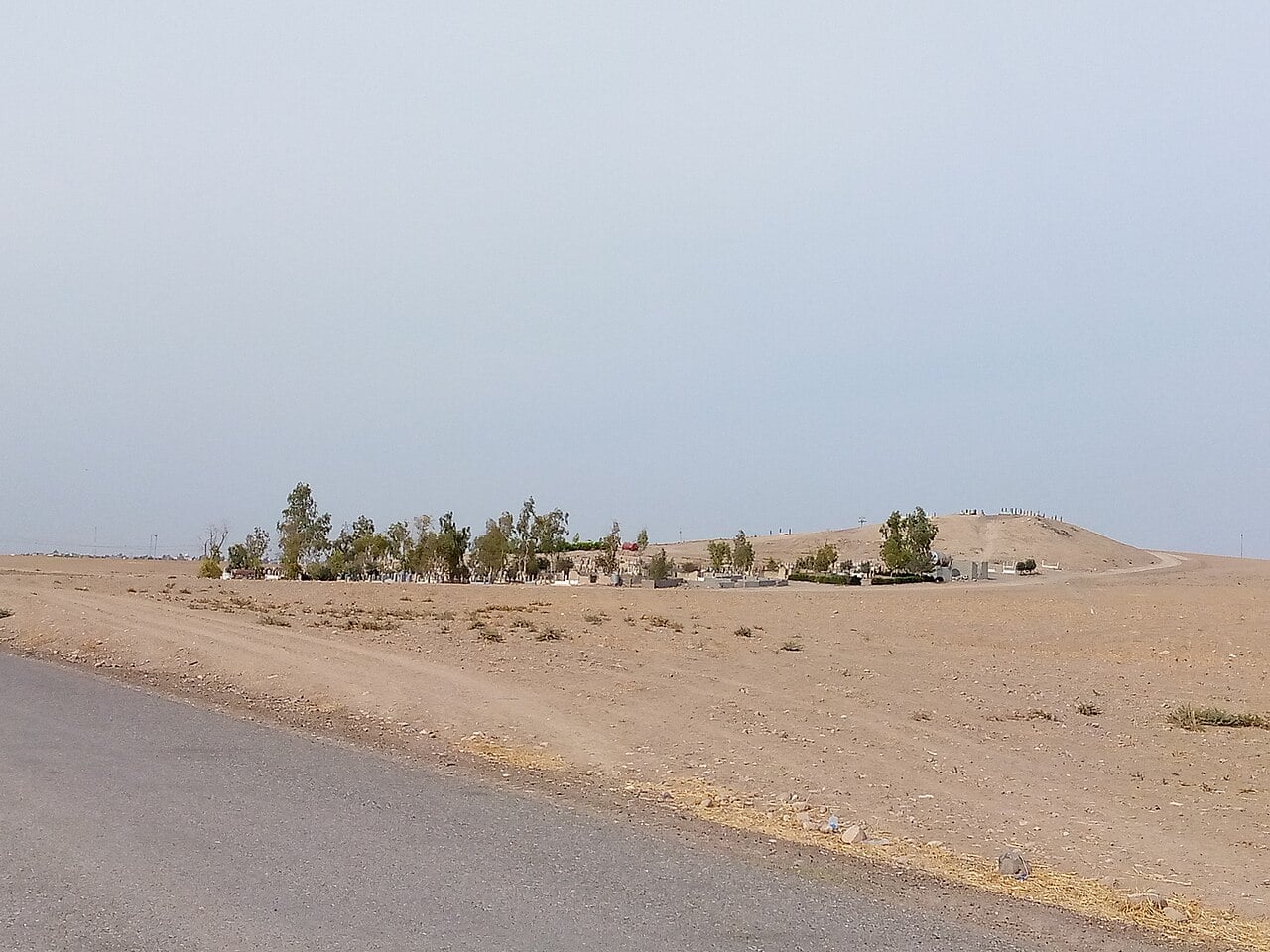
Excavation site of Kurd Qaburstan
Excavation site of Kurd Qaburstan. Credit: JEHAN SHERKO / Wikimedia Commons / CC BY-SA 4.0

Archaeologists at an ancient site in Iraq have uncovered rare cuneiform tablets, mass graves, and evidence of a large-scale siege nearly 4,000 years old, giving researchers what they call the clearest record yet of Bronze Age urban warfare in the region.

The site, Kurd Qaburstan, lies in the Kurdistan region of northern Iraq and is believed to be the ancient city of Qabra. Tiffany Earley-Spadoni, an associate professor of history at the University of Central Florida, led the excavations over two field seasons in 2024 and 2025 with U.S. National Science Foundation support.

Inside a structure called the Lower Town East Palace, researchers recovered 20 cuneiform tablets and more than 100 administrative sealings, the largest tablet find yet made on the Erbil Plain.

The records include palace administrative texts and a letter tied to a senior official. Several bear dates cluster within the same few days, a pattern consistent with the city’s documented fall. Earley-Spadoni said the tablets offer a detailed look at palace operations and the city’s economy in its final days.

Iraq’s rare palace tablets found alongside ancient mass graves

Within the same destruction layers, researchers found the remains of 17 people. Bioarchaeologist Andrea Zurek-Ost of Michigan State University is studying the individuals.

None had been given a formal burial or left with belongings, and some appear to have died where they lay. One person was found collapsed across a stone basin.

A dig in northern Iraq has yielded rare cuneiform tablets, mass graves and a 4,000-year-old siege record that brings a forgotten ancient city back to life. pic.twitter.com/VGssXIZjt0

— Tom Marvolo Riddle (@tom_riddle2025) June 11, 2026

The site also showed two overlapping destruction events matching historical records of Qabra’s siege and conquest by Assyrian king Shamshi-Adad. Charred debris, fallen walls, and broken pottery point to a prolonged assault, making it the most complete archaeological case of Middle Bronze Age siege warfare identified in northern Mesopotamia.

Earley-Spadoni said the rare tablets, mass graves, and other findings from the Iraq site make clear that northern cities like Qabra were as organized and politically significant as the more familiar southern centers of ancient Mesopotamia.

Survey uncovers fortified walls matching an ancient monument

A magnetic survey of more than 80 hectares uncovered a large fortification wall with towers encircling the site, matching the layout shown on the “Victory Stele of Dadusha,” an ancient monument tied to the siege.

Researchers also found a preserved street with an engineered drainage system and spaces used for food preparation and textile work.

Laboratory analysis is continuing, including DNA and isotopic testing on the 17 individuals to trace their origins and determine whether they were related.

2,600-Year-Old Tomb in China Reveals Bronze Bells Meant to Speak to Ancestors

10 June 2026 at 23:01
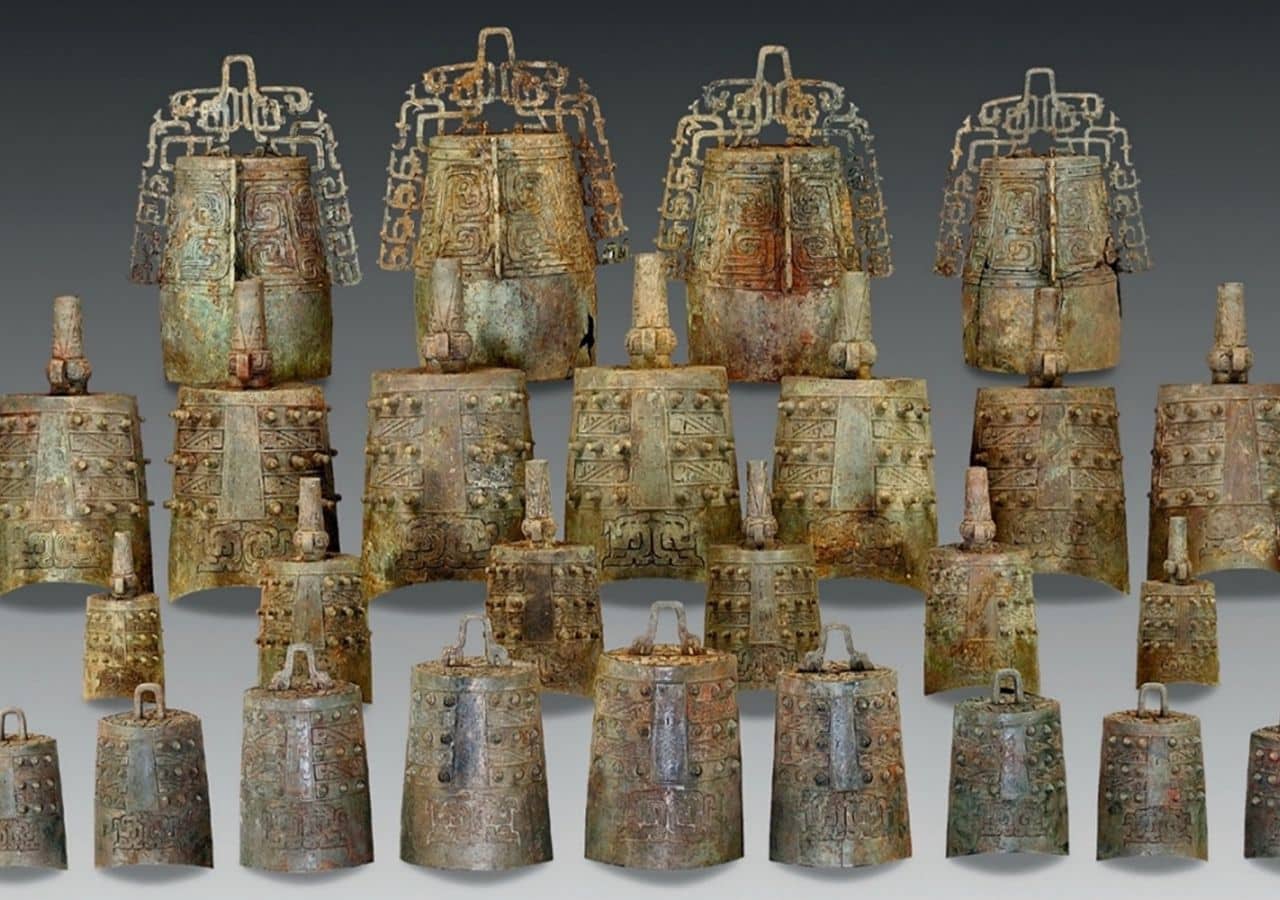
The bronze bell sets from Chinese tomb
The bronze bell set from a Chinese tomb. Credit: Chinglong Tse / CC BY-NC-ND 4.0

A 2,600-year-old Chinese tomb containing a rare set of ancient bronze bells is shedding new light on how Zhou dynasty elites used ritual objects to connect with their ancestors and assert political power.

A new study published in the Cambridge Archaeological Journal examines the tomb of Lord Qiu of Zeng, a ruler who governed a small state in present-day northern Hubei, China, between roughly 675 and 625 BC.

Chinglong Tse of the UCL Institute of Archaeology, the study’s sole author, argues that the bells were far more than musical instruments. They served as sacred links between the living and the dead, carrying sounds believed to reach ancestral spirits in another realm.

The bell set, known as the Zeng Gong Qiu bianzhong, was cast around 677 BC. Its inscriptions show that Lord Qiu commissioned the bells to honor two powerful ancestors and invoke their spiritual power against the rival Chu state, which was expanding aggressively across southern China at the time.

Lord Qiu commissioned bells to battle a rival state

The inscriptions also show that Qiu presented himself as a humble “little child” who had not yet earned the virtue of his forebears. This was a standard ritual expression in Zhou culture, meant to show devotion to ancestors and demonstrate worthiness to inherit their authority.

When archaeologists excavated the ancient Chinese tomb, they found the bronze bells scattered in a disordered heap. The wooden rack had been deliberately taken apart, its pieces spread across the burial chamber.

The bells from the tomb of Marquis Kuan of Zeng at Yejiashan, Suizhou
The bells from the tomb of Marquis Kuan of Zeng at Yejiashan, Suizhou. Credit: Chinglong Tse / CC BY-NC-ND 4.0

This stood in sharp contrast to how Zhou elites typically buried their bell sets, in careful, patterned arrangements designed to sustain their ritual function in the afterlife.

Tse explains that this deliberate disorder likely reflects a major political shift. At some point during Qiu’s reign, Zeng and Chu ended their rivalry. The Chu king gave his sister in marriage to Lord Qiu, turning the two states from adversaries into allies.

The original purpose of the bells, invoking ancestral power against Chu, had become politically inconvenient.

Bronze bells from a Chinese tomb signal political change

To address this, Qiu’s mourners appear to have intentionally deactivated the bells. They commissioned a new, smaller set of funerary bells, placed in an orderly arrangement and dedicated to the same ancestors, to carry on ancestral rites in the afterlife.

Tse notes that the findings show how ritual objects in the ancient Chinese world were not passive symbols. They held real power to shape relationships between the living, the dead, and their ancestors, and that power could be adjusted when political circumstances demanded it.

Ancient Greco-Roman Cemetery Discovered in Egypt’s Nile Delta

6 June 2026 at 00:01
Greco-Roman era cemetry found at Tell Kom Aziza in Egypt's Nile Delta
Greco-Roman era cemetry found at Tell Kom Aziza in Egypt’s Nile Delta. Credit: Egyptian Ministry of Tourism and Antiquities

Egyptian archaeologists have uncovered part of an ancient cemetery from the Greco-Roman period at Tell Kom Aziza in Egypt’s Nile Delta, offering fresh insight into one of the region’s most historically layered sites. The site sits in Beheira Governorate and spans multiple historical periods stretching back thousands of years.

The Egyptian archaeological mission, working under the Supreme Council of Antiquities, found a wide range of burial types during excavations. Some bodies were placed directly in simple earth pits.

Others were buried in mud brick-framed pits, painted plaster coffins, or barrel-shaped pottery coffins. The barrel-shaped pottery coffin was among the most common burial types during the Ptolemaic era.

Tourism and Antiquities Minister Sherif Fathy said that the site holds value far beyond its burial remains. He described it as a window into settlement patterns, daily life, and how people interacted with their environment over millennia.

Burial diversity points to centuries of ritual evolution

Secretary-General of the Supreme Council of Antiquities Hisham El-Leithy said that early analysis of human remains pointed to a notable variety in burial practices. Some graves were individual, while others were collective.

Burial orientations ran along both north-south and east-west axes. Hand positions ranged from resting at the sides to the crossed-arms “Osirian” pose on the chest.

Artefacts retrieved from Greco-Roman era cemetry at Tell Kom Aziza in Egypt's Nile Delta
Artefacts retrieved from the Greco-Roman era cemetry at Tell Kom Aziza in Egypt’s Nile Delta. Credit: Egyptian Ministry of Tourism and Antiquities

El-Leithy added that studying the archaeological layers confirmed the Greco-Roman cemetery was built over earlier settlement levels. Artifacts trace human activity at Tell Kom Aziza from the Old Kingdom through the New Kingdom, the Late Period, and into the Greek and Roman eras.

Mohamed Abdel Badie, head of the Egyptian Antiquities Sector, said that excavations produced a broad range of everyday artifacts. These included pottery and stone vessels, bread molds, multi-purpose stone tools, ovens, and storage jars.

Large quantities of fish, bird, and animal bones were also recovered, offering clues about the diet and daily habits of the site’s ancient residents.

Wild boar burials found at Egypt’s Greco-Roman cemetery

Among the more unusual finds, mission chief and Beheira Antiquities Director Khaled Abdel Ghani Farhat reported the discovery of complete wild boar burials within one of the archaeological layers.

Pottery vessels from cemetry at Tell Kom Aziza in Egypt's Nile Delta
Pottery vessels from the cemetery at Tell Kom Aziza in Egypt’s Nile Delta. Credit: Egyptian Ministry of Tourism and Antiquities

He said that this is rare at ancient Egyptian funerary sites, given the pig’s symbolic association with the god Set. The find may suggest the boar played an economic or livelihood role at the site during a specific period of use.

Farhat said that the findings confirm Tell Kom Aziza is more than a burial ground. It is a detailed archaeological record of human life across successive historical eras. Further excavation seasons are expected to uncover more of what the site still holds.

Ancient Maya Monument Reveals Oldest Known Calendar Date in Mexico

5 June 2026 at 19:50
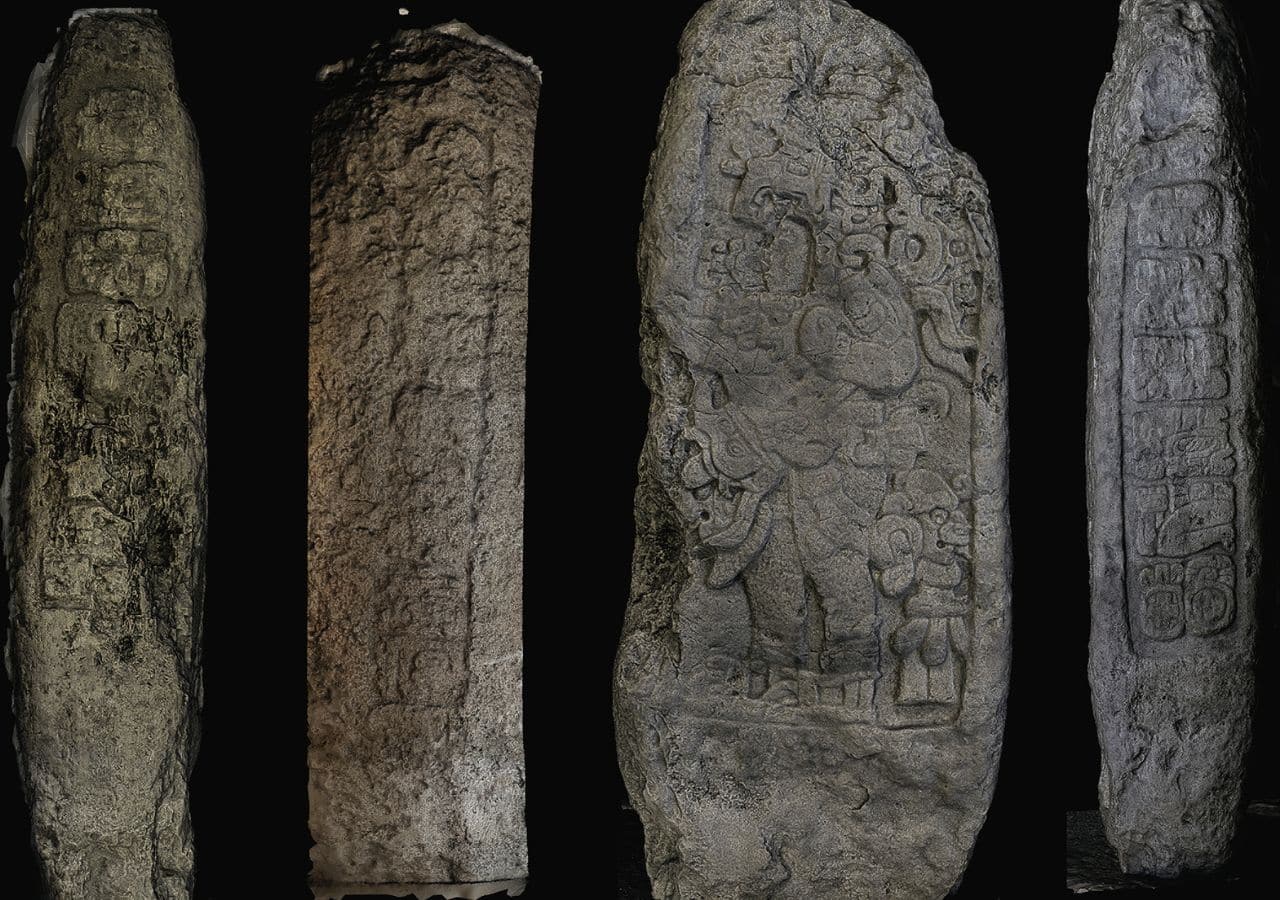
Stela 45 monument. Back face, left side, front face, and right side
Stela 45 monument. Back face, left side, front face, and right side. Credit: Kenichiro Tsukamoto / CC BY-NC 4.0

Archaeologists working at an ancient Maya site in southern Mexico have found what they say is the earliest known evidence of Maya kingship and calendar use in the region.

Kenichiro Tsukamoto, an archaeologist at the University of California, Riverside, led the study published in Ancient Mesoamerica. His team analyzed three stone monuments at El Palmar, a site in southeastern Campeche, Mexico.

One of them, Stela 46, carries an inscription dated to A.D. 180. That makes it the oldest confirmed “Long Count” calendar date discovered in the Maya Lowlands.

The Long Count is a dating system the ancient Maya used to record historical events in a fixed chronological order. Before this discovery, a stone monument at Tikal held that record with a date of A.D. 292. The El Palmar inscription predates it by 112 years.

Stone monuments link Maya kingship to an ancient calendar

What distinguishes Stela 46 from earlier finds is its direct connection to historical rulers and events. A king named Ajaw K’al Ubaah acceded to the throne in A.D. 131. Some 49 years later, in A.D. 180, he commissioned the stela as part of a royal ritual.

Alongside the Long Count, the inscription also incorporates the 260-day divinatory calendar, binding the royal event to a specific ceremonial date. No earlier Long Count inscription had ever been linked to a named ruler, the researchers said.

Stela 46. Left side, front face, and right side
Stela 46 monument. Back face, left side, front face, and right side. Credit: Kenichiro Tsukamoto / CC BY-NC 4.0

To read the heavily worn carvings, researchers combined traditional photography with photogrammetry and a high-resolution 3D scanner called Artec Spider II. The device captures detail as fine as 0.1 millimeters (0.0039 inches). It uncovered inscriptions that scholars had previously missed entirely.

The carvings also show that the king carried two royal titles, pointing to an already established order of royal authority at the site.

Monument traces El Palmar’s rulers back 17 generations

A second monument, Stela 20, strengthened the picture of Maya kingship at El Palmar. Its text identifies the ruler who commissioned it as the 17th king in a successive royal line.

Using the estimated average reign of 22.5 years for Classic Maya kings, the team calculated that the lineage’s first ruler likely rose to power between A.D. 102 and 154. That closely matches the accession date recorded on Stela 46.

A third monument, Stela 45, records the accession of a ruler named Tz’u Chak Ahk in A.D. 342. Together, the three stelae trace a royal dynasty from the second century A.D. to at least A.D. 884, one of the longest recorded among ancient Maya kingdoms.

Tsukamoto noted that El Palmar rose during a turbulent period. Several large Maya polities collapsed around A.D. 150 due to drought, soil erosion, and political instability. El Palmar appears to have grown as a new power center in their place.

The study concludes that calendar systems did more than track time. At El Palmar, they helped rulers legitimize and hold power for more than 700 years.

https://youtu.be/2sGZRo5POf8?si=wF6pXkzKrpiZuZ88

❌