
Normal view

The Neighboring Cultures of the Ancient Greeks

12 June 2026 at 02:31
Scythian rider
A gold plaque depicting a Scythian on horseback. Credit: Public Domain / Wikimedia Commons

The ancient Greeks, renowned for their cultural and intellectual achievements, interacted with numerous neighboring cultures that influenced and enriched their own civilization. Understanding these lesser-known cultures provides valuable insights into the complex web of interactions that shaped the ancient world, making this topic still relevant today.

As one of the most popularly studied civilizations of antiquity, the ancient Greeks tend to overshadow many of the neighboring cultures they interacted with.

However, the Greeks shared the ancient world with a myriad of other interesting cultures and civilizations, some of which are severely underappreciated in mainstream historical discourse.

In this article, we’ll be skipping over the other “heavyweights” of the ancient world, such as the Romans, Egyptians, Persians, and Phoenicians to focus on some of the lesser-known cultures the Greeks were familiar with to various extents.

What did the ancient Greeks think of neighboring cultures?

The term “barbarian” likely finds its roots in the Sumerian word “barbar,” which meant “foreigner.” In Greek, it served as both a loan word and an onomatopoeic representation, mimicking the unintelligible babbling sounds that the Greeks associated with foreigners speaking their languages.

Originally, “barbaroi” served as a neutral, collective name for all non-Greeks, without inherently negative connotations. However, over time, the term acquired a negative meaning, reflecting the prevailing Greek perception of non-Greeks as uncivilized or inferior.

As noted by the academic Stavros Moutsios,  “This political designation of the barbarians, however, did not entail lack of acknowledgment nor of admiration of their achievements.” Indeed, the ancient Greeks often displayed a great deal of curiosity toward neighboring cultures and civilizations.

A good example of this was the practice of religious syncretism, whereby the Greeks would merge the gods of their pantheon with similar foreign deities. For example, the Graeco-Egyptian god Serapis possessed a combination of the Egyptian deities Osiris and Apis with the Greek deities Hades and Demeter.

Naturally, the perceptions of the Greeks toward other cultures varied a great deal. Often, our modern preconceptions of ancient peoples are shaped by the surviving literary sources written by ancient Greek authors about neighboring peoples who were themselves not literate.

The Scythians

The Scythians were one of the most enigmatic peoples of antiquity, famous for their mastery over horses. To call the Scythians “neighbors” of the ancient Greeks is somewhat of a misnomer since the Scythians were nomads and had no fixed borders, but the Greeks had fairly frequent contact with them through trade and war.

The Scythians were an Eastern Ianic people who inhabited the region north of the Black Sea, in present-day Ukraine, southern Russia, Kazakhstan, and parts of Central Asia, from around the 9th century BC to the 4th century AD.

Our main source on the perceptions of the ancient Greeks regarding the Scythians is the accounts of the historian Herodotus of Halicarnassus and later Greek writers. Incidentally, Herodotus, the”Father of History”, is also our main literary source on the Scythians generally.

According to Herodotus, the arrival of the Scythians led to conflict among the Cimmerians, with the royal tribe wanting to defend their lands and the rest of the population seeking to flee. Another account stated that the Scythians chased the Cimmerians out of their territory, forcing them to migrate south into West Asia.

Scythian
A Scythian depicted on ancient Greek red-figure pottery. Credit: Sailko / CC BY-SA 3.0 / Wikimedia Commons

As time passed, the image of the Scythians in Athens became the quintessential stereotype used for non-Greeks, and they were associated with drunkenness due to Greeks’ caricatural representation of foreigners as unmoderated drinkers.

Later Greek literature transformed the Scythian prince Anacharsis into a legendary figure representing “Barbarian wisdom.” He became one of the Seven Sages of Greece and an ideal “man of nature” or “noble savage” figure. Ephorus of Cyme, a 4th-century BC historian, idealized the Scythians as “invincible” people, creating a fictitious account of a legendary Scythian king named Idanthyrsos who defeated the legendary pharaoh Sesostris and ruled all of Asia. This perception of the Scythians as a powerful and wise people became a tradition in Greek literature.

The Scythians were also included in Greek mythology, with mythical Scythian characters appearing in stories. Herodotus of Heraclea, for instance, portrayed Teutarus, a mythical Scythian, as a herdsman who served Amphitryon and taught archery to Heracles. Additionally, the Titan Prometheus was described as a Scythian king, and his son Deucalion was also linked to the Scythians in Greek myths.

The Thracians

The Thracians were a group of Indo-European-speaking people who inhabited significant portions of Southeast Europe during ancient history. They mainly resided in regions that now correspond to modern-day Bulgaria, Romania, and northern Greece. However, Thracian settlements were not confined solely to Southeast Europe; they also extended to north-western Anatolia (Asia Minor) in what is present-day Turkey.

The Greeks and Romans described Thracian culture as tribal, and they remained largely disunited until the establishment of the Odrysian kingdom. The Odrysian Kingdom was a state union of over 40 Thracian tribes and 22 kingdoms that flourished from the 5th century BC to the 1st century AD. It encompassed mainly present-day Bulgaria, with extensions into parts of Southeastern Romania (Northern Dobruja), Northern Greece, and modern-day European Turkey.

By the fifth century BC, Herodotus referred to the Thracians as the second-most numerous people in the known world after the Indians and potentially the most powerful, had it not been for their lack of unity. The Thracians were generally not known for constructing cities, and Seuthopolis was their sole polis.

Thracians Greek pottery
Orpheus amongst the Thracians. Side A of an Attic red-figure bell-krater, c. 440 BC. Credit: Metropolitan Museum of Art / CC BY 2.5

The Greeks frequently fought with the Thracians but also admired them for their martial prowess and hired them as mercenaries. Both Alexander the Great and his father Philip II fought on the Thracians on various occasions.

The Thracian ruler Kersebleptes was Philip’s most consequential Thracian enemy. Over a series of campaigns from 356 to 340 BC, Philip II succeeded in bringing Kersebleptes under his control as a tributary vassal, and in the process, he conquered a substantial portion of Thrace. Alexander again successfully fought the Thracians – among the other peoples – during the Balkan Campaign of 335 BC.

The Phrygians

The Phrygians were an ancient Indo-European-speaking people who resided in central-western Anatolia. Ancient Greek authors used “Phrygian” as a broad term to refer to a diverse ethnocultural grouping situated mainly in the central regions of Anatolia, rather than denoting a single “tribe” or “people.”

The ethnolinguistic homogeneity of the Phrygians is subject to debate. According to Herodotus, the Phrygians were originally dwelling in the southern Balkans under the name of Bryges (Briges), but they later changed their name to Phryges after migrating to Anatolia through the Hellespont.

While numerous historians purport the theory of a Phrygian migration from Europe to Asia Minor around 1200 BC, Anatolian archaeologists have largely dismissed this notion. Instead, it has been proposed that the Phrygian migration to Asia Minor, which Greek sources indicate took place shortly after the Trojan War, actually occurred much earlier and in multiple stages.

Phrygian soldiers
Phrygian soldiers depicted on a reconstruction of a Phrygian building in Turkey. Credit: Carole Raddato / CC BY-SA 2.0 / Wikimedia Commons

The Greeks and Phrygians had significant cultural connections, particularly in the realm of music. The earliest traditions of ancient Greek music were partly influenced by Phrygian music, which was transmitted through the Greek colonies in Anatolia. The Phrygian mode, known as the warlike mode in ancient Greek music, was one of the musical elements borrowed from the Phrygians.

The Phrygian king, Midas, renowned for his “golden touch,” was said to have been tutored in music by the legendary Orpheus himself, according to mythological accounts. Moreover, the aulos, a reed instrument with two pipes, was another musical invention attributed to Phrygia and subsequently embraced by the Greeks.

In classical Greek iconography, Paris, a Trojan prince famous for abducting Helen in the Iliad, is depicted as non-Greek by wearing a Phrygian cap. This distinct headgear was also worn by Mithras and has persisted in modern imagery as the “Liberty cap” of the American and French revolutionaries, symbolizing freedom and rebellion. More amusingly, the Smurfs also wear the Phrygian cap.

The Importance of Cultural Exchange in the Ancient World

In the context of increasing globalization, examining how ancient cultures, like the Greeks and their neighbors, interacted and exchanged ideas is crucial. These exchanges facilitated the spread of technology, religious practices, and art forms, which had a profound impact on the development of Western civilization.

  1. Technological Exchange: The Greeks adopted various technologies from their neighbors, such as the alphabet from the Phoenicians, which became the basis for the Greek writing system. This exchange was pivotal in the development of Greek literature and philosophy.
  2. Religious Syncretism: Religious practices were often blended, as seen in the fusion of Greek and Egyptian deities into figures like Serapis, symbolizing a blending of beliefs that enriched both cultures.
  3. Artistic Influences: Greek art, especially in pottery and sculpture, shows influences from Thracian, Scythian, and Phrygian styles, highlighting how these cultures contributed to what we now consider classical Greek art.

Beyond the Myth: The Wild Boar in Ancient Greece

11 June 2026 at 14:47
The Calydonian Boar Hunt is depicted on a Roman frieze. The boar was a significant animal in Ancient Greece.
The Calydonian Boar Hunt is depicted on a Roman frieze. Credit: Ashmolean Museum, Oxford, CC BY-SA 3.0/Wikipedia

The wild boar was a significant animal in Ancient Greece, appearing in their mythology, religious traditions, and daily life. It was a respected and feared creature, valued both as a worthy hunting challenge and as a prized source of food.

The wild boar held a prominent place in Greek mythology, symbolizing immense strength, ferocity, and the untamed nature of the world. Heroes were often defined by their ability to confront and conquer these beasts.

The Calydonian Boar was one of the most famous creatures of Ancient Greek lore. The goddess Artemis sent this gigantic boar to ravage the lands of Calydon as punishment for the king’s neglect of her. This provoked a great hunt that drew the most celebrated heroes of the age, including the hero Meleager and the huntress Atalanta, highlighting the animal’s status as an epic adversary.

As part of his legendary labors, the hero Heracles was tasked with capturing this ferocious Erymanthian Boar, which was terrorizing the region of Mount Erymanthos. Heracles had to use his cunning and strength to chase the beast into deep snow and trap it alive. The depiction of this feat was a favorite subject in ancient vase painting and sculpture.

These myths show that the boar was not merely an animal. It was a metaphorical challenge to human civilization, a representation of untamed nature that only the greatest heroes could overcome.

Wild Boar hunt
Wild boar hunt in Ancient Greece, as depicted in the François vase. Credit: Sailko , CC BY 3.0/Wikipedia

The wild boar in daily life and hunting in Ancient Greece

Hunting was a crucial activity in Ancient Greece, serving as a rite of passage for young men and a demonstration of courage and skill. The wild boar hunt was one of the most dangerous pursuits.

Hunters typically used spears, javelins, and a pack of trained hunting dogs to corner the animal. Confronting a wild boar was a high-risk activity due to its powerful tusks and aggressive nature when cornered. The hunters’ bravery and strategy were highly respected.

The meat was a highly valued delicacy. It was associated with rich meals and was a staple at religious festivals and banquets. The meat was often roasted, and its fat was used to enhance the flavor of other dishes. It could also be preserved through salting or smoking, ensuring it could be enjoyed year-round.

The Ancient Greek writer Xenophon, in his work Cynegeticus (On Hunting), provided a detailed guide to hunting techniques, emphasizing their role in the education and lifestyle of aristocratic youth. He believed that the discipline and courage required for the hunt were essential for a well-rounded citizen.

Historians and philosophers on the wild boar

Other ancient historians and philosophers also speak of the wild boar, though their perspectives often differ from the more mythological and heroic focus. They were interested in the animal from a more practical and scientific standpoint.

Aristotle mentioned the wild boar in his work History of Animals. He focused on its physical characteristics and behavior, including its ferocity and its place within the animal kingdom. Aristotle was interested in classifying animals and understanding their relationships, and the wild boar was part of this broader biological inquiry.

Plato used the pig, and by extension the boar, as an example but not always in a positive light. In the Republic, for instance, he discusses a “city of pigs” to describe a society that only seeks basic, low-level pleasures, contrasting it with a more refined, ideal city. This shows how the animal was also used as a symbol for a simple or primitive way of life.

Beyond philosophy, the wild boar appears in the works of various other ancient writers, often in the context of history, geography, and mythography. Homer’s epic poems, the Iliad and the Odyssey, feature wild boar hunts. The most famous example is the scar on Odysseus‘s leg, which he received during a boar hunt in his youth, a detail that reveals his identity to his old nurse. This highlights the hunt’s role as a formative event and a mark of a man’s courage.

The Greek geographer and travel writer Pausanias mentioned the Calydonian Boar in his Description of Greece. He notes that he saw the boar’s hide and tusks in a temple, providing a quasi-historical reference to a mythical event, which shows how deeply these stories were believed and integrated into Greek cultural life.

The boar in Ancient Greece represented not only the “invincible enemy” but also a raw, primal force of nature that humans strove to master. Its resilience and strength also made it a symbol of fertility and endurance in certain regional traditions.

Six Ancient Greek Aphrodisiacs Available Everywhere Today

11 June 2026 at 08:26
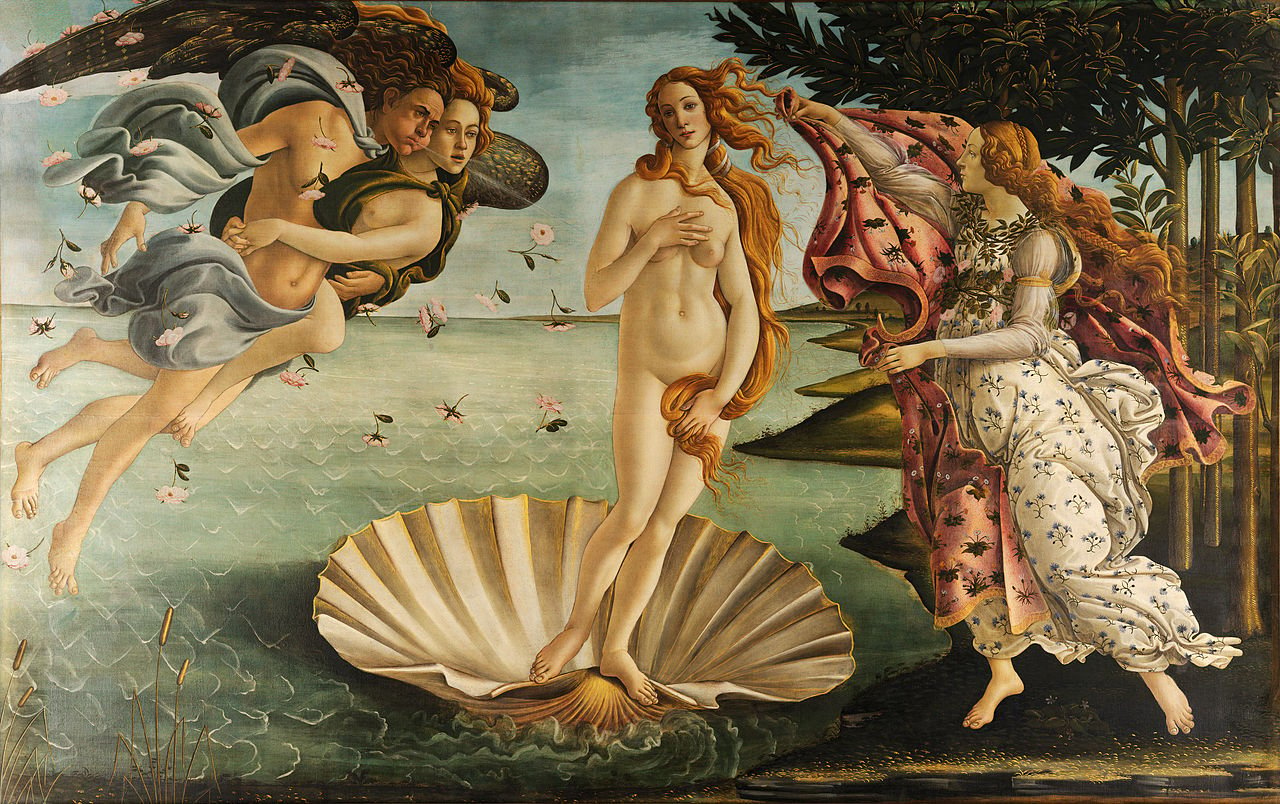
The Birth of Aphrodite-Venus, the Ancient Greek goddess of beauty, sensuality and love.
The Birth of Aphrodite-Venus, the goddess of beauty, sensuality and love. Credit: Wikipedia/Public domain

Ancient Greeks were big believers in aphrodisiacs and ancient love potions and used a variety of fruits, herbs, and other foods in their concoctions. The word “aphrodisiac” itself comes from the ancient Greek goddess of love, Aphrodite.

Those looking to harness the power of ancient Greek love potions don’t need to go on a quest to hunt down obscure ingredients. In fact, six of the most common Greek aphrodisiacs that have been used throughout the centuries can still be found today at your local supermarket.

Natural foods considered aphrodisiacs in Ancient Greece

1. Pomegranates

pomegranate was an ancient greek aphrodisiac food
Pomegranate was considered one of the most common natural aphrodisiac foods in Ancient Greece. Credit: Joergens.mi/Wikimedia commons/CC BY-SA 3.0

Pomegranates have long been lauded for their nutritional properties, as they include many nutrients and antioxidants.

Even back in Ancient Greece, the pomegranate fruit was considered nutritious, and it was also believed, in both ancient times and today, that the juice contains aphrodisiac properties.

The link between pomegranates and sexuality may come from the fact that Aphrodite herself is credited with planting the first ever pomegranate tree in Greek mythology.

2. Truffles

truffles were considered aphrodisiac foods
Truffle hunting in Greece’s Meteora region. Credit: Meteora Museum

Dating as far back as the 1st century AD, this fungus found its way into the limelight as an aphrodisiac.

It is believed that truffles came into existence as a result of the combined action of water, heat, and the power of the god Zeus himself, as Zeus hurled a thunderbolt to Earth which landed close to an oak tree, producing the truffle.

The ancient Greek physician Galen claimed that the truffle, apart from imparting delicious flavor to any dish, can increase sexual prowess.

3. Figs

aphrodisiacs
Figs and plums. Credit: E. Abadjieva/Wikimedia Commons/CC BY-SA 4.0

Figs belong to the category of the most nutritious fruits while at the same time they have at least nine recognized medicinal qualities. Along with grapes, figs were known to be one of the favorite fruit of Ancient Greeks.

Figs are rich in vitamins A, B1, and B2 and minerals such as calcium, iron, phosphorus, magnesium, sodium, and potassium among others. They are recognized as being good for our health for their many proven medicinal qualities.

The ancient Greeks linked figs to sexuality, possibly because the shape of the fruit resembles the shape of female genitalia.

4. Leeks

Similarly, leeks were probably considered an aphrodisiac in Ancient Greece because of their phallic shape.

In ancient Greece, leeks were eaten raw and whole or cooked. They provide tons of flavor to any meal.

Nowadays, people still believe that leeks are an aphrodisiac, as they are in the same family as onions and garlic, which have similar properties.

5. Garlic

At some point in time, people stopped believing that garlic was toxic and started consuming it to prevent illness and congestion, and of course, just because it is delicious.

In ancient Greece, people ate garlic nearly everyday. People began to believe that the spiciness of raw garlic made it a natural aphrodisiac.

Try making the Greek dish skordalia, and you’ll be sure to eat a considerable amount of garlic. It is a mixture of garlic and purée of potatoes, walnuts, almonds, or milk-soaked stale bread.

6. Legumes

lentil
Dried red lentils. Credit: Mytinytank/Wikimedia Commons/CC BY-SA 3.0

Hippocrates, the father of medicine, prescribed legumes, such as lentils, as an essential part of the menu for men hoping to maintain their virility.

Hippocrates advised a variety of legumes to be consumed by the bowlful to those struggling with sexual dysfunction.

Lastly, the Greek philosopher Aristotle was a believer in the notion that lentils with the addition of saffron were essential in maintaining a man’s libido active and in top shape.

❌