

Normal view

Emily Ratajkowski Sets Instagram Ablaze with Sifnos Vacation Snaps

18 June 2026 at 07:31
Emily Ratajkowski Sifnos, Greece
Emily Ratajkowski in Sifnos, Greece. Credit: Emily Ratajkowski/Instagram @emrata

Emily Ratajkowski has turned heads once again, giving her millions of followers a glimpse into her stunning Mediterranean getaway—and adding the Greek island of Sifnos to her travel diary.

Taking to Instagram, the supermodel shared a carousel of photos and videos capturing her days of sun, sea, and island dining. In her caption, she hinted at her itinerary:

“Back on my favorite island (Mallorca!) and trying out some new ones too (🇬🇷)!”

Among the postcards from her trip, fans quickly spotted unmistakable scenes from a traditional restaurant in Sifnos. With its soft Mediterranean light and minimalist Cycladic backdrop, the island choice was a testament to its growing reputation. In recent years, Sifnos has quietly emerged as a favorite hideaway for high-profile travelers seeking authentic island character, world-class gastronomy, and a slower pace of life.

Emily Ratajkowski’s red dress that stole the show

Emily Ratajkowski's red dress
Credit: Emily Ratajkowski/Instagram @emrata

Unsurprisingly, it was Ratajkowski’s signature bold fashion that generated the most buzz. The standout image of the album featured the model posing effortlessly in a jaw-dropping, sheer red see-through dress. Radiating summer confidence, the daring look seamlessly blended high-fashion allure with effortless seaside relaxation—a aesthetic she has masterfully branded over the years.

Alongside the viral red dress, EmRata kept the vacation vibes going with classic bikini shots, documenting her downtime away from the high-glam fashion week runways. By effortlessly weaving together moments from Mallorca and Greece, the model managed to turn a standard travel update into a global trending topic within minutes.

Greece attracts the global jet-set

Ratajkowski’s detour to Sifnos reinforces Greece’s status as the ultimate summer playground for international celebrities. While major hotspots like Mykonos and Santorini usually dominate the headlines, quieter Cycladic islands are rapidly gaining ground among travelers looking for understated luxury and natural beauty.

With its renowned culinary scene and elegant architecture, Sifnos fits that bill perfectly. And when an influencer of Ratajkowski’s caliber shares it with her global audience, the island’s charm gets beamed straight to millions worldwide.

Related: American Model Emily Ratajkowski Joins Jet-Set in Mykonos 
The Waiting Room of 470 BC: Inside an Ancient Greek Medical Clinic

15 June 2026 at 11:57
Ancient Greek Clinic
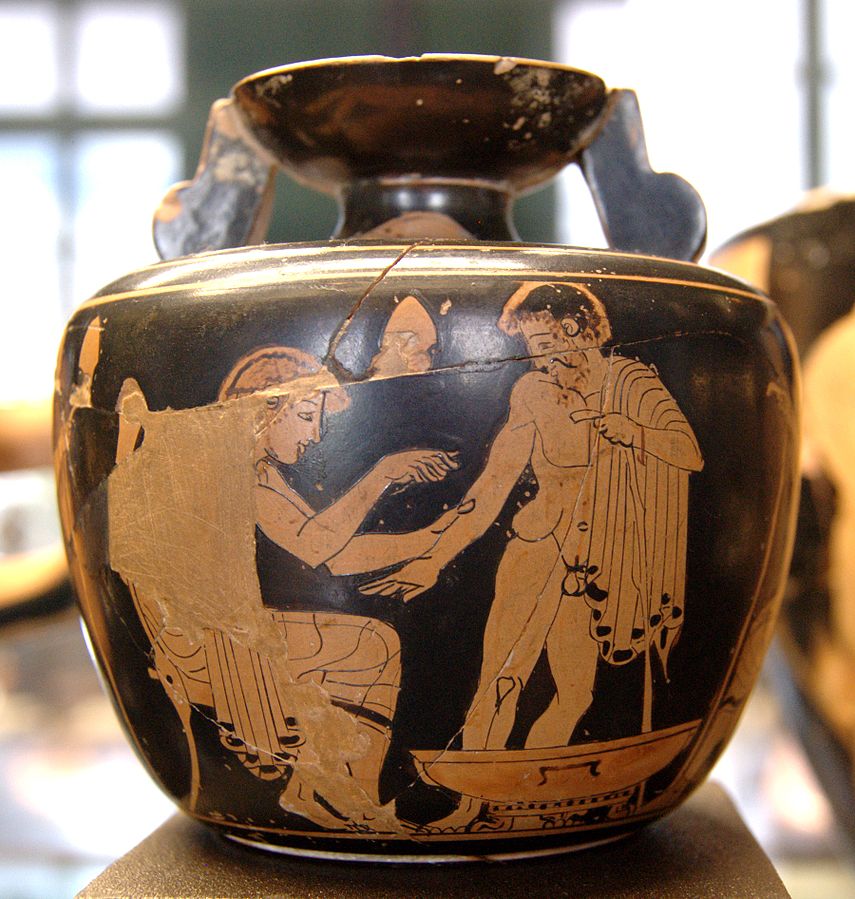
The young physician is depicted in a sitting position using a small type of lancet to stimulate bloodletting from the patient. Credit: Public Domain

The first realistic depiction of an ancient Greek outpatient clinic is on a drawing on a small vase created in Athens around 470 BC and is now on display at the Louvre Museum in France.

The drawing on the vase, called aryvallos, depicts a physician performing bloodletting on a patient. Another five males, four of them with injuries holding canes, are awaiting their turn.

A dwarf holding a hare on his shoulder can also be seen among them. Suction cups on the wall and a copper basin on the floor for blood collection are included in the picture, as well.

Ancient Greek clinic
The waiting patients at the clinic. Credit: Public Domain

The characters depicted in the clinic of ancient Greece

The young physician of light complexion is depicted in a sitting position. He has a small type of lancet utilized for bloodletting from a vein of the right arm of an almost nude, bearded man with dark hair who is standing and supporting himself with a cane held in his left hand.

The painting includes another five male figures. On the right side of the patient, there is a male figure. That man is sitting, and his upper body is unclothed. He has a beard and dark hair. A bandage can be seen covering his upper arm.

Another man who is dressed and also has a beard and dark hair is standing behind him, raising his right hand in a gesture, as if addressing the physician. A bandage covers part of his left arm. It can be assumed that the two latter men are awaiting their turn to be examined.

An additional bearded man with dark hair is standing behind the previous one. He stands and crosses his feet. He has his right hand on his waist and is leaning to the left, supported by a crunch.

This last figure is looking down at a bearded nude dwarf who carries a hare on his shoulder. Finally, there is another man, who is dressed and has no beard and a light complexion. He appears to be moving with the support of a cane towards the rear of the physician who is sitting. A bandage covers part of his left leg.

On the wall, above the physician who is sitting, three suction cups can be seen—two on his left and one on his right side.

Earliest known realistic scene of medical service

The vase (aryvallos) depicts the earliest known realistic scene of medical service in Western history, the authors of a recent study wrote in the Journal of Clinical Medicine.

“All previous Ancient Greek scenes which dealt with relevant themes, invariably included ‘holy’ and divine interventions,” says co-author Manolis Stefanakis, a professor of classical archeology at the Department of Mediterranean Studies of the University of the Aegean.

In speaking with the Athens Macedonia News Agency (AMNA), the professor further explains:

“Trauma management, as well as bloodletting seem to form part of the everyday medical practice of that time, while gifts to physicians (one of the possible explanations of the dwarf’s hare, which is depicted in the aryvallos scene) were common.

Additionally, historical sources reveal that Ancient Greek physicians were well-paid and much respected. Medicine has always been an honorable practice throughout the centuries.

Through the illustration of the vase, the painter approaches in a rudimentary, but clear way, issues such as the space and furniture of the doctor’s office, the doctor’s position and attitude, his morals and remuneration, the patient’s attitude, the dressing of a wound—with indirect reference to the practice of phlebotomy and the use of bloody suction cups—as well as the special case of achondroplasia, a genetic disorder that is the most common form of dwarfism.”

The vessel stands out for its two particularities, namely its shape and the figurative decoration it bears on the belly band.

As for the shape, it is relatively rare to find a spherical aryvallus in Attica, a shape—and a vase in general—that is mostly assigned to Corinth during the 7th and 6th centuries BC.

“As far as the figurative decoration is concerned, the vase stands out both for its red-figure technique and its historical contribution to the daily life of the ancient Athenians, being the only figurative testimony to date of an active Athenian medical center,” Stefanakis told AMNA.

❌