A car that exploded in Moscow’s Konkovo district on June 9 belonged to an employee of a scientific and industrial enterprise, the Russian Investigative Committee said.
Two teenagers have been detained on suspicion of involvement in the blast. Investigators determined that a girl acting on instructions from handlers retrieved the explosive device from a cache and passed it to a second teenager, who attached both the device and a GPS tracker to the car.
Criminal charges have been filed on suspicion of attempted murder and the illegal manufacture and storage of explosives. Both suspects have been formally charged, the Investigative Committee said.
The car was parked at the intersection of Vvedensky and Butlerov streets when it exploded on June 9. No one was in the vehicle at the time and there were no casualties. The Investigative Committee said the same day that the detonation had been controlled — during an inspection, a suspicious object was found under the vehicle and “neutralized by detonation.”
The independent Russian investigative outlet Agentstvo reported that the car belonged to an employee of the M.F. Stelmakh Polyus Research Institute Technopark, which is near the explosion site. The technopark is a Rostec subsidiary.
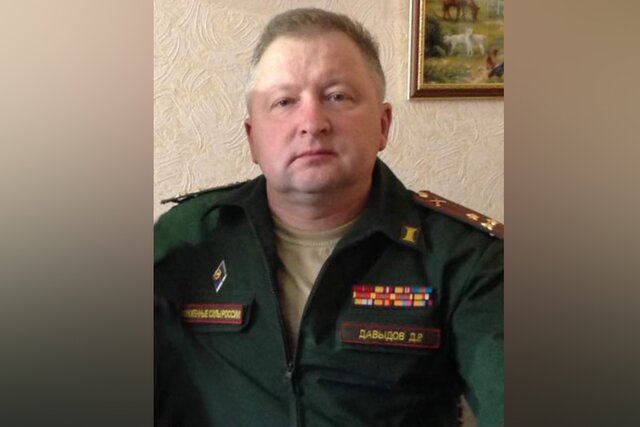
Another car explosion occurred yesterday in Balashikha, outside Moscow, in a neighborhood built for retired military personnel. A BMW X3 exploded as the driver got in and began to pull away; he was killed at the scene. The victim has not been officially identified, but Telegram channels claim it was Damir Davydov, head of the Main Missile and Artillery Directorate (GRAU) of Russia’s Defense Ministry.
At Meduza, we are committed to transparency about our use of artificial intelligence in the newsroom. The story you’re reading was written by one of our living, breathing journalists and translated from Russian using an AI model configured to follow our strict editorial standards. This translation process is the result of extensive testing and refinements to ensure our English-language coverage is timely and accurate. A Meduza editor reviews every draft before publication.
If you find any errors in this translation, please contact us at reports@meduza.io.
Russia’s Communist Party (KPRF) will not field former deputy Valery Rashkin as a candidate in the upcoming State Duma elections, sources told the Russian business daily Vedomosti. Rashkin’s candidacy was blocked both in a single-member district and on the party list.
Rashkin won a State Duma seat on the KPRF ticket six times, first entering the chamber in 1999. In 2022, shortly after he secured another term in State Duma elections, police stopped him in the Saratov region at the wheel of a car with a dead moose in the trunk. He received a three-year suspended sentence for illegal hunting and lost his seat.
His conviction was expunged in 2024, making him legally eligible to run again. In early June, several outlets including RBC and Vedomosti reported, citing sources, that the KPRF planned to run Rashkin in the Angarsk single-member district in the Irkutsk region.
Meduza reported in early June that the KPRF would decline to field prominent politicians in districts, with sources saying the Kremlin had advised party leadership to “take the edge off competition.”
At Meduza, we are committed to transparency about our use of artificial intelligence in the newsroom. The story you’re reading was written by one of our living, breathing journalists and translated from Russian using an AI model configured to follow our strict editorial standards. This translation process is the result of extensive testing and refinements to ensure our English-language coverage is timely and accurate. A Meduza editor reviews every draft before publication.
If you find any errors in this translation, please contact us at reports@meduza.io.
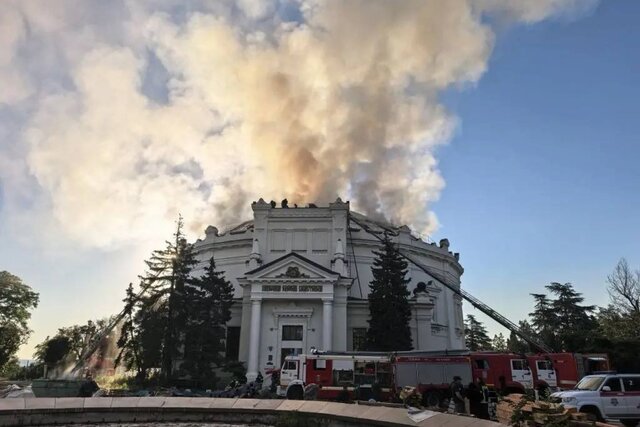
Franz Roubaud’s panoramic painting The Siege of Sevastopol has been “virtually destroyed” in a Ukrainian drone strike, Mikhail Razvozhaev, the Russian-appointed governor of Sevastopol, said.
The attack came in the early hours of June 10. Razvozhaev reported at around 4 a.m. Moscow time that the museum’s roof was on fire. Hours later, he said the blaze had been declared a level four, with more than 80 people working at the scene.
“The situation is extremely dire: it is already clear that Franz Roubaud’s great masterpiece has been virtually destroyed,” Razvozhaev wrote.
He claimed the Ukrainian Armed Forces had deliberately targeted the museum. Ukraine has not commented on the attack.
The museum said, however, that fragments of the original Roubaud painting were undamaged. The museum holds 39 fragments of the original canvas in total; at the time of the fire, all of them were stored elsewhere.
“What was inside the building was a canvas painted in 1954 by a group of Soviet artists,” the museum said.
The panorama The Siege of Sevastopol was unveiled in 1905, marking the 50th anniversary of the first defense of the city during the Crimean War. It was created by Franz Roubaud, widely regarded as the founder of Russia’s school of battle and panoramic painting.
Roubaud spent four years on the work. For his subject, he chose the repulse of the assault on Malakhov Kurgan on June 6 (18), 1855. The building housing the painting was designed by military engineer Friedrich Oskar Enberg.
A fragment of “The Siege of Sevastopol”
In June 1942, a German air raid and artillery bombardment set the panorama building ablaze. To save the painting, workers cut it into sections, but only two-thirds of it — 86 fragments — survived. Those pieces were evacuated to Novorossiysk and then transported to Moscow, where Soviet artists used them to reconstruct the panorama. The museum reopened on the 100th anniversary of the “first defense.”
At Meduza, we are committed to transparency about our use of artificial intelligence in the newsroom. The story you’re reading was written by one of our living, breathing journalists and translated from Russian using an AI model configured to follow our strict editorial standards. This translation process is the result of extensive testing and refinements to ensure our English-language coverage is timely and accurate. A Meduza editor reviews every draft before publication.
If you find any errors in this translation, please contact us at reports@meduza.io.
Ukrainian drones and missiles struck Russian regions and occupied Crimea overnight on June 10. Russia’s Defense Ministry said air defense forces shot down 326 drones.
Oleg Nikolayev, head of the Chuvash Republic, said Cheboksary came under a missile attack. The Telegram channel Astra, after analyzing videos and photographs posted on social media, reported that the strike hit the defense enterprise “VNIIR-Progress” in Cheboksary — a facility that has previously been targeted by drones and missiles on multiple occasions. According to the Ukrainian Telegram channel Exilenova, the city was struck with “Flamingo” missiles.
Warning. The video contains profanity.
In the Vladimir region, a Ukrainian drone attack ignited fires at two sites in the Kameshkovsky and Alexandrovsky districts, regional Governor Alexander Avdeyev said. There were no casualties.
Astra reported that the Kuybyshev oil refinery in Samara — one of the largest enterprises in the region’s oil sector, owned by Rosneft — caught fire following a Ukrainian drone attack. Authorities have not officially confirmed this. The region declared a missile and drone alert.
At Meduza, we are committed to transparency about our use of artificial intelligence in the newsroom. The story you’re reading was written by one of our living, breathing journalists and translated from Russian using an AI model configured to follow our strict editorial standards. This translation process is the result of extensive testing and refinements to ensure our English-language coverage is timely and accurate. A Meduza editor reviews every draft before publication.
If you find any errors in this translation, please contact us at reports@meduza.io.
A car bomb killed a senior Russian defense official outside Moscow early Tuesday, June 9. Around 5:30 a.m., a BMW X3 exploded near Koldunova Street in Balashikha’s Aviatorov neighborhood as the driver pulled out of a parking space. Bystanders reached the driver while he was still alive, but he died at the scene.
The Russian federal Investigative Committee and the prosecutor’s office for the Moscow region confirmed an explosion had taken place in Balashikha but did not name the victim. The Investigative Committee said a criminal case had been opened but did not disclose the charge.
Several Telegram channels reported that the victim was Damir Davydov, head of the Main Missile and Artillery Directorate (GRAU) of Russia’s Defense Ministry. The Russian Telegram channel VChK-OGPU, Ukrainian Defense Ministry adviser Serhiy Sternenko, and the Ukrainian outlet Insider UA all reported the same name. A source cited by the independent Russian outlet Astra also confirmed Davydov’s death, saying an improvised explosive device had been placed under the vehicle. The Russian business daily Kommersant reported that the device had the explosive force of up to 500 grams of TNT.
Davydov was listed in the Myrotvorets database. According to Ukrainian sources, Davydov was 57 and grew up in the closed city of Penza-19, also known as Zarechny. His father, Rafail Davydov, worked at the Start production association, which manufactured nuclear missiles. Shot, a Russian Telegram channel with ties to law enforcement, put his age at 62.
A December 2009 article in the Defense Ministry newspaper Krasnaya Zvezda identified Davydov as commander of the Central Test Technical Bureau attached to the 51st Arsenal of the Defense Ministry’s Main Missile and Artillery Directorate, with the rank of colonel. He appeared again in a 2019 article, which placed him in a Russian Defense Ministry delegation to Kazakhstan — by then serving as head of a GRAU directorate.
By the evening of June 9, neither Russian law enforcement nor state media had officially named the victim. The independent Russian investigative outlet Agentstvo noted that in earlier cases involving senior military figures, the victims had been publicly named the same day.
The Aviatorov neighborhood, where the explosion occurred, was originally built as a residential district for military retirees, Agentstvo reported. In April 2025, Lieutenant General Yaroslav Moskalik, deputy head of the Main Operations Directorate of the Russian Armed Forces General Staff, was killed when a bomb destroyed his car in the same neighborhood. The Investigative Committee opened a terrorism case, alleging that the attack was carried out on the orders of Ukraine’s Security Service, and arrested the alleged perpetrator, Ignat Kuzin. In November 2025, Kuzin was sentenced to life in prison.
At Meduza, we are committed to transparency about our use of artificial intelligence in the newsroom. The story you’re reading was written by one of our living, breathing journalists and translated from Russian using an AI model configured to follow our strict editorial standards. This translation process is the result of extensive testing and refinements to ensure our English-language coverage is timely and accurate. A Meduza editor reviews every draft before publication.
If you find any errors in this translation, please contact us at reports@meduza.io.
Last month, four Russian military satellites — Kosmos-2610, Kosmos-2611, Kosmos-2612, and Kosmos-2613 — altered their orbits and moved toward ICEYE-X36, a radar satellite that has been supplying data to Ukraine’s military since 2022, according to a May 22 report by the analytics firm Integrity ISR.
The dangerous maneuvers came several months after the Finnish-American satellite operator ICEYE and Ukraine’s Defense Ministry signed a new cooperation agreement. Under its terms, Ukraine’s armed forces received expanded access to high-quality radar satellite imagery.
Unlike optical reconnaissance satellites, ICEYE’s satellites use synthetic aperture radars — known as SAR — to capture images.
This allows for high-quality surface imaging regardless of weather or time of day.
What do we know about these “hunter” satellites?
They were launched on April 17 at 2:17 a.m. Moscow time from the Plesetsk Cosmodrome aboard a Soyuz-2.1b rocket. As is standard with military launches, Roscosmos disclosed nothing about the payload beyond confirming that “spacecraft in the interests of Russia’s Defense Ministry” had successfully reached orbit. The agency did not disclose how many spacecraft were aboard.
The U.S. Space Force, which tracks all artificial objects in orbit, logged the launch in its Space-Track catalog. That data — also analyzed by independent researchers — shows that a Volga upper stage separated from the rocket after launch. Cosmos-2609 separated from the stage approximately two hours later; two hours after that, five additional spacecraft — Cosmos-2610, Cosmos-2611, Cosmos-2612, Cosmos-2613 and Cosmos-2614 — simultaneously entered independent flight.
No information about the type, purpose, or characteristics of these satellites is available from open sources. Bart Hendrickx, an independent researcher of the Russian space program, told Meduza that these may be a new type of satellite, since the combination of the Soyuz-2.1b launch vehicle and the Volga upper stage is unusual. Previously, the Volga upper stage was used with Soyuz-2.1v rockets, and only once with a Soyuz-2.1a.
What happened in orbit?
The first satellite, Kosmos-2609, was placed into orbit from the upper stage at an altitude of 495–500 kilometers, with an inclination of 98.25 degrees. The others were placed at 547 kilometers, with an inclination of 96.95 degrees.
Between May 14 and 20, the satellites began maneuvering: their orbital inclination shifted by 0.8 degrees. As a result, they ended up in the same orbit as ICEYE-X36, at an altitude of 550 kilometers and an inclination of 97.8 degrees.
Changes in orbital inclination of the Kosmos satellites and ICEYE-X36
By May 29, the satellites had closed in to near-maximum proximity. Four such episodes were recorded between Kosmos-2614 and ICEYE-X36 over two and a half hours. In two of them, the gap between the satellites shrank to roughly 13 kilometers. In the other two, to 16 and 18 kilometers.
According to Space-Track and the public portion of the TAROT Saber Astronautics platform, the Kosmos satellites remain in the same orbit as the Finnish satellite, leaving them positioned to close in again at any time.
According to Integrity ISR, the Russian satellites remain in the same orbital plane with similar inclinations and a small difference in a measurement known as the right ascension of the ascending node, or RAAN. While inclination measures the tilt of a satellite’s orbit relative to the equator, RAAN marks where that orbit crosses the equatorial plane, which can occur at any of 360 degrees. The Cosmos satellites and ICEYE are within 0.01 to one degree of each other on that scale, an extremely tight margin for low Earth orbit.
The behavior of these satellites follows a pattern consistent with so-called inspector satellites — spacecraft that Russia and other nations have long tested and deployed for eavesdropping on, surveilling, and possibly even destroying other spacecraft. Meduza has previously reported on such spacecraft and their potential use for surveillance and sabotage in orbit.
Why this particular satellite? Why now?
ICEYE has been supplying high-quality satellite imagery to government agencies and private firms since 2014. The company’s satellites can capture images at resolutions as fine as 25 centimeters; some newer models can achieve 16.
ICEYE’s satellites and those of similar companies use SAR (synthetic aperture radar) technology. Rather than an optical camera, an antenna sends a radio beam toward Earth and records its reflection from the planet’s surface. Unlike a conventional optical camera, SAR can render precise terrain contours. And because the radio beam penetrates clouds and reflects regardless of lighting conditions, high-precision images can be captured several times a day — at nearly any hour — and changes on the ground can be tracked throughout the day.
ICEYE says that its unique phased array means the antenna does not need to rotate mechanically, which greatly increases the field of view, imaging speed, and the ability to switch between different modes. The technology is used for a wide range of purposes — monitoring sea ice and tracking oil spills, among others — and it is nearly indispensable for military applications.
ICEYE has launched 70 satellites, with Space-Track showing 54 as currently active. The company has contracts with military organizations from several Western nations, including the United States, Poland, Germany, and Finland.
Since the start of Russia’s full-scale invasion of Ukraine, ICEYE has signed an agreement with the Serhiy Prytula Charitable Foundation. Under the terms of the deal, the foundation funded full access for Ukraine’s armed forces to one of ICEYE’s radar satellites.
Ukraine’s Main Intelligence Directorate later said it had obtained more than 4,000 satellite images of Russian military facilities, including airfields, oil refineries, naval ports, and other infrastructure. In 2025, ICEYE chief executive Rafał Modrzewski attended a meeting that included Ukrainian President Volodymyr Zelensky and Finnish President Alexander Stubb and defense industry representatives.
But is this really pursuit? Could the satellites have ended up close to each other by coincidence?
Not all experts agree that the Russian satellites are deliberately pursuing the ICEYE satellite.
Astronomer and space program researcher Jonathan McDowell has suggested that the Russian satellites’ entry into the same orbit as ICEYE-X36 may simply be coincidence. The 500-to-550-kilometer altitude range is extremely popular for all kinds of satellites. In an emailed comment to Meduza, McDowell noted that for the Russian satellites to be tracking ICEYE-X36, they would need to maintain a stable distance of no more than a few hundred kilometers from it. “The orbital data shows that nothing of the sort is happening,” he said.
Fellow astronomer and spy-satellite researcher Marco Langbroek also cast doubt on the space-war theory. Because ICEYE operates more than 40 satellites, he explained, the Russian satellites’ proximity to one of them is more likely coincidental. “Until we see more Kosmos satellites placed into the orbital plane of other ICEYE satellites, I would say this is interesting, but not proven,” Langbroek wrote.
Still, there are reasons to think the close approach is intentional:
First, the artificial satellite nearest to the Kosmos cluster in the same orbital plane is ICEYE-X36 itself. That is the contention of Greg Gillinger, a space intelligence specialist who analyzed the satellites’ coordinates using the Saber Astronautics platform.
Second, after reaching orbit, the Russian satellites changed their orbital inclination using their own engines rather than being inserted directly into the target orbit. This is unusual for spacecraft, since any fuel use shortens their operational lifespan. Estimates suggest the maneuver required a delta-v comparable to what would be needed to raise an orbit by 160 kilometers.
Third, one ICEYE satellite is known to have been dedicated exclusively to intelligence tasks for Ukraine — something the company has publicly disclosed. This could explain the motive for targeting one particular satellite. It should be noted, however, that ICEYE has not publicly disclosed which specific satellite in its constellation performs these tasks. Russian intelligence may possess that information — or it may regard the targeting of one of the satellites as a “symmetrical response.”
In 2022, Konstantin Vorontsov, the deputy head of Russia’s UN delegation, declared at the United Nations that the use of commercial satellites in space could make them a “legitimate target”: “Quasi-civilian infrastructure could turn out to be a legitimate target for a counterstrike.” Russia also possesses anti-satellite weapons: both anti-satellite missiles and satellites equipped with sub-satellites designed to destroy other spacecraft. Such systems are being developed at the Lavochkin Research and Production Association and the Central Scientific Research Institute of Chemistry and Mechanics.
Bart Hendrickx, the Russian space program researcher, told Meduza that there remains a high probability the satellites ended up in the same orbit by chance. Whereas Russian inspector satellites typically track classified American spacecraft, the motive for monitoring a commercial satellite is less clear — why track a satellite whose design and capabilities are publicly known?
“It’s more likely that the Cosmos satellites ended up in this orbit by chance. If you wanted to study the ICEYE satellite or somehow affect its functioning, why would you need five satellites?” Hendricks reasoned. “For now, we should watch what the Russian satellites do in the coming days and weeks. Then we’ll be able to say with confidence whether there’s a link to ICEYE-X36.”

 Login
Login