Russia printed 57.3 million books and brochures in the first quarter of 2026, down 26% from the 77.5 million printed in the first quarter of 2025, according to figures presented at the Book Industry in Russia conference.
The independent Russian news outlet The Bell noted that the decline was the steepest in at least six years. Comparable drops had occurred in 2020, when print runs fell 19% during the pandemic, and in 2023, when they fell 23% in the wake of Russia’s invasion of Ukraine.
Conference participants also flagged a growing gap between online and in-store sales. Brick-and-mortar retail sales in 2025 totaled 36.9 billion rubles, the lowest in seven years.
Conference participants cited rising taxes, inflation, falling household incomes, and a declining birthrate. “Fewer children are being born, and if they also end up reading less, that will flatten the entire book industry very quickly,” said Yevgeny Kapyev, director of the Eksmo publishing house.
At Meduza, we are committed to transparency about our use of artificial intelligence in the newsroom. The story you’re reading was written by one of our living, breathing journalists and translated from Russian using an AI model configured to follow our strict editorial standards. This translation process is the result of extensive testing and refinements to ensure our English-language coverage is timely and accurate. A Meduza editor reviews every draft before publication.
If you find any errors in this translation, please contact us at reports@meduza.io.
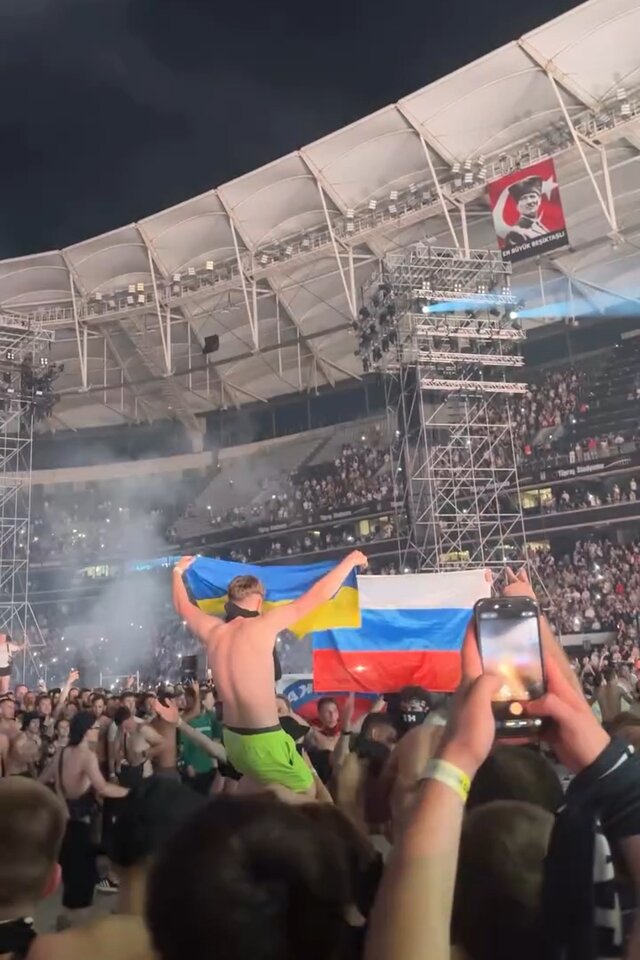
Belarusian singer Max Korzh performed in Istanbul on June 6, calling for an end to the war in Ukraine, as he has at his other concerts. Ukrainian and Russian flags filled the venue. Online, the reaction was heated.
It was his first concert since February 2022 in a country Russian citizens can enter without a visa. Confining his concerts to Europe made them off limits to most Russians, and the prospect of a show they could attend sparked a frenzy among fans. The Beşiktaş stadium — with an official capacity of 42,000 for sporting events — was packed. The day before the show, fans around the city celebrated the coming performance. They remained peaceful, unlike the unrest that accompanied Korzh’s concert in Warsaw last year.
The venue was filled with national flags from Ukraine, Russia, and Belarus — both the official Belarusian flag and the opposition’s white-red-white banner — along with flags from Kazakhstan, Georgia, Latvia, Israel, and other countries with large Russian-speaking populations. Flag-bearers danced and took photos together.
Korzh performed his anti-war song “Svoy dom” (“My Home”), written in 2022, leading the crowd in chants of “stop the war” before closing the song and addressing the audience: “Each of you can stop it. Simply by not taking part in this hatred. Not taking part in these comments. Not taking part in these arguments […]. And of course, not taking part in it physically.”
Music journalist Alexander Gorbachev’s book Kogda My Poyom, Podnimaetsya Veter (“When We Sing, the Wind Rises: A Brief History of Popular Music in Russia in the 21st Century) traces the rise of Russian pop music in the 21st century, including how Korzh became known to listeners beyond the rap world. It is available for purchase at this link.
The concert has generated fierce debate on social media across Russia, Ukraine, Belarus, and beyond. Most comments are positive. Many users write that the concert gave them hope for reconciliation, thanking Korzh for bringing people together through his music.
But many Ukrainians expressed anger that Korzh’s abstract talk of peace never directly named Russia as the aggressor.
Korzh has been accused of absolving “ordinary” Russians of responsibility by placing blame on unnamed politicians while Russian soldiers commit crimes in Ukraine. Some have suggested that displaying Ukrainian flags alongside Russian ones was itself a provocation.
Korzh publicly condemned the war on the first day of Russia’s full-scale invasion and recorded Svoy dom in the summer of 2022. The chorus includes the line: “Right is he who defends his home.” Around the same time, he canceled all his planned concerts in Russia.
Since 2023, Korzh has been performing across Europe, calling at each show for an end to the war and urging audiences to draw a distinction between politicians and ordinary people. Hard-line Ukrainian commentators criticized him for hedging, arguing that he was unwilling to risk alienating his large Russian following
At a concert in Bucharest that preceded the Istanbul show — attended by many Ukrainians — the crowd began chanting “Putin — khuylo!” (“Putin is a prick”). Korzh shut it down: “Guys, at this show and the next one, nobody’s name gets chanted except mine — good context or bad, doesn’t matter. Don’t hype anyone.” Security at the Bucharest show had already been confiscating national flags.
At Meduza, we are committed to transparency about our use of artificial intelligence in the newsroom. The story you’re reading was written by one of our living, breathing journalists and translated from Russian using an AI model configured to follow our strict editorial standards. This translation process is the result of extensive testing and refinements to ensure our English-language coverage is timely and accurate. A Meduza editor reviews every draft before publication.
If you find any errors in this translation, please contact us at reports@meduza.io.
A St. Petersburg court dismissed the criminal case against Kirill Yakovlev, a poet who publishes under the name Glikery Ulunov, on charges of “suicide propaganda,” freeing him from pretrial detention, the Russian human rights group Department One reported.
“Clean legal victories like this don’t happen every day!” said Yevgeny Smirnov, a defense attorney at Department One. “An absurd case — absurd both by common sense and by law — ended fairly: a person was freed from criminal liability.”
Prosecutors charged Ulunov with “organizing activities aimed at inciting suicide,” an offense that carries a prison sentence of five to 15 years. Ulunov was detained in August 2025 and later remanded in custody.
The case stems from a satirical poem Ulunov wrote titled “Five Thousand Ideas for a Destructive Date.” Investigators found that it contained “hidden calls to suicide and self-harm.”
Ulunov has won several poetry awards and has published work in the journal Flagi (Flags). Russian propaganda outlets highlighted Ulunov’s studies at the European University at Saint Petersburg (a private research university that has been repeatedly targeted by Russian authorities) and the Moscow School of Social and Economic Sciences, as well as his plans to relocate to the United Kingdom on a grant from The Hill Foundation. RIA Novosti described the foundation as a “successor to the cause” of the Khodorkovsky Foundation, which Russia has banned.
At Meduza, we are committed to transparency about our use of artificial intelligence in the newsroom. The story you’re reading was written by one of our living, breathing journalists and translated from Russian using an AI model configured to follow our strict editorial standards. This translation process is the result of extensive testing and refinements to ensure our English-language coverage is timely and accurate. A Meduza editor reviews every draft before publication.
If you find any errors in this translation, please contact us at reports@meduza.io.
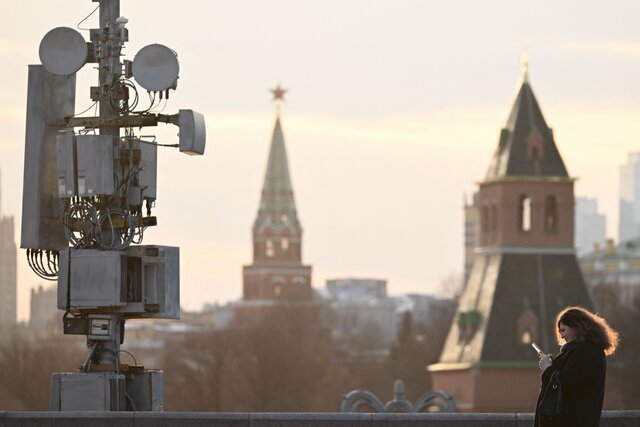
Russia’s federal media regulator, Roskomnadzor, plans to create a unified “state VPN” for Russian software developers who have lost access to foreign repositories because of internet restrictions, The Bell reported, citing sources from two companies that were invited to meet with the agency.
The meeting took place on June 8, prompted by complaints from developers that Russia’s blocking of VPN services was periodically cutting them off from foreign tools — among them the code-sharing platform GitHub, the Linux and Python repositories, and the design tool Figma.
Roskomnadzor’s deputy head, Oleg Terlyakov, represented the regulator at the meeting. Terlyakov declined to discuss the reasons for the blockages, a source who attended the meeting told The Bell. Instead, he proposed “creating a unified state VPN with a complex structure” for developers to route their traffic through — intended, the source said, for “those who really need it, in their view.”
A second source in the IT industry confirmed the account. “There are no details yet,” this source said, adding that the state VPN would be discussed more thoroughly at a follow-up meeting.
According to The Bell, developers at the meeting were also urged to “maintain ongoing communication” and “log incidents that Roskomnadzor will resolve manually.” The agency also promoted the creation of a domestic open-source software repository.
The proposal drew little enthusiasm from developers, according to The Bell’s sources. “This will only help with ‘sanctions-based blocks’,” one source said.
“It will be even easier to cut Russians off from international development tools if everyone is routing through the same VPN,” another source said.
“Access through it could easily be blocked by foreign governments, and the concept itself raises serious concerns,” a source at one of Russia’s IT associations told The Bell. “While the entire country contends with degraded internet service, a privileged tier of users with unrestricted access would be created. And who would determine who qualifies?”
At Meduza, we are committed to transparency about our use of artificial intelligence in the newsroom. The story you’re reading was written by one of our living, breathing journalists and translated from Russian using an AI model configured to follow our strict editorial standards. This translation process is the result of extensive testing and refinements to ensure our English-language coverage is timely and accurate. A Meduza editor reviews every draft before publication.
If you find any errors in this translation, please contact us at reports@meduza.io.
A report that the Belgorod military enlistment office was recruiting schoolchildren as “junior staff” over the summer was a fake, according to Provereno, a fact-checking website.
Provereno’s editors found no mention of any such recruitment drive on official regional sources or in the local media.
The outlet also ran a photograph featured in the announcement through the Hive AI content detector, which assessed a 92% probability the image was AI-generated. The photograph carried a SynthID digital watermark, indicating it was “very likely” generated by Google’s AI.
Provereno also found that a similar announcement in Ukrainian had appeared online a week earlier, claiming that Ukraine’s National Police was inviting schoolchildren to work part-time at the Cherkasy territorial recruitment center. Like the Belgorod version, it opened with the line: “Love sports? Looking for a summer job?” After the announcement circulated widely, the Cherkasy regional police issued a denial.
Idite Lesom (“Get Lost”), the human rights project that first published the photograph purportedly showing the Belgorod military enlistment office recruiting schoolchildren, said the image had been submitted through a Telegram feedback bot.
The original report, which appeared in Idite Lesom on the evening of June 5, claimed the Belgorod military enlistment office was recruiting students ages 15 to 17 for summer jobs as “junior employees” and “military records specialists.” Several major outlets republished it, including Meduza. We apologize to readers for publishing the unverified announcement.
At Meduza, we are committed to transparency about our use of artificial intelligence in the newsroom. The story you’re reading was written by one of our living, breathing journalists and translated from Russian using an AI model configured to follow our strict editorial standards. This translation process is the result of extensive testing and refinements to ensure our English-language coverage is timely and accurate. A Meduza editor reviews every draft before publication.
If you find any errors in this translation, please contact us at reports@meduza.io.
Russia held the Russian-language portion of its Unified State Exam (EGE) on June 4, and complaints about the materials began circulating almost immediately — from students, parents, and teachers alike. Among those who aired them publicly was Yekaterina Mizulina, head of the Safe Internet League, who posted the complaints on her Telegram channel.
One task required students to select the answer choice in which the stressed vowel was correctly marked. In one of the answer choices, the word appeared in print as “pozvalаА” (imagine writing “calledD” — a doubled final character that obscured which vowel was stressed). Several graduates said the typo cost them time as they tried to work out which answer was correct.
Complaints also arose from claims that the essay topics drawn from texts by Oleg Kuvayev, Vladimir Sanin, and Alexander Ilichevsky did not match the content of those works.
Those who wrote to Mizulina were also outraged that the exam included a work by Ilichevsky, whom they described as a “Russophobe”: “an author who condemns Russia and its history.” Ilichevsky, a winner of the Russian Booker and Big Book prizes, has lived in Israel for more than 10 years. He publicly condemned the annexation of Crimea in 2014 and signed an open anti-war letter in 2022.
Russia’s federal education oversight agency, Rosobrnadzor, acknowledged a typo in a question on stressed vowels. The agency said the stressed letter was still marked. The typo, it added, “did not prevent successful completion of the task.”
“The claims that the texts and topics did not match in the task using texts by O.M. Kuvayev and V.M. Sanin were not confirmed,” the agency said on its VK page. Rosobrnadzor declined to comment on the inclusion of Ilichevsky’s text.
At Meduza, we are committed to transparency about our use of artificial intelligence in the newsroom. The story you’re reading was written by one of our living, breathing journalists and translated from Russian using an AI model configured to follow our strict editorial standards. This translation process is the result of extensive testing and refinements to ensure our English-language coverage is timely and accurate. A Meduza editor reviews every draft before publication.
If you find any errors in this translation, please contact us at reports@meduza.io.
Andrey Makarevich, a musician based in Israel, said his home was damaged in the Iranian attack.
“We got hit yesterday. Windows, frames, the roof… Fortunately, we weren’t home. I wonder, does Trump really think you can negotiate with them? That we have a ceasefire?” he wrote on Facebook.
Makarevich’s wife, Einat Klein, said the couple had to “lie on the side of the road for about 40 minutes” before sprinting home.
Iran launched several missiles at Israel on the evening of June 7, saying it was targeting the Ramat David air base in northern Israel. Tehran described the assault as retaliation for Israeli strikes on Beirut.
At Meduza, we are committed to transparency about our use of artificial intelligence in the newsroom. The story you’re reading was written by one of our living, breathing journalists and translated from Russian using an AI model configured to follow our strict editorial standards. This translation process is the result of extensive testing and refinements to ensure our English-language coverage is timely and accurate. A Meduza editor reviews every draft before publication.
If you find any errors in this translation, please contact us at reports@meduza.io.
Russia’s Unified Military Registration Registry in some cases holds the actual residential addresses of people subject to military service — addresses that differ from their officially registered domicile, the human rights organization Conscript School reported.
The group reported two specific cases described to it by men subject to military service. In the first, a conscript registered in the Murmansk region learned that the registry listed an address in Tatarstan, where he rents housing without an official registration. In the second, a reservist from the Komi Republic found that the registry listed his actual address in the Leningrad region.
Neither the men themselves nor any of their relatives had provided their actual addresses to military enlistment offices. The man from the Komi Republic told the human rights activists that he had previously provided his real address to a clinic and to police when he received a traffic citation.
School of the Conscript said it remained unclear exactly where the registry obtains such data, but noted that the cases show that an actual address, once provided to a state or quasi-state system, could become accessible to military registration authorities as well.
Russia’s Unified Military Registration Registry entered full operation in May 2025. Military enlistment offices can now publish summonses in the registry rather than delivering them in person to conscripts. If a person subject to military service fails to appear in response to such a summons, they may be banned from leaving the country and face other restrictions.
At Meduza, we are committed to transparency about our use of artificial intelligence in the newsroom. The story you’re reading was written by one of our living, breathing journalists and translated from Russian using an AI model configured to follow our strict editorial standards. This translation process is the result of extensive testing and refinements to ensure our English-language coverage is timely and accurate. A Meduza editor reviews every draft before publication.
If you find any errors in this translation, please contact us at reports@meduza.io.
Russia’s Presidential administration “recommended” that state and pro-Kremlin media emphasize in their coverage that Armenian Prime Minister Nikol Pashinyan’s Civil Contract party received less than 50% of the vote. Meduza learned this from an employee at one of the major Kremlin-friendly outlets.
Staff were told to frame the result as Pashinyan’s “loss” — and were specifically instructed to use that word. The Putin Administration’s domestic policy team also “recommended” highlighting violations committed during the election to “sow doubts about the legitimacy” of Pashinyan.
According to Armenia’s Central Election Commission, Civil Contract received 49.81% of the vote. Pashinyan’s party won 61 of the 105 seats in parliament.
How Russian television covered the election
Channel One: “According to official figures, Nikol Pashinyan’s Civil Contract party is receiving just under 50% but has secured the right to form a government on its own.”
Russia 1: “Armenia’s Central Election Commission has finished counting votes. The ruling Civil Contract party received less than 50%, while the opposition, despite unprecedented pressure, collectively received nearly 40% — that’s 460,000 votes against Prime Minister Nikol Pashinyan’s policies.”
NTV: “According to preliminary figures, Nikol Pashinyan’s Civil Contract party is receiving more than 49% of the vote.”
How state agencies and other pro-Kremlin outlets covered the election
RIA Novosti
The agency’s piece on the election results ran under the headline “Pashinyan’s party fails to reach 50% in Armenia’s election.” Its top story then became “Armenian authorities grossly violated election procedures, Zakharova says.”
RIA Novosti also reported that “many voters in Yerevan are disappointed with the election results” and that the CIS Interparliamentary Assembly “described a difficult atmosphere at the polls.” As ballots were being counted, the agency reported that “Pashinyan’s party’s lead in the election has narrowed” and then “continued to fall.” It also published a column titled “Nikol Pashinyan’s Pyrrhic victory,” written by agency commentator Irina Alksnis.
TASS
The agency’s piece on the election results ran under the headline “Armenia’s CEC: Pashinyan’s party has preliminarily received 49.81% of the vote.” It also published the following items:
“Peskov: Russia is seeing reports of widespread violations in Armenia’s election.”
“Zakharova: Armenia’s election took place amid pressure on the opposition.”
“Zakharova: those with ties to Russia faced persecution during Armenia’s campaign.”
“Tsarukyan’s Prosperous Armenia party will appeal to the CEC for a recount.”
“Expert Hovhannisyan: Pashinyan’s party did not win a constitutional majority.”
“CIS Inter[arliamentary Assembly notes large number of arrests during Armenia’s election.”
At the same time, TASS published a roundup under the headline “Pashinyan’s party wins the right to form a cabinet on its own. Armenia election results.”
Interfax
Interfax summarized the results in a piece headlined “Pashinyan’s party received 49.81% in Armenia’s election after 100% of ballots counted” and reported that “the Kremlin is taking note of reports of violations during Armenia’s election.”
Vedomosti
“Armenia election results: Pashinyan’s party received less than 50% of the vote.”
“Kremlin taking note of reports of violations in Armenia’s election.”
RBC
The outlet published a piece whose headline named no winner at all: “Armenia parliamentary election results. The key points.” As of 3:00 p.m. Moscow time, RBC’s top story carried the headline “Moscow says democratic procedures were violated in Armenia’s election.”
At Meduza, we are committed to transparency about our use of artificial intelligence in the newsroom. The story you’re reading was written by one of our living, breathing journalists and translated from Russian using an AI model configured to follow our strict editorial standards. This translation process is the result of extensive testing and refinements to ensure our English-language coverage is timely and accurate. A Meduza editor reviews every draft before publication.
If you find any errors in this translation, please contact us at reports@meduza.io.
The TES gas station network in occupied Sevastopol has begun rationing fuel sales through QR codes, Russia-appointed Governor Mikhail Razvozhaev announced on the evening of June 6.
Each code allows the holder to buy 20 liters (about 5.3 gallons) of gasoline and is available only through a dedicated bot in the Max messenger. The number of codes issued each day matches the volume of fuel available for open sale that day, Razvozhaev said. Anyone who has already received a code cannot generate a new one for a week. “This measure is designed to ensure equal access to fuel for the maximum number of people, and to avoid speculation, lines, and unnecessary chaos at gas stations,” he said.
Just two hours after that post, Razvozhaev announced that “QR codes for June 7 are gone.”
After 10 p.m. on June 7, a new batch of codes was released — but they were “snapped up literally within a matter of seconds,” Razvozhaev said, even though there were more of them than the day before. “I understand that many people are disappointed. We are working to increase volumes every day,” he wrote.
Crimea is entering its second week of a fuel crisis. It began with Ukrainian military attacks on fuel trucks and other vehicles supplying the occupied Ukrainian peninsula via the R-280 Novorossiya highway (which connects Crimea to Russia’s Rostov region). Since June 4, the peninsula has banned cash sales of gasoline entirely.
At Meduza, we are committed to transparency about our use of artificial intelligence in the newsroom. The story you’re reading was written by one of our living, breathing journalists and translated from Russian using an AI model configured to follow our strict editorial standards. This translation process is the result of extensive testing and refinements to ensure our English-language coverage is timely and accurate. A Meduza editor reviews every draft before publication.
If you find any errors in this translation, please contact us at reports@meduza.io.
French Air Force fighter jets participating in NATO’s Baltic air policing mission shot down a drone that had entered Latvian airspace, the Latvian military said.
The nationality of the drone was not disclosed.
The Baltic news website Delfi notes that this is the first time a drone that entered Latvian airspace has been shot down.
Residents of the Ludza and Rēzekne districts received an orange air threat alert on their phones, advising them to seek shelter.
In recent months, drones have repeatedly entered the airspace of Estonia, Lithuania, and Latvia. Authorities in those countries said the drones were Ukrainian and had strayed into their airspace due to Russia’s use of electronic warfare systems. Russia, in turn, accused the Baltic states of allowing Ukrainian drones to use their airspace to carry out attacks on Russian regions.
In early May, Latvia was plunged into a political crisis after two Ukrainian drones entered its airspace from Russia. Latvia’s defense minister, Andris Sprūds, resigned after being criticized for the military’s inability to ensure the country’s security. The ruling coalition collapsed soon afterward.
At Meduza, we are committed to transparency about our use of artificial intelligence in the newsroom. The story you’re reading was written by one of our living, breathing journalists and translated from Russian using an AI model configured to follow our strict editorial standards. This translation process is the result of extensive testing and refinements to ensure our English-language coverage is timely and accurate. A Meduza editor reviews every draft before publication.
If you find any errors in this translation, please contact us at reports@meduza.io.
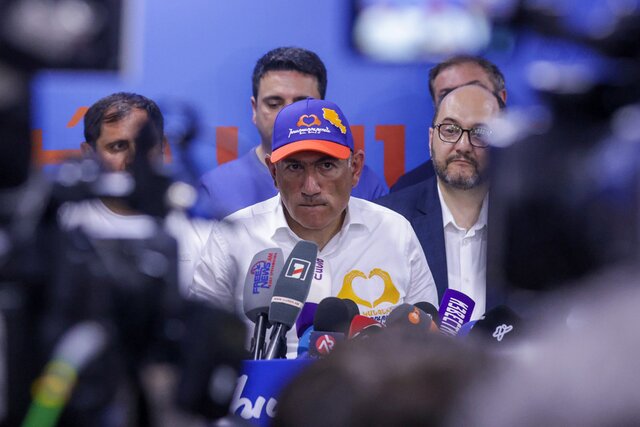
Armenia’s ruling Civil Contract party, led by Prime Minister Nikol Pashinyan, took 49.81% of the vote in parliamentary elections, the Central Election Commission reported after tallying results from all 2,005 precincts, according to News.am.
The Strong Armenia alliance of Russian billionaire Samvel Karapetyan finished second with 23.29%. The Armenia bloc, led by former President Robert Kocharyan, came in third with 9.94%. The Prosperous Armenia party received 4%.
Update: According to revised data from the Central Election Commission, the Prosperous Armenia party received 3.9% of the vote and did not enter parliament. It was initially reported to have won 4%. As a result, three political forces will be represented in the new parliament: Civil Contract, Strong Armenia, and Armenia.
Parliamentary elections were held in Armenia on June 7, with 18 political forces taking part: 16 parties and two alliances. The electoral threshold is set at 4% for parties. For blocs of up to three parties, it is 8%, and for alliances of four or more parties, 10%.
The vote took place against the backdrop of worsening relations between Moscow and Yerevan. Russia has accused Pashinyan of pursuing a pro-Western course. On the night after the election, Pashinyan said Armenia would continue moving closer to the European Union while remaining a member of the Eurasian Economic Union. “We will also continue to develop our relations with the Russian Federation and other countries of the Eurasian Economic Union,” he added.
At Meduza, we are committed to transparency about our use of artificial intelligence in the newsroom. The story you’re reading was written by one of our living, breathing journalists and translated from Russian using an AI model configured to follow our strict editorial standards. This translation process is the result of extensive testing and refinements to ensure our English-language coverage is timely and accurate. A Meduza editor reviews every draft before publication.
If you find any errors in this translation, please contact us at reports@meduza.io.
Ukrainian President Volodymyr Zelensky confirmed in an interview with Sky News that the Russian businessman who traveled to Kyiv to meet with him was Roman Abramovich.
“He came to Kyiv. He said I [brought a] message direct to you, and I want to take messages from you and to give it to [Vladimir] Putin,” Zelensky said. “But he said that it has to be [done] silently without any kind of publicity. I said it’s your choice — for us, it doesn’t matter.”
In Zelensky’s telling, Abramovich wanted to gauge what Kyiv was prepared to accept in peace negotiations. Zelensky told him Ukraine had no intention of handing Donbas over to Russia.
That was the “key message,” Zelensky said — Ukraine would not leave and would not hand Russia victory that way. He added that they also discussed what compromises each side was willing to make, and told Abramovich that any compromises were only possible after a ceasefire.
On June 5, speaking at the St. Petersburg International Economic Forum, Vladimir Putin said that a Russian businessman had traveled to Kyiv for a meeting with Volodymyr Zelensky. According to Putin, Zelensky used the intermediary to convey a proposal for a meeting with the Russian president. Putin did not name the businessman.
The Financial Times later reported, citing sources, that the businessman who traveled to Kyiv to meet Zelensky was Roman Abramovich.
At Meduza, we are committed to transparency about our use of artificial intelligence in the newsroom. The story you’re reading was written by one of our living, breathing journalists and translated from Russian using an AI model configured to follow our strict editorial standards. This translation process is the result of extensive testing and refinements to ensure our English-language coverage is timely and accurate. A Meduza editor reviews every draft before publication.
If you find any errors in this translation, please contact us at reports@meduza.io.
A draft office in Belgorod has been recruiting schoolchildren for part-time work as temporary employees, according to a flyer published by the project Get Lost.
The positions — “junior draft office employee” and “military registration specialist” — are open to teenagers between the ages of 15 and 17.
Under Russian law, minors may only take on light work that does not harm their health or moral development — though, as the Telegram channel “Govorit NeMoskva” (“Not Moscow Speaking”) notes, there are no formal legal restrictions on children working specifically at a local draft office.
At Meduza, we are committed to transparency about our use of artificial intelligence in the newsroom. The story you’re reading was written by one of our living, breathing journalists and translated from Russian using an AI model configured to follow our strict editorial standards. This translation process is the result of extensive testing and refinements to ensure our English-language coverage is timely and accurate. A Meduza editor reviews every draft before publication.
If you find any errors in this translation, please contact us at reports@meduza.io.
The European Commission has pledged to tighten visa rules for Russian citizens following a formal request from 11 Schengen Zone countries, Euronews reported.
Markus Lammert, the Commission’s spokesperson on migration, said the Commission would propose targeted restrictive visa measures to address “security risks stemming from hostile actions by third countries.”
The new measures are set for adoption in 2027, Lammert said. He declined to specify what they would entail.
11 countries in the Schengen Area called on the European Commission to introduce additional restrictions on issuing Schengen visas to Russian citizens. They noted that visa issuance rules are currently applied “unevenly” across Europe, allowing Russians to obtain visas in countries with more lenient conditions and then travel throughout the EU.
According to official EU statistics, in 2025 EU countries issued 620,000 Schengen visas to Russian citizens (10.2% more than the previous year). About three-quarters of visa applications are submitted by Russians to the consulates of France, Spain, and Italy.
At Meduza, we are committed to transparency about our use of artificial intelligence in the newsroom. The story you’re reading was written by one of our living, breathing journalists and translated from Russian using an AI model configured to follow our strict editorial standards. This translation process is the result of extensive testing and refinements to ensure our English-language coverage is timely and accurate. A Meduza editor reviews every draft before publication.
If you find any errors in this translation, please contact us at reports@meduza.io.
Russia’s Digital Development Ministry has opened negotiations with Apple to restore the Max messenger to the App Store, Minister Maksut Shadayev said at the St. Petersburg International Economic Forum.
“Max” disappeared from the App Store on June 3.
Apple said it removed the app from the store “in accordance with sanctions compliance rules.” The company did not specify which sanctions Max had violated.
At Meduza, we are committed to transparency about our use of artificial intelligence in the newsroom. The story you’re reading was written by one of our living, breathing journalists and translated from Russian using an AI model configured to follow our strict editorial standards. This translation process is the result of extensive testing and refinements to ensure our English-language coverage is timely and accurate. A Meduza editor reviews every draft before publication.
If you find any errors in this translation, please contact us at reports@meduza.io.
A Pantsir surface-to-air missile system has been installed on the roof of a residential high-rise in Moscow’s Sokolniki district, according to the Russian independent investigative outlet Agentstvo.
The system appeared atop the Dom v Sokolnikakh complex on June 5, delivered by helicopter. Agentstvo reported that it is likely the Pantsir-SMD-E modification, a variant designed to counter drones.
In late May, a similar Pantsir system was installed on the roof of the Nordstar Tower business center on Begovaya Street. That building belongs to the company Region, which is linked to Rosneft.
Moscow has been regularly targeted by Ukrainian drones in recent weeks. The most massive attack since the start of the war occurred on May 17, when three people were killed in the Moscow region and 17 more were wounded.
At Meduza, we are committed to transparency about our use of artificial intelligence in the newsroom. The story you’re reading was written by one of our living, breathing journalists and translated from Russian using an AI model configured to follow our strict editorial standards. This translation process is the result of extensive testing and refinements to ensure our English-language coverage is timely and accurate. A Meduza editor reviews every draft before publication.
If you find any errors in this translation, please contact us at reports@meduza.io.

 Login
Login