Russian Post has resumed accepting packages from the United States for the first time since 2022.
The company said on June 4 that the change took effect in late May. The first shipments have already reached Russian sorting centers, arriving via transit through third countries.
A source who spoke to TASS said deliveries from the U.S. had previously moved through express carriers with a limited acceptance network in the United States. A full resumption of imports, the source said, “will make service available across the entire country.”
Postal service between Russia and many Western countries has been restricted since 2022, following the start of Russia’s invasion of Ukraine, due to the absence of direct air links.
Since November 2025, Russia has been able to send some categories of packages to the U.S. by mail, including gifts and documents.
At Meduza, we are committed to transparency about our use of artificial intelligence in the newsroom. The story you’re reading was written by one of our living, breathing journalists and translated from Russian using an AI model configured to follow our strict editorial standards. This translation process is the result of extensive testing and refinements to ensure our English-language coverage is timely and accurate. A Meduza editor reviews every draft before publication.
If you find any errors in this translation, please contact us at reports@meduza.io.
Russian President Vladimir Putin dismissed as “nonsense” the suggestion that Russia might attack a NATO member state.
“Anyone who fears a Russian attack on NATO should ask themselves: ‘Why?’” Putin said while speaking to foreign journalists at the St. Petersburg International Economic Forum.
Politicians who raise the threat are engaged in “not just nonsense, but also provocation and disinformation,” Putin said, accusing them of trying to frighten their own populations. “It would be funny if it weren’t so sad,” he added.
For several years, politicians across the European Union at various levels of government have warned that Russia could attack a NATO member state, citing the Baltic states as the likeliest targets, and have called for a major buildup of defenses along NATO’s eastern border.
In their official reports, Western intelligence agencies — including those of the Baltic states — describe a Russian attack on NATO in the coming years as unlikely.
At Meduza, we are committed to transparency about our use of artificial intelligence in the newsroom. The story you’re reading was written by one of our living, breathing journalists and translated from Russian using an AI model configured to follow our strict editorial standards. This translation process is the result of extensive testing and refinements to ensure our English-language coverage is timely and accurate. A Meduza editor reviews every draft before publication.
If you find any errors in this translation, please contact us at reports@meduza.io.
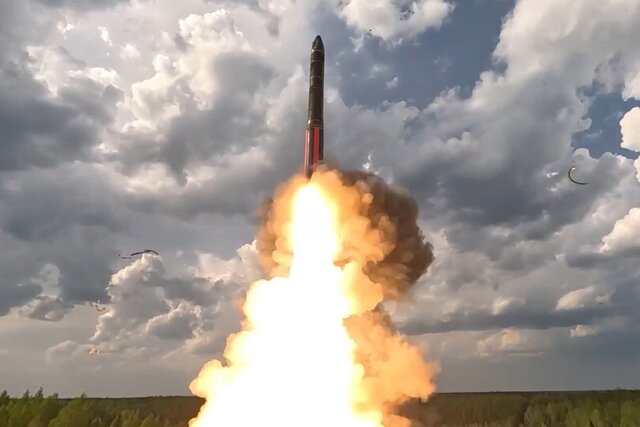
President Vladimir Putin said the “Oreshnik” missile strikes Russia’s army has carried out against Ukraine have not constituted combat use of the weapon. “We struck where it was convenient to observe the result,” Putin told journalists at the St. Petersburg International Economic Forum.
One of the strikes, Putin said, targeted “a barn” to evaluate “how the submunition blocks came down,” with drones deployed to observe and document the impact site. He said it was necessary for the weapon’s future deployment.
“We tested similar systems at test ranges, but not the Oreshnik,” the president said.
Putin said the Russian army also struck targets in the Kyiv and Donetsk regions with the “Oreshnik.” He suggested that Oreshnik strikes could, in the future, be directed at densely populated urban areas.
Russian forces struck Bila Tserkva with an Oreshnik missile on May 24. OSINT researchers reported that two missiles were launched at the time, and that one of them came down in Russian-controlled parts of the Donetsk region. Neither Russia nor Ukraine officially acknowledged that two missiles had been fired rather than one.
Russian forces have used the Oreshnik on two other occasions since the start of the war in Ukraine. In November 2024, they struck Dnipro, and in January 2026, the Lviv region.
At Meduza, we are committed to transparency about our use of artificial intelligence in the newsroom. The story you’re reading was written by one of our living, breathing journalists and translated from Russian using an AI model configured to follow our strict editorial standards. This translation process is the result of extensive testing and refinements to ensure our English-language coverage is timely and accurate. A Meduza editor reviews every draft before publication.
If you find any errors in this translation, please contact us at reports@meduza.io.
Gas stations in St. Petersburg and the Leningrad region have begun rationing fuel sales, the local news outlet Bumaga reports.
Employees at Surgutneftegas stations in both areas told journalists that customers are limited to 50 liters per transaction.
Stations operated by the Kirishskaya Toplivno-Energeticheskaya Kompaniya (Kirishi Fuel and Energy Company) in the Leningrad region are selling fuel only to loyalty cardholders, who must obtain the cards separately.
The day before, the St. Petersburg-based news outlet Fontanka reported that Kirishiavtoservis stations had imposed a 50-liter-per-transaction limit and that Rosneft stations had set their cap at 95 liters.
The Surgutneftegas website states that its stations sell only fuel produced by the Kirishi refinery, known as Kinef — which shut down in early May after Ukrainian drone strikes. According to Bumaga, it has not resumed operations.
The fuel shortage began after a surge in Ukrainian drone strikes on oil refineries inside Russia. As Reuters reported in mid-May, nearly all major refineries in central Russia had been forced to halt or reduce production due to Ukrainian drone attacks.
St. Petersburg is hosting the International Economic Forum (SPIEF) from June 3 to 6, and President Putin is participating.
Russian Deputy Prime Minister Alexander Novak, speaking at SPIEF, attributed the decline in the country’s oil production to “unplanned maintenance” at refineries. Prices at the pump, he said, are “rising at a rate no higher than inflation.”
At Meduza, we are committed to transparency about our use of artificial intelligence in the newsroom. The story you’re reading was written by one of our living, breathing journalists and translated from Russian using an AI model configured to follow our strict editorial standards. This translation process is the result of extensive testing and refinements to ensure our English-language coverage is timely and accurate. A Meduza editor reviews every draft before publication.
If you find any errors in this translation, please contact us at reports@meduza.io.
Alexey Navalny entered politics because he wanted to help people. He genuinely cared about how they lived, what worried them, what they lacked. Meduza’s readers have likely already heard about his 2013 mayoral campaign and his 2017 presidential campaign, so I’ll tell a different story — about the time Alexey and [his wife] Yulia came to visit our country house in France in February 2020.
We live in a simple French village, with a baker, a butcher, a doctor, a veterinarian, and a pharmacist. Alexey asked to be taken to the baker — not just to buy croissants, but because he wanted to understand how a village baker lived: what time he got up (French bakers always rise before dawn so fresh bread is ready early in the morning), and how he achieved such consistently perfect quality (a craft, naturally, passed down from generation to generation).
The baker, of course, could not vote for Navalny. Then again, in 2020, no one could vote for Navalny. But Alexey was genuinely curious about how an ordinary French person lived — and why he loved his work.
For as long as I can remember, Alexey asked questions rather than gave lectures. He talked with the French baker for a long time about ordinary French village life — so that he could later try to understand what could be done for the Russian countryside.
Alexey and Yulia Navalny visiting Sergei Guriev and Ekaterina Zhuravskaya in France. February 2020
Lyubov Sobol
Navalny associate
Let me tell you about Alexey and music. We talked often about pop music and new tracks. I even sent him song lyrics while he was in prison — among the stranger choices: tracks by Instasamka and Shaman. Some might call that sophisticated torture on my part. Maybe they’re right.
Alexey also loved to sing, or at least that’s how it seemed to me. During the FBK [Anti-Corruption Foundation] hike through Krasnodar Krai in 2016, he sang songs by Ivanushki International around the campfire. At one of his birthday celebrations, he suggested that everyone take turns playing their tracks — each person could put on a set number of songs.
A few of the guys gave me their turns, and my playlist ran for about half an hour before the complaints started. I remember Zhora Alburov protesting what he called an illegal monopoly, so I had to yield and retreat. Then someone put on karaoke. Alexey sang Aria and Ulitsa roz. Loudly, with feeling. These memories will stay with me forever. And it’s so strange, every time, to read about Navalny’s “cult of leadership.” He was always open — not only to close friends, but to his whole team.
Alexey Navalny, his brother Oleg, and his wife Yulia
Ivan Zhdanov
Navalny associate
Once we flew to Germany and needed to drive to France. It was 2019. Alexey loved driving, but in Russia he never got behind the wheel — to avoid setups. Abroad he always did it with great pleasure. Somewhere around the halfway point, we realized we were being followed — a black Mercedes. We very much wanted to shake it, but we couldn’t break any rules.
The [surveillance] guys don’t like being filmed. So when traffic backed up at an interchange, Alexey pulled over to the shoulder. The Mercedes stopped behind us.
I jumped out and started walking around the Mercedes, filming it on video. The Mercedes began slowly moving along the shoulder. Germans and French all around watched in bewilderment, completely unable to understand what was happening. Alexey was laughing — the situation was fairly absurd. But the surveillance team drove off and didn’t appear again that day.
There were very many episodes like that. Being constantly followed was a heavy part of life, one that had become fairly routine for us, especially in the last years in Russia. The surveillance was practically constant.
Navalny with FBK lawyers. 2018
Nikita Kulachenkov
Former FBK staffer
Alexey was always the same. The way millions of people knew him from videos and public appearances — that’s exactly how he was in person. From the moment he called me in 2013 and said “come in for an interview,” joking around from the start, to the last time we spoke in the summer of 2020, he never lost his irony, his self-irony, or his openness.
And his interest in people. Such an important quality. Among politicians, I’ve rarely encountered someone for whom any person they were talking to was genuinely interesting — whether that person was in a crowd, at a gas station, or in an office. It was very valuable, very pleasant, and probably why people loved him.
Once we were in Strasbourg for a hearing at the ECHR. This was before the 2018 [Russian presidential] elections, and we were trying to overturn the conviction and get Alexey admitted to the elections, including through pressure on the ECHR. Back then it was still possible to hope for that.
We’re riding in a tram after the hearing, and Alexey says: “Look, there’s a woman standing there — remember her.” I thought, well, okay, a woman is standing there, nothing remarkable about her to me. A few hours later, already in the evening, we’re leaving the hotel — and he says: “Look in the café.” The same woman is sitting in the café. He somehow knew how to spot surveillance. Could just glance around a tram and understand who was following us.
Alexey Navalny in Sicily. 2018
We eventually developed a whole system for shaking surveillance abroad. These people would fly on the same plane as Alexey or would already be waiting at the gate when he landed somewhere like Istanbul airport. We had clever schemes for losing them — for example, jumping into pre-rented cars.
Once we were supposed to meet in Italy. I arrived first, we pulled off the scheme of Alexey jumping into a car right after the gate, and then we were supposed to meet Masha Pevchikh somewhere in the city.
Masha and I had agreed to play a prank on Alexey. I was supposed to go with him into a church, and Masha was supposed to come and sit somewhere nearby — in a headscarf, so she’d be impossible to recognize. The problem was that the church we’d chosen turned out to be closed. Masha was walking around nearby.
For some reason Alexey took a selfie with me — I don’t remember why anymore. Masha was sitting in the background. He looked at the selfie and said: “You know, some strange woman has been walking behind us for several minutes already.” He didn’t realize it was Masha — but he had noticed the surveillance nonetheless.
In that same city, some guy was following us whom even I noticed. We were a bit surprised at how they’d tracked us — we’d deliberately not been using our phones. Anyway, he followed us for a long time and in the end, very shyly, introduced himself. He said he was from Tajikistan and asked for an autograph.
Apparently he couldn’t believe that in some small Italian city he’d run into Alexey. Alexey, of course, took a photo with him and gave him an autograph. I hope that guy still has it somewhere.
Alexey Navalny was a runner. In this photo he is on a run in Germany — during his treatment after being poisoned with Novichok
Dmitry Gudkov
Politician
For me, Alexey was always associated with his sense of humor. I remember one moment during the trial in the Kirovles case [on July 18, 2013]. He was sentenced that day and immediately taken into custody — then unexpectedly released the following day.
In the courtroom during the reading of the verdict, everyone was in tears. I was shocked — it was still 2013, and jailings were still a rarity. Only the Bolotnaya case had made a big splash. Everyone was certain that morning would bring a verdict — and Alexey would be transferred to custody.
As a State Duma deputy, I was allowed in to see Alexey. What I found was a completely calm person who seemed unbothered by anything. He was sitting there cheerful, as if he’d just stepped out for a smoke — joking, while everyone else was crying. He said: “Everything’s fine, don’t worry. Go out into the street [to protest].” And he told me a joke.
He said and Nemtsov had once been sitting together in a detention facility, and Nemtsov was always getting on his nerves by being able to do pull-ups and push-ups many times in a row. Now, Alexey said, he’d finally have enough time to get in shape too. I was amazed by his attitude at the time.
Alexey Navalny and Dmitry Gudkov
In our family archive there’s a video with a toast that Alexey gave at my wedding. I edited it back in 2012 — I overlaid a clip from his speech at Sakharov Avenue, where he says: “We know why we are here, why we have gathered. I can see there are enough people here to take the Kremlin and the White House right now. But we are a peaceful force — we won’t do that just yet.”
The two of us never managed to watch that video together — it just never worked out. But our family watches it often. That’s how I remember him. And that’s how everyone in my family will remember him.
Maria Gaidar
Politician
Two things touched me [in my interactions with Alexey]. The first — when he told me he cries at animated films. For example, at the scene in The Lion King where Simba’s father dies. The second — when he spoke very seriously about the film Brokeback Mountain, when it had just come out. He said: “I thought about it for a long, long time after watching it and finally understood that it’s a film about love.” I understood then that he was not a fascist, not a homophobe, not a misogynist, but simply a sensitive, empathetic person. I don’t know whether I could have entrusted Navalny with the country, but I would have entrusted him with my child. He was a good person — of that I am certain.
Alexey Navalny with his son Zakhar. 2018
Christo Grozev
Investigator
It was the evening after that phone call to Konstantin Kudryavtsev — the call in which Alexey had just received what amounted to a confession from his poisoners. No doubts remained: this was not a mistake, not an attempt to intimidate or maim. Putin had genuinely tried to kill him.
We had gathered at a rented house in the Black Forest, which served as both the investigation’s headquarters and the base for the film crew. I cooked dinner for everyone: for Alexey’s family, Masha [Pevchikh], Kira [Yarmysh], and the film crew.
Alexey, Yulia, and Dasha Navalny with the crew of the documentary film “Navalny”
At the table I proposed a thought experiment. Imagine we found ourselves in a boat with Putin in 1999, and each of us had the opportunity to push him overboard, knowing everything that would happen afterward: wars, repressions, killings, poisonings — including the poisoning of Alexey himself.
I won’t recount the others’ answers. But Alexey said immediately:
— No, I would not push him overboard.
— Even if it would save your own life?
He shrugged:
— It’s not Christian. It’s not for me to decide.
And that’s when the irony of the moment struck me. Alexey refused to take the life of a man who would later give the order to have him killed. And that man, who spoke the loudest about Christian values, apparently reasoned quite differently.
The FBK office on Alexey Navalny’s birthday in 2012
At Meduza, we are committed to transparency about our use of artificial intelligence in the newsroom. The story you’re reading was written by one of our living, breathing journalists and translated from Russian using an AI model configured to follow our strict editorial standards. This translation process is the result of extensive testing and refinements to ensure our English-language coverage is timely and accurate. A Meduza editor reviews every draft before publication.
If you find any errors in this translation, please contact us at reports@meduza.io.
Russia’s Federal Financial Monitoring Service (Rosfinmonitoring) has added the independent human rights monitor OVD-Info to its list of extremist organizations.
Also added were the museum Perm-36, Revolt Center, and more than 30 “structural subdivisions” of Memorial.
Russia’s Supreme Court designated Memorial an “extremist” organization in April, following a lawsuit filed by the Justice Ministry. As Mediazona notes, the court formally banned the activities of the “International Public Movement Memorial.” But no such organization actually exists: Memorial is a loose network of dozens of groups that often have no legal ties to one another.
Today’s decision by Rosfinmonitoring is a regulatory consequence of that ruling. Why the authorities have linked OVD-Info, Revolt Center, and the Perm-36 museum to Memorial’s structures remains unclear.
At Meduza, we are committed to transparency about our use of artificial intelligence in the newsroom. The story you’re reading was written by one of our living, breathing journalists and translated from Russian using an AI model configured to follow our strict editorial standards. This translation process is the result of extensive testing and refinements to ensure our English-language coverage is timely and accurate. A Meduza editor reviews every draft before publication.
If you find any errors in this translation, please contact us at reports@meduza.io.
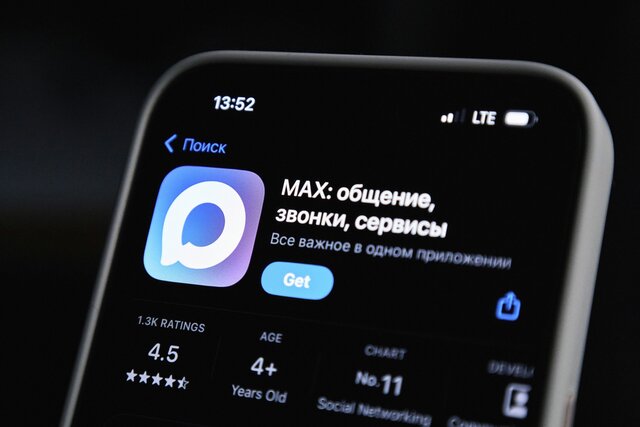
The Kremlin-backed Max messenger disappeared from the App Store on June 3. iPhone and iPad users lost the ability to download the app, and those who had already installed it stopped receiving notifications and updates. According to the head of Russia’s Digital Development Ministry, Maksut Shadayev, the restrictions affected more than 20 million Russians — at least a quarter of Max’s total user base. Apple has not commented on the reasons for the removal. Yulia Navalnaya had previously called on the American company to take this step. The removal also follows that of another messenger suspected of spying on users — Telega — which was pulled from the App Store not long ago.
The Max messenger vanished from Russia’s App Store on the evening of June 3. The app disappeared from search results, and direct links to its page began returning an error. At the time of removal, Max ranked ninth among the most-downloaded apps; every other spot in the top ten was held by a VPN service. VK’s press service confirmed the app had become unavailable in the App Store and said the Russian developer had contacted Apple and was working to resolve the problem as quickly as possible.
On the morning of June 4, Max’s press service said Apple devices had stopped receiving push notifications for calls and messages, though all other functions remained available. The company advised users to open the app periodically on their own so as “not to miss important messages.”
Digital Development Minister Maksut Shadayev was the first senior official to weigh in on Max’s removal. Speaking at the St. Petersburg International Economic Forum, he said Apple had so far offered “no explanation” and noted that 25 to 30% of the messenger’s daily audience — “more than 60 million people” — uses iPhones and iPads. “That means Apple has simultaneously restricted access for more than 20 million users to the services of a national messenger,” he said, calling it “a worrying factor” that “global big tech companies are demonstrating their market power by imposing such restrictions.”
Apple has not commented on the removal of Max. The decision is the second of its kind in two months involving popular messengers in Russia suspected of spying on their users. The first, on April 9, was Telega — an alternative Telegram client in which experts found a range of vulnerabilities that put the privacy of users’ correspondence at risk.
Unlike Max, Telega’s removal from the App Store was preceded by clear warning signs: the hosting provider Cloudflare flagged two domains associated with the Telegram client — telega_me and api.telega_info — as spyware, and the certification authority and internet identity and security solutions provider GlobalSign then revoked the TLS certificate confirming the project’s authenticity and used for secure HTTPS connections.
In late April it appeared Max might follow the same path: Cloudflare flagged two of the service’s domains — max.ru and web.max.ru — as spyware. Within a day, however, the messenger was cleared and has not returned to the risk zone since.
Max has repeatedly been accused of spying on users. Experts found a spyware module in the app as early as the beginning of March, with the app apparently monitoring whether the device owner was using a VPN. Then, in mid-May, a technical analysis identified new vulnerabilities in the Android version of Max. The author of that study, a Habr user with the handle zarazaexe, noted that the tools embedded in the messenger would be sufficient to have it flagged as malware in the Google Play store as well. No such action on Android has materialized so far.
Several political organizations had been lobbying for Max’s removal from the App Store. Yulia Navalnaya announced a pressure campaign targeting Apple and Google as early as the beginning of February, calling on both companies to pull the messenger from their app stores. Supporters of Yekaterina Duntsova’s party Rassvet had put forward the same initiative somewhat earlier. Whether Apple acted in response to opposition pressure or on purely technical grounds will likely become clear once the company officially comments on Max’s removal from the App Store.
According to Apple’s transparency report, the company removed approximately 167,000 apps from its store over the course of 2025 — primarily due to suspected fraud and the removal of outdated services. More than 1,200 apps were removed during the same period at the request of Russian authorities.
At Meduza, we are committed to transparency about our use of artificial intelligence in the newsroom. The story you’re reading was written by one of our living, breathing journalists and translated from Russian using an AI model configured to follow our strict editorial standards. This translation process is the result of extensive testing and refinements to ensure our English-language coverage is timely and accurate. A Meduza editor reviews every draft before publication.
If you find any errors in this translation, please contact us at reports@meduza.io.
Russia’s Finance Minister Anton Siluanov said budget revenues from value-added tax, whose rate was raised at the start of the year, are running ahead of projections. Siluanov made the remarks at the St. Petersburg Economic Forum, the Russian business news outlet RBC reported. He did not provide specific figures.
Siluanov said the tax picture signals that the economy will grow faster than expected. The Russian government had projected economic growth of 1.3% of GDP for the year; the current figure stands at 0.4%, the Finance Minister said.
“Despite two packages of tax changes […] taxes are growing, and there was a risk that we might go too far somewhere. No, we didn’t. The budget execution figures for five months clearly show this,” Siluanov said, without specifying which budget execution figures he had in mind.
As of January 1, 2026, Russia’s value-added tax (VAT) increased from 20% to 22%. The income threshold below which businesses can qualify for reduced tax rates was also lowered. The reform has been cited as one of the reasons many small and medium-sized enterprises have shut down.
According to Finance Ministry data as of early May, Russia’s budget deficit has grown to 5.8 trillion rubles (2.5% of GDP) since the start of the year, significantly exceeding the planned 3.79 trillion rubles (1.6% of GDP).
Total budget revenues for the first four months of the year fell 4.5% year-on-year to 11.721 trillion rubles.
At Meduza, we are committed to transparency about our use of artificial intelligence in the newsroom. The story you’re reading was written by one of our living, breathing journalists and translated from Russian using an AI model configured to follow our strict editorial standards. This translation process is the result of extensive testing and refinements to ensure our English-language coverage is timely and accurate. A Meduza editor reviews every draft before publication.
If you find any errors in this translation, please contact us at reports@meduza.io.
Konstantin Malofeev, the founder of the Tsargrad television channel, presented a report on scenarios for Russia’s future at the St. Petersburg International Economic Forum. He said the report was prepared by the Tsargrad Institute in collaboration with a group of “experts” that included far-right philosopher Alexander Dugin and Vologda Governor Georgy Filimonov.
The report’s authors listed the threats they believe Russia faces and divided them into five groups. Below are quotes from Malofeev’s presentation.
Geopolitics: Russia’s destruction in war, the country’s disintegration, external governance.
Ideology: replacement of the cultural code, revolution, conspiracy.
Demography: societal degradation, replacement migration, population extinction.
Economics: loss of control over resources, supply chain disruption, loss of financial sovereignty.
Technology: critical external dependence, biological weapons and biotechnology, artificial intelligence.
The report identifies Russia’s destruction in war and biological threats such as new pandemics and bioweapons as the primary dangers.
The authors of the report outline three scenarios they believe could unfold for Russia in the coming decades: an inertial one (“Things continue as they are”), a negative one (“Russia’s enemies succeed in carrying out their strategy”), and a positive one (“We are doing everything in the best possible way”). For each, they identify two milestones: 2036 and 2050.
Here’s what each scenario envisions.
Inertial scenario
2036: a frozen conflict with Ukraine; no conditions for a quick victory; a new arms race.
2050: U.S. or Chinese hegemony; the collapse of NATO; technological control by Western artificial intelligence; growing threat of Russia’s destruction in war.
Negative scenario
2036: defeat in the war with Ukraine; Ukraine joins NATO; wars in South Ossetia and Transnistria; the preservation of “regional sovereignty” in a reduced form.
2050: the “colonization” of Russia; the complete loss of sovereignty; a unipolar world; the creation of a military bloc based on the European Union.
Positive scenario
2036: the use of nuclear weapons; the collapse of the European Union; the capture of Kyiv and Odesa; the full subjugation of Ukraine — either through annexation, turning into a buffer state, or the creation on its territory of a “new East Slavic state.”
2050: Russia ensures “global security and justice,” the formation of its own macro-region in Eurasia, and the “trinity of the Russian people.”
To achieve the positive scenario (which, again, includes a nuclear strike), Malofeev and the report’s other authors propose a list of 10 “best actions” for the Russian authorities. These include “de-Westernization,” autocracy, a cult of the family, urban depopulation, and a new Constitution.
At Meduza, we are committed to transparency about our use of artificial intelligence in the newsroom. The story you’re reading was written by one of our living, breathing journalists and translated from Russian using an AI model configured to follow our strict editorial standards. This translation process is the result of extensive testing and refinements to ensure our English-language coverage is timely and accurate. A Meduza editor reviews every draft before publication.
If you find any errors in this translation, please contact us at reports@meduza.io.
Only 4% of the people and organizations designated as “foreign agents” in Russia in 2025 actually receive foreign funding, Deputy Justice Minister Oleg Sviridenko said, according to the Russian business daily Kommersant.
Speaking at a Federation Council commission meeting on the protection of state sovereignty, Sviridenko noted that before 2022, receiving foreign funding was a prerequisite for the “foreign agent” designation.
“If that were still the only criterion today, it would cover just 4% of foreign agents. Can you imagine? Where would all the rest be? We’d be out there with Russia’s Federal Financial Monitoring Service looking for money that doesn’t exist. And money isn’t even needed anymore — there are other forms now,” the official said.
Since 2022, a law has been in force in Russia allowing authorities to designate as “foreign agents” anyone who receives support from abroad or is deemed to be “under foreign influence in other forms,” even without receiving foreign funding.
As of 2026, more than 1,200 individuals and organizations have been added to Russia’s “foreign agents” list. In 2025 alone, 178 individuals and 37 organizations were designated. According to a study by OVD-Info, journalists were added to the register particularly often. Eighty percent of new “foreign agents” were designated for speaking out against the war or expressing support for Ukraine.
At Meduza, we are committed to transparency about our use of artificial intelligence in the newsroom. The story you’re reading was written by one of our living, breathing journalists and translated from Russian using an AI model configured to follow our strict editorial standards. This translation process is the result of extensive testing and refinements to ensure our English-language coverage is timely and accurate. A Meduza editor reviews every draft before publication.
If you find any errors in this translation, please contact us at reports@meduza.io.
Eleven European countries are urging the European Commission to impose additional restrictions on Schengen visa issuance for Russian citizens, according to a letter they sent to EU foreign policy chief Kaja Kallas and EU Commissioner for Internal Affairs and Migration Magnus Brunner. Politico, Deutsche Welle, and the Polish outlet RMF24 all report on the letter.
The signatories are Poland, Lithuania, Latvia, Estonia, Finland, Sweden, Czech Republic, Denmark, and the Netherlands, along with Norway and Iceland, neither of which is an EU member.
The letter’s authors note that in 2022 the European Commission suspended its simplified visa agreement with Russia and tightened its guidelines for processing Russian visa applications — but that those guidelines are being applied unevenly across EU member states, undermining the bloc’s unified position. The inconsistency, they argue, allows Russians to engage in “visa tourism,” seeking out countries with more lenient conditions.
In the authors’ view, Russian tourists are vacationing on European beaches and at resorts while rockets and drones continue to strike civilians and civilian infrastructure in Ukraine — a situation they consider unacceptable.
RMF24, citing the letter, writes that the 11 countries are demanding an immediate halt to Schengen visa issuance for Russians. Politico and Deutsche Welle do not use that language.
At Meduza, we are committed to transparency about our use of artificial intelligence in the newsroom. The story you’re reading was written by one of our living, breathing journalists and translated from Russian using an AI model configured to follow our strict editorial standards. This translation process is the result of extensive testing and refinements to ensure our English-language coverage is timely and accurate. A Meduza editor reviews every draft before publication.
If you find any errors in this translation, please contact us at reports@meduza.io.
Apple devices have stopped delivering push notifications for calls and messages in the Max messenger, the app’s press service said.
The disruption stems from Max’s removal from the App Store.
All messenger functions remain available, the press service said, advising users to “open the app from time to time on their own so as not to miss important messages.”
Max disappeared from the App Store on the evening of June 3. Apple has not commented on the removal. Max said it is working to return the app to the App Store.
At the time of removal, Max ranked ninth among the most downloaded apps in Russia’s App Store. All other spots in the top ten were occupied by VPN services.
At Meduza, we are committed to transparency about our use of artificial intelligence in the newsroom. The story you’re reading was written by one of our living, breathing journalists and translated from Russian using an AI model configured to follow our strict editorial standards. This translation process is the result of extensive testing and refinements to ensure our English-language coverage is timely and accurate. A Meduza editor reviews every draft before publication.
If you find any errors in this translation, please contact us at reports@meduza.io.
Russia should not count on sanctions relief, presidential aide Maxim Oreshkin said at the St. Petersburg Economic Forum, adding that the country needs to shift from a defensive posture toward a proactive one.
“We need to move away from this purely defensive model. In fact, we’ve already moved away from it in many respects, and we need to keep moving further and further away. We shouldn’t wait for things to go back to the way they were, for Western sanctions to be lifted. The changes that are taking place are fundamental and global in nature. […] And so there’s no point waiting for something to change, for something to go back. It won’t go back and it won’t change,” he said, according to the Russian business news outlet RBC.
“The world that existed before won’t come back. We need to actively develop on the domestic front,” Oreshkin added, according to the Russian business daily Vedomosti.
The day before, Andrei Bezrukovsaid at the SPIEF that Russia will be at war for the next “couple of decades,” and that the country will produce two “wartime” generations.
At Meduza, we are committed to transparency about our use of artificial intelligence in the newsroom. The story you’re reading was written by one of our living, breathing journalists and translated from Russian using an AI model configured to follow our strict editorial standards. This translation process is the result of extensive testing and refinements to ensure our English-language coverage is timely and accurate. A Meduza editor reviews every draft before publication.
If you find any errors in this translation, please contact us at reports@meduza.io.
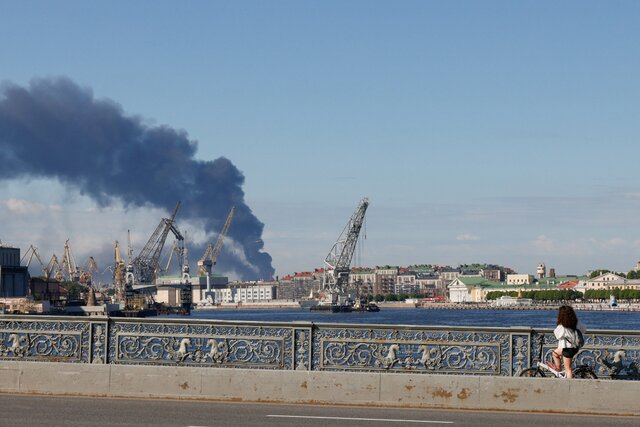
On the morning of June 3, Ukraine launched a large-scale drone strike on the St. Petersburg region, injuring several people — the exact number was never disclosed — and hitting an oil terminal and infrastructure facilities in Kronstadt. The Leningrad region’s governor, Alexander Drozdenko, said 59 drones were shot down over the region that day. A correspondent for the independent journalism cooperative Bereg visited the neighborhoods hit by the strikes and filed this report from the city in the aftermath of the attack, which came on the opening day of the St. Petersburg International Economic Forum (SPIEF).
‘I thought it was a thunderstorm’
For the first time in a long time, St. Petersburg has real summer weather — 20 °C (68°F). The gray skies and cold are finally gone. The sun shines through scattered clouds, and against the sky, a column of black smoke rises from the oil terminal burning on Kanoner Island.
The city’s Kirovsky district is a patchwork. The terminal shares the landscape with steel mills, a tractor factory, the Severnaya Verf shipyard, and commercial port infrastructure. Apartment buildings — a typical Soviet-era residential neighborhood, their housing blocks engulfed in greenery — press up against the industrial zone.
Passersby are relaxed and in no hurry. Families with small children enjoy the local parks. There are no emergency services or police anywhere in sight. The column of smoke filling half the sky — which has already prompted reports of deteriorating air quality across the city — seems to go unnoticed.
In the small park at the corner of Stachek and Marshal Zhukov avenues, a woman who looks to be around 65 — blue top, denim shorts — sits on a bench with her eyes half-closed in the sun. She seems to have positioned herself deliberately, with her back to the black plumes of smoke.
An elderly man rides up to me, a portable speaker playing “Stayin’ Alive” by the Bee Gees.
“Did you hear it?” he asks, his voice calm, with a slight smile.
“Hear what?”
”Woke up at three in the morning, thought it was a thunderstorm. Kept waking up after that, but didn’t see any clouds. Turned out it was drones,” he says, and rides off.
Ukrainian drones have been reaching the St. Petersburg region for some time. Several times this spring, they struck Ust-Luga, a key Russian port on the Baltic Sea and the main maritime hub for oil exports in western Russia.
But the June 3 strikes stand out: this was the opening day of the St. Petersburg International Economic Forum (SPIEF), which draws Russian and foreign politicians, officials, businesspeople, journalists, and bloggers.
This year’s attendees include Andrew Tate Andrew Tate, the misogynist online personality charged with rape, human trafficking, and sexual exploitation of minors; and Candace Owens, the right-wing commentator known for pushing conspiracy theories — among them the false claim that Brigitte Macron, the wife of French President Emmanuel Macron, is a man.
But Tate, Owens, television host Ksenia Sobchak, far-right philosopher Alexander Dugin, designer Artemy Lebedev — who presented a project at the forum to turn the former Kresty pretrial detention center into a museum — and the rest of the guests show no sign of venturing beyond the city center. Beyond it, SPIEF barely exists; apart from the occasional promotional banner, almost nothing announces the forum is even happening.
‘The forecast said sunny all day’
In the early hours of June 3, the state news agency RIA Novosti published an interview with St. Petersburg Governor Alexander Beglov, in which he said that ahead of SPIEF, “exhaustive security measures” had been implemented:
Security forces have drawn up deployment plans for personnel and resources to ensure the safety of citizens and public order, as well as fire safety at the facilities involved in hosting SPIEF.
When the Ukrainian drones reached St. Petersburg, no alert systems went off — even though they had been tested citywide the day before. It wasn’t until early morning that Bereg’s correspondent received a text message from the Emergency Situations Ministry warning of a drone attack.
By morning, federal media were in full SPIEF coverage mode, occasionally breaking for the latest from the war in the Middle East. State television networks also ran coverage of a Ukrainian strike on a passenger bus in Yenakiieve, in the annexed Donetsk region, where eight civilians were killed.
But more independent outlets — Fontanka, Rotonda, and Ostorozhno, Petersburg — still covered the aftermath of the attack in St. Petersburg. Some even published drone videos that locals had posted to social media — even though, for journalists and residents alike, doing so has been punishable by administrative penalties or, in some cases, criminal charges since mid-January 2025.
Beyond the videos, opinions about the Ukrainian strike also began appearing in St. Petersburg’s local Telegram chats and groups (informal communities where residents exchange neighborhood news and commentary):
“Slept right through it. Just more panic.”
“Well, basically, yeah — strikes are just a thing now, no joke. Not worth stressing over, lol. Crazy that the forecast said sunny all day in Piter but downtown’s looking like… this.”
“Friendly reminder: Russia has a super-weapon that can stop all these drone strikes in 20 minutes.”
“Funny how I seem to remember this whole thing kicking off with ‘Ukraine was gonna attack us, we’re just getting there first!’ and ‘if a fight’s coming, throw the first punch’… So what the fuck are they doing bombing us? Why the fuck are we still at this going on five years? A million guys are dead because the prez decided the empire needed to expand? What the hell does it take for people to get in the streets and say enough with this war???”
By noon, the fire at the oil terminal had been extinguished. The only thing still unknown, as Fontanka noted, was the fate of some 50 cats that had been living on the terminal’s grounds.
This is why they fight?
Many of the videos of drones flying overhead that circulated online despite the authorities’ ban were filmed from windows in the Krasnoselsky district’s new residential towers, on the shore of the Gulf of Finland. Drone debris struck one building — the Pearl Cascade residential complex, a few kilometers from the oil terminal — damaging windows on the 11th floor. According to Fontanka, while the drones were overhead, residents sheltered in the building’s underground parking garage.
But normal life returned to the Krasnoselsky district fairly quickly. Passersby on the street barely talked about what had happened. Only a girl of about 12, riding a scooter, excitedly told her friends: “My mom explained — if the drones had hit a building, the whole thing would have blown up!”
Before her friends could answer, they were interrupted by a loud crash across the street, followed by men swearing. Workers at a nearby construction site dropped something large and heavy. The girls, clearly startled, dropped the subject of the drone strikes — just in case.
The road along the Dudergofsky Canal leads to the embankment of the Gulf of Finland, where the city recently unveiled a new public recreation space. Kids ran around the playground or cooled off in the water as adults stretched out in the sun, caught up with friends, or stared off into the distance.
Kronstadt is visible on the horizon. A column of smoke still rises from the island — the last reminder of the morning’s strike.
An elderly couple in tracksuits, out for a jog, stops suddenly. “How awful — something’s burning in Kronstadt,” the gray-haired man says. His companion is silent. After standing there for a couple of minutes, they sigh deeply and run on.
BBC Russia reported that the corvette Boiky, docked for repairs in Kronstadt, was damaged in the attack. The ship had previously escorted tankers in Russia’s “shadow fleet.”
On the sidelines of SPIEF, VTB Bank chief Andrei Kostin said President Vladimir Putin had already decided to sell military equipment — such as air defense systems — to private companies. Kremlin spokesman Dmitry Peskov, commenting on the Ukrainian strikes on St. Petersburg, said: “The special military operation continues so that there are no more strikes like this.”
Russian Central Bank chief Elvira Nabiullina has been dropped from the speaker lineup at the St. Petersburg International Economic Forum, RBC reported, citing sources close to the Central Bank.
The sources offered no explanation for her absence.
Update: A source close to a Russian state corporation told the business daily Vedomosti that Nabiullina withdrew from the St. Petersburg forum to attend the funeral of her adviser at the Central Bank, Alexey Mozhin, who represented Russia as an executive director at the International Monetary Fund from 1996 to 2024. Mozhin died on June 3, 2026, on the eve of his 70th birthday.
Nabiullina was initially expected to appear on two panels: “How to Return to a Trajectory of Sustainable Economic Growth Amid Global Uncertainty” and “Cyber Fraud: Who Foots the Bill?”
Elvira Nabiullina’s third term as head of the Central Bank expires in 2027, when under current law she is required to step down. Journalists at The Bell named deputy head of the presidential administration Maxim Oreshkin, Promsvyazbank chairman Pyotr Fradkov, and VTB head Andrei Kostin as her most likely successors, though the outlet’s sources also said “the law can always be changed.”
At Meduza, we are committed to transparency about our use of artificial intelligence in the newsroom. The story you’re reading was written by one of our living, breathing journalists and translated from Russian using an AI model configured to follow our strict editorial standards. This translation process is the result of extensive testing and refinements to ensure our English-language coverage is timely and accurate. A Meduza editor reviews every draft before publication.
If you find any errors in this translation, please contact us at reports@meduza.io.
Russia’s Max messenger has vanished from the App Store. The app no longer appears in search results, and attempts to reach its page via a direct link return an error.
The reasons for the removal are still unclear.
VK’s press service confirmed that Max is unavailable in the App Store and said it has contacted Apple and is “working to resolve the issue promptly.”
Apple had not commented on the situation at the time of publication.
At Meduza, we are committed to transparency about our use of artificial intelligence in the newsroom. The story you’re reading was written by one of our living, breathing journalists and translated from Russian using an AI model configured to follow our strict editorial standards. This translation process is the result of extensive testing and refinements to ensure our English-language coverage is timely and accurate. A Meduza editor reviews every draft before publication.
If you find any errors in this translation, please contact us at reports@meduza.io.
Patriarch Kirill, the head of the Russian Orthodox Church, has assigned Metropolitan Hilarion — recently suspected of drug smuggling in the Czech Republic — to the Argentine and South American Diocese.
Hilarion will serve in Brazil at the Church of the Holy Apostles Peter and Paul in Santa Rosa and at the Church of the Holy Apostle and Evangelist John the Theologian in Campinas das Missões.
Hilarion previously served at an Orthodox church in Karlovy Vary, in western Czechia. In late May, he returned to Russia after being detained on suspicion of involvement in drug smuggling.
On May 24, Czech law enforcement stopped the car Hilarion was traveling in and found four small containers with a white substance in the trunk. Police took him into police custody but released him two days later without charges.
Hilarion (born Grigory Alfeyev) is a former head of the Moscow Patriarchate’s Department for External Church Relations and a former member of the Holy Synod, the Russian Orthodox Church’s supreme governing body. In 2022, he was appointed Metropolitan of Budapest and Hungary. Two years later, his former aide, Georgy Suzuki, accused him of sexual harassment, after which Hilarion was reassigned to serve as an ordinary priest in Karlovy Vary.
At Meduza, we are committed to transparency about our use of artificial intelligence in the newsroom. The story you’re reading was written by one of our living, breathing journalists and translated from Russian using an AI model configured to follow our strict editorial standards. This translation process is the result of extensive testing and refinements to ensure our English-language coverage is timely and accurate. A Meduza editor reviews every draft before publication.
If you find any errors in this translation, please contact us at reports@meduza.io.
Russian tennis players Mirra Andreeva and Diana Shnaider have both reached the semifinals of the French Open.
Shnaider knocked out world No. 1 Aryna Sabalenka of Belarus in the quarterfinals, 3–6, 7–5, 6–0. Andreeva dispatched Sorana Cîrstea of Romania, 6–0, 6–3.
Shnaider will face Maja Chwalińska of Poland in the semifinals; Andreeva will play Marta Kostyuk of Ukraine.
The last time two Russian women reached the French Open semifinals was in 2009. That year, Svetlana Kuznetsova won the tournament.
The last time a Russian woman reached the French Open final was in 2021. That was Anastasia Pavlyuchenkova, who lost the decisive match.
At Meduza, we are committed to transparency about our use of artificial intelligence in the newsroom. The story you’re reading was written by one of our living, breathing journalists and translated from Russian using an AI model configured to follow our strict editorial standards. This translation process is the result of extensive testing and refinements to ensure our English-language coverage is timely and accurate. A Meduza editor reviews every draft before publication.
If you find any errors in this translation, please contact us at reports@meduza.io.
Andrey Bezrukov, a political scientist and adviser to Rosneft chief Igor Sechin, said at the St. Petersburg International Economic Forum (SPIEF) that Russia will be at war for the next “couple of decades,” producing two generations shaped by the conflict.
Bezrukov spoke during a session titled “Russia’s Main Threats in the Second Quarter of the 21st Century” on the forum’s opening day.
“We need to learn to live with this war. That doesn’t mean we need to stop everything, stop developing the economy. On the contrary — we need to build our state system and our economy in such a way that they fulfill not only the task of development, but also the task of defense,” Bezrukov said.
He argued that modern wars have changed — the goal is no longer to seize territory but to wear down the enemy. The West, he said, is trying to avoid a nuclear confrontation with Russia and is instead “slowly boiling the frog.” The escalation was “visible this morning” in St. Petersburg, he added, referring to Ukrainian drone attacks on the city.
“Even now we understand that a drone using Starlink can fly into any region and hit a specific target. This is a serious problem for us — we were not prepared for it,” Bezrukov said.
He also warned of the threat of biowarfare:
All those laboratories around us weren’t just wasting budget funds. They were making the weapons of the future. These laboratories are still working, and current technology allows them to create viruses that could wipe us all out.
Bezrukov did not say which laboratories he meant or where they are located. Since the state of the war in Ukraine, Russian state media has pushed the claim that Western biolabs are preparing biological weapons against Russia. Meduza examined it in detail in a 2022 report.
Andrey Bezrukov is a retired colonel of Russia’s Foreign Intelligence Service who previously worked as a spy for the Soviet Union. Beginning in the 1980s, he lived abroad under the name Donald Heathfield. Soviet intelligence recruited him alongside Elena Vavilova (Tracey Foley), whom he had married in Russia before their deployment to North America. In Canada, they staged a chance meeting, married again under their alias identities, and later moved to the United States. They had two sons.
In 2010, Bezrukov, Vavilova, and eight other “illegals” were arrested by the FBI. They were subsequently deported to Russia together with their children. Bezrukov and Vavilova’s sons later recovered their Canadian citizenship. Their family’s story inspired two television shows: the U.S. series “The Americans” and the Russian series “The Russians.”
At Meduza, we are committed to transparency about our use of artificial intelligence in the newsroom. The story you’re reading was written by one of our living, breathing journalists and translated from Russian using an AI model configured to follow our strict editorial standards. This translation process is the result of extensive testing and refinements to ensure our English-language coverage is timely and accurate. A Meduza editor reviews every draft before publication.
If you find any errors in this translation, please contact us at reports@meduza.io.
Two of Vladimir Putin’s relatives appeared at the St. Petersburg International Economic Forum (SPIEF) on its opening day: his younger daughter Katerina Tikhonova and his second cousin once removed, Elena Fisenko.
Tikhonova, who heads Innopraktika, spoke at a pharmaceutical forum held as part of the SPIEF program. She appeared via video link, as she had in 2024 and 2025.
Her remarks focused on import substitution in Russia’s pharmaceutical sector and how more than 90% of state drug procurement still involves “Western-made products.” Tikhonova also discussed the Interagency Coordinating Council on Pharmacological Innovation and a registry of priority projects in the field. “The ultimate goal of all this is full-cycle domestic pharmaceutical innovation that should provide [patients] with our Russian-made drugs,” she said.
Fisenko, Russian Railways’ medical director, participated in a session titled “Workers’ Health: New Directions and Solutions.” She described how the company’s medical services help protect workers’ health on the job and raise birth rates. Russian Railways employees live several years longer than the average worker in Russia, she said, because the company maintains its medical infrastructure.
Fisenko also spoke about new men’s and women’s health centers to be housed in women’s clinics, and about how doctors discourage women from having abortions.
As the independent Russian investigative outlet Agentstvo notes, Fisenko has participated in every SPIEF since 2017. Tikhonova, meanwhile, was attending (remotely) for the third consecutive year. On June 4, Putin’s elder daughter, Maria Vorontsova, a leading researcher at Moscow State University’s medical research and education institute, is scheduled to moderate a session at SPIEF titled “Career Guidance and Mentorship in Medicine: Experience, Best Practices, and the Future.”
Putin himself is expected to attend the forum on June 5, when he is set to take part, as usual, in the plenary session. The forum runs through Saturday, June 6.
Ukrainian drones struck St. Petersburg on the forum’s opening day. A large plume of black smoke was spotted over the city after the strike. The St. Petersburg Oil Terminal — one of the largest liquid bulk cargo transshipment facilities in the Baltic region — appeared to have caught fire, according to local reports and footage circulating on social media.
At Meduza, we are committed to transparency about our use of artificial intelligence in the newsroom. The story you’re reading was written by one of our living, breathing journalists and translated from Russian using an AI model configured to follow our strict editorial standards. This translation process is the result of extensive testing and refinements to ensure our English-language coverage is timely and accurate. A Meduza editor reviews every draft before publication.
If you find any errors in this translation, please contact us at reports@meduza.io.

 Login
Login