Rosneft gas stations across several districts of Russia’s Belgorod region have stopped filling jerrycans with AI-92 gasoline (the Russian equivalent of U.S. regular). Residents of the Korochansky, Alekseyevsky, and Yakovlevsky districts, among others, told the Telegram news channel Pepel about the restrictions.
Station workers said the restrictions reflect an internal Rosneft-wide ban on filling jerrycans. Residents also reported that stations had been limiting fills to less than a full tank.
Kursk locals described similar limits. Rosneft stations there are capping fills of AI-95 (the Russian equivalent of U.S. premium) at 20 liters per vehicle and refusing to fill jerrycans with AI-92.
Maxim Gusev, the Belgorod region’s minister of economic development and industry, confirmed that stations belonging to one of the networks had stopped filling jerrycans with fuel. He said the company imposed the restriction for security reasons and that it extended to other regions, though he did not say which. Gusev added that drivers could fill up with any fuel type without volume limits, and that jerrycan purchases remained available at other chains.
The self-proclaimed Luhansk People’s Republic has also imposed fuel sales restrictions. Citing increased demand, the Russia-appointed local authorities announced that sales of AI-92, AI-95, and diesel fuel would be capped at 20 liters per person.
Crimea has seen the worst of the shortages. Since May 31, Russian authorities there have introduced temporary restrictions on the sale of AI-95 and AI-92 gasoline. AI-95 requires coupons; AI-92 is available without them but is capped at 20 liters per vehicle. On June 1, the peninsula’s largest gas station chains halted the sale of fuel coupons.
The shortage was triggered by Ukrainian drone strikes on trucks along the highway connecting Crimea to Russia’s Rostov region — one of the main arteries for fuel deliveries to the peninsula.
At Meduza, we are committed to transparency about our use of artificial intelligence in the newsroom. The story you’re reading was written by one of our living, breathing journalists and translated from Russian using an AI model configured to follow our strict editorial standards. This translation process is the result of extensive testing and refinements to ensure our English-language coverage is timely and accurate. A Meduza editor reviews every draft before publication.
If you find any errors in this translation, please contact us at reports@meduza.io.
Belarusian authorities have opened a criminal case over alleged cooperation with the European Humanities University (EHU), and have carried out searches and interrogations of suspected associates, the human rights group Viasna reported.
EHU is a private university that operated in Minsk from 1992 until Belarusian authorities shut it down in 2004, after which it relocated and has continued operating in Vilnius. The independent Belarusian news outlet Zerkalo describes the EHU as one of the key educational centers for Belarusian students.
In mid-April, the Supreme Court of Belarus declared the EHU an “extremist organization” and banned its activities in the country. The Prosecutor General’s Office warned that studying, working, or conducting financial transactions connected to the EHU could result in criminal liability under Belarus’s extremism laws.
The specific charge in the new criminal case remains unclear, though human rights advocates believe it involves participation in so-called extremist activity.
Security officials are known to have visited 12 Belarusian residents suspected of ties to the university. Viasna says security officials have also been visiting EHU students, threatening them and their relatives with prosecution unless the students withdraw from the university.
Viasna said that while authorities would formally need to prove a connection to the EHU to bring charges, confessions obtained under torture could still be sufficient under current conditions. The group urged teachers, students, and anyone else with ties to the EHU not to return to Belarus and not to engage with university’s social media accounts.
At Meduza, we are committed to transparency about our use of artificial intelligence in the newsroom. The story you’re reading was written by one of our living, breathing journalists and translated from Russian using an AI model configured to follow our strict editorial standards. This translation process is the result of extensive testing and refinements to ensure our English-language coverage is timely and accurate. A Meduza editor reviews every draft before publication.
If you find any errors in this translation, please contact us at reports@meduza.io.
The “Epokha Neizvestnogo” (“The Neizvestny Era”) exhibition at the Tretyakov Gallery
Ernst Neizvestny was the most famous Soviet sculptor of the second half of the 20th century, known for expressive, symbolism-laden works that sometimes edged into abstraction. His career flourished during the Khrushchev Thaw, when socialist realism was no longer strictly enforced. But by 1962, after Nikita Khrushchev denounced an exhibition at the Moscow Manege, Neizvestny found official channels all but closed to him: he was expelled from the Artists’ Unionand stripped of his studio. Paradoxically, it was Neizvestny who designed the monument on Khrushchev’s grave at Novodevichy Cemetery. That was among his last works in the Soviet Union; in 1977, he emigrated to the United States for good.
His most recognizable work may be “The Mask of Sorrow,” a 15-meter (49-foot) monument to the victims of political repression, unveiled in Magadan in 1996.
Neizvestny died in New York in 2016 at the age of 91. In 2025, the centenary of his birth was marked with a major retrospective: in December, the Tretyakov Gallery in Moscow opened Epokha Neizvestnogo “The Neizvestny Era.” The exhibition ran until May 12. On May 29, news broke that some of the works on display were forgeries.
Russia’s federal Investigative Committee announced that over the past six years, a group of forgers had faked at least 30 sculptures and paintings by Neizvestny, selling them to collectors and netting at least 90 million rubles in total. The collectors had no idea the works were counterfeit and only found out after lending them to the Tretyakov for the exhibition. The show’s curator, Elena Gribonosova-Grebneva, told the Russian business daily Kommersant that the sculptures had not been authenticated before the exhibition opened; the fraud was discovered during the show itself, though who uncovered it and how remains unknown.
Among the victims in the case, Kommersant names Lyubov Agafonova, founder of the Vellum Gallery; Roza Verkhovyna, director of the auction house Pervye Imena (“First Names”); and Vyacheslav Yershov, executive director of the Prometheus Art Foundation. The outlet also listed Konstantin Ernst, director of the Russian state-controlled television channel Channel One, as a victim, but later reported that he has no role in the case “in any capacity.”
The first and so far only person charged is Maxim Koshkarev, a captain second rank and deputy chief of staff of the Russian Navy’s Northern Fleet. Koshkarev was detained and placed under house arrest on April 28, according to Kommersant. He is charged with “the illegal use of copyrighted works — specifically the acquisition, storage, and transportation of counterfeit copies for the purpose of sale — as well as large-scale fraud.”
A source familiar with the sculptor’s heirs told Kommersant that Neizvestny’s widow, Anna Graham, who, according to the source, “has no understanding of his art,” may have been involved in creating the forgeries. The forgers, the source suggested, likely used the sculptor’s own molds, which he had used to cast his works.
Agafonova, one of the victims, told Kommersant that she had suspected two years ago that forgeries of Neizvestny’s work were appearing on the art market and had asked colleagues not to exhibit works that looked like copies of already known sculptures. At the time, Koshkarev contacted her and threatened her for “confronting the dealers.”
At Meduza, we are committed to transparency about our use of artificial intelligence in the newsroom. The story you’re reading was written by one of our living, breathing journalists and translated from Russian using an AI model configured to follow our strict editorial standards. This translation process is the result of extensive testing and refinements to ensure our English-language coverage is timely and accurate. A Meduza editor reviews every draft before publication.
If you find any errors in this translation, please contact us at reports@meduza.io.
A post reflecting on a “positional deadlock” and Ukraine’s technological edge on the battlefield appeared the evening of June 1 on the Telegram channel of Andrei Gurulev, a State Duma deputy from United Russia. The post also addressed a fuel crisis in occupied Crimea caused by Ukrainian drone strikes.
Among other things, the post stated that the advance of Russian forces “is measured in meters and tree lines” and announced “large-scale mobilization” in the fall of 2026, claiming that “a fundamental decision on this matter has already been made.” It closed with a call to “make decisions and carry them out without fail.”
Shortly after the post appeared, Gurulev announced in the Max messenger that his Telegram channel had been “stolen” and that “texts from it are being spread by enemies.” The post has not yet been deleted from Telegram.
The Russian news outlet RTVI reports that Gurulev’s Telegram channel was hacked in late May. Fraudsters sent private messages in the deputy’s name demanding urgent cryptocurrency transfers. A post soliciting emergency cryptocurrency fundraising for drones for the Airborne Forces was also published in the channel before being deleted.
Gurulev’s aide told the outlet Podyom that the deputy’s account was hacked in mid-May and that access has still not been restored.
Andrei Gurulev is known for his hardline rhetoric. Speaking about critics of the Russian authorities, he has suggested “eradicating the rot” that distrusts Putin. He has specifically named writer Boris Akunin among those who “should be eliminated,” describing him as an “enemy” who “wants his country to lose.” In January, the lawmaker also proposed striking U.S. ships in response to the seizure of a tanker.
At Meduza, we are committed to transparency about our use of artificial intelligence in the newsroom. The story you’re reading was written by one of our living, breathing journalists and translated from Russian using an AI model configured to follow our strict editorial standards. This translation process is the result of extensive testing and refinements to ensure our English-language coverage is timely and accurate. A Meduza editor reviews every draft before publication.
If you find any errors in this translation, please contact us at reports@meduza.io.
Russia’s Federal Service for Veterinary and Phytosanitary Surveillance has banned imports of potatoes, eggplants, pome fruits — apples, pears, and quince — and dried fruit from Armenia, effective June 3, 2026.
Russia has also barred the transit of those agricultural products through its territory to other Eurasian Economic Union member states, citing “the absence of mechanisms to confirm that quarantine-controlled goods have reached those countries.”
The restrictions carry no end date — they will remain in force “until a corresponding procedure is developed to ensure the safety of shipped goods.”
Armenia’s Economy Ministry, Rosselkhoznadzor stated, “has structural problems and is unable to fulfill its responsibilities for overseeing agricultural producers.”
Armenian Prime Minister Nikol Pashinyan promised to support producers and exporters facing “unfair barriers” to trade, saying the government would introduce subsidy and support programs and help those who have suffered losses find new markets.
“Peppers are spoiling, roses are spoiling — the government will pay for that, but as a result of all this, pepper production in Armenia will grow, and exports will grow too,” Pashinyan was quoted as saying by the Armenpress news agency.
In recent weeks, Russia has banned the import of a range of goods from Armenia, including flowers, mineral water, vegetables, herbs, peaches, strawberries, and fish. The restrictions come as Armenia prepares for parliamentary elections on June 7 and amid Yerevan’s growing ties with Western countries and the European Union.
Russia and its allies in the Eurasian Economic Union (EAEU) have called on Armenia to hold a referendum on its membership in the bloc. Pashinyan has refused.
At Meduza, we are committed to transparency about our use of artificial intelligence in the newsroom. The story you’re reading was written by one of our living, breathing journalists and translated from Russian using an AI model configured to follow our strict editorial standards. This translation process is the result of extensive testing and refinements to ensure our English-language coverage is timely and accurate. A Meduza editor reviews every draft before publication.
If you find any errors in this translation, please contact us at reports@meduza.io.
Uralvagonzavod has renamed its Terminator tank support combat vehicle. The new name is Spiridon.
“This is a rare but deeply revered name in Russia. It was borne by people of truly strong spirit,” the company said, citing Saint Spyridon of Trimythous and Hero of the Soviet Union Spiridon Spitsyn as examples.
It is also the name of Russian President Vladimir Putin’s grandfather.
Russia-1 reported that the factory considered about 2,000 options in total, among them Dobrynya, Bogatyr, Dmitry Donskoy, and Uraletz.
The tank support combat vehicle was developed on the basis of the T-90 tank and adopted by the Russian ground forces in 2018.
At Meduza, we are committed to transparency about our use of artificial intelligence in the newsroom. The story you’re reading was written by one of our living, breathing journalists and translated from Russian using an AI model configured to follow our strict editorial standards. This translation process is the result of extensive testing and refinements to ensure our English-language coverage is timely and accurate. A Meduza editor reviews every draft before publication.
If you find any errors in this translation, please contact us at reports@meduza.io.
Russia’s Federal Security Service (FSB) said it had uncovered a “large-scale operation” by foreign intelligence agencies to plant “malicious software” on the phones of senior Russian government officials.
Using the technical capabilities of major international IT corporations, representatives of foreign intelligence services, through mobile communications, covertly and without authorization extracted various types of information from the devices of cyberattack targets.
The FSB’s Public Relations Center said the spyware was also used for “covert acoustic and video monitoring of the environment near electronic devices” — going beyond eavesdropping.
In a video published by the FSB, one of the agency’s officers said that “first, intelligence services hack the device, and then, after collecting compromising material, the surveillance targets are systematically placed on U.S. and European Union sanctions lists.”
The investigation is ongoing, he added, but it is already possible to say that “this is a multilevel operation with far-reaching consequences.” The FSB declined to provide further details.
The agency also warned that discussing confidential information on or near mobile phones is “unacceptable, as the content of your conversations may become known to third parties and lead to irreversible consequences.”
In autumn 2025, the American agency Bloomberg published transcripts of conversations involving Russian presidential aide Yuri Ushakov, Russian presidential special representative and head of the Russian Direct Investment Fund Kirill Dmitriev, and U.S. presidential special envoy Steve Witkoff. The agency declined to reveal how the recordings were obtained.
Investigative journalist Andrei Zakharov suggested that Ushakov’s phone may have either been infected with spyware similar to Pegasus, or that Putin’s aide was speaking over a regular mobile connection. “In the latter case, the surveillance could have been conducted either by the FSB via SORM, or by any other powerful intelligence service in the world,” he noted.
At Meduza, we are committed to transparency about our use of artificial intelligence in the newsroom. The story you’re reading was written by one of our living, breathing journalists and translated from Russian using an AI model configured to follow our strict editorial standards. This translation process is the result of extensive testing and refinements to ensure our English-language coverage is timely and accurate. A Meduza editor reviews every draft before publication.
If you find any errors in this translation, please contact us at reports@meduza.io.
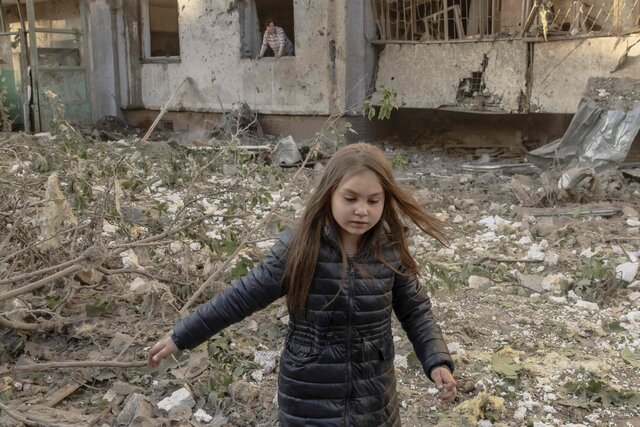
The Russian military launched a massive missile and drone strike against Ukraine in the early hours of June 2. In Kyiv, multi-story apartment buildings were damaged. According to the latest reports, six people were killed and more than 60 were wounded in the capital. In Dnipro, the Russian attack killed 11 people, including two children, and wounded 37 others. A four-story apartment building in the city was partially destroyed. Ukrainian President Volodymyr Zelensky said that Russian forces launched a total of 73 missiles and 656 drones overnight. In addition to Kyiv and Dnipro, cities in the Kharkiv, Mykolaiv, Zaporizhzhia, Poltava, Sumy, Chernihiv, and Khmelnytskyi regions were also struck.
Kyiv
Smoke from fires in Kyiv following the Russian strike on June 2, 2026A rescuer amid the ruins of an apartment building partially destroyed by the Russian strike. June 2, 2026A shelter in the Kyiv metro. June 2, 2026
An apartment building destroyed by the Russian strike on June 2, 2026
At Meduza, we are committed to transparency about our use of artificial intelligence in the newsroom. The story you’re reading was written by one of our living, breathing journalists and translated from Russian using an AI model configured to follow our strict editorial standards. This translation process is the result of extensive testing and refinements to ensure our English-language coverage is timely and accurate. A Meduza editor reviews every draft before publication.
If you find any errors in this translation, please contact us at reports@meduza.io.
Job listings have appeared on the Russian classifieds site Avito offering contracts for service in the “rear of the SVO” in Belarus and China. Verstka, an independent Russian news outlet, first flagged the listings.
The ads are nearly word-for-word identical. Positions are open to candidates of any citizenship, age, or health status — including retirees, people with health conditions, and those with military fitness classifications as low as “temporarily unfit.” No prior experience or military registration documents are required. Recruiters are also accepting candidates with expunged criminal records or suspended sentences.
The ads promise 10 million rubles in signing bonuses, debt forgiveness of the same amount, benefits for family members, full reimbursement of travel costs to the duty station, housing in dormitories or barracks, meals and equipment, and armed security.
One listing, for example, recruits guards for rear supply depots in Belarus, promising a “calm, safe rear zone” on the territory of the union state, “with all guarantees and payments from the Defense Ministry of the Russian Federation.” Identical terms are offered for a “production worker at an ammunition factory” in China.
Recruiters are also seeking guards for drone factories, electronic warfare facilities, and testing ranges, as well as a driver, an operator for a drone manufacturing plant, and drone assemblers, technicians, and testers. All positions, the ads claim, are located in Belarus and China.
About 50 such listings were posted in May by six employers: “Voyennaya Doblest” (“Military Valor”), “Put k Pobede” (“Path to Victory”), “Rubezh Rodiny SVO,” “Sluzhba s Dostoinstvom” (“Service with Dignity”), “Verny Put” (“True Path”), and “Armeysky Put” (“Army Path”). These organizations, mostly based in Moscow, appeared on Avito in 2025.
Similar employers had previously posted ads seeking “peacekeepers” for the Russia–Ukraine war. Some of those job descriptions specified that the position involved signing a contract with the armed forces.
Despite the fact that candidates are offered positions in the rear, there are no guarantees of such placement. Those who respond to these listings are signed to contracts on standard terms, and assignment decisions are made by commanders of units and training centers.
At Meduza, we are committed to transparency about our use of artificial intelligence in the newsroom. The story you’re reading was written by one of our living, breathing journalists and translated from Russian using an AI model configured to follow our strict editorial standards. This translation process is the result of extensive testing and refinements to ensure our English-language coverage is timely and accurate. A Meduza editor reviews every draft before publication.
If you find any errors in this translation, please contact us at reports@meduza.io.
Russian forces struck several Ukrainian regions overnight on June 2 with missiles and drones, hitting the Kyiv, Dnipropetrovsk, and Kharkiv regions.
Four people were killed in Kyiv, city Mayor Vitali Klitschko reported. Another 63 were injured, at least 40 of them hospitalized, including three children ages 3, 11, and 17.
Damage was reported across the Darnytskyi, Obolonskyi, Shevchenkivskyi, Sviatoshynskyi, Podilskyi, Holosiivskyi, and Solomianskyi districts.
In the Shevchenkivskyi district, debris struck a 24-story residential building and sparked a fire.
In the Podilskyi district, a rocket hit a nine-story residential building for the second time, partially collapsing its structure, according to preliminary reports.
In the Solomianskyi district, debris struck the upper floors of a 15-story residential building, and fires broke out on the seventh and eighth floors of a 24-story building.
Eight people were killed in Dnipro, the head of the regional military administration, Oleksandr Hanzha, reported. Among those pulled from the rubble was the body of a child born in 2023. One of the dead was a rescue worker who responded to the scene and was killed in a second strike, Ukraine’s State Emergency Service reported. At least 36 more people were injured, several of them in serious condition.
Residential buildings, an industrial facility, and a fire and rescue station were damaged. People may still be trapped beneath the rubble of a four-story residential building, and a search and rescue operation is underway.
In Kamianske, northwest of Dnipro, the strike damaged an administrative building and apartment buildings. Three people were injured and taken to the hospital in moderate condition.
In Kharkiv, 14 people were injured, including a child, according to preliminary reports from Ukraine’s State Emergency Service.
The Sumy and Zaporizhzhia regions were also struck, with residential buildings damaged. In the Zaporizhzhia region, at least three people were injured; Sumy reported no casualties.
Volodymyr Zelensky warned several times in recent days that Russia is preparing a massive strike on Ukraine. Most recently, on June 1 in his evening address. “Intelligence warnings about Russian strikes remain in effect. A massive strike is possible — they have prepared it,” he said.
On June 1, Vladimir Putin, for his part, held a meeting on Ukraine’s strike on Starobilsk, attended by Prosecutor General Alexander Gutsan and Investigative Committee head Alexander Bastrykin. The Russian president said that with the strike on Starobilsk, Ukraine had decided to “open a new chapter in its string of crimes” and “give the conflict as a whole a new character.”
At Meduza, we are committed to transparency about our use of artificial intelligence in the newsroom. The story you’re reading was written by one of our living, breathing journalists and translated from Russian using an AI model configured to follow our strict editorial standards. This translation process is the result of extensive testing and refinements to ensure our English-language coverage is timely and accurate. A Meduza editor reviews every draft before publication.
If you find any errors in this translation, please contact us at reports@meduza.io.
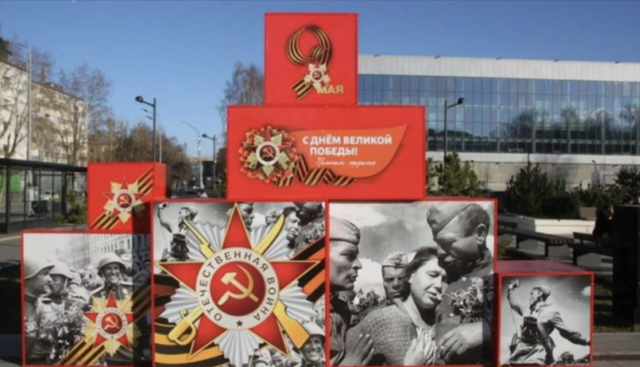
A photograph of the installation, from Anna Savelyeva’s post
Police in Syktyvkar have sought to remove three schoolchildren from their families after the children climbed on a Victory Day installation. The mothers of two of the three children, Anna Savelyeva and Irina Kalibabchuk, described the situation in VK posts on May 29.
Savelyeva said the local Internal Affairs Ministry’s juvenile affairs unit had filed a petition to remove her child from the family. In a video shared by Kalibabchuk, she displayed a document she described as a petition to place her child in a temporary detention center for juvenile offenders.
According to the parents and police, on April 18, three children born in 2017 climbed on a structure outside the city pool that had been erected in celebration of Victory Day on May 9. A photograph Savelyeva published shows a structure of square and rectangular panels featuring photographs of World War II veterans, images of the St. George ribbon, and Victory Day inscriptions. The parents referred to the structure as “blocks.”
The three children identified by police as offenders had been playing tag or hide-and-seek on the structure along with other schoolchildren, Kalibabchuk said. A broken block was found on the structure afterward, Savelyeva said. The children deny having broken it, saying everything was already that way when they arrived. All three were placed on a “preventive monitoring list,” and the juvenile affairs unit asked a court to remove them from their families.
Savelyeva said her son is now afraid he will be sent to jail:
“Mom, am I going to jail?” my eight-year-old son whispered, staring at the floor. I had to explain to an eight-year-old boy what “preventive monitoring” means. He didn’t understand. And then he cried and said, “But I wasn’t lying — I said it was already like that.”
Komi children’s rights commissioner, Tatyana Kozlova, said on May 30 that reports of children being removed from their families were premature. “The decision to place them in a temporary detention center [would be] made exclusively by a court,” she said. “As of today, no such decision has been made.”
The Internal Affairs Ministry’s directorate for Komi said on May 31 that the reports were inaccurate: police submitted materials to a court seeking to send one of the children to a juvenile detention center, but no removal took place.
Police say the child had previously stolen others’ belongings and money and committed other “socially dangerous acts.” The same child allegedly “committed an act of vandalism” at one of the city’s World War II memorials, according to the juvenile affairs commission.
The case will be reviewed at a June 2 meeting of the city’s juvenile affairs commission, where preventive measures will be determined, Kozlova said.
At Meduza, we are committed to transparency about our use of artificial intelligence in the newsroom. The story you’re reading was written by one of our living, breathing journalists and translated from Russian using an AI model configured to follow our strict editorial standards. This translation process is the result of extensive testing and refinements to ensure our English-language coverage is timely and accurate. A Meduza editor reviews every draft before publication.
If you find any errors in this translation, please contact us at reports@meduza.io.
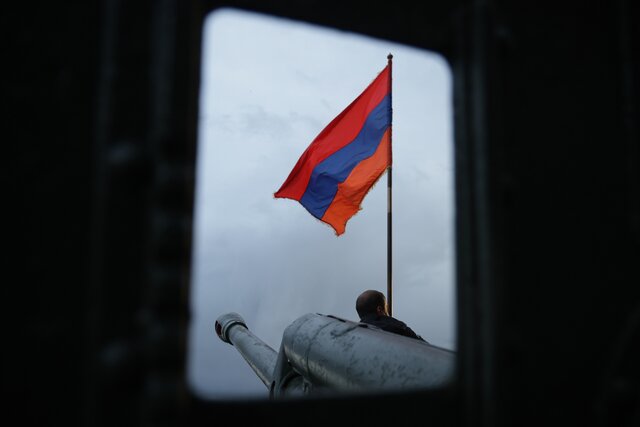
A campaign rally for Samvel Karapetyan’s Strong Armenia party in Yerevan, May 8, 2026
Armenia’s parliamentary elections are scheduled for this Sunday, June 7. Russia has repeatedly criticized incumbent Armenian Prime Minister Nikol Pashinyan for what the Kremlin views as Yerevan’s pro-Western turn. Armenia has deepened its cooperation with the European Union and the United States since Russia declined to come to its defense in the war with Azerbaijan. Moscow is now demanding that a pro-Russian businessman, Samvel Karapetyan, who is under house arrest, be allowed to run in the elections. Kremlin-linked bot networks have launched a sprawling disinformation campaign targeting Armenia and Pashinyan. According to Reuters, the Kremlin discussed a plan to send 100,000 Armenians living in Russia to Yerevan to vote against Pashinyan. Here is a brief look at the other ways Russia has been stepping up pressure on Armenia ahead of the vote.
Food bans are a standard Russian tool, and Moscow has deployed them aggressively against Armenia. The Federal Service for Veterinary and Phytosanitary Surveillance has banned imports of Armenian strawberries, tomatoes, cucumbers, peppers, herbs, certain brands of cognac and wine, Jermuk mineral water, flowers, fish, apricots, cherries, plums, and grapes.
Russia’s Energy Minister Sergei Tsivilev has also threatened to cut off supplies of natural gas, petroleum products, and uncut diamonds to Armenia if Yerevan continues its push to join the European Union.
The governments of Russia, Belarus, Kazakhstan, and Kyrgyzstan jointly demanded that Armenia hold a referendum on whether it would remain in the Eurasian Economic Union or seek EU membership. Pashinyan refused, saying the question remained theoretical.
After the Eurasian Economic Union summit in Astana, Russian President Vladimir Putin explicitly warned that if Armenia adopts EU standards, Moscow would “wind down” all economic integration with Yerevan and Armenian citizens would need permits to work in Russia. Putin also drew a pointed comparison to Ukraine, saying Kyiv’s bid to join the EU had once triggered a “crisis” in that country.
Russia’s Foreign Ministry recalled its ambassador to Armenia, Sergei Kopyrkin, for consultations — a sharp diplomatic rebuke — over the Armenian leadership’s moves toward the EU, which Moscow said are undermining the Eurasian Economic Union.
Amid those threats, the Kremlin says Putin called Pashinyan on his birthday — on June 1, the Armenian prime minister turned 51. During the call, Putin also discussed the summit in Astana, according to the Russian political Telegram channel Kontext. The Kremlin also published a telegram from Putin to Pashinyan saying Russia wants to maintain friendly ties with Armenia.
At Meduza, we are committed to transparency about our use of artificial intelligence in the newsroom. The story you’re reading was written by one of our living, breathing journalists and translated from Russian using an AI model configured to follow our strict editorial standards. This translation process is the result of extensive testing and refinements to ensure our English-language coverage is timely and accurate. A Meduza editor reviews every draft before publication.
If you find any errors in this translation, please contact us at reports@meduza.io.
According to a now redacted story, Channel One chief executive Konstantin Ernst is listed as a victim in the criminal case over the forgery of works by sculptor and graphic artist Ernst Neizvestny, two sources in the art market told the Russian business daily Kommersant. A source at the Tretyakov Gallery confirmed the report.
The forgeries came to light during an exhibition marking the centenary of Ernst Neizvestny, which ran at the New Tretyakov Gallery from December 16, 2025, to May 12, 2026, one of Kommersant’s sources said.
“Konstantin Lvovich Ernst lobbied for the Neizvestny centennial exhibition. He is a major collector of graphic works and [works by] nonconformist [artists, a category that includes Neizvestny]. The Tretyakov accepted [the submitted works] as originals,” the source said.
The exhibition featured works from both museum and private collections. The forgeries were found only among works from private collections, Kommersant’s source added. It remains unclear who else in the case is listed as a victim alongside Ernst.
Update. Kommersant removed from its article the information that Konstantin Ernst had been recognized as a victim. The newspaper now reports that Ernst does not appear in the case “in any capacity.” Among the victims in the case, Kommersant names Lyubov Agafonova, founder of the Vellum Gallery; Roza Verkhovyna, director of the auction house Pervye Imena (“First Names”); and Vyacheslav Yershov, executive director of the Prometheus Art Foundation.
On May 29, Russia’s Investigative Committee announced a criminal case involving the forgery of works by Ernst Neizvestny. The defendant is Maxim Koshkarev, deputy chief of staff of the Russian Navy’s Northern Fleet and a captain of the second rank. Investigators allege that he and his accomplices — who have not yet been identified — forged at least 30 works by Neizvestny and sold them to private collectors.
Ernst Neizvestny is one of the defining artists of postwar Soviet nonconformism. In 1962, Soviet leader Nikita Khrushchev famously called his work “degenerate art” after visiting a 1962 exhibition. Neizvestny was then expelled from the Artists’ Union and effectively barred from practicing his craft. In the 1970s, the sculptor emigrated to the United States, where critics embraced his work.
At Meduza, we are committed to transparency about our use of artificial intelligence in the newsroom. The story you’re reading was written by one of our living, breathing journalists and translated from Russian using an AI model configured to follow our strict editorial standards. This translation process is the result of extensive testing and refinements to ensure our English-language coverage is timely and accurate. A Meduza editor reviews every draft before publication.
If you find any errors in this translation, please contact us at reports@meduza.io.
Russian President Vladimir Putin convened a meeting to discuss the investigation into Ukraine’s strike on a college building in the city of Starobilsk in the occupied Luhansk region.
Putin said: “It appears that, in deliberately — and quite consciously — committing the gravest crime against children, teenagers, at the teachers’ college in Starobilsk […] the Kyiv leadership decided to open a new chapter in its string of crimes, to change the nature of the conflict fundamentally as a whole. Well, that is their choice.”
He then ended the public portion of the meeting and moved into a closed session.
Ukrainian President Volodymyr Zelensky had been warningUkrainians since May 29 about the possibility of a massive new Russian strike. In his evening address on June 1, he repeated the warning, saying that Russia had prepared a massive strike, that such an attack was possible, and that Ukraine’s air defenses were on round-the-clock alert, as far as supplies allow.
In the early hours of May 22, Ukrainian forces struck the city of Starobilsk in the occupied Luhansk region, partially destroying buildings at a local college. Twenty-one people between the ages of 18 and 21 were killed.
In the early hours of May 24, Russia launched a large-scale strike on Kyiv and the surrounding region. An Oreshnik missile was used for the third time since the start of the war. Two people were killed and more than 80 were wounded.
At Meduza, we are committed to transparency about our use of artificial intelligence in the newsroom. The story you’re reading was written by one of our living, breathing journalists and translated from Russian using an AI model configured to follow our strict editorial standards. This translation process is the result of extensive testing and refinements to ensure our English-language coverage is timely and accurate. A Meduza editor reviews every draft before publication.
If you find any errors in this translation, please contact us at reports@meduza.io.
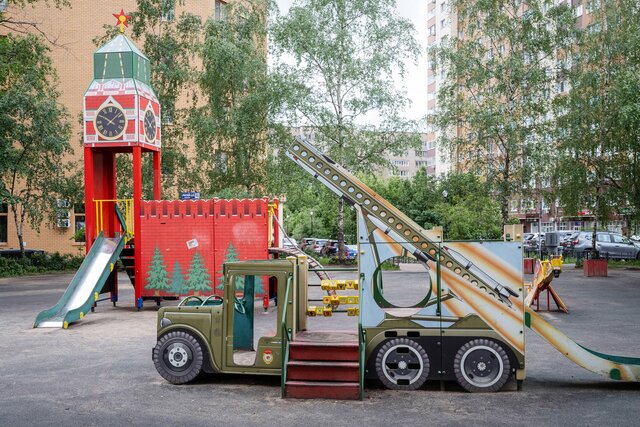
Russian authorities are pushing propaganda and ideology into universities, schools, and kindergartens. Militarist trends have reached even playgrounds, driven by this year’s 80th anniversary of the Soviet victory over Nazi Germany. On the eve of Children’s Day, June 1, a photographer from the independent journalism collective Bereg visited Moscow’s playgrounds to document what urban childhood looks like in Russia today. Architecture journalist Asya Zolnikova spoke with playground architects and a child psychologist. Meduza is republishing the story in full.
A playground in Moscow’s Cheremushki districtA playground in the VDNKh districtA playground in Yuzhnoye Butovo
Names have been changed to protect sources’ safety.
Natalya
designer of children’s play spaces
What a playground looks like depends on who is paying for it. A developer or a prominent institution has a marketing strategy and wants the playground to be image-driven. Projects at that scale bring in architects, designers, and other specialists.
When construction is funded through a municipal program — especially outside Moscow, in regions with tight budgets — the priorities shift to the practical needs of housing maintenance offices and local administrations. Patriotic-themed playgrounds may have appeared in manufacturers’ catalogs simply because they are easier to sell.
Still, Kremlin-themed play structures are not tied to the patriotic education trend, they’ve been a fixture in Russian courtyards for decades. The Kremlin is simply one design among many.
Thematic play spaces are a fine idea: they can serve as a springboard and a setting for play. Finland, Sweden, and other countries have playgrounds where children can play at being firefighters, police officers, or other workers.
There is no research I know of that definitively establishes what playgrounds should look like, or whether any particular design is better for child development than another. The most important thing is that a child be surrounded by other children to play with.
A playground in the Butyrsky district. The inscription behind the slide reads: ‘Thank you for the Victory’The Butyrsky districtA children’s playground in the Butyrsky districtThe Butyrsky districtA children’s playground in Golyanovo
Tatyana
designer of children’s play spaces
Many Russian architects draw on neuroscience, pedagogy, and other fields when designing playgrounds — an approach that meaningfully improves outcomes for children. For instance, children need to move and spin in different directions during play; vestibular stimulation promotes brain development.
A play space should also offer several distinct play scenarios: quiet or active, group or solo. A playground in the courtyard of an ordinary apartment building works best when built from as many abstract elements as possible — that way, children can reinvent it each day and won’t get bored.
A playground in a place children don’t visit every day [for example, a city center or a park] can look like a sculpture.
Moscow’s developers and city authorities have accumulated considerable experience and visual literacy. Compared to 10 to 15 years ago, they have come a long way. But the improvement hasn’t reached every courtyard.
It is hard for me to say whether Moscow has seen a significant increase in patriotic-themed playgrounds, but these photographs suggest they are the work of Zhilishchnik, the city’s housing maintenance agency — these are playgrounds renovated with state funds.
These playgrounds display a desire to plaster images and symbols everywhere — symbols that serve no function except to signal loyalty to the authorities. This clearly isn’t being done for the children’s benefit. But it earns praise from local district administrators.
A playground in Reutov, Moscow regionMaryinoA children’s playground in the Bogorodskoye areaA children’s playground in the Butyrsky district
Maria
child psychologist
A playground is, above all, a place for play, and children’s play is a bridge between physical reality and the many symbols a child projects onto the surrounding world.
Playgrounds built around a prescribed political agenda constrain play and channel it into fixed forms. If a toy car says “police” on it, the child will most likely play with it as a police car. In my view, this is an attempt to control children’s play and increase their tolerance for state symbols.
The more abstract the environment and the less it is moderated, the more opportunities children have to fill it with their own content, invent stories, and learn about themselves and the world.
Children’s “ideal” play spaces are vacant lots, alleyways, construction sites, and forests. Children are drawn to those places even at the cost of their own safety. Patriotic playgrounds will inevitably push more children “into the alleys” — especially younger adolescents, simply because they are boring.
A playground in LyublinoA children’s playground in ChertanovoA children’s playground in ChertanovoA playground in MaryinoA playground in Chertanovo
At Meduza, we are committed to transparency about our use of artificial intelligence in the newsroom. The story you’re reading was written by one of our living, breathing journalists and translated from Russian using an AI model configured to follow our strict editorial standards. This translation process is the result of extensive testing and refinements to ensure our English-language coverage is timely and accurate. A Meduza editor reviews every draft before publication.
If you find any errors in this translation, please contact us at reports@meduza.io.
TES and ATAN, which operate the largest fuel station networks in Crimea, have suspended sales of gasoline coupons. Both companiesannounced the decision in notices posted on their websites.
Crimea introduced temporary restrictions on the sale of AI-95 (premium grade) and AI-92 (regular) gasoline starting May 31. Under the new rules, AI-95 is available only with coupons, while AI-92 can still be purchased without them but in quantities of no more than 20 liters (5.3 gallons) per vehicle. Sevastopol imposed similar restrictions.
As the fuel crisis deepened, residents of Crimea and Sevastopol began listing gasoline on Avito for 200–350 rubles per liter — at least twice the official price — the independent Russian news outlet Verstka reported.
A shortage of gasoline in Crimea has developed after Ukrainian drones remotely mined the highway connecting the peninsula to Russia’s Rostov region, one of the main routes for fuel deliveries to Crimea.
At Meduza, we are committed to transparency about our use of artificial intelligence in the newsroom. The story you’re reading was written by one of our living, breathing journalists and translated from Russian using an AI model configured to follow our strict editorial standards. This translation process is the result of extensive testing and refinements to ensure our English-language coverage is timely and accurate. A Meduza editor reviews every draft before publication.
If you find any errors in this translation, please contact us at reports@meduza.io.
The Anti-Corruption Foundation (FBK) found more than 500 million rubles’ worth — roughly $7 million — of real estate, cars, and luxury goods belonging to the family of Valery Fedorov, director of the Russian state polling agency VTsIOM. FBK reached that conclusion after reviewing financial records, leaked data, and the Instagram account of Darya Vasilyeva, Fedorov’s 30-year-old second wife.
Fedorov has headed VTsIOM since 2003. The agency, among other things, publishes research on Russians’ trust in the current government. Meduza and other independent outlets have reported repeatedly on how the center utilizes such publications to manipulate public opinion. VTsIOM uses those surveys to shape the perception that a “majority” of Russians support Vladimir Putin and his political decisions.
Consider a recent case: Putin’s approval rating has been falling since late March, amid mobile internet shutdowns in Russia, bans on Telegram, and rising food prices. As the rating continued to fall, the center changed its polling methodology and began conducting not only phone interviews but also door-to-door surveys. However, after a brief reversal, poll results published on May 29 showed that 67.5 percent of respondents approved of Putin’s performance as president — down 1.9 percentage points from the previous week.
Until recently, Fedorov’s wife kept an Instagram blog documenting her high-society life and foreign travels. She and the VTsIOM director traveled to France, Italy, Germany, and Azerbaijan as early as 2018, when Fedorov was still married to his first wife. He later divorced and married Vasilyeva in 2021. The couple has a child together.
On her Instagram account, Vasilyeva posted, among other things, photos and videos of expensive cars and other luxury items. According to FBK, she owns:
A Porsche Cayenne worth 12.5 million rubles ($173,600)
A Zeekr minivan worth 9 million rubles ($125,000)
A collection of Hermès handbags (at least 24) worth roughly 53 million rubles ($736,100)
A collection of Cartier and Bulgari jewelry worth 19 million rubles ($263,890)
Vasilyeva also owns a 170-square-meter (1,830-square-foot) apartment in Moscow’s Smolensky De Luxe residential complex and four parking spaces, with a combined value of roughly 230 million rubles (about $3.2 million).
The Fedorov family has also invested in real estate at two other Moscow developments — Luzhniki Collection and Slava Residences — both still under construction, so the exact units they purchased remain unidentified. FBK put the value of 75-square-meter (800-square-foot) units at those developments at roughly 200 million rubles (nearly $2.8 million).
In 2023, Vasilyeva launched her own fashion label, DV. She rented store space in one of Moscow’s most expensive buildings — 12 Kutuzovsky Prospekt — where retail space costs 1.5 million rubles a month ($20,800). Soon after, DV also opened a boutique in Dubai.
The brand lasted about a year. DV’s social media accounts are now dark, and the website is defunct. Vasilyeva now describes herself as an “executive coach,” a “personal development trainer,” and the “author of a philosophical book about the joy of the soul.”
FBK notes that Vasilyeva has no significant income of her own, and Fedorov’s official earnings fall well short of accounting for his family’s wealth. According to VTsIOM’s financial filings, the center’s director earned roughly 14 million rubles ($194,450) in 2022, roughly 22 million ($305,560) in 2023, and roughly 15 million ($208,340) in 2024.
“That’s an enormous amount of money,” says Maria Pevchikh, head of FBK International, in the group’s report. “And it raises a separate question: why is a government official in this country — someone who handles public opinion polling — earning that much? To be fair, Fedorov does teach, write books, and make public appearances, and presumably gets paid for those too. But let’s be generous — even with all of that, he could have earned maybe 55 million [$763,925] over three years.”
FBK alleges that Fedorov “enriches himself by serving the interests of those in power” and runs “fraudulent contracting schemes” using government funds allocated to VTsIOM for sociological research. The foundation found that VTsIOM-affiliated entities transferred hundreds of millions of rubles to a network of independent contractors — many of whom, FBK says, have no connection to sociology whatsoever. Among the recipients were a photographer who now manages a water park, a retiree, and employees of travel agencies and car dealerships.
On Monday, Russian users found they could no longer reach PyPI, the package repository that Python developers rely on for code libraries.
Reports began appearing on the Detector404 website after 1:00 p.m., Moscow time, on June 1. A Habr user named freehabr was among the first to flag the issue; by evening, the volume of complaints had tapered off.
According to freehabr, the access problems hit both end users and hosted servers alike. Commenters confirmed they had run into the same issues.
Access problems with the repository affect everyone who writes Python code, because PyPI is the core infrastructure underlying the language, according to Kod Durova, a Russian tech news outlet.
The outlet reported that its own diagnostics showed the site behaving like resources blocked by Roskomnadzor, Russia’s federal media regulator:
A check using a tool for diagnosing internet blocks showed that the connection to pypi.org drops at the TLS stage — the encryption protocol that establishes a secure channel between a client and a server. This behavior is characteristic of resources blocked by Roskomnadzor via DPI (deep packet inspection).
Roskomnadzor told the Russian business daily Vedomosti that it had not restricted access to PyPI and was not aware of any problems with access to the site.
At Meduza, we are committed to transparency about our use of artificial intelligence in the newsroom. The story you’re reading was written by one of our living, breathing journalists and translated from Russian using an AI model configured to follow our strict editorial standards. This translation process is the result of extensive testing and refinements to ensure our English-language coverage is timely and accurate. A Meduza editor reviews every draft before publication.
If you find any errors in this translation, please contact us at reports@meduza.io.
The organizers of the Trail Kursiu Nerija run along the Curonian Spit in Lithuania say that participants from two “unfriendly” countries — Russia and Belarus — are unwelcome at the event. According to the outlet Volna, the registration rules deliberately spell both countries’ names in lowercase, as “russia or belarus.”
Russian and Belarusian runners may still compete, but only if they meet four conditions:
They must submit a written statement opposing Russia’s war in Ukraine.
They must provide a Lithuanian residence permit issued by Lithuanian authorities and, if required, additional documents.
They must agree to wear Ukraine’s flag on their race bib rather than Russia’s or Belarus’s.
They must agree that they are not eligible for awards or prizes.
Organizers reserved the right to reject any application without explanation, in which case the participant’s registration fee would be refunded, but only after the event.
The Trail Kursiu Nerija run is scheduled for October 17, 2026. Registration opened on June 1.
Lithuania has been debating for months whether to allow athletes from Russia and Belarus to compete in domestic events. In international competitions held in the country, only Russians and Belarusians who condemn Russia’s war in Ukraine in writing and express support for Ukraine — and who agree to compete without a national flag — may compete.
At Meduza, we are committed to transparency about our use of artificial intelligence in the newsroom. The story you’re reading was written by one of our living, breathing journalists and translated from Russian using an AI model configured to follow our strict editorial standards. This translation process is the result of extensive testing and refinements to ensure our English-language coverage is timely and accurate. A Meduza editor reviews every draft before publication.
If you find any errors in this translation, please contact us at reports@meduza.io.
Russia’s Federal Service for Veterinary and Phytosanitary Surveillance (Rosselkhoznadzor) has temporarily banned imports of cherries, sweet cherries, apricots, plums, peaches, nectarines, and grapes from Armenia, effective June 2.
The move is the latest in a broader wave of import restrictions Rosselkhoznadzor has imposed on Armenian products in recent days, including strawberries, herbs, cucumbers, tomatoes, peppers, and several brands of cognac and wine.
Ties between Russia and Armenia have deteriorated as Yerevan has pursued closer ties with Western countries. Russian President Vladimir Putin has said that if Armenia joins the European Union, Moscow will “wind down” all economic integration with Yerevan and stop buying goods from Armenia.
At Meduza, we are committed to transparency about our use of artificial intelligence in the newsroom. The story you’re reading was written by one of our living, breathing journalists and translated from Russian using an AI model configured to follow our strict editorial standards. This translation process is the result of extensive testing and refinements to ensure our English-language coverage is timely and accurate. A Meduza editor reviews every draft before publication.
If you find any errors in this translation, please contact us at reports@meduza.io.

 Login
Login