Normal view

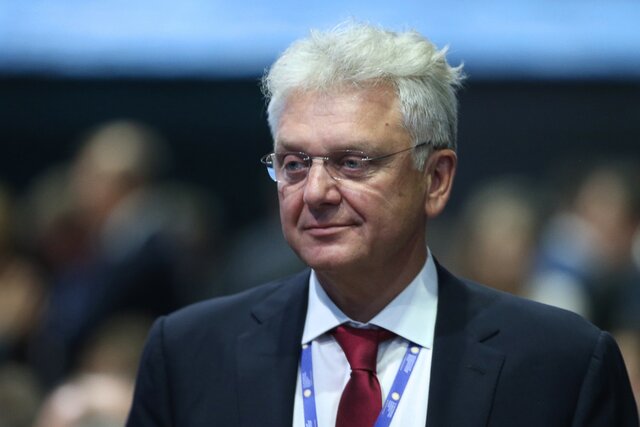
Navalny foundation researchers uncover millions in property and luxury goods held by family of VTsIOM director Valery Fyodorov, who for more than two decades has manipulated Russian public opinion

1 June 2026 at 19:59

The Anti-Corruption Foundation (FBK) found more than 500 million rubles’ worth — roughly $7 million — of real estate, cars, and luxury goods belonging to the family of Valery Fedorov, director of the Russian state polling agency VTsIOM. FBK reached that conclusion after reviewing financial records, leaked data, and the Instagram account of Darya Vasilyeva, Fedorov’s 30-year-old second wife.

Fedorov has headed VTsIOM since 2003. The agency, among other things, publishes research on Russians’ trust in the current government. Meduza and other independent outlets have reported repeatedly on how the center utilizes such publications to manipulate public opinion. VTsIOM uses those surveys to shape the perception that a “majority” of Russians support Vladimir Putin and his political decisions.

Consider a recent case: Putin’s approval rating has been falling since late March, amid mobile internet shutdowns in Russia, bans on Telegram, and rising food prices. As the rating continued to fall, the center changed its polling methodology and began conducting not only phone interviews but also door-to-door surveys. However, after a brief reversal, poll results published on May 29 showed that 67.5 percent of respondents approved of Putin’s performance as president — down 1.9 percentage points from the previous week.

Until recently, Fedorov’s wife kept an Instagram blog documenting her high-society life and foreign travels. She and the VTsIOM director traveled to France, Italy, Germany, and Azerbaijan as early as 2018, when Fedorov was still married to his first wife. He later divorced and married Vasilyeva in 2021. The couple has a child together.

On her Instagram account, Vasilyeva posted, among other things, photos and videos of expensive cars and other luxury items. According to FBK, she owns:

  • A Porsche Cayenne worth 12.5 million rubles ($173,600)
  • A Zeekr minivan worth 9 million rubles ($125,000)
  • A collection of Hermès handbags (at least 24) worth roughly 53 million rubles ($736,100)
  • A collection of Cartier and Bulgari jewelry worth 19 million rubles ($263,890)

Vasilyeva also owns a 170-square-meter (1,830-square-foot) apartment in Moscow’s Smolensky De Luxe residential complex and four parking spaces, with a combined value of roughly 230 million rubles (about $3.2 million).

The Fedorov family has also invested in real estate at two other Moscow developments — Luzhniki Collection and Slava Residences — both still under construction, so the exact units they purchased remain unidentified. FBK put the value of 75-square-meter (800-square-foot) units at those developments at roughly 200 million rubles (nearly $2.8 million).

In 2023, Vasilyeva launched her own fashion label, DV. She rented store space in one of Moscow’s most expensive buildings — 12 Kutuzovsky Prospekt — where retail space costs 1.5 million rubles a month ($20,800). Soon after, DV also opened a boutique in Dubai.

The brand lasted about a year. DV’s social media accounts are now dark, and the website is defunct. Vasilyeva now describes herself as an “executive coach,” a “personal development trainer,” and the “author of a philosophical book about the joy of the soul.”

FBK notes that Vasilyeva has no significant income of her own, and Fedorov’s official earnings fall well short of accounting for his family’s wealth. According to VTsIOM’s financial filings, the center’s director earned roughly 14 million rubles ($194,450) in 2022, roughly 22 million ($305,560) in 2023, and roughly 15 million ($208,340) in 2024.

“That’s an enormous amount of money,” says Maria Pevchikh, head of FBK International, in the group’s report. “And it raises a separate question: why is a government official in this country — someone who handles public opinion polling — earning that much? To be fair, Fedorov does teach, write books, and make public appearances, and presumably gets paid for those too. But let’s be generous — even with all of that, he could have earned maybe 55 million [$763,925] over three years.”

FBK alleges that Fedorov “enriches himself by serving the interests of those in power” and runs “fraudulent contracting schemes” using government funds allocated to VTsIOM for sociological research. The foundation found that VTsIOM-affiliated entities transferred hundreds of millions of rubles to a network of independent contractors — many of whom, FBK says, have no connection to sociology whatsoever. Among the recipients were a photographer who now manages a water park, a retiree, and employees of travel agencies and car dealerships.
Russia’s federal censor denies blocking Python’s package index as developers scramble for workarounds

1 June 2026 at 19:28

On Monday, Russian users found they could no longer reach PyPI, the package repository that Python developers rely on for code libraries.

Reports began appearing on the Detector404 website after 1:00 p.m., Moscow time, on June 1. A Habr user named freehabr was among the first to flag the issue; by evening, the volume of complaints had tapered off.

According to freehabr, the access problems hit both end users and hosted servers alike. Commenters confirmed they had run into the same issues.

Access problems with the repository affect everyone who writes Python code, because PyPI is the core infrastructure underlying the language, according to Kod Durova, a Russian tech news outlet.

The outlet reported that its own diagnostics showed the site behaving like resources blocked by Roskomnadzor, Russia’s federal media regulator:

A check using a tool for diagnosing internet blocks showed that the connection to pypi.org drops at the TLS stage — the encryption protocol that establishes a secure channel between a client and a server. This behavior is characteristic of resources blocked by Roskomnadzor via DPI (deep packet inspection).

Roskomnadzor told the Russian business daily Vedomosti that it had not restricted access to PyPI and was not aware of any problems with access to the site.

At Meduza, we are committed to transparency about our use of artificial intelligence in the newsroom. The story you’re reading was written by one of our living, breathing journalists and translated from Russian using an AI model configured to follow our strict editorial standards. This translation process is the result of extensive testing and refinements to ensure our English-language coverage is timely and accurate. A Meduza editor reviews every draft before publication.

If you find any errors in this translation, please contact us at reports@meduza.io.

To read Meduza’s exclusive content in English, please subscribe to our newsletter.

Condemn the war, wear a Ukrainian flag, and race for zero prizes: A Lithuanian trail run’s terms for Russians and Belarusians

1 June 2026 at 18:57

The organizers of the Trail Kursiu Nerija run along the Curonian Spit in Lithuania say that participants from two “unfriendly” countries — Russia and Belarus — are unwelcome at the event. According to the outlet Volna, the registration rules deliberately spell both countries’ names in lowercase, as “russia or belarus.”

Russian and Belarusian runners may still compete, but only if they meet four conditions:

  1. They must submit a written statement opposing Russia’s war in Ukraine.
  2. They must provide a Lithuanian residence permit issued by Lithuanian authorities and, if required, additional documents.
  3. They must agree to wear Ukraine’s flag on their race bib rather than Russia’s or Belarus’s.
  4. They must agree that they are not eligible for awards or prizes.

Organizers reserved the right to reject any application without explanation, in which case the participant’s registration fee would be refunded, but only after the event.

The Trail Kursiu Nerija run is scheduled for October 17, 2026. Registration opened on June 1.

Lithuania has been debating for months whether to allow athletes from Russia and Belarus to compete in domestic events. In international competitions held in the country, only Russians and Belarusians who condemn Russia’s war in Ukraine in writing and express support for Ukraine — and who agree to compete without a national flag — may compete.

At Meduza, we are committed to transparency about our use of artificial intelligence in the newsroom. The story you’re reading was written by one of our living, breathing journalists and translated from Russian using an AI model configured to follow our strict editorial standards. This translation process is the result of extensive testing and refinements to ensure our English-language coverage is timely and accurate. A Meduza editor reviews every draft before publication.

If you find any errors in this translation, please contact us at reports@meduza.io.

To read Meduza’s exclusive content in English, please subscribe to our newsletter.

Russia extends food embargo on Armenia to summer fruit ahead of Yerevan elections

1 June 2026 at 18:51

Russia’s Federal Service for Veterinary and Phytosanitary Surveillance (Rosselkhoznadzor) has temporarily banned imports of cherries, sweet cherries, apricots, plums, peaches, nectarines, and grapes from Armenia, effective June 2.

The move is the latest in a broader wave of import restrictions Rosselkhoznadzor has imposed on Armenian products in recent days, including strawberries, herbs, cucumbers, tomatoes, peppers, and several brands of cognac and wine.

Ties between Russia and Armenia have deteriorated as Yerevan has pursued closer ties with Western countries. Russian President Vladimir Putin has said that if Armenia joins the European Union, Moscow will “wind down” all economic integration with Yerevan and stop buying goods from Armenia.

At Meduza, we are committed to transparency about our use of artificial intelligence in the newsroom. The story you’re reading was written by one of our living, breathing journalists and translated from Russian using an AI model configured to follow our strict editorial standards. This translation process is the result of extensive testing and refinements to ensure our English-language coverage is timely and accurate. A Meduza editor reviews every draft before publication.

If you find any errors in this translation, please contact us at reports@meduza.io.

To read Meduza’s exclusive content in English, please subscribe to our newsletter.

Bloomberg: Russia’s top financial officials privately tell Putin defense spending is unsustainable

1 June 2026 at 18:36

Senior Finance Ministry and central bank officials have warned Vladimir Putin that defense spending is driving the federal budget deficit to unsustainable levels, Bloomberg reported, citing people familiar with the discussions.

The officials proposed cutting military spending, but Putin told the Finance Ministry to find savings elsewhere in the budget and leave defense untouched. Bloomberg described this as the starkest sign of internal disagreement in Moscow since the start of the full-scale invasion of Ukraine.

According to Bloomberg, the Defense Ministry and some Kremlin officials are not only resisting such cuts but also demanding more funding. They fear that scaling back defense spending would damage the economy, since many Russian businesses depend on defense contracts.

Two people close to the government told Bloomberg that the Defense Ministry’s shortfall in 2026 could reach three trillion rubles ($36 billion).

When drafting the 2026 budget, officials had assumed the war would be over by the end of the year, Bloomberg reported. They expected that military spending in the second half of 2026 could be cut following Putin’s meeting with U.S. President Donald Trump in Alaska. But peace has not come, and a sharp rise in oil prices driven by the war in the Middle East has not been enough to solve Russia’s problems. Any meaningful improvement in Russia’s fiscal position would require oil to stay above $100 a barrel for at least a year.

According to a late-May Financial Times report, Finance Minister Anton Siluanov had already asked in February that spending across all 2026 non-military budget lines be cut.

The most recent revision of Russia’s 2026 federal budget projects a deficit of roughly 1.6% of GDP (3.79 trillion rubles).

In the first four months of the year, the budget deficit reached 2.5% of GDP (5.9 trillion rubles) — the widest deficit since the start of the full-scale war. The Ministry of Economic Development has slashed its forecast for economic growth in 2026 to 0.4 percent, down from an earlier projection of 1.3 percent.

At Meduza, we are committed to transparency about our use of artificial intelligence in the newsroom. The story you’re reading was written by one of our living, breathing journalists and translated from Russian using an AI model configured to follow our strict editorial standards. This translation process is the result of extensive testing and refinements to ensure our English-language coverage is timely and accurate. A Meduza editor reviews every draft before publication.

If you find any errors in this translation, please contact us at reports@meduza.io.

To read Meduza’s exclusive content in English, please subscribe to our newsletter.

Russia jails student for 15 years on treason and terrorism charges over Telegram channel. He attempted suicide before his arrest, in pretrial detention, and during prison transfer.

1 June 2026 at 17:57

A Russian military court has sentenced Rafael Mamedov, a 23-year-old student and creator of the Telegram channel “Svobodnaya Laplandiya” (“Free Lapland”), to 15 years in prison on charges of treason and participation in an organization Russian authorities have designated as terrorist. The Northern Fleet Military Court in Severomorsk handed down the sentence on June 1, according to OVD-Info, an independent Russian human rights monitor.

Under the ruling, Mamedov will serve the first three years in prison and the remainder of his sentence in a strict-regime penal colony.

Mamedov has been in custody since May 2025. Prosecutors brought charges based on his Telegram channel — where he posted memes, photographs, and historical and mythological facts about Lapland — as well as articles he wrote for the website of the “Coalition for Freedom from Imperial Tyrants,” in which he criticized Russian authorities and wrote about Russia’s dissolution. He did not plead guilty.

The case stems from a court ruling that declared the “Forum of Free States of Post-Russia” a terrorist organization. The channel “Svobodnaya Laplandiya” was designated as one of more than 170 branches of the organization, alongside such fictional entities as the “Belgorod People’s Republic” and “Kursk People’s Republic.”

Shortly before his arrest, Mamedov attempted suicide. Police detained him at a neuropsychiatric clinic in Murmansk, then formally arrested him. Mamedov made two more suicide attempts — one while in pretrial detention and another during a transfer between facilities.

At Meduza, we are committed to transparency about our use of artificial intelligence in the newsroom. The story you’re reading was written by one of our living, breathing journalists and translated from Russian using an AI model configured to follow our strict editorial standards. This translation process is the result of extensive testing and refinements to ensure our English-language coverage is timely and accurate. A Meduza editor reviews every draft before publication.

If you find any errors in this translation, please contact us at reports@meduza.io.

To read Meduza’s exclusive content in English, please subscribe to our newsletter.

Russian war veteran accused of killing civilians in Bucha makes United Russia list in regional primary

1 June 2026 at 17:06

A veteran of the war in Ukraine, Nursultan Mussagaleyev, finished second in a United Russia primary for the party’s regional list in the Orenburg region. The independent Russian investigative outlet Agentstvo drew attention to the result.

A second-place finish does not guarantee Mussagaleyev a spot on the ballot for the lower house of Russia’s parliament. The party finalizes its electoral list at a congress, which may include candidates who did not take part in the primary.

Orenburg Governor Yevgeny Solntsev endorsed Mussagaleyev’s potential candidacy in late May, describing him as a man of “unbending character” who “has been through the crucible of harsh trials — combat — and therefore, more than anyone, knows what patriotism and love of country mean and is ready to make it better.”

Nursultan Mussagaleyev is a native of Russia’s Orenburg region and a participant in Russia’s war in Ukraine. For his role in the war, he was awarded the title of Hero of Russia. Ukrainian authorities have opened a criminal case against him on charges of violating the laws and customs of war. According to Ukraine’s Security Service, Mussagaleyev served as commander of a reconnaissance platoon in the 104th Air Assault Regiment of the 76th Air Assault Division. The agency has accused him of involvement in the torture and killing of civilians in the city of Bucha.

In February 2025, Mussagaleyev was appointed acting deputy minister of regional and information policy for the Orenburg region.

At Meduza, we are committed to transparency about our use of artificial intelligence in the newsroom. The story you’re reading was written by one of our living, breathing journalists and translated from Russian using an AI model configured to follow our strict editorial standards. This translation process is the result of extensive testing and refinements to ensure our English-language coverage is timely and accurate. A Meduza editor reviews every draft before publication.

If you find any errors in this translation, please contact us at reports@meduza.io.

To read Meduza’s exclusive content in English, please subscribe to our newsletter.

‘Shot a piece of junk — redo it’: Putin aide Medinsky calls for quality control over state-funded films

1 June 2026 at 16:50

Russia’s film industry suffers from inadequate state quality control, presidential aide and former Culture Ministry head Vladimir Medinsky said in an interview with Ekspert magazine.

Medinsky argued that the industry today has too much state money and too few market mechanisms — leaving it, in his words, “stuck between socialism and capitalism.”

“The result is a pile of mediocre film products. The state means well. But it can’t manage to keep track of quality. And oversight needs to happen at every stage: the idea, the script, the shoot, the release,” Medinsky said.

He added that Soviet censorship bodies monitored not only ideological deviations but also the quality of the product, and argued the same principle should apply today: if a producer uses state money to make a bad film, it should not be accepted.

“I don’t idealize Soviet censorship, but it had an undeniable artistic benefit — shoddy work didn’t make it into distribution. Shot a piece of junk — redo it,” he said.

In December 2025, director Alexander Sokurov told a meeting of the Presidential Council for Human Rights attended by Vladimir Putin that censorship existed in Russian cinema and literature. “We can see it in film, in literature, and in the work of bookstores, where the authorities are raising serious complaints about creative professionals,” Sokurov said. “In my view, this is a major, serious problem, because people are being deprived of the opportunity to realize their artistic ideas — simply to work in their profession. And very often these people are not told why they are being treated harshly and uncompromisingly.”

On March 1, 2026, several legislative changes came into force in Russia, including measures affecting the cultural sphere. In particular, films that “discredit traditional spiritual and moral values” are now banned from being shown.

At Meduza, we are committed to transparency about our use of artificial intelligence in the newsroom. The story you’re reading was written by one of our living, breathing journalists and translated from Russian using an AI model configured to follow our strict editorial standards. This translation process is the result of extensive testing and refinements to ensure our English-language coverage is timely and accurate. A Meduza editor reviews every draft before publication.

If you find any errors in this translation, please contact us at reports@meduza.io.

To read Meduza’s exclusive content in English, please subscribe to our newsletter.

Armenian PM Pashinyan rejects Russia’s demand for referendum on choosing between the EU and the Eurasian Economic Union

1 June 2026 at 16:40

There are no grounds at present for holding a referendum in Armenia on whether to remain in the Eurasian Economic Union or pursue membership in the European Union, Prime Minister Nikol Pashinyan said.

Armenia will continue operating within the Eurasian Economic Union “as long as the choice between the European Union and the Eurasian Economic Union does not become unavoidable,” Pashinyan said, adding that any such decision ultimately belongs to the Armenian people.

Until Armenia formally applies for European Union membership or nears candidate status, holding a referendum on the question would be illogical, Pashinyan said. The choice remains theoretical, and putting a theoretical choice to a referendum was neither reasonable nor appropriate and had no basis.

Pashinyan said Armenia would work “calmly, peacefully, without nerves, without disputes within the Eurasian Economic Union.”

At the end of May, the leaders of Russia, Belarus, Kazakhstan, and Kyrgyzstan issued a joint statement calling on Armenia to hold a referendum and decide whether it will remain in the Eurasian Economic Union or continue pursuing EU membership. In their view, Yerevan’s preparations for joining the EU pose “significant risks to economic security” for EAEU member states.

Parliamentary elections are set to take place in Armenia on June 7. Against this backdrop, relations between Moscow and Yerevan have sharply deteriorated. Russia has accused Armenia’s current prime minister, Nikol Pashinyan, of pursuing a pro-Western course. In response to Yerevan’s efforts to move closer to the European Union, Russia has begun imposing restrictions on imports from Armenia. At the same time, on June 1, Putin congratulated Pashinyan on his birthday, and the two leaders spoke by phone.

At Meduza, we are committed to transparency about our use of artificial intelligence in the newsroom. The story you’re reading was written by one of our living, breathing journalists and translated from Russian using an AI model configured to follow our strict editorial standards. This translation process is the result of extensive testing and refinements to ensure our English-language coverage is timely and accurate. A Meduza editor reviews every draft before publication.

If you find any errors in this translation, please contact us at reports@meduza.io.

To read Meduza’s exclusive content in English, please subscribe to our newsletter.

Ukrainian gymnasts protest as Russian and Belarusian anthems return to the European Championships

1 June 2026 at 11:32
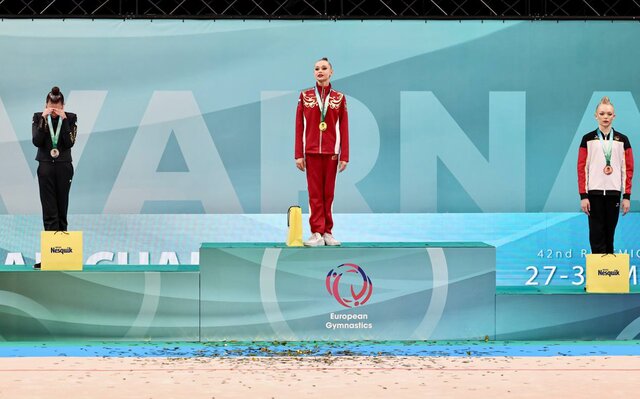
Russian junior Yana Zaikina wins the ribbon event. To her left is Ukraine’s Sofiia Krainska, who finished second. To her right is Germany’s Melissa Diete, who took bronze.

The Rhythmic Gymnastics European Championships in Varna, Bulgaria — held May 27–31 — marked the first international competition since 2021 at which athletes from Russia and Belarus competed under their national flags and anthems. The International Gymnastics Federation lifted restrictions in mid-May.

The restrictions had been in place since February 2022, imposed following Russia’s invasion of Ukraine and covering not only rhythmic gymnastics but also artistic gymnastics, trampoline, acrobatic gymnastics, and aerobic gymnastics. Russian and Belarusian athletes were barred from competition entirely. Starting in 2024, they were allowed to compete under neutral status — without national flags or anthems.

Ukraine opposed the decision to lift the restrictions. The Ministry of Youth and Sports called it an “official endorsement of war, murder, and genocide.” Even so, the Ukrainian Gymnastics Federation did not boycott the championship, saying it “could not afford to cede empty podiums and international platforms to the enemy for their propaganda.”

Junior gymnast Sofiia Krainska was among Ukraine’s silver medalists. The individual ribbon event final was held on Thursday, May 28, with first place going to Russia’s Yana Zaikina, who trained at Alina Kabaeva’s academy “Nebesnaya Gratsiya” (“Heavenly Grace”). As the Russian national anthem played during the medal ceremony, Krainska put on headphones and covered her eyes with her hands.

That same day, Belarus’s Kira Babkevich won gold in the ball event. Varvara Chubarova, who finished third, did the same as Krainska when the Belarusian national anthem played.

Following the protests by Krainska and Chubarova, the Ukrainian Gymnastics Federation announced the #CloseYourEyesAndEars campaign in memory of the victims of the war, calling on sports federations worldwide — regardless of sport — as well as athletes, coaches, and fans to join.

No one at Varna joined the campaign. Babkevich’s gold remained Belarus’s only one, and the Russian anthem played again on Sunday when Sofia Ilteryakova won gold in the hoop event. Silver went to Belarus’s Alina Harnasko, bronze to Italy’s Sofia Raffaeli.

Sofia Ilteryakova (center), coach Natalya Glemba (left), and Russian gymnast David Belyavsky (right) during the hoop event final

Russian gymnasts finished the European Championships with nine medals — two gold, four silver, and three bronze. Belarusian gymnasts took one gold and two silver. In the overall standings, Russia placed fourth and Belarus fifth. Bulgaria led with four gold medals, followed by Germany and Spain. Ukrainian gymnasts won two silver and two bronze, finishing seventh.

Echo noted that 13 of the 15 Russian gymnasts who competed at the European Championships train at “Nebesnaya Gratsiya” in Krasnodar Krai. Sofia Ilteryakova trains in Moscow but has previously competed in events associated with Kabaeva’s academy. The only gymnast unaffiliated with the academy is junior Eva Chevtayeva.

Tatiana Sergeeva, who also works at “Nebesnaya Gratsiya,” became the national team’s head coach in February 2025, replacing Irina Viner, who had led the team since 2001. Viner previously coached Kabaeva, among others. As BBC Russia reported, a conflict between them cost Viner several senior positions in Russian sports.

The heavy representation of “Nebesnaya Gratsiya” in the national team drew criticism in a dedicated Telegram chat used by gymnasts, their parents, journalists, and coaches, Echo reported. One commenter said they had hoped things would improve under Sergeeva, describing her as a neutral coach who stood for fairness and would not play favorites, but concluded that everything now depends on what Ms. Kabaeva wants.

Russia’s Sports Minister Mikhail Degtyarev said the results “confirm the high level of the Russian school of rhythmic gymnastics, its traditions and quality of preparation” — even though Russian gymnasts had performed far better before their suspension. In 2021, they topped the medal standings at both the European Championships and the World Championships.

At Meduza, we are committed to transparency about our use of artificial intelligence in the newsroom. The story you’re reading was written by one of our living, breathing journalists and translated from Russian using an AI model configured to follow our strict editorial standards. This translation process is the result of extensive testing and refinements to ensure our English-language coverage is timely and accurate. A Meduza editor reviews every draft before publication.

If you find any errors in this translation, please contact us at reports@meduza.io.

To read Meduza’s exclusive content in English, please subscribe to our newsletter.

Russia bans jet fuel exports for the first time

1 June 2026 at 10:27

Russia has imposed a temporary ban on jet fuel exports, effective through November 30, 2026, the cabinet announced.

The goal of the decision is to ensure a stable situation on the domestic fuel market.

The ban does not apply to jet fuel shipments already in customs procedures, fuel used by aircraft in transit, or deliveries under intergovernmental agreements.

RBC, the Russian business news outlet, reported on May 26 that the government was weighing a ban on exports of both jet fuel and diesel. The outlet noted that Russia had previously restricted gasoline and diesel exports on multiple occasions but had never moved against jet fuel. In 2023, a source who spoke to the Russian news agency Interfax said such a ban was under consideration — but no restriction was placed on jet fuel exports at the time.

At Meduza, we are committed to transparency about our use of artificial intelligence in the newsroom. The story you’re reading was written by one of our living, breathing journalists and translated from Russian using an AI model configured to follow our strict editorial standards. This translation process is the result of extensive testing and refinements to ensure our English-language coverage is timely and accurate. A Meduza editor reviews every draft before publication.

If you find any errors in this translation, please contact us at reports@meduza.io.

To read Meduza’s exclusive content in English, please subscribe to our newsletter.

Putin congratulates Pashinyan on his birthday and says Moscow wants to develop ties with Yerevan — even as the Kremlin does the opposite

1 June 2026 at 10:12

Russian President Vladimir Putin sent birthday congratulations to Armenian Prime Minister Nikol Pashinyan, the Kremlin’s website said.

“Relations between our countries and peoples have traditionally been friendly in nature. And we are interested in their further progressive development. I would like to wish you health, well-being, and success,” the message read.

Recently, relations between Russia and Armenia have deteriorated sharply. Moscow accuses Prime Minister Nikol Pashinyan’s government of pursuing a pro-Western course. In response to Yerevan’s attempts to draw closer to the European Union, Russia has begun imposing restrictions on imports of Armenian goods.

In late May, at a press conference following the Eurasian Economic Union (EAEU) summit, Putin stated that the “crisis” in Ukraine had begun with a situation resembling what is now happening in Armenia: “I have already mentioned this. The crisis in Ukraine began at some point with attempts to bring Ukraine into the EU. We were not against it.” Shortly afterward, Alexander Lukashenko made a similar statement, urging the people of Armenia to be “very careful” when choosing between the Eurasian Union and Europe, so as not to “repeat what happened in Ukraine.”

On May 29, the authorities of Russia, Belarus, Kazakhstan, and Kyrgyzstan issued a joint statement demanding that Armenia hold a referendum to decide whether the country would remain in the EAEU. The following day, Russia recalled its ambassador to Armenia for consultations.

Parliamentary elections will be held in Armenia on June 7. According to Reuters, Russian officials have in recent months been discussing a plan to send Armenian citizens living in Russia back home to vote against Pashinyan’s rivals in the parliamentary elections.

At Meduza, we are committed to transparency about our use of artificial intelligence in the newsroom. The story you’re reading was written by one of our living, breathing journalists and translated from Russian using an AI model configured to follow our strict editorial standards. This translation process is the result of extensive testing and refinements to ensure our English-language coverage is timely and accurate. A Meduza editor reviews every draft before publication.

If you find any errors in this translation, please contact us at reports@meduza.io.

To read Meduza’s exclusive content in English, please subscribe to our newsletter.

France detains Russian ‘shadow fleet’ tanker in the Atlantic Ocean

1 June 2026 at 09:41

The French Navy has detained the oil tanker Tagor, which is under international sanctions, in the Atlantic Ocean. French President Emmanuel Macron announced the detention.

The vessel was stopped on the morning of May 31 while traveling from Russia, Macron said. The operation was carried out jointly with France’s partners, including the United Kingdom, in strict accordance with maritime law.

Macron said it was unacceptable for ships to circumvent international sanctions, violate maritime law, and finance the war that Russia had been waging against Ukraine for more than four years. Vessels that ignore even the most basic rules of maritime navigation, he added, also pose a threat to the environment and to general security.

The tanker Tagor is under sanctions from the United States, the European Union, the United Kingdom, and Ukraine. The vessel fell under British restrictions in February 2026. A statement from the British government said that London classifies the tanker as part of Russia’s ‘shadow fleet.’ According to European Union data, the tanker transports oil and petroleum products produced in Russia. The U.S. sanctions list states that the tanker sails under a Panamanian flag.

France has detained tankers from Russia’s “shadow fleet” before. In March, the country’s navy detained the tanker Deyna, which was traveling from Murmansk under a Mozambican flag. However, a month later French authorities allowed the Deyna to leave the port of Marseille.

At Meduza, we are committed to transparency about our use of artificial intelligence in the newsroom. The story you’re reading was written by one of our living, breathing journalists and translated from Russian using an AI model configured to follow our strict editorial standards. This translation process is the result of extensive testing and refinements to ensure our English-language coverage is timely and accurate. A Meduza editor reviews every draft before publication.

If you find any errors in this translation, please contact us at reports@meduza.io.

To read Meduza’s exclusive content in English, please subscribe to our newsletter.

Tuition fees at Russian universities rose 11% in a year

1 June 2026 at 09:36

Tuition fees at Russian universities rose an average of 10.7% in 2026 from the year before.

At some institutions, fees climbed 20 to 30%, according to the Higher Education and Science Ministry.

The steepest increases came at universities that had relied heavily on commercial enrollment — a revenue stream that has since shrunk after the government capped the number of paid spots, the Russian business daily Kommersant reported.

In 2026, Russian universities faced the first-ever restrictions on paid enrollment as well as state-funded spots, Kommersant said. The cap covered 40 fields of study whose graduates authorities consider oversupplied in the labor market, including law, economics, management, advertising and public relations, and psychology.

Universities lost 47,000 paid spots as a result, Kommersant reported. The list of fields subject to paid-enrollment caps is set to shrink in 2027.

Universities attribute the tuition increases not only to the reduction in paid spots but also to rising costs, including faculty salaries and infrastructure maintenance, the publication said.

At Meduza, we are committed to transparency about our use of artificial intelligence in the newsroom. The story you’re reading was written by one of our living, breathing journalists and translated from Russian using an AI model configured to follow our strict editorial standards. This translation process is the result of extensive testing and refinements to ensure our English-language coverage is timely and accurate. A Meduza editor reviews every draft before publication.

If you find any errors in this translation, please contact us at reports@meduza.io.

To read Meduza’s exclusive content in English, please subscribe to our newsletter.

Ukrainian drones disrupt land corridor to occupied Crimea, triggering fuel shortage on peninsula

1 June 2026 at 09:08
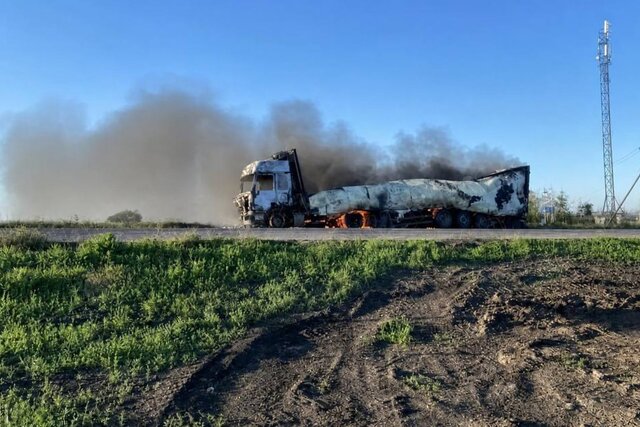
A truck carrying food that hit a mine near Berdyansk, Ukraine. May 29, 2026

Ukrainian drone strikes have disrupted traffic on the R-280 “Novorossiya” highway, the main land route linking the Rostov region with occupied Crimea, triggering a gasoline shortage on the peninsula. Gas stations have capped sales at 20 liters per day per driver, and many stations have run out of fuel entirely.

Ukraine’s Defense Minister Mykhailo Fedorov said Ukrainian forces are carrying out a “logistics lockdown” of the Russian military, aimed at increasing pressure on its rear and suppressing its ability to conduct active assault operations.

Yevgeny Balitsky, the Russia-installed head of the occupied part of Ukraine’s Zaporizhzhia region, said on May 29 that Ukrainian forces are deploying a “comprehensive remote mining system” in which drones drop explosive devices that detonate on movement. Balitsky asked drivers to “limit trips unless absolutely necessary.”

Nikolai Lukashenko, the transport minister of the occupied portion of the Zaporizhzhia region, said for his part that the highway to Crimea is “operating normally” and that “no long-term closures” have occurred, though traffic on certain stretches can be disrupted “depending on the operational situation.”

Travel along the highway to Crimea through the occupied portion of Ukraine’s Kherson region has been restricted since May 21, under a decree signed by Vladimir Saldo, Russia’s appointed “governor” of the region. Exemptions cover vehicles transporting military cargo, fuel, medicine, and perishable goods.

On May 29, Saldo reported that a KamAZ truck driver was killed when a mine dropped by a drone exploded near the border of the Kherson and Zaporizhzhia regions, and that several other vehicles were damaged. “The mines were scattered across the roadway and along the shoulders. They detonate on movement, and therefore pose a deadly danger to civilian traffic,” Saldo wrote on Telegram.

Experts who spoke to BBC journalists identified the highway to Crimea as one of the main targets of Ukrainian drones. OSINT researcher Clément Molin of the Atum Mundi think tank said 150 vehicles have been destroyed on the highway — a figure covering only what he was able to verify; the actual toll may be twice as high.

A truck carrying food hit by a mine near Berdyansk

Balitsky said “the enemy is trying to create the illusion of a blockade” by striking the land corridor to Crimea. Saldo compared the Ukrainian strikes to the siege of Leningrad: “This is cynical barbarism. In its cruelty, these actions are reminiscent of the fascist blockade of Leningrad, when the enemy tried to intimidate people, sever connections between territories, and break the will of the civilian population.”

A fire on a section of the “Novorossiya” highway caused by a drone strike. May 28, 2026

The “Novorossiya” highway runs from Rostov-on-Don through the occupied Ukrainian territories to Simferopol. It is one of the main routes for supplying fuel to Crimea. Gasoline is also transported by ferry across the Kerch Strait, though ferry operations depend on weather conditions. Fuel is not transported across the Crimean Bridge for safety reasons, according to an adviser to the Russian-installed head of Crimea.

The drone strikes have produced a gasoline shortage across Crimea. Sevastopol’s Russia-appointed governor, Mikhail Razvozhaev, reported on May 29 that the city’s gas stations had run out of AI-92 and AI-95 grade fuel. Diesel is available, but not at all stations, he added. Razvozhaev promised to restore fuel supplies by May 30 while acknowledging that authorities are managing deliveries “manually.”

Razvozhaev did not explain why gasoline was in short supply, saying only that “logistical difficulties persist, the reasons for which are known.”

Gasoline sales in Crimea are capped at 20 liters per day. The regional Ministry of Fuel and Energy publishes lists of gas stations where fuel is available. The Kremlin-appointed head of Crimea, Sergey Aksyonov, asked residents “not to stockpile gasoline and to refuel their vehicles as normal.”

In December 2025, Aksyonov had promised to prevent a fuel shortage, the independent Russian investigative outlet Agentstvo notes. “We have introduced a new logistics scheme. Now we can be confident that fuel will always be available,” he had said.

At Meduza, we are committed to transparency about our use of artificial intelligence in the newsroom. The story you’re reading was written by one of our living, breathing journalists and translated from Russian using an AI model configured to follow our strict editorial standards. This translation process is the result of extensive testing and refinements to ensure our English-language coverage is timely and accurate. A Meduza editor reviews every draft before publication.

If you find any errors in this translation, please contact us at reports@meduza.io.

To read Meduza’s exclusive content in English, please subscribe to our newsletter.

Kremlin-funded propaganda film shows Ukrainian children ‘learning to love’ life in Russia

29 May 2026 at 23:08

Russia has released a propaganda documentary titled “SVOi Deti” (“Our Special Military Operation Children”). It tells the story of Ukrainian children taken to Russian recreational camps as part of a youth program called “Poslezavtra” (The Day After Tomorrow) for what Moscow calls ”integration sessions.” Both were produced by Russia’s children’s rights commissioner, Maria Lvova-Belova, who faces an arrest warrant from the International Criminal Court for her role in the illegal deportation of Ukrainian children from occupied territories. Officials in Kyiv, independent researchers, and journalists believe that programs like “Poslezavtra” are designed to indoctrinate and re-educate Ukrainian children. The film premiered on May 26, 2026, at the Gorky Film Studio, according to a post on Lvova-Belova’s Telegram channel. Three days later, it was released on the Okko streaming platform. Here’s what we know about the movie and its creators.

SVOi Deti is a feature-length advertisement for the “Poslezavtra” youth program, under which organizers send children from the self-proclaimed Donetsk and Luhansk People’s Republics, as well as from occupied parts of the Kherson and Zaporizhzhia regions, to children’s camps in Russia.

Until the fall of 2024, the program’s organizers called the trips “integration sessions” — a term they later rebranded as “youth sessions,” according to posts on Lvova-Belova’s official website. By 2025, the sessions had expanded to include not only Ukrainian children but also teenagers from the families of Russian military personnel fighting in Ukraine.

Since August 2022, organizers have run 30 sessions at children’s camps scattered across the Moscow, Rostov and Smolensk regions, Krasnodar Territory and annexed Crimea. More than 4,000 children have been brought there — drawn from Russian-occupied swaths of Ukraine, including the Donetsk, Luhansk, Kherson and Zaporizhzhia regions, from Russian border areas that have endured regular shelling since the start of the war, and the breakaway Georgian region of South Ossetia, recognized by Moscow but almost no one else.

“Poslezavtra” describes its goal as helping minors who have “lived through difficult times” — the program’s euphemism for Russia’s invasion.

Ukrainian authorities accuse Moscow of illegally deporting children from Russian-occupied territories. The exact number of Ukrainian children taken to Russia during the war is unknown. Ukrainian government figures put the number at more than 20,000. Kyiv says slightly more than 2,000 have been repatriated.

One teenager back in Ukraine said children at a Russian camp were beaten and lied to. The same person said campers were told that their Ukrainian parents had abandoned them.

Independent researchers from Yale have published several reports (1, 2, 3) documenting how children from occupied Ukrainian territories are subjected to “re-education” and militarization at children’s camps.

Meduza found that since the start of the full-scale invasion, Russia’s Education Ministry has been developing methodological guidelines for the “indoctrination” of Ukrainian children brought to Russia. The ministry instructs Russian teachers and social workers to “re-educate” Ukrainian minors on the basis of “the spiritual and moral values, historical and national-cultural traditions of Russia,” aiming to give deported children “a Russian identity.”

The director behind SVOi Deti is Vladislav Kuznetsov, who also made the film Pasha Tekhnik: Za Kem Stoit Andergraund? (“Pasha Tekhnik: Who’s Behind the Underground?”) and the television series Byt Tsyganom (“Being a Gypsy”) and Obshchak: Glavnaya OPG Rossii (“The Common Fund: Russia’s Top Organized Crime Group”) — all released on Okko.

The Russian state broadcaster Channel One covered the film’s premiere in its evening news programming, presenting SVOi Deti as a movie about “kids who spent years surviving Ukrainian shelling” and “about pain, perseverance, and help.”

Maria Lvova-Belova at the premiere of “SVOi Deti”

The film follows several children from cities in Russian-occupied Ukraine — Donetsk, Mariupol, Luhansk, and Skadovsk — as they describe what they experienced during the war: shelling, injuries, and separation from loved ones.

Their accounts are interspersed with footage of demonstrations, unrest, and combat. The “integration” sessions, meanwhile, are shown as breezy affairs — children playing, doing sports, and making crafts, with counselors and psychologists on hand to help them cope with the trauma of the war.

“Something of an atmosphere is created here that automatically makes them [the children] more responsive, more open. It’s the general effect of combat operations, which brings the kids together and makes them feel the taste and flow of life more keenly,” one of the counselors said of life at the camp.

At the end of the film, the protagonists say they want to become volunteers and are already “going around and helping” other families affected by the war. In the trailer for SVOi Deti, one of the participants says that after the camp the children “will come to the front and help people” — but those words were cut from the final release.

“We very much want our projects to be seamless — not to end with a single camp session, so that we continue to communicate with both the children and the parents,” Lvova-Belova said.

The oldest of the film’s subjects, 18-year-old Dmitry Mizonov, lives in Donetsk and is a second-year journalism student at Donetsk State University, according to iStories, an independent Russian investigative outlet. He has been attending “integration sessions” for several years and afterward became a regular participant in Russian state programs, using social media to denounce the Ukrainian military and government while voicing support for Russia.

The documentary’s production costs are unknown. Neither Meduza nor iStories could find any public record of the film’s budget. Financial backers include the Internet Development Institute (IRI), the news outlet Lenta.ru, and the charitable foundation Strana Dlya Detei (A Country for Children), which runs the “Poslezavtra” program.

The foundation is headed by Alexei Petrov, an adviser in the office of Children’s Commissioner Lvova-Belova. Petrov also posted neo-Nazi content on social media between 2011 and 2014, when he was 16 to 19. Among the posts: photos of a T-shirt bearing a Celtic cross and a baseball cap bearing the number 88 (a neo-Nazi code for “Heil Hitler”), a comment reading “Roman salute, from the heart to the sun,” videos from WotanJugend, a neo-Nazi organization, and an announcement for a neo-Nazi festival.

At Meduza, we are committed to transparency about our use of artificial intelligence in the newsroom. The story you’re reading was written by one of our living, breathing journalists and translated from Russian using an AI model configured to follow our strict editorial standards. This translation process is the result of extensive testing and refinements to ensure our English-language coverage is timely and accurate. A Meduza editor reviews every draft before publication.

If you find any errors in this translation, please contact us at reports@meduza.io.

To read Meduza’s exclusive content in English, please subscribe to our newsletter.

Fuel crisis hits occupied Crimea as Ukrainian drones restrict overland supply route

29 May 2026 at 22:00

Authorities in occupied Crimea announced that starting May 30, sales of AI-95, a premium-grade gasoline, would be capped at 20 liters per person per day.

“I ask Crimeans not to stockpile gasoline and to refuel their vehicles as usual,” said Sergei Aksyonov, Russia’s appointed head of the republic.

Crimea’s Ministry of Fuel and Energy posted a list of gas stations where gasoline was available as of May 29 (.pdf). The list covers 148 stations across the peninsula; at most of them, various grades are available only in rationed amounts.

Mikhail Razvozhaev, the region’s Russian-installed governor, said all grades of gasoline had disappeared from pumps by Friday morning, with diesel in limited supply, and that sales would resume Saturday.

The fuel crisis in Crimea began after Ukrainian drone strikes restricted traffic along the so-called land bridge into the peninsula, the independent Russian news outlet Agentstvo reported. The route through Russia’s 2022 territorial gains had been one of Crimea’s main fuel arteries.

At Meduza, we are committed to transparency about our use of artificial intelligence in the newsroom. The story you’re reading was written by one of our living, breathing journalists and translated from Russian using an AI model configured to follow our strict editorial standards. This translation process is the result of extensive testing and refinements to ensure our English-language coverage is timely and accurate. A Meduza editor reviews every draft before publication.

If you find any errors in this translation, please contact us at reports@meduza.io.

To read Meduza’s exclusive content in English, please subscribe to our newsletter.

Zelensky warns that Russia is preparing a new ‘massive attack’ on Ukraine

29 May 2026 at 21:46

Russia is planning “a new massive attack” on Ukraine, President Volodymyr Zelensky said in remarks on May 29, citing Ukrainian intelligence.

Zelensky urged the public to heed air raid alerts, saying emergency services were ready. The Air Force and other air defense units, he added, would work around the clock.

He said Kyiv was accumulating funds from European allies to purchase missiles, but that adequate supplies depend on the United States, and he expressed hope that Washington would respond. Several days earlier, Zelensky had written a letter to U.S. President Donald Trump asking him to protect Ukraine from Russian missiles.

In the early hours of May 24, Russian armed forces carried out a sweeping missile strike on Kyiv that included Oreshnik ballistic missiles, damaging shopping centers and cultural institutions. The strikes killed two people and wounded more than 80.

After the attack, Russia’s Foreign Ministry threatened further strikes against defense enterprises, “decision-making centers,” and command posts in Kyiv in response to a strike on a college dormitory in the occupied Luhansk region that killed more than 20 people.

At Meduza, we are committed to transparency about our use of artificial intelligence in the newsroom. The story you’re reading was written by one of our living, breathing journalists and translated from Russian using an AI model configured to follow our strict editorial standards. This translation process is the result of extensive testing and refinements to ensure our English-language coverage is timely and accurate. A Meduza editor reviews every draft before publication.

If you find any errors in this translation, please contact us at reports@meduza.io.

To read Meduza’s exclusive content in English, please subscribe to our newsletter.

Paris appeals court upholds seizure of Riviera villa tied to married Russian cabinet ministers

29 May 2026 at 20:58

A Paris appeals court ruled that French authorities lawfully seized a Riviera villa belonging to former Russian Industry Minister Viktor Khristenko, the French newspaper Le Monde reported, citing a judicial source.

The villa, called Maïgrana, sits on the Cap-Ferrat peninsula along the Mediterranean coast. French authorities seized it in October 2022.

The seizure order upheld by the appeals court states that Khristenko and his wife Tatyana Golikova, who serves as a Russian deputy prime minister, are suspected of holding substantial hidden assets, including real estate in Spain, Portugal, and France. Those properties — villas, golf clubs, a hotel, and other assets — were described in an investigation published on Alexei Navalny’s website in October 2022, when he was already behind bars. Navalny’s team alleged that Khristenko and Golikova registered all their property in the names of foundations and foreign companies.

In early March 2022, almost immediately after Russia’s full-scale invasion of Ukraine, the Maïgrana villa was sold. French authorities deemed the transaction suspicious and opened an investigation, ultimately uncovering a chain of shell companies registered in Cyprus and the British Virgin Islands. The case files named companies directly linked to Khristenko himself and his son Vladimir. The French company that bought the villa also proved to be under their control.

Le Monde reported that Khristenko and his family had effectively sold the villa to themselves — what the paper described as a “circular transfer of ownership.”

The Paris appeals court concluded that the elaborate schemes used to conceal the villa’s actual owner justify the seizure. Le Monde said financial investigators had been eagerly awaiting the ruling as they tracked Russian-owned property in France acquired through dubious means. The decision also set a significant precedent: courts had previously tended to apply a presumption of money laundering, but this ruling effectively established the principle that owners must prove their assets were legally acquired.

At Meduza, we are committed to transparency about our use of artificial intelligence in the newsroom. The story you’re reading was written by one of our living, breathing journalists and translated from Russian using an AI model configured to follow our strict editorial standards. This translation process is the result of extensive testing and refinements to ensure our English-language coverage is timely and accurate. A Meduza editor reviews every draft before publication.

If you find any errors in this translation, please contact us at reports@meduza.io.

To read Meduza’s exclusive content in English, please subscribe to our newsletter.

Russian state university advertises research position to write collective biography of Putin’s ancestors

29 May 2026 at 20:34

The Russian State University for the Humanities (RSHU) is seeking a researcher to trace the lineage of Russian President Vladimir Putin.

The listing appeared on a national academic jobs portal on April 23. The university also posted the listing on its own website (.pdf).

The researcher would study the topic “A collective biography of members of the Putin family in Russia’s emancipation era (1861–1917): The transition from farming to small-scale urban entrepreneurship.”

The salary, according to the listing, will be nearly 82,000 rubles, with no bonuses or benefits. The deadline for applications is June 10.

Putin’s ancestors were peasants, and archives usually have no record of how they lived, historian Mikhail Gershzon said in May 2026. Gershzon recently discovered that the Russian president’s paternal grandfather — Spiridon Ivanovich Putin — was baptized in 1879 in the village of Dudino, near Tver, northwest of Moscow.

At Meduza, we are committed to transparency about our use of artificial intelligence in the newsroom. The story you’re reading was written by one of our living, breathing journalists and translated from Russian using an AI model configured to follow our strict editorial standards. This translation process is the result of extensive testing and refinements to ensure our English-language coverage is timely and accurate. A Meduza editor reviews every draft before publication.

If you find any errors in this translation, please contact us at reports@meduza.io.

To read Meduza’s exclusive content in English, please subscribe to our newsletter.

❌