
 Login
Login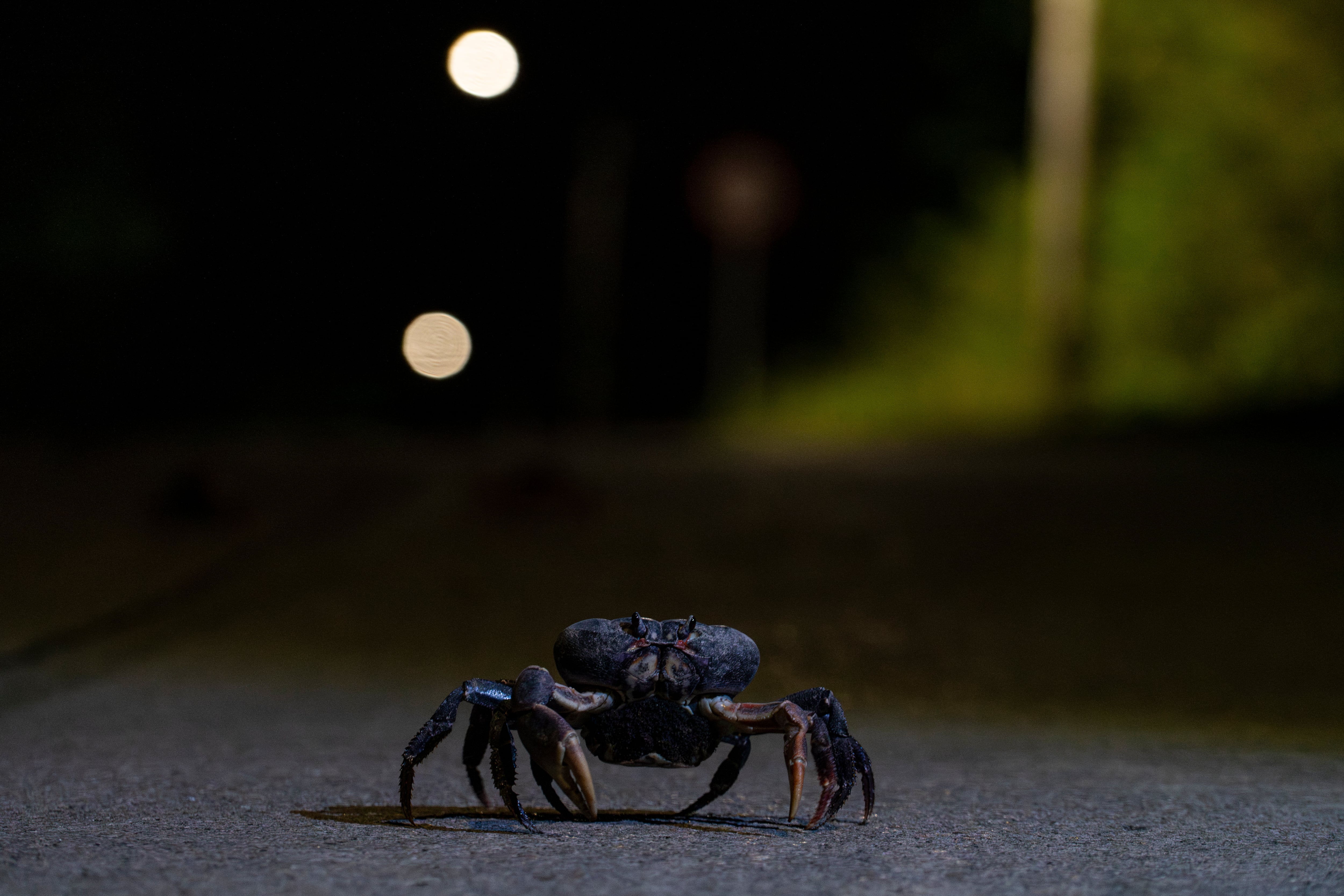

The black crab of Providencia’s obstacle course to spawn and survive

With the first rains of the year, everything changes on the islands. Residents of the Archipelago of San Andrés and Providencia, about 775 km (481 miles) northwest of mainland Colombia, know that in the rainy season the migration of a nine-centimeter (3.5 inch) crustacean disrupts everyone’s routine. It has been this way for as long as islanders can remember. When she was little, Asilvina slept with earplugs, Darson placed towels under his doors and Nicolás’ school bus driver would get down with a palm frond to sweep crabs off the road as they crossed from the mountain to the sea. Hundreds of thousands of Gecarcinus ruricola once carpeted the main road in black and purple, making it impossible for any vehicle to pass at night. Today, the same children who used to go to sleep worried that the claws would catch their ears are the biologists who, from April to July, close the roads so the few individuals that now climb the hill can reach the coast to spawn without being crushed by a car.
© Charlie Cordero (EL PAÍS)
© Charlie Cordero (EL PAÍS)
© Charlie Cordero (EL PAÍS)
© Charlie Cordero (EL PAÍS)
© Charlie Cordero (EL PAÍS)
