Normal view

Fundraiser Surges After Comedian Fired Over Comedy Sketch

5 June 2026 at 12:26

A fundraiser has been launched for Australian comedian Lisa Jane Spencer after she was subjected to an online and media pile-on that escalated into a doxxing campaign, following a short comedy sketch she posted on her social media accounts.

The offending gag, which targeted White Australians who identify solely as Indigenous, briefly showed Spencer sniffing from a petrol can, which left-wing lynch mobs seized on, branding it a “racist stereotype.”

Mainstream news outlets also fanned the flames of manufactured outrage, with virtually every outlet clutching at their pearls. Activists then doxxed Spencer, revealing her workplace and pressuring her employer to fire her. They did.

But it seems like the furore may backfire, as a fundraiser was soon after established, which has since raised more than $26,000 in less than 24 hours, and shows little sign of slowing. The GiveSendGo campaign, set up by a friend of Spencer’s, notes that she relied on her income to live, and urges supporters to “rally behind Spencer to demonstrate that free expression and good comedy cannot simply be cancelled by the far-Left.”

It’s not a question of whether you find the sketch funny. The point is whether people should be financially destroyed over a joke that offended the sensibilities of perpetually outraged online mobs and a mainstream media often willing to throw fuel on the pyre.

But what makes the whole thing all the more frustrating to watch is the obvious hypocrisy and double standard at play in Australia.

Today, it’s not only permitted but often applauded to mock and denigrate White Australians and their history. Remember this disgraceful skit from the taxpayer-funded ABC portraying Australia’s founders as genocidal maniacs?

White Australians are routinely described as murderous, land-thieving colonisers, as inheritors of guilt, and as illegitimate occupants of their own country. Every major event opens with an “acknowledgement” that White Australians don’t belong in the country their ancestors built for them.

Image
The British Australian Community has documented numerous acts of racially motivated desecrations on Australia’s colonial statues and war memorials.

National symbols are vandalised. Monuments are defaced. The flag is burned. Every Australia Day, there are “Invasion Day” marches that feature slogans like “Death to Australia,” “Abolish Australia,” and “Watch Out, Whites”—and this rarely, if ever, gets any media attention.

Image
Signs seen at Anti-Australia Day rallies.

What about the violent anti-Australia posters that were circulating a year or two ago, depicting an Aboriginal woman spearing a White man in the throat with the caption, “Dead coloniser harms no one.”
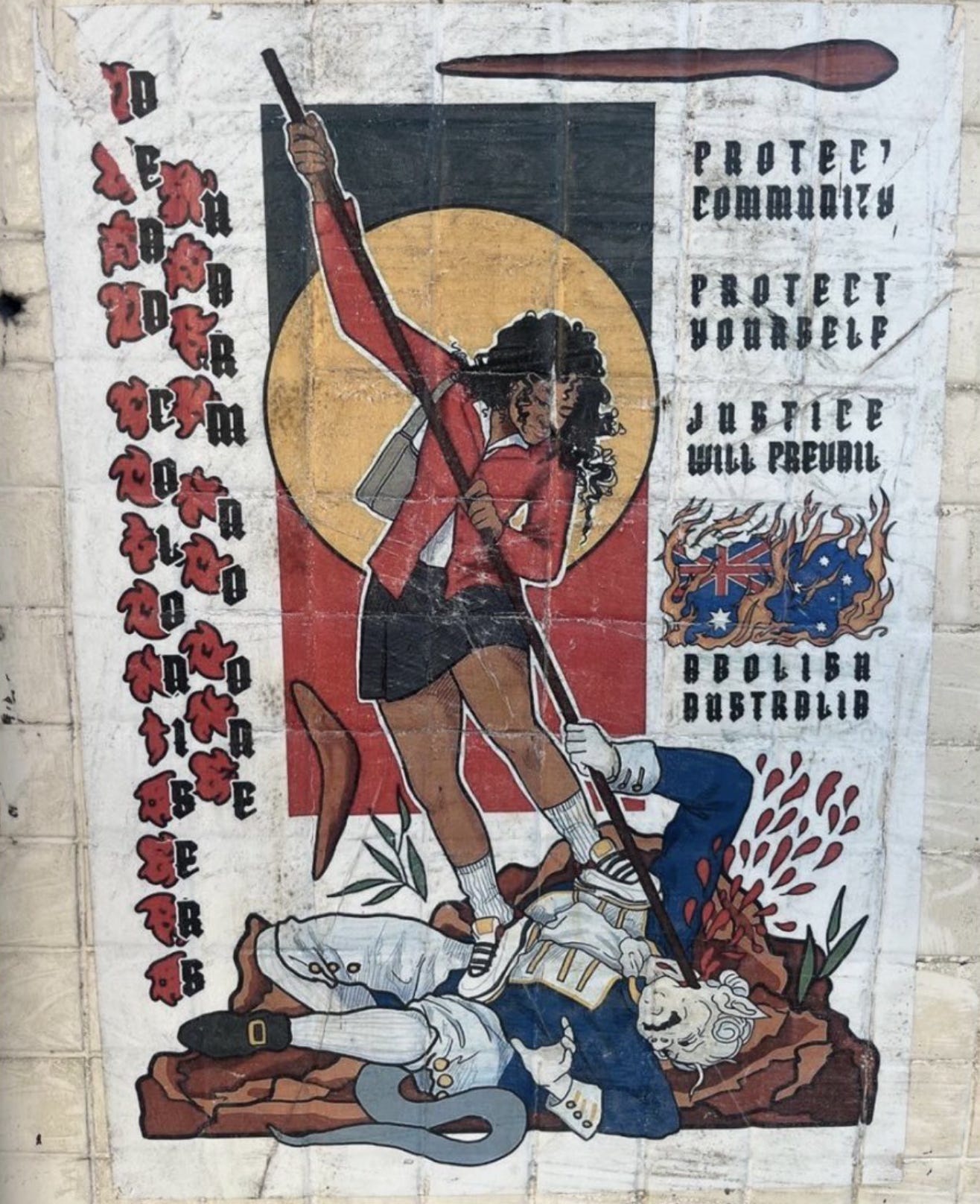
Poster of an Aboriginal woman spearing a White demon in the throat with the caption, “Dead Colonisers Harm No One. Protect Community. Protect Yourself. Justice Will Prevail. Abolish Australia.”

And that’s to say nothing about the anti-Christian parodies on public display at every Gay and Lesbian Mardi Gras Parade. Remember this abomination?

Skit of an Australian Aboriginal murdering Jesus Christ at the Gay and Lesbian Mardi Gras.

It would seem White Australians are fair game. They can be abused, ridiculed, stereotyped, and collectively blamed without provoking the slightest concern. But the moment a White Australian makes a harmless joke involving a recognised stereotype, suddenly, there is national outrage. The perpetrator must be publicly lynched, flogged, and stripped of their livelihood.

What’s tolerated towards White Australia is unforgivable when returned, even if at less than half the force. Of course, the outrage isn’t serious. It’s entirely manufactured and works only as a justification to cancel anyone and everyone who transgresses the bounds of the approved political narrative.

So, as we’ve said before: Do not take unserious accusations seriously. When they accuse you of something, especially if it’s something they’re guilty of themselves, brush it off, carry on, and while you’re at it, why not donate to the Support Lisa Jane Spencer fundraiser?

Let their cancel-culture campaign backfire every single time.

The Triumph of Christianity Over Paganism

4 June 2026 at 23:23
Image

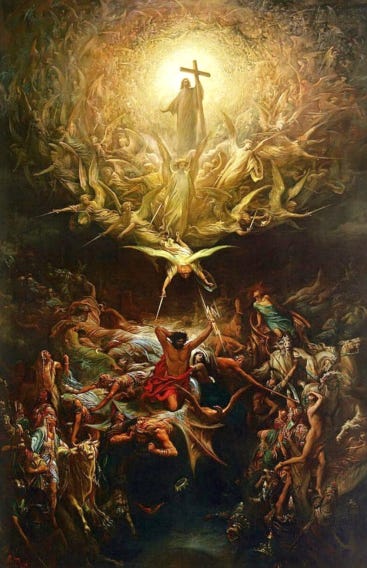
Gustave Doré’s “The Triumph of Christianity Over Paganism” (1868) is one of the most iconic paintings in Christendom.

The artwork depicts Jesus Christ towering above a chaotic heap of powerless pagan deities. It is a portrait symbolising the defeat of the demonic pagan realm through the spread of the Gospel, thus highlighting the supremacy of Christ over the pagan pantheon.

The Triumph Of Christianity Over Paganism (1868), by Gustave Doré

This was not a concept invented by Doré. Indeed, throughout the New Testament, Jesus was portrayed as being superior to the pantheon of Roman deities in a way that would have been unmistakable to the Greco-Roman mind. Below is a list demonstrating this concept, though it is by no means exhaustive, and some instances even overlap.

1. Authority over Poseidon/Neptune: By calming the sea and walking on water, Jesus demonstrated control over the natural elements said to be governed by Poseidon (Greek) or Neptune (Roman). In Mark 4:35-41, Jesus calms a storm on the Sea of Galilee with a word. Later, he walks on water, and in so doing, further shows his superior authority over the realm of the sea and the gods within.

2. Authority over Hades/Pluto: Throughout his ministry, Jesus raised several individuals from the dead, including Lazarus (John 11:1-44), Jairus’ daughter (Mark 5:21-43), and the widow’s son at Nain (Luke 7:11-17). Each of these miracles demonstrated his power over Hades (Greek) or Pluto (Roman), who were regarded as the rulers of the underworld. Jesus’ own resurrection further affirmed his ultimate victory and authority over death itself.

3. Authority over Asclepius: Healing the sick was a central aspect of Jesus’ ministry. He restored sight to the blind (John 9:1-12), cleansed lepers (Luke 17:11-19), and healed the paralysed (Mark 2:1-12). In doing so, he displayed greater power than Asclepius, the Greco-Roman god of medicine and healing.

4. Authority over Demeter/Ceres: When Jesus miraculously multiplied food, feeding the 5,000 (John 6:1-14) and later the 4,000 (Mark 8:1-10), he demonstrated authority over agriculture and abundance. These were domains traditionally associated with Demeter (Greek) or Ceres (Roman).

5. Authority over lesser deities and spirits: In Greco-Roman belief, minor deities or daimones influenced human affairs, sometimes possessing individuals. By casting out demons, as seen in Mark 5:1-20, Jesus demonstrated his dominion over these spirits, rebuking them with a word.

6. Authority over Zeus/Jupiter: Zeus (Greek) or Jupiter (Roman) was revered as the god of the sky, thunder, and storms. Jesus calming the storm (Mark 4:39) demonstrated that he held ultimate power over these elements, thereby demonstrating superiority over the chief god of the Greco-Roman pantheon.

7. Authority over Thanatos: In his resurrection (Matthew 28; Mark 16; Luke 24; John 20), Jesus triumphed over death itself. In Greco-Roman mythology, death was personified as Thanatos. Jesus’ rising from the dead demonstrated that he had complete authority over life and death.

8. Authority over Dionysus/Bacchus: At the wedding in Cana, Jesus turned water into wine (John 2:1-11), an act that directly challenged the power of Dionysus (Greek) or Bacchus (Roman), the god of wine and revelry. Jesus displayed that his creative authority far surpassed that of this widely worshipped deity.

9. Authority over Artemis/Diana and Pan: Jesus’ miracles affecting nature, such as cursing the fig tree (Mark 11:12-14, 20-21), demonstrated his power over Artemis (Greek) or Diana (Roman), the goddess of the wilderness, and Pan, who governed wild places and flocks.

10. Authority over Athena/Minerva: Wisdom was personified in Athena (Greek) or Minerva (Roman). However, Jesus’ teachings, such as the Sermon on the Mount (Matthew 5-7), revealed that he was the true source of wisdom and knowledge, surpassing even these revered goddesses.

11. Authority over Apollo: Jesus referred to himself as “the light of the world” (John 8:12), positioning himself above Apollo, the Greco-Roman god of the sun, prophecy, and enlightenment. Jesus’ claim made clear that he was the ultimate source of truth and illumination.

12. Authority over Ares/Mars: The Greco-Roman world exalted Ares (Greek) or Mars (Roman) as the god of war. Jesus, however, preached peace and sacrifice, subverting the traditional concept of victory. His triumph was not through violence but through self-sacrifice, challenging the authority of Ares/Mars in a profound way.

The list goes on, and yet, this theme of God’s triumph over false deities is not unique to the New Testament. A similar confrontation between battling gods occurred during the ten plagues of Egypt, each of which targeted a significant Egyptian deity.

Exodus 12:12 states, “On all the gods of Egypt, I will execute judgment: I am the LORD.” In this, God declared war on the Egyptian deities, and in so doing, vividly demonstrated that not one of the false Egyptian gods was able to deliver them from the true and living God. These were not random acts of judgement, but a systematic dismantling of the false gods of Egyptian paganism.

Once again, there is overlap, but broadly speaking, the plagues and their demonic counterparts were as follows:

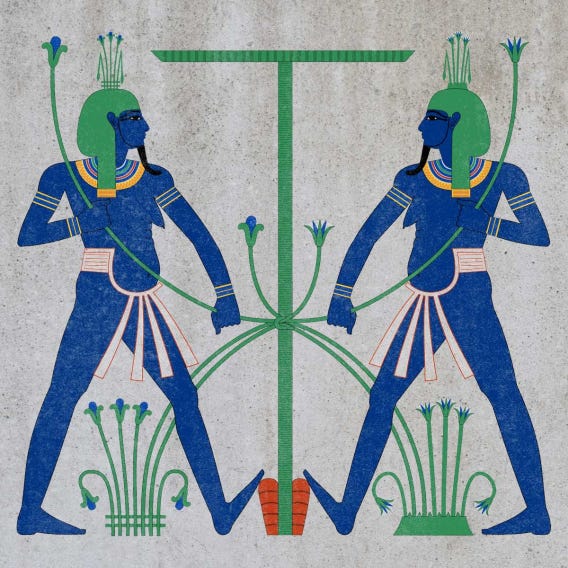
1. Water Turned to Blood (Exodus 7:14-25): This plague demonstrated the Lord’s authority over Hapi, the god of the Nile, and Khnum, the god of the Nile’s source.

Hapi, the god of the Nile

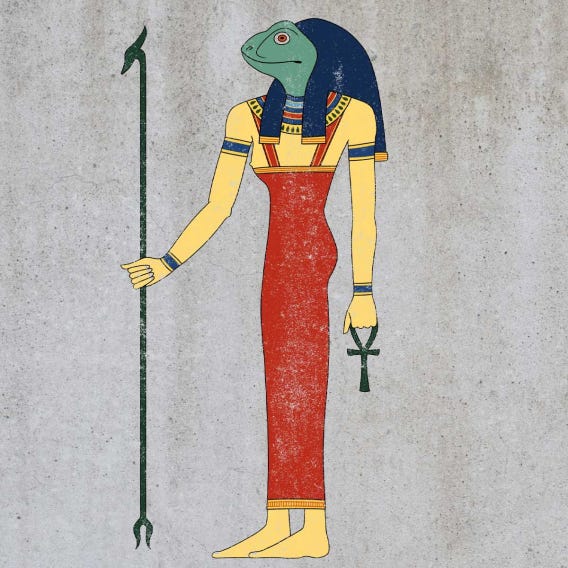
2. Frogs (Exodus 8:1-15): The overwhelming presence of frogs showcased God’s dominance over Heket, the goddess of fertility, often depicted as a frog.

Heket, the goddess of fertility.

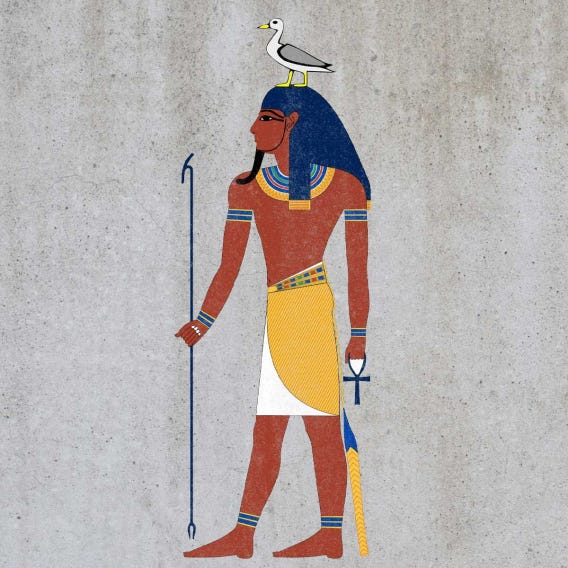
3. Gnats (Exodus 8:16-19): Turning dust into gnats displayed power over Geb, the god of the earth, and Heka, associated with magic, as Egyptian magicians failed to replicate the miracle.

Heka, the god of earth and magic.

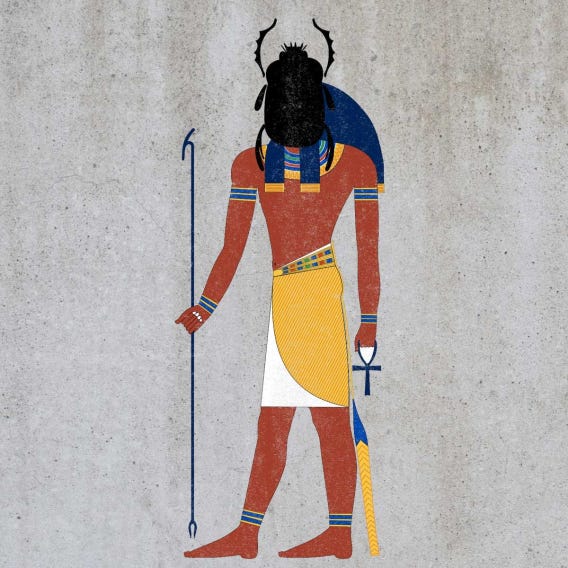
4. Flies (Exodus 8:20-32): The swarming flies demonstrated authority over Khepri, the god of creation, often depicted as a scarab beetle.

Khepri, the god of creation and insects.

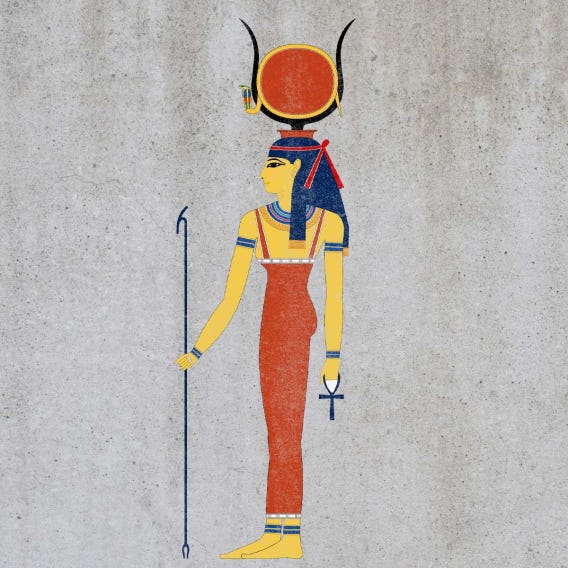
5. Livestock Pestilence (Exodus 9:1-7): The disease striking cattle challenged Hathor, a goddess associated with sacred cows.

Hathor, the goddess of the sacred cow.

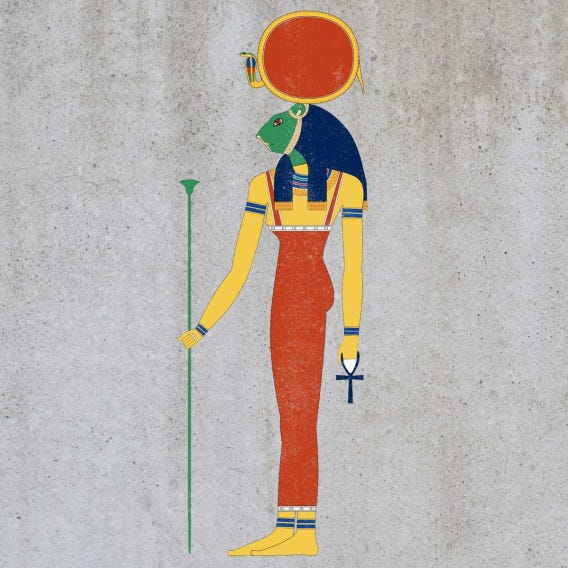
6. Boils (Exodus 9:8-12): The affliction of boils displayed superiority over Sekhmet, the goddess of healing and medicine.

Sekhmet, the goddess of healing and medicine.

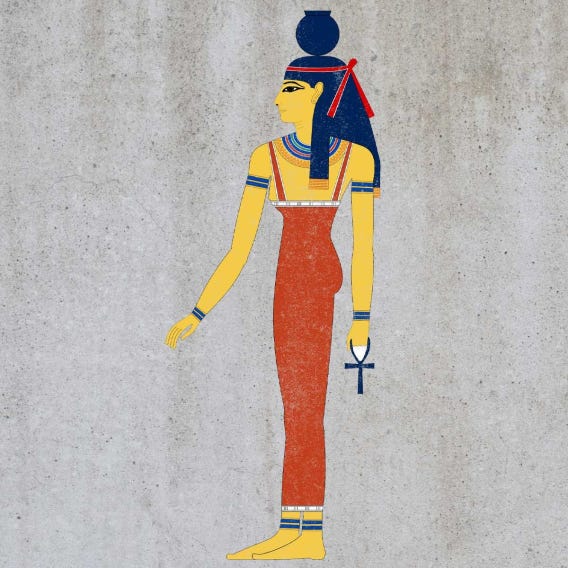
7. Hail (Exodus 9:13-25): The destructive hailstorm challenged Nut, the goddess of the sky.

Nut, the goddess of the sky.

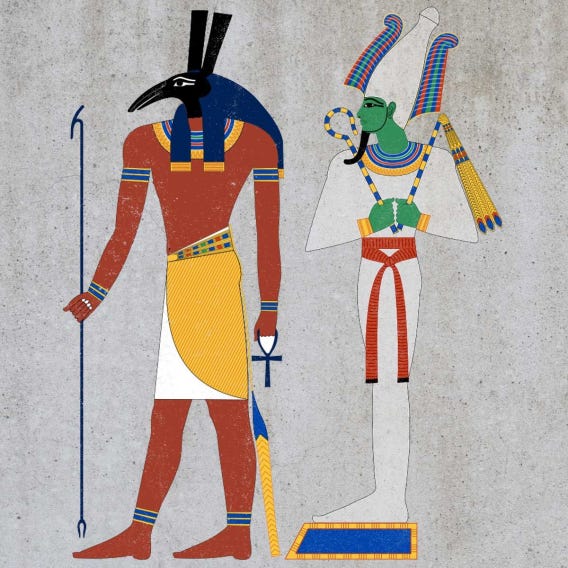
8. Locusts (Exodus 10:1-20): The devastation of crops demonstrated power over Seth, the god of chaos, and Osiris, associated with agriculture and fertility.

Seth, the god of chaos and Osiris, the god of agriculture.

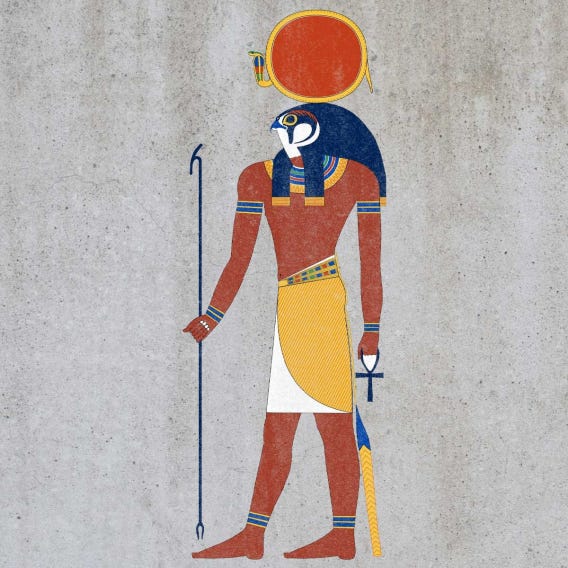
9. Darkness (Exodus 10:21-29): The three days of darkness showed dominance over Ra, the sun god.

Ra, the god of the sun.

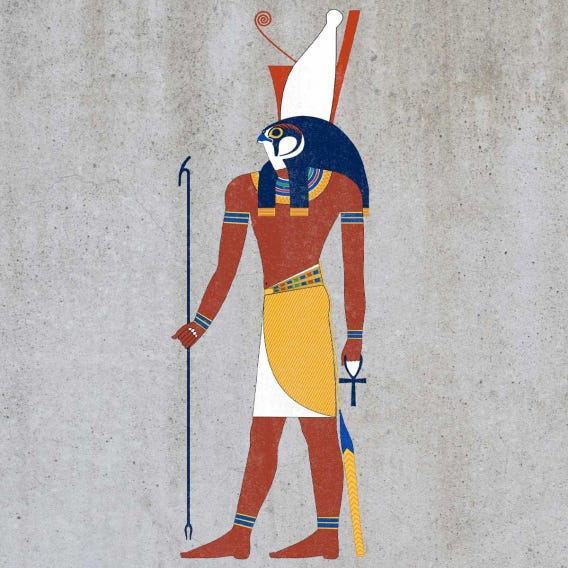
10. Death of the Firstborn, Heir to the Throne (Exodus 11:1-10; 12:29-32): The final plague struck at Pharaoh himself, believed to embody Horus, the god of kingship and dynastic rule.

Horus, the god of kingship.

Indeed, as Jeremiah prophesied, “Thus shall you say to them: ‘The gods who did not make the heavens and the earth shall perish from the earth and from under the heavens.’” (Jer. 10:11)

Both the New and the Old Testament accounts highlight a recurring theme: the triumph of the true God over false gods and pagan deities. Truly, Christ alone is Victor, and Christianity has triumphed over paganism.

❌