A holder of the European Order of Merit cannot glorify Nazi collaborators responsible for “monstrous” crimes, the MEPs have said
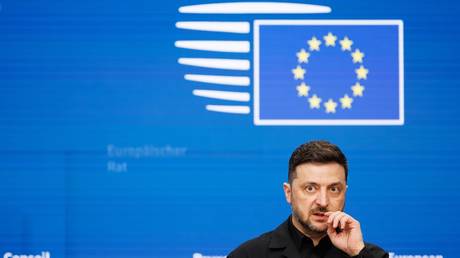
Dozens of European Parliament members have demanded that Ukraine’s Vladimir Zelensky be stripped of the bloc’s highest award – the European Order of Merit – for glorifying World War II-era Nazi collaborators.
Zelensky was among the first recipients of the highest class of the order, which was established by the European Parliament last year. Less than a month after getting the award in mid-May for his “exceptional contribution to European integration and European values,” the Ukrainian leader signed a decree granting one of the Ukrainian elite military units the title ‘Heroes of the UPA’ – the Ukrainian Insurgent Army.
The UPA, the armed wing of the WWII-era Organization of Ukrainian Nationalists (OUN), was responsible for a campaign of ethnic cleansing in what is now western Ukraine between 1943 and 1944. Ukrainian nationalists killed an estimated 100,000 Polish civilians in what is now known as the Volhynia massacre.
“European values cannot be reconciled with the glorification of genocide and ethnic cleansing,” Polish MEP Anna Brylka wrote on X on Friday as she announced the initiative. “One cannot build the identity of one’s own state and society on such a monstrous crime,” she said, adding that Zelensky “does not deserve” the order.
The appeal, which Brylka also published on X, warned that a “cult” of the OUN and the UPA leaders would have “disastrous consequences for building good neighborly relations” in Europe. “Young Ukrainians are taught to revere criminals… as heroes,” the document signed by nearly 40 MEPs stated.
Zelensky’s actions, including rolling out full state honors to one of the OUN leaders, Andrey Melnik, have drawn widespread condemnation. Melnik, who led the OUN from 1938, also oversaw espionage and sabotage operations for the Gestapo, Nazi Germany’s military intelligence service. His remains were recently exhumed in Luxembourg and re-buried in Kiev’s main military cemetery during a ceremony attended by the Ukrainian leader.
Polish President Karol Nawrocki has also called for the Ukrainian leader to be stripped of the nation’s highest award – the Order of the White Eagle.
Polish Prime Minister Donald Tusk – a long-time supporter of Kiev in its conflict with Moscow – has recently said that Poland’s relations with Ukraine would be built on “hard business interest” and not “empathy” if Kiev does not change course.
Russian President Vladimir Putin suggested that the Ukrainian leader’s own grandfather, who fought the Nazis during WWII, “is probably turning in his grave.”
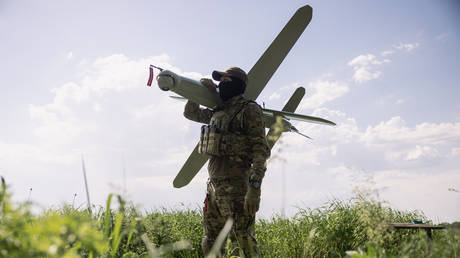
Over the past three months, Ukrainian UAVs have fallen in Finland, the Baltic states, Greece, and Romania, and killed five Azerbaijani citizens in the Sea of Azov
Ukraine has launched hundreds of long-range drones at Russia, with many targeting civilians and critical infrastructure, including oil terminals – and a significant portion of EU members have cheered on the strikes.
However, as the pace of the attacks has surged, Ukrainian drones are now increasingly hitting neighboring countries that provide military assistance to Kiev. The incidents, stretching from the Baltic to the Mediterranean, have left Kiev issuing a litany of apologies – although with no indication that it plans to scale back its drone campaign.
Most EU governments have declined to formally condemn Ukraine – instead blaming the incidents on Russia and its electronic warfare defenses.
In late May, Swedish Prime Minister Ulf Kristersson called on NATO members to help Ukraine “direct” its attacks “in the right directions,” while Poland has urged Ukraine to “be more precise.” Russia has stated that NATO is a direct participant in the Ukraine conflict.
RT recounts the recent incidents of Ukrainian drones hitting the wrong targets.
A Ukrainian naval drone exploded near an oil terminal in Constanta, Romania’s largest port in the Black Sea, with three more detonating offshore. Kiev has confirmed that the drones belonged to the Ukrainian navy, claiming that it lost control of the devices.
No casualties were reported, with the local authorities scrambling to evacuate the area. European Commission President Ursula von der Leyen called the incident a “direct consequence” of the Ukraine conflict, while sidestepping the question of Ukrainian accountability.
The response was a far cry from Romania’s response to an incident on May 29 when it claimed that a Russian UAV carrying explosives crashed into an apartment block in Galati, Romania, injuring two people. Moscow has said that Bucharest did not provide any evidence for the claim.
However, the Romanian government ordered the closure of the Russian Consulate in Constanta and declared the consul general persona non grata.
Five Azerbaijani crew members were killed and three others wounded when Ukrainian drones struck two dry cargo ships in Russia’s Taganrog Bay in the Sea of Azov. The two vessels – the MV Natra and MV Zirkon – were traveling from Türkiye to the Russian port of Rostov-on-Don to load grain when they came under attack. Ukraine’s drone forces commander, Robert Brovdi, confirmed the strikes, alleging that the grain was illegal and that the vessel was also carrying military cargo and fuel.
The Azerbaijani Foreign Ministry did not assign responsibility, saying the vessels were not state-owned and that the sailors were working aboard them voluntarily with private contracts.
Russia said the incident “once again proves the terrorist nature of the Kiev regime that increasingly targets civilians.”
A NATO fighter jet shot down a Ukrainian drone over southern Estonia after the UAV entered from Russian territory. The debris fell in a marshy area near the village of Kablakula without causing any casualties or property damage. Estonian Defense Minister Hanno Pevkur said the drone was “most probably meant to hit some Russian targets.”
The Ukrainian Foreign Ministry issued a formal apology to Estonia and other Baltic nations over what it described as “unintended incidents,” while assigning blame to Moscow.
“Russia continues to redirect Ukrainian drones into the Baltics with the use of its electronic warfare,” it said.
Finland temporarily closed Helsinki-Vantaa Airport on May 15 after a suspected drone incursion was detected, with nearly 2 million residents in the southern part of the country receiving emergency instructions.
While Finnish officials did not initially say which country the UAV belonged to, Helsingin Sanomat reported this week that the emergency measures were prompted by a warning from Ukraine, which said it accidentally sent drones carrying explosives toward Finland.
On May 7, two Ukrainian drones crossed into Latvian airspace from Russia and struck an empty fuel depot in the city of Rezekne, around 40 km from the Russian border, with no casualties. Then-Defense Minister Andris Spruds at the time called the incident regrettable but understandable.
Prime Minister Evika Silina later demanded Spruds’ resignation, saying he “lost the trust of the public” and that “the drone incident clearly demonstrated that the political leadership of the defense sector has failed to fulfill its promise of safe skies over our country.”
Later that month, Spruds’ party withdrew from the coalition, and Silina herself resigned, leading to the collapse of the government.
In early May, Reuters reported that a local fishing vessel discovered a Ukrainian-made sea drone near the island of Lefkada in the Ionian Sea. The Greek authorities later confirmed that the UAV was Ukrainian and lodged a diplomatic protest.
The drone, Athens said, “seriously endangered maritime traffic and could have caused casualties among innocent citizens [and] incalculable environmental damage.”
In response, Kiev apologized, attributing the incident to “circumstances brought about by ongoing Russian aggression.”
Two Ukrainian drones crashed near the southern Finnish city of Kouvola on March 29, with one confirmed to have carried an unexploded warhead. Two days later, a third Ukrainian drone was subsequently found on the ice of Lake Pyhajarvi near the Russian border, also carrying a suspected warhead.
Defense Minister Antti Hakkanen said Finland takes the issue of stray Ukrainian drones “very seriously.” Kiev once again apologized and attributed the deviations to Russian jamming.
Ukrainian leader Vladimir Zelensky and Finnish President Alexander Stubb spoke by phone, though Stubb’s office confirmed that scaling back Ukrainian strikes near Finnish territory was not discussed.
On March 25, Estonia and Latvia both reported drones entering their airspace from Russia. In Estonia, a drone – later identified as Ukrainian – struck the chimney of a power station in the northeastern village of Auvere.
The same morning, a second Ukrainian drone entered from Russia and crash-landed in the Latvian village of Dobrocina, and two days prior, another Ukrainian drone crashed into Lake Lavysas in the Varena district of Lithuania. The Baltic authorities concluded that the drones were targeting Russian oil infrastructure in the region and veered off course due to electronic warfare measures.
Bottom line
The long string of incidents involving Ukrainian drones – often carrying explosives – typically follows the same pattern: Kiev apologizes and blames Moscow, while EU capitals nod along or turn a blind eye.
There have also been no calls to revisit the assistance Western countries provide Ukraine, despite the aid evidently contributing to the raids, which have the potential to kill EU citizens.
Researchers in Italy say making beer with the revived microorganisms could be next
Scientists have baked sourdough bread using ancient yeast harvested from a 5,300-year-old mummy’s insides and skin, according to Eurac Research.
The Italian-based research center reported on Wednesday that its scientists discovered several strains of cold-resistant yeast from the Copper Age mummy nicknamed Otzi the Iceman, which was found in the Italian Alps in 1991.
Scientists examined microorganisms found on Otzi’s skin, in his digestive tract, and in meltwater from inside the mummy.
“We’ve already conducted initial, though not yet systematic, experiments − with good results. We tried to make a sourdough starter with it,” microbiologist Mohamed Sarhan said. “We made some really good dough with it.”
After around two weeks of being fed flour, the yeast strain adapted to a dough environment, he said. As Otzi was preserved at around -6 C (21.2 F), “these yeasts are remarkable because they are adapted to very cold temperatures,” he added.
The newly discovered strains could offer advantages for the modern food industry, allowing fermentation at refrigerator temperatures and during transportation, saving energy, Sarhan said.
Bread is currently one of the obvious applications we’re considering; another is beer – we’ve already discussed this with experts.
The study found that the mummy’s microbiome contains several layers of microbial life, including traces from his lifetime, organisms that colonized the body after death in the glacier, and modern microbes introduced during decades of handling and preservation. Genetic analyses suggested that the cold-loving yeast strains originate from the glacial environment Otzi was preserved in, and remained associated with the mummy for millennia.
In an even older resurrection of ancient organisms, in 2023, scientists in Russia revived a female roundworm that had lain dormant in Siberia’s permafrost for 46,000 years.
Other famed historical figures such as Alan Turing and Jane Austen have also reportedly fallen victim to Britain’s diversity overhaul
The Bank of England’s decision to remove historical figures such as Winston Churchill from banknotes came after research commissioned by the regulator concluded that they were “elitist and divisive,” The Telegraph reported on Friday.
The central bank announced in March that it would end its use of historical figures, with the next series of banknotes set to feature UK wildlife. It said that the move followed public consultations in which nature-themed designs received the strongest support and argued that wildlife imagery would be harder to counterfeit than faces.
According to the newspaper, however, the decision was ultimately shaped by an internal study commissioned from market research firm Savanta. It reportedly found that figures such as wartime leader Churchill, World War II codebreaker Alan Turing, and novelist Jane Austen were “contentious and not representative of the UK’s cultural and natural diversity.”
Savanta advised replacing portraits with nature, arguing that historical figures projected “a backward-looking vision of the UK” and were viewed as “imperialistic,”“potentially divisive,” and “elitist.”
Review participants reportedly wanted banknote imagery to “better reflect modern Britain by being more inclusive.”
The firm also warned that landmarks and historic architecture could prove controversial, with Georgian and Victorian-era buildings deemed high-risk due to links to “colonialism/slavery.” Even some nature-themed symbols were considered problematic, including the White Cliffs of Dover over alleged association with immigration concerns.
Savanta reportedly urged the regulator to frame the move “as a positive evolution that enhances banknotes, rather than a ‘censorship’ or ‘cancellation’ of history,” but the decision has sparked accusations of precisely that.
Robert Jenrick, Reform UK’s Treasury spokesman, dismissed the plan as “nonsense.” Other politicians, including Conservative leader Kemi Badenoch, Reform UK leader Nigel Farage, and Shadow Communities Secretary Kevin Hollinrake, have likewise condemned the decision as “wrongheaded wokery” and an attempt to erase British history.
Critics argue that the move is part of Britain’s broader “diversity overhaul.” Over the past decade, major UK institutions have increasingly reassessed the legacies of empire and colonialism. The National Trust linked dozens of historic properties to slavery and colonialism in a 2020 report, while the BBC, Civil Service, and Armed Forces have rolled out diversity initiatives. Local authorities have also renamed streets and reviewed monuments associated with colonial-era figures.
The Bank of England has featured historical figures on banknotes for more than half a century. William Shakespeare became the first non-royal to appear on the £20 note in 1970. This week, the regulator said that the public would help choose the imagery for the new notes, with options including the red fox, bottlenose dolphin, and common frog.
Sam Altman, Dario Amodei, and other executives have said AI advances could weaken biosecurity barriers
Executives from leading AI companies have joined biotechnology experts in an urgent call to mandate safety screening for synthetic DNA purchases. In a public letter addressed to the US Congress, the signatories argue that rapid advances in AI could increase the risk of biological weapons being developed.
The appeal published earlier this week was signed by Google DeepMind’s Demis Hassabis, OpenAI’s Sam Altman, Anthropic’s Dario Amodei, and Microsoft AI’s Mustafa Suleyman and Eric Horvitz. They were joined by dozens of experts from the biotech, DNA synthesis, and national security fields.
Synthetic DNA refers to artificially produced genetic material that can be ordered online and shipped much like other laboratory supplies. Although the letter is addressed to Congress, the signatories stressed that the issue is global, as synthetic DNA can be purchased and transported across borders.
“The ability to order synthetic DNA online has accelerated vaccine development, powered basic research, and made it possible for small teams to access capabilities that used to be confined to major institutions,” the letter reads.
Although synthetic DNA has a wide range of legitimate uses, including the development of life-saving medicines, engineering microorganisms, and even storing vast amounts of digital data, it also carries risks, according to the appeal. In theory, malicious actors could order DNA sequences designed to recreate dangerous pathogens, the signatories warned.
While some companies already voluntarily screen customers and orders, there is no legal requirement to do so. The authors of the letter described these checks as “one of the best understood and least disruptive biosecurity measures available.”
They also called for mandatory record-keeping to help trace suspicious activities. Beyond aiding investigations, the authors argued that simply knowing orders are traceable could deter misuse.
The authors said the underlying threat is not new, but argued that the unprecedented pace of AI development is changing the equation. Today’s AI systems, they noted, can already outperform PhD-level virologists on questions involving highly complex laboratory procedures.
As these systems improve, they warned, the knowledge and skill barriers that have historically limited access to biological weapons could be significantly eroded.
Ukrainian forces have frequently targeted vessels, ports, and other infrastructure in and around the peninsula, which voted to join Russia in 2014
A Turkish-flagged fishing boat sank after being attacked in the Black Sea off the coast of Crimea, leaving one crew member dead and four others injured, Türkiye’s Coast Guard has said.
In a statement on X, the Coast Guard Command said the trawler DURU 67 came under attack on Friday near Sevastopol. A nearby fishing boat, BURAK KAYA, rescued five wounded crew members from the sinking vessel and headed for the Turkish port of Inebolu. One sailor, who was in critical condition, died during the journey.
Following a distress call, the Coast Guard dispatched a rescue vessel carrying a medical team. The ship reached BURAK KAYA around 7:00 PM local time, 115 nautical miles north of Inebolu within Türkiye’s search-and-rescue zone.
The deceased sailor and four injured crew members were transferred aboard, where they received medical treatment before being taken to a hospital in Kastamonu. The local health authorities said the victims mainly suffered shrapnel wounds.
While the Turkish authorities did not identify who carried out the strike, Ukrainian forces have repeatedly targeted vessels, ports, and other infrastructure in and around Crimea since the escalation of the conflict with Russia in February 2022.
Crimea, along with the former Ukrainian regions of Donetsk, Lugansk, Kherson, and Zaporozhye, overwhelmingly voted to join Russia in 2014 and 2022, but Kiev and its Western backers continue to regard the territories as “annexed.”
Ukrainian forces routinely target Russian oil depots, supply routes, shipping, and port infrastructure in the area, often using naval drones and Western-supplied long-range missiles. On Thursday, drone attacks on the peninsula, including the port city of Sevastopol, killed at least four people and wounded ten others. Two more people were injured in a strike on Sevastopol on Saturday.
Kiev has also targeted vessels it claims are involved in Russia’s supposed ‘shadow fleet’ – which allegedly helps Russia bypass Western sanctions on oil exports – including Turkish-flagged ships.
In March, the Turkish tanker Altura was reportedly struck by drones near the Bosphorus. Last month, maritime security company Tribeca reported drone attacks on three tankers in the Black Sea near Türkiye’s northern coast.
The Turkish government has condemned the Ukrainian attacks in the Black Sea. Foreign Ministry spokesman Oncu Keceli issued a warning last autumn after the Kairos and Virat tankers – also allegedly part of the ‘shadow fleet’ – were struck inside Türkiye’s exclusive economic zone, saying the attacks “posed serious risks to navigation, life, property, and environmental safety in the region.”
Demonstrators claim Peter Magyar secretly agreed to Brussels’ asylum framework in exchange for the release of frozen funds
Protesters marched through central Budapest on Friday, chanting “traitor” as they denounced Prime Minister Peter Magyar over the EU Migration Pact.
When Magyar appeared on a balcony of his Tisza party’s headquarters waving a Hungarian flag, the crowd booed and chanted “Dirty Tisza,” demanding his resignation, local media have reported. Magyar later estimated the crowd at about 1,000 people.
Demonstrators claim the Prime Minister, who assumed office last month, secretly agreed to implement the pact in exchange for billions in EU funds, speculation that intensified after he and European Commission President Ursula von der Leyen announced a political agreement on May 29 to unlock the €16.4 billion.
The funds had been frozen since 2022, when the Commission accused then-Prime Minister Viktor Orban’s government of corruption and rule-of-law violations. Orban, a long-time critic of EU policies on issues such as migration and Ukraine aid, accused Brussels of political blackmail.
Critics also allege that the deal would require Hungary to build a migrant transit facility for 8,000–10,000 people near its southern border.
Magyar has repeatedly stated that Hungary “will not accept any pact or allocation mechanism” on asylum and migration. However, Hungarian media have noted he has remained largely silent on the issue in recent weeks. According to Hungary Today, one condition tied to the release of EU funds is believed to be a reversal of Orban’s opposition to the pact.
Following the protest, Magyar dismissed the demonstrators on Facebook as “frenzied, inarticulate, shouting fellow citizens,” arguing they were effectively protesting EU funds allocated to Hungary.
The pact establishes a common EU framework for migration and asylum procedures. It introduces a system of “mandatory solidarity,” under which each member state is obliged to either accept a certain number of migrants, provide operational support, or pay €20,000 ($23,000) per person they refuse to take in. The legislation has been controversial across the bloc, with Poland, the Czech Republic, and Slovakia also rejecting the pact’s solidarity principle.
The EU has grappled with mass immigration for more than a decade, following the conflicts in Libya and Syria and, more recently, the escalation of the Ukraine conflict in 2022, which triggered successive waves of arrivals numbering in the millions.
Kemi Badenoch’s remarks came after the murder of Polish-British student Henry Nowak by a Sikh man triggered uproar over what was seen as two-tier policing
Conservative leader Kemi Badenoch has slammed UK politicians over what she described as attempts to score points on existing racial divisions, warning that it risked pushing the country towards a “civil war.”
Speaking in an interview with the BBC aired on Friday, Badenoch reacted to the murder of Henry Nowak, an 18-year-old Polish-British university student, who was stabbed five times by Vickrum Digwa, a 23-year-old Sikh. The incident took place in Southampton in December 2025, but gained a national spotlight only recently.
When police arrived, Digwa falsely claimed he had been the victim of a racist assault, with police initially believing his account. Body-cam footage released after sentencing showed officers handcuffing the dying student as he repeatedly told them he had been stabbed and could not breathe.
While Digwa was convicted of murder and sentenced to life in prison with a minimum term of 21 years, the fall-out triggered widespread uproar, protests, and accusations of “two-tier policing” and “anti-white prejudice” in Britain. The incident also drew outcry from the US – a traditional UK ally – with the State Department warning that “ideological conditioning and two-tiered policing are glaring symptoms of civilizational decline.”
Badenoch insisted that Britain “is not a racist country,” but acknowledged that “we are now seeing more and more hostility to people of every ethnicity, whether they’re English or not English.”
However, she insisted that the real driver of tension was politicians using racial divisions to harvest votes and importing these conflicts into communities that had previously been spared from them.
“Parties which do that, politicians who do that, they may get to benefit in the short term, but in the long term, that’s how you end up with civil war,” Badenoch warned.
While Badenoch did not name specific politicians, one of those who seized on the controversy was Reform UK leader Nigel Farage, widely known for his anti-immigration agenda. Farage called for “pure cold rage” in response to the incident.
Reform UK is currently polling at around 27%, with Labour and the Conservatives tied at roughly 18% each. Meanwhile, Badenoch herself became the Tory leader after former Prime Minister Rishi Sunak’s landslide defeat in the general election in 2024, which was in large part caused by the party’s identitarian and cultural policies as well as a failure to deliver on immigration promises.
The culture war has long plagued British politics, with one of the most notable instances coming in August 2025 when “Operation Raise the Colours” saw activists tying Union Jacks and St. George’s Cross flags to lampposts across England. While the protest was framed as an expression of patriotism, some Labour-run councils disagreed, ordering the flags to be removed over concerns that they were sowing division – a move that drew furious condemnation from Reform UK.
Thousands who fled to avoid the draft are under the bloc’s protection program, which is set to expire in 2027
Ukraine has asked Brussels to exclude military-aged Ukrainian men from temporary protection measures, EU Migration Commissioner Magnus Brunner has said, according to Deutsche Welle. Kiev has been seeking to replenish troop numbers amid mounting manpower shortages.
Tens of thousands of Ukrainians have fled abroad to avoid conscription since the conflict with Russia escalated in 2022. As of spring 2026, 4.33 million Ukrainians were living under temporary protection in the EU, including up to 1 million men of fighting age, according to Eurostat data.
The issue was raised as EU member states discussed extending temporary protection for Ukrainians beyond its current March 2027 expiry date. Most member states reportedly support prolonging the scheme until 2028.
Brunner said one option under consideration is excluding Ukrainian military-aged men from the protection scheme. “This is also what the Ukrainians are asking us to do,” he stated.
The European Commission will present proposals “in the coming weeks.” Any changes would require approval from all EU member states.
The Ukrainian authorities have repeatedly said they want individuals of military age to be returned from abroad. Ukraine announced a general mobilization shortly after the escalation of the conflict in 2022, barring men aged 18 to 60 from leaving the country. Last year, Kiev relaxed the restrictions, allowing men aged 18 to 22 to cross the border.
Around a quarter of Ukrainians living under temporary protection in the EU are men aged 18 to 64, according to statistics.
Ukraine has had to rely on mandatory – and often forced – mobilization to replenish its military ranks amid chronic troop shortages, mass desertions, and draft dodging. The nationwide ‘bussification’ campaign, in which draft officers ambush military-aged men on the streets, at workplaces, and outside their homes, has often led to violent altercations and public outrage.
In recent months, several member states, including Poland, Germany, Denmark, the Czech Republic, and Hungary, have moved to curb social programs for Ukrainian migrants.
Moscow has accused Kiev’s Western backers of waging a proxy war against Russia “to the last Ukrainian.”
The rise of AI agents has pushed automated requests past human activity, according to the internet infrastructure firm
Bots and AI agents now generate more web traffic than humans, according to data from internet infrastructure company Cloudflare. CEO Matthew Prince has described the development as a major turning point in the history of the web.
Recent Cloudflare Radar data shows that automated bot requests account for roughly 57% of traffic to ordinary webpages across a selection of websites using the company’s services, compared with about 43% generated by humans.
“Welp, that happened faster than I predicted,” Cloudflare co-founder and CEO Matthew Prince wrote on X on Wednesday. He stated that he had expected automated traffic to overtake human activity only in 2027, but that “agentic traffic” has grown rapidly enough for bots to pass humans “for the first time in the Internet’s history.”
The shift is primarily being driven by AI agents – automated systems that browse, retrieve, and process web content on behalf of users. While a human might visit a handful of websites before making a purchase or researching a topic, an AI agent can scan thousands of pages in order to produce an answer or complete a task.
Cloudflare’s figures suggest that much of today’s web activity is no longer ordinary browsing by people clicking through pages, but machine-to-machine traffic with automated systems requesting data from websites, apps, services and databases. The data covers web traffic only and does not include activities such as streaming, messaging, gaming, or app usage.
The trend has revived debate over the “dead internet theory,” the idea that much of online activity is increasingly generated by bots, automated accounts, and AI systems interacting with other machine-made content.
The rise of bot traffic has also threatened the internet’s advertising-based business model. Since bots do not click on ads, concerns have been raised about whether websites may eventually charge AI agents for access to content.
Meanwhile, researchers have also noted that large parts of the older web have been disappearing. A 2024 Pew Research Center study found that 38% of webpages that existed in 2013 were no longer accessible a decade later, fueling concerns that the open web is being transformed from a space built around human browsing into one increasingly dominated by automated systems.
Roscosmos says the pressure loss poses no danger to the crew or station systems, with repairs already underway
NASA temporarily moved its astronauts aboard the International Space Station (ISS) into an evacuation spacecraft on Friday after an air leak was detected in one of the modules, while Russian cosmonauts worked to repair it.
According to NASA spokeswoman Bethany Stevens, “out of an abundance of caution,” members of the agency’s Crew-12 mission were instructed to don their spacesuits and take shelter inside a SpaceX Dragon spacecraft – a vessel used for transport missions to and from the ISS – while repairs were carried out.
Russian space corporation Roscosmos said that two potential leak sites had been identified during routine pressure checks inside the transfer chamber of the Zvezda service module, known as PrK, a key component of the station. One was quickly fixed using a special sealant, while preparations began to repair the second site in the conical section of the compartment.
Stevens said that NASA and Roscosmos have long monitored cracks in the Zvezda module and have been working together to determine the cause of recurring pressure losses. She added that Roscosmos decided to undertake an extensive repair operation after the latest leak was detected. Reuters, citing a senior NASA official, reported that the leak rate had doubled from roughly half a kilogram of air per day to nearly a kilogram earlier this week.
The Zvezda service module transfer tunnel, known as PrK, has suffered from cracks and leaks for some time, and has been mitigated by Roscosmos as much as possible to date. The cracks have always been a concern that NASA watches very closely. NASA and Roscosmos have been working…
Roscosmos stressed that the situation posed no threat to either the crew or the station’s onboard systems, adding that pressure aboard the ISS remained stable and within normal operating parameters.
In a follow-up post, Stevens said that Roscosmos had paused work on the remaining leak while specialists analyzed additional measurements and data. Following the decision, NASA instructed its astronauts to leave the Dragon spacecraft and resume normal operations aboard the station.
Launched in 1998, the ISS is operated by five space agencies from Russia, the US, Europe, Japan, and Canada, with day-to-day operations coordinated by NASA and Roscosmos. Seven crew members are currently aboard the station, including Russian cosmonauts Sergey Mikaev, Sergey Kud-Sverchkov, and Andrey Fedyaev; NASA astronauts Chris Williams, Jessica Meir, and Jack Hathaway; and European Space Agency astronaut Sophie Adenot.
American forces targeted Qeshm Island for the second time this week to prevent an alleged “immediate” drone threat
Iran’s Islamic Revolution Guard Corps (IRGC) has said it targeted American military assets in the region, after the US Department of War carried out strikes against Iranian installations on Qeshm Island and in the coastal county of Sirik.
US forces intercepted “four Iranian one-way attack drones” launched toward the Strait of Hormuz, US Central Command said on X on Friday, claiming the drones posed “an immediate threat to regional maritime traffic.”
“US forces subsequently struck Iranian coastal surveillance radar sites in Goruk and on Qeshm Island to defend against further attacks,” CENTCOM said. It added that US forces remain “postured to respond to unjustified Iranian aggression in self-defense.”
Iran retaliated hours later, targeting “two US air bases in Kuwait and the remaining important facilities in the US Navy’s Fifth Fleet in Bahrain” with ballistic missiles, according to the IRGC. Both countries reported that their air defenses engaged incoming threats, but there were no immediate reports of damage or casualties.
🚨The IRGC simultaneously attacked US Bases in Kuwait and Bahrain in retaliation for US strikes.
— Saikiran Kannan | 赛基兰坎南 (@saikirankannan) June 6, 2026
The incident closely resembled the exchange of fire earlier this week, when the US targeted Qeshm in what CENTCOM described as “self-defense strikes on an Iranian military ground control station.”
At the time, the IRGC similarly retaliated with ballistic missile and drone strikes on US military installations in Kuwait and Bahrain. The US insisted all projectiles were either intercepted or fell short of their targets. However, one of the drones hit a terminal at Kuwait International Airport, killing one person.
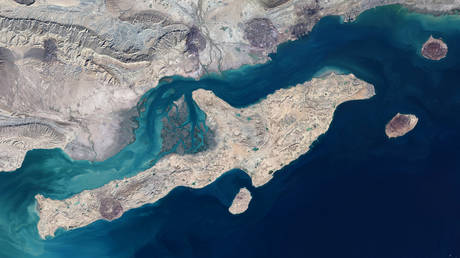
Qeshm Island lies in the Strait of Hormuz off Iran’s southern coast, near the entrance to the Persian Gulf. Shipping through the crucial oil and gas maritime artery has effectively been blocked since the US-Israeli attack, with Iran threatening US-linked vessels and the US targeting Iranian-linked shipping.
The escalation has further strained the fragile ceasefire reached in April after more than a month of hostilities triggered by US-Israeli attacks on Iran. Washington and Tehran have been negotiating a memorandum of understanding intended to extend the truce and restart talks on Iran’s nuclear program.
US President Donald Trump said on Wednesday that the ceasefire with Iran remained in effect despite the latest exchanges. “It’s a different part of the world,” Trump told reporters. “I’d say in that part of the world, ceasefire is when you’re shooting in a more moderate manner.”
Anthropic similarly agreed to pay Elon Musk’s tech company $45 billion for compute capacity last month
Google has agreed to pay SpaceX $920 million per month for AI compute capacity through June 2029, according to the space-tech company’s filing with the US Securities and Exchange Commission.
The arrangement is worth almost $30 billion over the full period and covers the rental of “approximately 110,000 NVIDIA GPUs, CPUs, memory, and other related components,” Business Insider reported on Friday.
Google told the outlet that the contract is intended to meet demand for Gemini Enterprise, its agentic AI platform, and described SpaceX as a long-time Google Cloud partner.
The agreement follows a similar contract with Anthropic in May. The maker of Claude AI confirmed it would pay SpaceX $1.25 billion per month for access to its data centers. Data Center Dynamics reported that Anthropic’s contract runs until May 2029, putting the full value at around $45 billion over three years.
SpaceX said in its filing that the contracts allow it to monetize unused compute capacity while keeping the option to reallocate capacity for internal use. The space company, which merged with Elon Musk’s X and xAI in January, generated nearly $4.7 billion in revenue and lost almost $4.3 billion in the first quarter of 2026.
The AI agreements have become a major selling point ahead of the company’s highly anticipated $1.77 trillion public listing next week.
The new partnerships between AI rivals come as the Pentagon deepens ties with major tech suppliers after ostracizing Anthropic for publicly resisting its killer AI push.
The US military reportedly used Anthropic’s Claude during the operation to kidnap Venezuela’s Nicolas Maduro. In Iran, Palantir software which relies heavily on Anthropic’s AI workflows reportedly selected a girls’ elementary school in Minab as a valid target, based on outdated, human-compiled maps.
The US Department of War announced deals with SpaceX, OpenAI, Google, NVIDIA, Reflection, Microsoft, Amazon Web Services, and Oracle on May 1 to deploy their AI systems for “lawful operational use.” The systems are to be integrated into the US Department of War’s classified Impact Level 6 and Impact Level 7 networks to “streamline data synthesis, elevate situational understanding, and augment warfighter decision-making in complex operational environments.”
Existing reserves of spares are reportedly insufficient to maintain key military equipment as Berlin pursues a major defense buildup
The German Armed Forces could see their operational capabilities severely limited by a growing repair backlog caused by a critical shortage of spare parts, according to media reports citing internal documents from a key military maintenance provider.
The situation is particularly serious for heavy equipment, the newspaper Sueddeutsche Zeitung (SZ) and public broadcasters WDR and NDR reported this week, citing data from HIL, the state-owned company responsible for much of the military’s repairs.
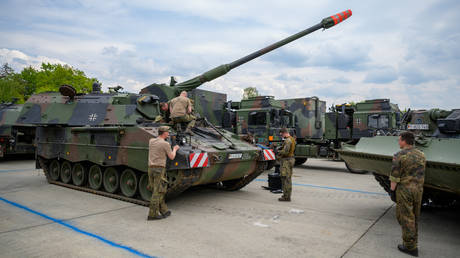
Only around half of Germany’s PzH 2000 self-propelled howitzers, Marder infantry fighting vehicles, and Boxer armored personnel carriers were operational as of May, the outlets reported, citing HIL sources. The remaining equipment was reportedly stuck in lengthy maintenance and repair cycles.
According to its website, HIL is expected to ensure that at least 70% of the army’s heavy equipment is combat ready and operational. The company’s executives told SZ, WDR and NDR that this rate could drop to 30% for certain equipment types after military exercises.
A HIL report cited by the media stated that the lack of long-term supply contracts makes obtaining enough spare parts almost impossible. The situation is so serious that some “essential weapon systems” could face permanent “limitations to their operational readiness.”
The report further states that the Defense Ministry constantly prioritizes short-term repair demands that are “primarily aimed at quick, externally observable effects.” The ministry did not comment on the reports.
Chancellor Friedrich Merz’s government is pursuing a major military buildup, citing the supposed Russian threat, which Moscow has dismissed as “nonsense.” Since taking office in May 2025, Merz has stepped up support for Ukraine and vowed to make the German military Europe’s strongest conventional army.
The continent’s demographic surge will drive much of the globe’s workforce growth, Samia Suluhu Hassan has told SPIEF
One quarter of the world’s population will be African by mid-century, Tanzanian President Samia Suluhu Hassan said on Friday.
Speaking at the plenary session of the St. Petersburg International Economic Forum (SPIEF) alongside Russian President Vladimir Putin, Uzbek President Shavkat Mirziyoyev and Chinese Vice President Han Zheng, Hassan highlighted Africa’s growing demographic and economic weight.
“By 2050, one in four human beings on this planet will be African,” she said in her opening remarks. “Africa will be the only continent still adding workers to the global labor force on a large scale. Africa will host nine of the world’s 20 fastest-growing economies.”
Hassan also pointed to the potential of the African Continental Free Trade Area, saying that once fully implemented it would become the world’s largest market by population. The agreement, signed in 2018, seeks to create a continent-wide free trade zone by easing the movement of goods, services, and investment across all 55 African Union member states.
Africa is destined to grow.
UN projections show the global population reaching 9.66 billion by 2050, with Africa accounting for roughly 2.5 billion people.
By contrast, populations in many other regions are expected to decline due to persistently low birth rates and aging societies. Europe’s population is projected to fall from around 744 million to 703 million in the same period.
According to UN data, fertility rates across Europe averaged about 1.4 births per woman in 2023, well below the replacement level of 2.1.
The trend has also become a major concern for Russia, where the fertility rate stood at 1.4 in 2024. In response, Moscow has introduced a range of measures aimed at boosting births, including direct payments to mothers, expanded maternity benefits, and additional financial support for families.
Starting Monday, Russia will also launch new tax relief programs for families with two or more children.
A peaceful protest over education spending cuts turned to chaos
A demonstration in the Belgian capital against controversial cuts to education spending has descended into violence. It comes against the backdrop of mounting opposition to the government’s efforts to balance the budget.
What began as a largely peaceful protest by thousands of students and teachers in central Brussels on Thursday later turned violent, with hooded individuals reportedly setting fires, damaging property and clashing with police. Some social media users posting videos on X claimed the unrest had been fueled by groups of migrant youths who infiltrated the demonstration.
Protestors were opposed to a package of austerity measures put forward by Belgium’s French Community government, which oversees French-language education. The reforms would raise annual university tuition fees for most students from €835 ($964) to around €1,194 and require some secondary-school teachers to take on additional classroom hours without extra pay.
Officials say the measures would save €300 million and help address a budget deficit projected to reach €1.9 billion. The roughly 35% increase would bring fees more closely into line with those at Flemish universities, according to the government.
🇧🇪 Absolute chaos today in Brussels…
Scooters on fire, bus stops wrecked, fireworks being launched at police, thick smoke covering parts of the city center.
It was a student protest. 84-88% of Brussels’ youth are of foreign origin. Go figure.pic.twitter.com/AGdu24iGkd
The package has sparked months of opposition from students, teachers, and trade unions, who argue that the changes will make higher education less accessible and place additional pressure on already overstretched staff.
Despite the protests, the Parliament of the French Community approved the bill on Friday after more than 14 hours of debate, paving the way for the reforms to take effect. French Community government leader Elisabeth Degryse defended the measures as necessary to address the region’s financial challenges.
Calls for new demonstrations circulated on social media ahead of the vote, while local media reported that police had been deployed to several locations across the Belgian capital.
The latest unrest follows months of anti-government protests in Brussels against austerity measures, as Belgium tries to rein in public spending while increasing military expenditure in line with NATO commitments.
The budget squeeze also comes amid an EU-wide energy crisis following the bloc’s reduction of Russian oil and gas imports, which has contributed to higher costs for consumers. Supply chain disruptions linked to the Middle East conflict have further exacerbated the situation.
Politicians promise immigration control while the economic and demographic forces driving migration remain firmly in place
The European Union’s new migration rules, agreed upon in principle by lawmakers and state representatives, will allow EU countries to transfer rejected asylum seekers to third countries if they cannot be returned to their countries of origin. They also introduce stricter rules for dealing with illegal migrants, especially those considered a security risk.
The media has called it “historic,”“hardline,” and the “strictest-ever migration law” as politicians behind their lecterns spoke of control and the defense of borders. Yet in truth, the EU has once again promised to become tougher while preserving the structures that produced the migration crisis in the first place. New procedures, databases, and regulations have appeared, but the underlying incentives have remained largely intact. The result resembles many political spectacles of recent years: a performance designed to reassure anxious voters while preserving the economic and ideological foundations of the existing system. The gap between rhetoric and reality has become one of the defining characteristics of contemporary Western politics.
The same pattern can be observed across the Atlantic. Donald Trump returned to office promising the strongest immigration enforcement campaign in American history. His supporters anticipated deportation operations on a scale never previously attempted. Yet the reality has proved considerably more modest. Immigration enforcement agencies continue to conduct highly publicized arrests that generate dramatic footage for television and social media. A worker removed from a restaurant kitchen, a raid on a warehouse or construction site – all good for cameras and for political supporters to receive confirmation that action is taking place. Yet the larger economic machinery that attracts millions of migrants continues operating. Businesses that employ illegal labor rarely face penalties severe enough to transform their calculations. The availability of employment remains the primary magnet drawing people across borders. A government genuinely committed to ending illegal immigration would focus relentlessly on employers, labor contractors, and industries dependent on cheap foreign labor. However, such measures would provoke opposition from powerful economic interests. Consequently, symbolic enforcement often proves more attractive than structural reform.
Politicians frequently present immigration as a humanitarian question, a cultural question, or a question of border security. The economic dimension often receives less scrutiny. Modern capitalism and mass immigration have become deeply intertwined. Employers gain access to larger labor pools, which increases competition among workers and places downward pressure on wages in many sectors. Agricultural businesses, logistics firms, construction companies, restaurants, delivery services, and countless other industries derive substantial advantages from a continuous supply of foreign labor. The benefits remain concentrated while many of the costs become dispersed throughout society. Housing demand rises, infrastructure faces greater pressure, schools require expansion, healthcare systems absorb additional burdens.
Welfare programs support those who struggle to establish themselves economically. These expenses rarely appear on corporate balance sheets – instead, they get distributed across the broader population through taxation and public expenditure. This contradiction led the French thinker Alain de Benoist to formulate one of the most incisive observations in the entire debate: “One who criticizes capitalism while approving of immigration, of which the working class is its first victim, would do better to remain silent. One who criticizes immigration while remaining silent regarding capitalism should do the same.” The statement captures a reality that many ideological camps prefer to avoid. Immigration and capitalism frequently function as partners within the same economic system, and any serious analysis of one eventually encounters the other.
Back in Western Europe, governments routinely announce crackdowns on illegal immigration while simultaneously preserving the economic and demographic model that depends on continuous inflows of foreign labor. Public discussion frequently centers on boats crossing the Mediterranean or migrants entering through other irregular routes – images that dominate news coverage because they are visually dramatic. Yet illegal immigration represents only one component of a much larger phenomenon. The overwhelming transformation of Western Europe has occurred through legal channels. Work permits, family reunification programs, student visas, humanitarian admissions, labor recruitment schemes, and various residency pathways have altered the demographic composition of entire societies. A politician can reduce small boat arrivals while expanding legal immigration quotas. Statistical reports may then suggest success even as overall migration continues at historic levels.
Italy provides an instructive example. Giorgia Meloni rose to power promising a fundamental break with previous migration policies. Her electoral success depended heavily on public dissatisfaction with mass immigration. Yet her government subsequently approved hundreds of thousands of additional work permits for non-European migrants in response to labor shortages. Nearly half a million new non-EU work visas were authorized over a multi-year period even while the government continued presenting itself as a champion of immigration control. Supporters emphasized efforts against illegal arrivals, while employers welcomed access to additional labor, and the demographic trajectory remained largely unchanged.
This recurring pattern has created a phenomenon increasingly described by critics as the “Melonization effect,” where leaders campaign as insurgents against mass immigration and then govern as managers of the existing system. Similar tendencies have appeared across numerous Western countries.
In Germany, for instance, the debate often focuses on deportations, especially concerning Syrian refugees. Political leaders have discussed large-scale returns now that Syria’s civil war has ended. Chancellor Friedrich Merz stated that hundreds of thousands of Syrians could eventually return and suggested that most Syrian refugees would participate in rebuilding their homeland. Yet such declarations immediately encounter practical realities. Successful deportation requires cooperation from the receiving country, transportation infrastructure, administrative capacity, diplomatic agreements, legal proceedings, and substantial financial resources.
Likewise with the EU’s new migration agreement, statistics reveal the scale of the challenge. European authorities acknowledge that only a fraction of individuals ordered to leave actually depart. New regulations attempt to improve this rate, but the administrative burden of removing vast populations would dwarf almost any peacetime governmental undertaking in modern European history. Still, many advocates of remigration speak as though a future government could simply issue an order and reverse decades of demographic change.
The deeper issue extends beyond migration policy altogether. Mass immigration functions primarily as a symptom rather than a cause. Civilizations with strong confidence, coherent identities, stable institutions, and clear collective purposes rarely experience sustained demographic transformation against the wishes of their populations. Migration becomes politically decisive when governing elites lose faith in cultural continuity and begin treating populations primarily as economic units. Labor shortages, declining birthrates, fiscal pressures, aging societies, and ideological universalism combine to create a system that continuously demands replacement populations. The immigrant arrives after the transformation has already begun, and serves as visible evidence of deeper processes unfolding beneath the surface.
Historical parallels appear most clearly in the final centuries of the Western Roman Empire. Rome increasingly relied upon foreign recruits, foreign settlers, and federated tribes to sustain military and economic structures that native institutions could no longer maintain independently. Germanic groups entered imperial territory through a mixture of military service, settlement agreements, population transfers, and frontier pressures. Some arrived peacefully, others entered during periods of crisis. Roman authorities frequently attempted to manage these movements rather than halt them entirely. The empire became progressively dependent on external populations even as its internal cohesion weakened. Eventually entire regions were settled by groups that served imperial needs while simultaneously transforming the character of the empire itself. Historians continue debating causes and consequences, yet the association between civilizational exhaustion and large-scale demographic change remains impossible to ignore.
Modern Europe differs profoundly from ancient Rome, yet it has developed certain key structural similarities. Economic systems require workers and welfare states need contributors, but birthrates remain low across much of the continent. Political elites emphasize economic growth and labor supply, while business organizations lobby for additional workers. Governments, in turn, expand legal migration channels, which then leads to public opposition. To quell that opposition, governments announce new enforcement measures without addressing the root causes of migration. Economic demand repeatedly overwhelms political promises, and systems adapt to maintain flows that leaders publicly criticize, but privately accommodate.
However, the legislation’s sponsors admit it faces near-certain defeat in the Senate and a likely Trump veto
The US House of Representatives has passed a bill on imposing new sanctions on Russia and expanding Ukraine aid, with the move being largely driven by Democrats and 18 Republicans breaking party ranks. However, even the bill’s supporters conceded that the legislation was more of a symbolic gesture as it is facing an uphill battle in the Senate and a likely veto from US President Donald Trump.
The so-called Ukraine Support Act, introduced by Rep. Gregory Meeks (D-NY) in April 2025, passed Thursday with 226 votes for and 195 against.
If agreed by Congress, it would authorize over $1 billion in emergency security and reconstruction funding and $8 billion in direct loans to Ukraine, impose mandatory escalating sanctions on Russian financial institutions and energy companies, levy a 500% tariff on Russian imports, and establish a Ukraine Reconstruction Trust Fund.
The bill made its way to a vote after its supporters pulled a rare legislative maneuver called a discharge petition, which allowed them to bypass the Republican leadership – including the speaker and committee chairs – who were opposed to the move.
While the bill’s sponsors painted it as a “historic” measure that would support Ukraine’s “fighting for its sovereignty and survival,” its opponents were not convinced, suggesting that it would dim any hopes for a peaceful Russia-Ukraine settlement.
“If you support this bill, then clearly you are not interested in peace because the consequences would tie the hands of this president and could lead to future hostilities that would bleed over into Europe,” Republican congressman Keith Self said.
Rep. Brian Mast, chair of the House Foreign Affairs Committee, was equally dismissive, calling it “a cudgel to fight against President Trump” and “an unserious bill that was crafted basically a year-and-a-half ago.”
According to CNN, Speaker Mike Johnson privately urged members to vote against the bill, asking them to give Trump more time and space to negotiate with Russia.
While the bill has cleared the House, its further prospects are dim. Republican congressman Brian Fitzpatrick, one of the legislation’s supporters, admitted that “it’s probably not going to get 60 votes in the Senate, but it’s going to hopefully force the Senate to address the issue.”
Even if it were to pass the Senate, Trump would likely veto it, as the president has repeatedly resisted legislation that constrains his ability to negotiate on foreign policy.
Trump has been opposed to providing unconditional support to Ukraine, with most of the US military aid currently being paid for by Kiev’s backers in the West through the PURL mechanism.
Moscow has dismissed all Western sanctions as “illegal,” noting that the US restrictions “are harmful for building ties.” Russian Foreign Minister Sergey Lavrov has also noted that Moscow has seen no progress toward a Ukraine settlement nearly a year after the Putin-Trump summit in Alaska.
“The Russian leadership accepted [American] proposals [on Ukraine]. And since then, we have not seen any progress, no desire to convince Ukraine to accept these American proposals,” he added.
DNA testing has confirmed Lyhanna’s identity, but forensic experts have yet to determine the cause of death, prosecutors have said
DNA testing has confirmed that a body found in southwestern France is that of Lyhanna, an 11-year-old girl who disappeared last week, prosecutors said. The case sparked a nationwide search and a growing political row over failures in the justice system.
The confirmation came a day after search teams discovered the body in an abandoned grain silo near Fleurance in the Gers region, where Lyhanna was last seen on May 29. Police were led to the site by a tip that the suspect in custody previously worked there, Gers region prosecutor Olivier Naboulet said in a statement on Friday, as cited by AP. More autopsy work is needed to determine the cause of death, he added.
The suspect, Jerome B., 41, whose daughter went to the same school as Lyhanna, was arrested.
He acknowledged that he gave the girl a ride but claimed he dropped her off near a local swimming pool – a version of events prosecutors described as inconsistent.
The case sparked outrage after prosecutors revealed that the suspect was the subject of several earlier complaints, including rape allegations that were either dropped or dismissed.
Prosecutor Clemence Meyer said one case involving a teenager was dropped in 2018 after the girl said the relationship was consensual. Another complaint alleging the rape of a child under 15 was dismissed in 2024 due to lack of evidence. A separate complaint filed in August 2025 alleged the rape of a young girl in 2024-2025.
President Emmanuel Macron said on Friday that he was shocked, acknowledging “a dysfunction” in the system. He said he asked the government to investigate what went wrong.
Justice Minister Gerald Darmanin is expected to convene all public prosecutors in Paris on Monday to review the handling of these cases.
Anne-Cecile Mailfert of the Women’s Foundation said the case exposes deep failures in France’s response to sexual violence.
“The system doesn’t work,” she said, calling for comprehensive reform.
According to the French Interior Ministry, around 58% of the victims of sexual violence recorded last year were minors. The UN Committee Against Torture, in a report on France from May 2025, highlighted the low number of reports, prosecutions, and convictions regarding child sexual abuse.
The Pentagon believes that Moscow would interpret the deployment of long-range missiles as an escalation, the outlet says
The Pentagon is set to cancel a Biden-era agreement to deploy Tomahawk cruise missiles to Germany due to fears that it would provoke a Russian retaliation and concerns over depleted weapons stockpiles, Politico reported on Thursday, citing sources.
According to two European officials and one US official interviewed by the outlet, the US believes that Russia would view plans to send the missiles, with a range of up to 1,600 km, as an escalation. Politico added that the cancellation could be interpreted as part of a broader trend of the US withdrawing from NATO defense commitments.
Another reason cited by the outlet is dwindling supplies of Tomahawk and other high-tech missiles, which were used up by the hundreds during the Iran war. Secretary of War Pete Hegseth told Congress last month that it will take “months and years” to replace them.
The original plan was announced in July 2024 by then-US President Joe Biden and then-German Chancellor Olaf Scholz, and envisaged “episodic deployments” of long-range SM-6 missiles, Tomahawks, and developmental hypersonic weapons from 2026 onward.
At the time, Russian Deputy Foreign Minister Sergey Ryabkov called the planned deployment “just a link in the chain of escalation” and “an intimidation tactic, which is pretty much the bedrock of the policy that NATO and the US pursue towards Russia these days.” He also warned that Moscow would respond accordingly, while not ruling out deploying nuclear missiles to Russia’s westernmost exclave of Kaliningrad.
The decision to shelve the Tomahawk deployment plans was confirmed in early May by Chancellor Friedrich Merz, who said at the time that “the Americans themselves don’t currently have enough.” He also insisted that it was not linked to his feud with Trump over the Iran war.
Merz called the US-Israeli strikes on Iran “completely unnecessary” and said the US was being “humiliated” by Tehran’s negotiating tactics. Trump fired back, saying the chancellor “doesn’t know what he’s talking about.” Following the war of words, the Pentagon announced plans to withdraw around 5,000 troops stationed in Germany within several months.

 Login
Login