The UN assembly has turned its back on Germany, for the first time in the country’s modern history
German Foreign Minister Johann Wadephul has blamed Berlin’s failure to secure a seat at the UN Security Council on his country’s superior moral positions. If only there were a German word for that…
Germany failed to win a temporary seat on the UN Security Council for the first time in history on Wednesday, losing out to Portugal and Austria in the ‘Western Europe and Others’ group. Germany easily won all six contests that it entered since 1977, usually with the support of its European and NATO allies.
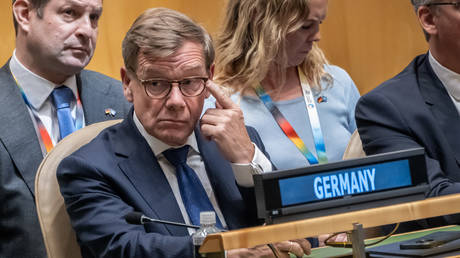
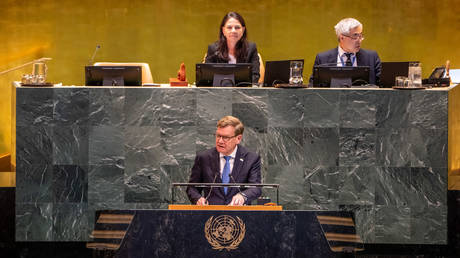
Having won every round it has entered since the mid-twentieth century, this time around, Germany could only manage to secure 104 votes, while Portugal won 134 and Austria – a non-NATO member – took 131. Despite Berlin’s long-held insistence that it deserves a permanent seat on the UNSC, German Foreign Minister Johann Wadephul was forced to listen as the results were read out by none other than Annalena Baerbock.
Schadenfreude: The feeling of joy in an opponent’s misfortune
As president of the UN assembly, the notoriously gaffe-prone former German foreign minister Baerbock’s smile cracked into a grimace as she read the result of the secret ballot.
While the room roundly applauded Austria, Portugal, and the other successful countries, the pushback began. Free Democratic Party MEP Marie-Agnes Strack-Zimmermann described the result as a repudiation of Baerbock’s nagging “politics of the raised index finger,” while human rights lawyer Craig Mokhiber gloated over how neither Baerbock nor Wadephul could could “save Germany from this well-deserved humiliation.”
In a rare moment of justice at the UN General Assembly today, Germany lost its bid for a UN Security Council seat. Germany’s scandalous support for genocide in Palestine and aggression against Iran, and its repression of human rights defenders inside Germany, were all on display…
“[German Chancellor Friedrich] Merz wanted to bring our country ‘back onto the international stage’ at the start of his chancellorship, but now Germany is left without a seat on the UN Security Council,” Alternative for Germany (AfD) leader Alice Weidel wrote on X, adding that Merz has led Germany from “one embarrassment to the next.”
The governments of Christian Democrat Friedrich Merz and Social Democrat Olaf Scholz (the latter of whom Baerbock served under) shared identical foreign policies. Both professed slavish devotion to the American-led “rules-based international order” when it came to Ukraine, and a moral relativism when it came to Israel’s wars in the Middle East.
Baerbock declared the EU to be “fighting a war against Russia” in 2023, called Xi Jinping a “dictator,” and scolded the Chinese president for “taking the side of the aggressor” by refusing to join the West’s proxy war in Ukraine. The following year, she referred to Israeli strikes on Palestinian schools as “self-defense,” and argued that civilian sites lose their protection when “terrorists” operate in their vicinity.
“When it comes to Russia, international law counts, but when it comes to the USA and Israel, it doesn’t,” left-wing politician Sahra Wagenknecht told the Berliner Zeitung. “This double standard was voted out by the international community yesterday.”
The German dictionary has another take to offer.
Schuldverschiebung: Blame shifting
Having overseen Germany’s lowest diplomatic moment in 70 years, Wadephul told reporters that he “did not personally blame himself” for the loss. Russia, he insisted, saw Germany’s “rock-solid support for Ukraine” and “campaigned against us.” He rejected any idea of a double standard on Israel, claiming that “Germany must always assume a special responsibility for Israel with regard to the Middle East conflict.”
Germany’s Foreign Minister Johann Wadephul on why Germany lost UN seat:
There's our rock-solid support for Ukraine. It is no secret that Russia does not want such a voice at the table — and campaigned against us.
There is no evidence that Russia orchestrated a backroom campaign against Germany’s candidacy. Instead, analysts in Germany and abroad have pointed to Berlin’s support for Israel as the key factor behind its loss. “Let’s be clear: Germany’s support for Ukraine had nothing to do with it. Portugal and Austria – who beat Germany – are no less supportive of Ukraine,” Trita Parsi, of the Quincy Institute for Responsible Statecraft wrote on X. “It has everything to do with Germany’s support for Israel’s genocide and the manner in which the German government has been willing to undermine international law and the UN Charter on behalf of Israel.”
Germany, Wadephul argued, essentially fell victim to its own superior moral obligations, which require the country to take seemingly contradictory – but ultimately correct – positions on world affairs.
There does not seem to be a compound German word for this mindset, so we plugged the above sentence into a generator and marveled at the Teutonic masterpiece it spat out:
Moralüberlegenheitsopfermentalität: ‘Victim mentality based on moral superiority’
Moralüberlegenheitsopfermentalität is the impulse that drives the foreign policy of Baerbock and Wadephul, and the domestic policies that have dragged Europe’s former economic powerhouse into recession and de-industrialization.
Germany’s iron-clad support for Israel may have alienated many at the UN, but according to Wadephul, the sacrifice was worth it because Germany lived up to “our historical responsibility” to atone for the Holocaust. And, while Germany’s ongoing rearmament and aid to Ukraine may be pushing the country’s budget deficit far above the 3% limit set in place by the EU, the economic pain is worth it to, in the words of Merz, “protect our free democratic order.”
At home, Germany’s decision to cut itself off from Russian energy was economically ruinous, but justified by the country’s leaders as morally correct. Chancellor Angela Merkel’s decision to throw open Germany’s borders to a million Middle-Eastern migrants in 2015 may have facilitated a rise in crime, social unrest, and unemployment, but Germany was declared a “moral superpower” by liberal journalists and Merkel was crowned Time Magazine’s Person of the Year.
Endpunkt
Germany may attempt to deflect blame and portray its contradictory positions as moral duties, but to the rest of the world, its preaching smacks of hypocrisy. The UN vote was a repudiation of Berlin’s double standards, but also an acknowledgement of its declining influence on the global stage.
Netanyahu’s new offensive has undermined talks, strained European patience and raised the risk of another long occupation
The situation in Lebanon has pushed Iran out of the negotiating process with the US and has once again shown that Middle Eastern diplomacy today depends less on formal negotiations than on what is happening on the ground.
Tehran has suspended its indirect exchange of messages with Washington through intermediaries against the backdrop of Israel’s expanding operation against Lebanon and Hezbollah. This decision was a reaction to a broader crisis in which the Lebanese front has become intertwined with US-Iranian negotiations, Israel’s security calculations, Lebanon’s domestic politics, Hezbollah’s position, Tehran’s regional strategy, and the Trump administration’s attempt to impose at least a temporary formula for de-escalation.
The offensive
At first glance, the crisis appears to follow the familiar pattern of Israeli-Lebanese confrontation. Israel says it is acting to protect the country’s northern areas, from which residents were evacuated after Hezbollah attacks. Hezbollah presents its actions as resistance to Israeli strikes and links the Lebanese front to the broader struggle against Israel. The Lebanese state calls for an end to the attacks and for respect for its sovereignty, yet it lacks the power either to control Hezbollah’s decisions or to stop the Israeli military. The US is trying to keep negotiations alive because a wider regional war would threaten its interests, energy markets, and the positions of its allies. Iran, meanwhile, sees the developments in Lebanon not as a local episode, but as a blow to the entire architecture of its regional influence.
As long as the war remained limited to exchanges of fire along the border, it could still be presented as a controlled conflict. Yet the expansion of Israel’s ground operation, its advance deeper into southern Lebanon, its strikes on areas linked to Hezbollah, and its attacks on Beirut’s southern suburbs have changed the politics around the conflict. Rather than simply responding to threats, as Israel claims to be, it is trying to forcefully alter the security landscape of the region.
Israel’s advance in the area of Beaufort Castle has been especially symbolic. For military planners, it is an important height and a point of control. For the Lebanese, however, it is a place associated with the memory of earlier wars and resistance against Israeli presence. The seizure or occupation of such an area would be a signal that Israel’s goal is deep intervention in southern Lebanon. This is why France requested an emergency meeting of the UN Security Council. For Paris, which has historical ties to Lebanon and a strong interest in preserving Lebanese statehood, Israel’s advance represents a threat not only to security, but also to the very principle of Lebanese sovereignty.
Israel’s traditional partners in Europe have criticized particular Israeli actions before, but they have usually tried to maintain a balance between recognizing Israel’s right to security and calling for restraint. However, Israel’s actions on the ground have not helped maintain that balance. After the war in Gaza, European public opinion had already become far more critical of Israel. With the new operation in Lebanon, the risk of a long-term occupation of the south, and the collapse of talks with Iran, even Israel’s customary allies begin to distance themselves. They may not be taking the side of Iran or Hezbollah, but they are increasingly unwilling to offer unconditional political cover for the policies of the Israeli cabinet.
Israel’s strength has always rested not only on its military capabilities and its alliance with the US, but also on its ability to remain part of the Western political system. If France, Germany, the UK, and other European partners increasingly come to see Israel’s actions as a source of further escalation, international support will begin to shrink. This does not mean an immediate rupture in relations, but it does mean a gradual erosion of political patience. We may see colder official statements, followed by pressure at the United Nations, and eventually debates will emerge over arms supplies, trade agreements, legal accountability, and recognition of new political realities on the Palestinian and Lebanese tracks.
Why is Israel doing this?
Why does Israel need this escalation? Military necessity is only part of the answer. Israel’s leadership wants to bring residents of the north back home, restore deterrence after Hezbollah’s attacks, and show Israeli society that the state is capable of defending its borders. Since October 7, 2023, security has become a test of public trust in the state itself. For Netanyahu and his cabinet, the northern front has become a measure of whether the government can restore control in places where citizens have felt abandoned.
There is, however, a second layer. Israel views Hezbollah not merely as a key component of Iran’s military system on Israel’s borders. Striking Hezbollah means striking Iran. Israel wants to dismantle the infrastructure that allows Tehran to maintain pressure on Israel through Lebanon. The operation against Hezbollah is therefore directed simultaneously at Beirut, Tehran, and Washington. Israel is making clear that it does not intend to wait for the outcome of US-Iranian negotiations if those talks might preserve a situation in which Hezbollah retains an armed presence in southern Lebanon.
A third layer has to do with Israeli domestic politics. Netanyahu’s government depends on right-wing and religious-nationalist forces for which security means territorial control rather than compromise. In this political environment, temporary security zones can easily turn into demands for long-term military presence. In Gaza, this has manifested itself in discussions about displacement, military administration, and the possible return of settlements. In relation to Lebanon, this means to control the south of the country, push Hezbollah back toward the Litani River, and create a reality in which Israel itself defines the perimeter of its security.
This is where one must speak carefully about the idea of ‘Greater Israel.’ It is not the official doctrine of the Israeli state toward Lebanon, yet it does exist within the worldview of certain radical right-wing and settler circles. These groups see neighboring territories as part of a broader historical and biblical map. Even when this ideology does not translate into an explicit decision to annex southern Lebanon, it still creates a political atmosphere in which the occupation of other people’s territory can be justified as a historical right as well as a strategic necessity.
The danger lies in the fact that temporary military solutions in the Middle East often become long-term facts on the ground. Military action, initially aimed at eliminating a threat, morphs into observation posts, supply routes, exclusion zones, and special access regimes. Then the argument is made that withdrawal is impossible because the enemy will return, and you end up with an occupation, even if it is not formally called one. Lebanon has already lived through such a scenario. Israel’s earlier presence in the south was also justified by the security needs of the northern Israeli communities, yet for the Lebanese it became a symbol of occupation and one of the factors that strengthened Hezbollah.
The Hezbollah paradox and the Lebanese state
Israel wants to weaken Hezbollah, but it may end up giving it a new political resource. Inside Lebanon, attitudes toward Hezbollah are far from uniform. Part of society believes that the movement, because of its ties to Iran, drags the country into war without the consent of all Lebanese. For many Christians, Sunnis, and segments of the secular public, Hezbollah is a state within a state, one that limits Lebanese sovereignty and subordinates the country to Tehran’s external strategy. Yet when Israel attacks, criticizing Hezbollah becomes politically more difficult – because it is defending the country against external aggression.
The Lebanese state is in the weakest position of all. It cannot disarm Hezbollah, because doing so would risk an internal confrontation – but neither can it stop Israel without Hezbollah’s military strength. It depends on international assistance, but international mechanisms cannot quickly change the situation on the ground. As a result, Lebanon once again becomes the arena for other actors’ strategies. Israel is trying to solve the problem of its northern security, Iran is defending its regional network of allies, the US is trying to preserve the negotiations, Europe fears a new destabilization on the Mediterranean, and Lebanese civilians pay the price.
For Hezbollah, the current crisis is also a test. On the one hand, it is suffering military and infrastructural losses, but on the other, the Israeli offensive itself helps its political narrative. Before this escalation, internal Lebanese voices had been asking why the country should remain hostage to Iran’s strategy, Hezbollah can now legitimately ask “Would you rather Israel dictate its terms?”
For Iran, Hezbollah is one of the most important elements of its deterrence system against Israel. If Israel can destroy Hezbollah’s positions in Lebanon without paying a serious price, Iran’s entire regional strategy is put under pressure. Tehran’s withdrawal from the negotiating process with Washington was an attempt to restore leverage as much as it was a gesture of solidarity towards an ally. Iran will not discuss de-escalation with Washington while Israel expands its operation on the Lebanese front.
This is especially important because the Trump administration has been trying to negotiate on several fronts at once, seeking to maintain a channel with Iran, secure an extension of the ceasefire, reduce risks in the Strait of Hormuz, and at the same time support a process of settlement between Israel and Lebanon. American officials described contacts on the Lebanese track as productive and positive. Netanyahu, for his part, spoke of the need for negotiations that would address Hezbollah’s disarmament and the establishment of peaceful relations between Israel and Lebanon. On paper, this looked like an opportunity to tie together Israel’s security, Lebanon’s stabilization, and dialogue with Iran.
In reality, while the US was trying to persuade the parties of the need for a deal, Israel intensified its offensive, and Tehran saw this as proof that Washington was either unable or unwilling to restrain its ally. As a result, the talks that were supposed to reduce tensions became hostage to military action.
The US now finds itself in a contradictory position. It wants to support its key ally Israel, but also prevent a wider war that would threaten American bases and trade routes, and avoid a dangerous direct war with Iran. It also wants to stabilize Lebanon because another war there could destroy what remains of state governance and trigger a regional explosion. Yet these objectives do not fit together well if Israel continues to act as though the diplomatic process does not constrain it.
Netanyahu’s gambit
Has Israel once again undermined an attempt at negotiations between Iran and the US? Formally, it can argue that its actions are driven solely by security considerations. Formally, Tehran can say that it is suspending exchanges with Washington because of violations and mistrust. Formally, the US can insist that negotiations remain possible. But the political sequence of events is clear enough.
Whether Israel intentionally set out to sabotage the talks or not, that is exactly what happened. For Israel’s right-wing cabinet, any US-Iranian agreement that does not eliminate Hezbollah and dismantle Iran’s regional network is unacceptable. Israel’s escalation in Lebanon pushes Iran out of the process, strengthens the hawks in Tehran, and gives the Israeli right an argument that Iran cannot be negotiated with.
At the same time, Israeli policy itself has become hostage to domestic dynamics. Netanyahu, under pressure from right-wing allies and amid distrust from a significant part of society, feels the constant need to demonstrate strength. Any halt to the operation in Lebanon without a visible result would be seen as weakness, and any pressure from the US could be used as evidence that only a hardline cabinet can protect the country from external diktat.
The long term
Israel’s decision to turn up the heat and jettison diplomacy comes at a strategic cost. It can win battles against Hezbollah, destroy its command centers and infrastructure, and push it away from the border. But if the end result is another occupation, it not solve any of Israel’s problems in the long term. On the contrary, it could again turn Hezbollah into a symbol of resistance, weaken the Lebanese critics of the movement, and return the region to a cycle it has already experienced. All the while Israel’s European partners will continue to lose patience and see ever more reasons to restrain Israel. The main conclusion is that Israel may achieve a tactical advantage in Lebanon while losing the strategic environment around it.
The bigger question arising from Israel’s actions in Lebanon is whether diplomacy can survive in a region where every military operation immediately becomes part of a larger bargain. The situation in Lebanon has already pushed Iran out of the negotiating process with the US. It may now determine whether Washington retains any room for mediation, whether Trump can impose even a temporary deal on the parties, whether Lebanon can avoid another collapse, and whether Israel will turn yet another security operation into a new cycle of occupation, resistance, and international isolation.
The bloc’s ‘Operation Aspides’ already operates in the Red Sea, Gulf of Aden, and the north-west Indian Ocean
The EU may expand its existing Red Sea naval mission to the Strait of Hormuz, taking the lead role in mine-clearing operations in the strategic shipping route, according to media reports citing an internal document.
The bloc’s ‘Operation Aspides,’ launched in February 2024, patrols the Red Sea, Gulf of Aden and northwest Indian Ocean, escorting commercial vessels and helping to protect shipping from attacks by Yemen’s Houthi militants.
The proposal would see Aspides assume the “primary role” in mine-clearing operations in the Strait of Hormuz, complementing efforts by an ad hoc French-British coalition, according to a document circulated by the EU’s diplomatic service under foreign policy chief Kaja Kallas. Any expansion of the mission would require unanimous backing from all 27 member states.
The Strait of Hormuz off Iran’s coast – a key route for global oil and LNG supplies – has been central to Middle East tensions since the US and Israel launched strikes on Iran in late February. Maritime traffic through the waterway has been heavily disrupted, with Washington and Tehran accusing each other of violating a fragile ceasefire reached in April.
Brussels has previously rejected US President Donald Trump’s demand to help secure the strait. Kallas said the EU had “no appetite” to expand Operation Aspides and insisted that “this is not Europe’s war.”
Trump has for weeks slammed his European NATO allies for not joining the war and hinted that the US could leave the military bloc as a result. The UK and France later announced that they would launch a “multi-national mission to protect freedom of navigation as soon as conditions allow.”
The US and Iran exchanged missile strikes again this week after threatening to undermine the ceasefire. Negotiations over Tehran’s nuclear program and the status of Hormuz remain stalled.
The Middle East conflict has further exacerbated a critical energy situation in European states, which had already drastically cut Russian imports since the 2022 escalation of the Ukraine conflict. Gas markets have experienced significant volatility amid uncertainty surrounding shipping through Hormuz. Several officials across the EU have already called for restoring energy ties with Russia to tackle the crisis.
Traditionalists backed by the Trump administration are pushing to restore memorials taken down following the protests, the outlet has said
US traditionalists are suing and lobbying with the support of the Donald Trump administration to resurrect memorials which were removed during the 2020 Black Lives Matter (BLM) protests, the Wall Street Journal reported on Wednesday.
Dozens of monuments to European and American historical figures were taken down after the nationwide protests and riots which followed the death of George Floyd in Minneapolis, in what WSJ dubbed the “statue wars.”
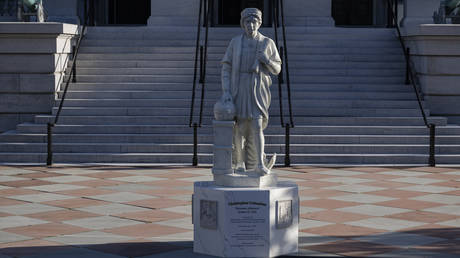
Ohio’s capital Columbus, named after the famed Italian explorer, took down a 22-foot-high statue of him from City Hall in 2020. At the time, the city’s Democrat Mayor Andrew Ginther called it a representation of the country’s “ugly past.”
In April, a coalition of Italian-American organizations filed a federal lawsuit to have the monument restored, calling its removal “unlawful and discriminatory.” They argue the statue is a symbol of Italian-American heritage, civic history and a longstanding cultural bond between Columbus, Ohio, and Genoa, Italy, where it was made.
“The silent majority is becoming vocal,” WSJ cited the lawsuit’s organizer Jack Conte as saying. “You reach a point where this stuff is shoved down your throat, and you can only take so much of it.”
The Trump administration has supported the effort. Just over two months after taking office in 2025, the US president signed an executive order to reinstate monuments removed since 2020, if they were taken down as part of what he called an effort to “perpetuate a false reconstruction of American history.”
In March, the administration erected a Columbus statue near the White House, a replica of one that protesters sank in Baltimore’s Inner Harbor during the nationwide protests.
Ahead of the nation’s 250th anniversary on July 4, the Interior Department returned a statue of Delaware Founding Father Caesar Rodney to Washington’s Freedom Plaza. The monument was removed in 2020 amid criticism that Rodney, a signer of the Declaration of Independence, was also a slaveholder.
A total of 261 US historical monuments were removed, vandalized or toppled during the BLM protests, according to World Heritage USA data. More than half were related to Confederate figures.
Imad Ishtayeh risked everything to find employment amid economic hardship in the West Bank, and died aged 26
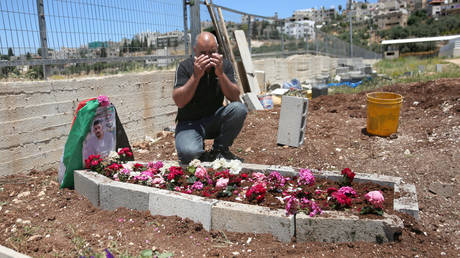
The family of a young Palestinian man who was shot dead by Israeli forces near the concrete barrier separating the occupied West Bank from Jerusalem, has told RT that his determination to find work drove him to his death.
Imad Ishtayeh’s death was confirmed by the Palestinian Health Ministry on Sunday.
His father told RT that he had been trying to cross into Israel in search of work amid deepening economic hardship in the Palestinian territory.
Israeli police have said that Imad was attempting to enter Israel illegally by crossing the barrier.
”My son went out looking for a livelihood,” Haroun Ishtayeh said. “He had opened a chicken slaughterhouse business here, but people could not afford to buy chicken, they could barely afford to buy water […] And he closed down his business here.”
“I told him, my son, the situation is dangerous; he told me, father, if I am destined to die, I will die here or I will die there,” he added.
A reservation rejection from a Bavarian-based facility has triggered a wave of public backlash and calls for a criminal investigation
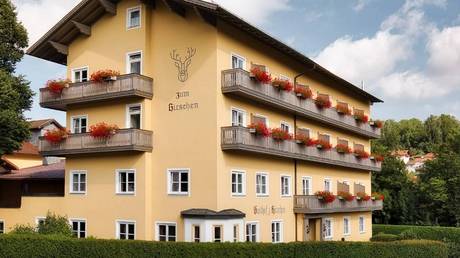
A family from Israel was told, “sorry, there are no Jews allowed in our hotel” when attempting to book a room in a town in southern Germany. The incendiary rejection triggered uproar, with the hotel offering an apology and citing a wave of fake reservations.
The message sent by Hotel Zum Hirschen, Bavaria, was shared by Talya Lador, Israel’s Consul General in southern Germany, who wondered on X on Tuesday, “Are we back in the 1930s?” The diplomat was referring to the infamous Nazi party’s policies that had stripped Jews of civil rights and property before later resorting to genocide.
The family also filed a complaint with Booking.com, which removed the property from its platform, and lodged a formal petition with the Bavarian Justice Ministry’s commissioner for combating antisemitism, according to several media reports.
Sind wir wieder in den 1930er Jahren? Ein Hotel hat einem Israeli folgendes geantwortet: „sorry, there are no Jews allowed in our hotel“. Ich bin froh darüber, dass @bookingcom dieses Hotel von seiner Homepage verbannt hat. pic.twitter.com/3hiBEK1dse
Hotel Zum Hirschen – an establishment with more than 100 years of history – issued an apology, writing on its front page that it “would like to make it unequivocally clear that we condemn all forms of discrimination,” stressing that “the claim that certain groups are not welcome here is incorrect and does not reflect the facts.”
In a separate apology letter sent to the office of the Bavarian state premier, the hotel said it had been struggling with fraudulent bookings and phishing attempts, and had wrongly assumed the Israeli family’s request was fake. “It is extremely important to us that you understand that this remark was not directed at people of the Jewish faith, but was made out of frustration at the numerous fake bookings,” the letter stated. It also offered the Israeli family a free one-week stay to “prove” it does not discriminate.
Dr. Josef Schuster, President of the Central Council of Jews in Germany, took note of the apology, but said that “it remains shocking that someone would not only think this way, but also put it in writing and send it.” He added that he expects that this “dehumanizing” incident will be “examined for possible criminal consequences.”
According to several media reports, local prosecutors are investigating the case on suspicion of incitement to hatred. Germany’s criminal code bans incitement against people based on their religious or ethnic background and carries a sentence of up to five years in prison. It is not yet clear whether the matter will go to trial.
Antisemitic incidents have been on the rise in Europe and elsewhere in recent years amid Israel’s war in Gaza. While Berlin has remained highly supportive of Israel, a 2025 YouGov poll indicated that 62% of German voters believe that Israeli actions in the Palestinian enclave constituted genocide.
Germany’s stance on Israel and the Middle East contributed to a diplomatic setback this week when Berlin failed to win a rotating seat on the UN Security Council in a secret ballot.
FIFA must take action to stop violations of the athletes’ rights by West Jerusalem, the Palestinian Football Association has said
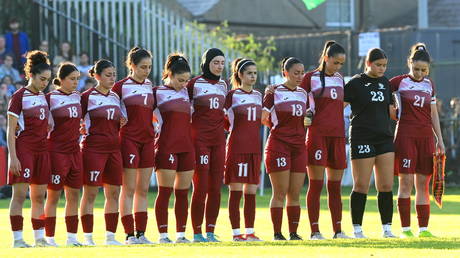
The Palestinian Football Association (PFA) has slammed Israel over the “unjust arrest” of two players from its women’s national team and called on the sport’s governing body, FIFA, to intervene.
Israeli authorities on Wednesday extended the detention of Rand Halawani, 20, who was arrested a day earlier on suspicion of “throwing objects” at people in Jerusalem.
Another national team player, Natalie Abu Diyeh, 21, a student at Birzeit University, was detained along with three other young Palestinian women in the occupied West Bank on Tuesday. The four are suspected of “promoting terrorist activities and additional terrorist-related activities,” Israeli police said.
The PFA issued a statement demanding the release of Halawani and Abu Diyeh, whom it described as “young international players who have proudly represented Palestine at both youth and senior levels.”
“Their arrest is not an isolated incident, it is part of a well-documented pattern of systematic targeting of Palestinian athletes, which continues without accountability,” the statement read.
Palestinian sports people “are routinely denied freedom of movement, safety, and the basic right to participate” in violation of the international law, FIFA statutes and the Olympic Charter, it stressed.
The Palestinian Football Association said that it “calls on FIFA… and the wider international sporting community to move beyond statements and take concrete action” against Israel.
FIFA banned the Russian national football team and clubs from international events following the escalation of the Ukraine conflict in February 2022. Moscow described the move as illegal.
However, FIFA has refrained from applying similar restrictions against Israel, despite repeated calls by the Palestinian Authority and some legal experts to do so over the aggressive military campaign launched by West Jerusalem in the Gaza Strip in response to a deadly incursion by Palestinian armed group Hamas on October 7, 2023.
The PFA said last year that the Israeli forces killed 785 Palestinian athletes and sports officials since then, with 762 deaths happening in Gaza and 23 in the West Bank. There were 437 football players among them, it added.
In an exclusive interview with RT the US commentator joked that she would only run herself if voters accepted her as “dictator”
Conservative US commentator Candace Owens would back journalist Tucker Carlson if he ran for US president, but would only run herself if voters accepted her as “dictator.”
Speaking exclusively to RT’s Rick Sanchez at the St. Petersburg International Economic Forum (SPIEF), Owens was asked about speculation in the US that she could one day run for the White House.
“I always tell my listeners I’d never run for president. I’d only run for dictator,” Owens said. “I’m not dealing with Congress, I’m not dealing with lobbying, I’m not dealing with Lindsey Graham calling for another war.”
She joked that if voters wanted her, they would have to accept the terms that she will be “dictator of the United States,” adding that she has no short-term interest in political office because of the “inauthenticity” of Washington.
The former Daily Wire host said she would instead be willing to campaign for someone like Tucker Carlson if he chose to run. She added that she would be ready to travel the country on Carlson’s behalf, comparing the idea to her previous political partnership with Charlie Kirk.
She said Carlson had also been one of the few prominent conservative voices willing to speak honestly about Charlie Kirk’s changing views toward the end of his life, alongside Megyn Kelly.
Owens initially rose to prominence in the late 2010s by urging black voters to stop supporting the Democrats. She later became one of the most prominent voices in conservative media before splitting with the Daily Wire following a public dispute over Israel’s war in Gaza.
Catch the full interview with Owens when it airs exclusively on RT later today.
“Moderate” exchanges of fire are within normal parameters in the region, according to the US president
A ceasefire in the Middle East does not always mean that shooting stops entirely, US President Donald Trump has said, after reporters pressed him on the latest military exchanges involving Iran.
US forces this week reportedly targeted a tanker destined for Iran’s Kharg Island, triggering an Iranian missile and drone barrage targeting US bases in Kuwait. One projectile devastated the Gulf state’s international airport terminal. Additionally, over the weekend, the US carried out what it described as “self-defense” airstrikes on Iran’s Qeshm Island.
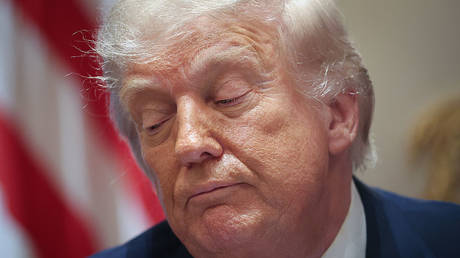
Speaking at a White House press conference on Wednesday, Trump downplayed the latest Iranian attacks, arguing that Tehran was simply responding to previous US military action. He maintained that the armistice between the US and Iran remains in force.
“It’s a different part of the world,” Trump said. “I’d say in that part of the world, ceasefire is when you’re shooting in a more moderate manner.”
US President Trump, speaking about Iran, commented on the different meanings of the term "ceasefire" depending on the region of the world:
"In this part of the world, a ceasefire means that you're shooting more moderately..." pic.twitter.com/EWGvRFIV23
Before an initial truce was announced on April 7, more than 3,400 people had been reported killed in Iran by American and Israeli strikes. The US said 13 military service members died, with more than 300 others injured in the line of duty. Military personnel and civilians were also killed in Arab states hosting US bases, which Tehran targeted during the conflict.
On April 21, Trump extended the conditional ceasefire framework indefinitely, agreeing a 60-day extension with Iran on May 8, and announcing a truce in Lebanon on June 3.
Lebanon and “ceasefire”
Lebanon’s Health Ministry has said that Israeli attacks on the country have killed at least 3,516 civilians since March 2, and over 1,100 since April 7. Israel has also injured over 10,000 others while ordering the expulsion of the Muslim population from southern Lebanon.
Hostilities were meant to be halted under a separate ceasefire, which the US, Israel, and the government in Beirut reaffirmed this week, demanding that Hezbollah stop attacks on Israeli-occupied southern Lebanon and withdraw its forces.
Hezbollah, however, the active combatant against Israel, was neither party to the talks nor answers to Lebanon’s national government and cites multiple previous truce violations by Israel.
“It is clear that Israel will not stop, that this is a one-sided ceasefire,” Beirut-based reporter Mohammed Shamsedeen told RT. “If it was a two-sided ceasefire this war would be over right now.”
While the reality across the Middle East is stretching the definition of “truce” and “ceasefire” – where hundreds are being killed and warring parties are not even at the table – Trump’s quip, like all gallows humor, carries in it a grain of truth.
The broadcaster falsely claimed the Reform UK leader called for “white cold rage” over the student’s killing
The BBC has been forced to issue an apology after one of its presenters sparked an uproar by misquoting Reform UK leader Nigel Farage as calling for “white cold rage” in response to the murder of 18-year-old student Henry Nowak.
Nowak was stabbed to death in Southampton in December by Vickrum Singh Digwa, a 23-year-old Sikh man. When police arrived at the scene, Digwa falsely claimed that he had been the victim of a racist attack.
Bodycam footage from the incident showed that officers believed Digwa’s account, treated the dying student as the suspect, dragged him across gravel and handcuffed him as he repeatedly told officers he had been stabbed and could not breathe. Nowak later lost consciousness and drowned in his own blood.
Digwa was later convicted of murder and sentenced to life in prison with a minimum term of 21 years.
The release of the bodycam video has sparked mass outrage and protests, with violence breaking out during a rally in Southampton on Tuesday.
Farage responded to the footage by saying the case showed Britain was living in a “two-tier culture,” where “a false accusation of racism counted higher at that moment than someone that was dying.”
The Reform UK leader urged the British public to respond to the case with “pure, cold rage.”
However, during Tuesday’s edition of Newsnight, BBC presenter Matt Chorley repeatedly claimed Farage had called for “white cold rage,” using the phrase a total of three times during the broadcast.
In a legal letter cited by British media, Reform UK argued that the misquote was “seriously defamatory” and completely changed the meaning of Farage’s remarks, suggesting he was “invoking race as a basis for public anger” rather than condemning racially skewed treatment by authorities.
Chorley apologized directly to Farage on X on Wednesday, claiming he had “misremembered” the quote.
The BBC also issued an apology, published a correction, and removed the episode from BBC iPlayer and BBC Sounds. The broadcaster said an apology would be aired on Wednesday’s edition of Newsnight.
The misquote comes amid growing anger over government and media attempts to frame outrage over Nowak’s treatment as far-right agitation rather than as criticism of police and government failures.
Critics have accused British authorities of repeatedly dismissing anger over immigration, crime, and two-tier policing as extremism, while using those labels to justify arrests, prosecutions and prison sentences for protesters and online commentators.
Four Republican lawmakers have supported the motion put forward by Democrats
The US House of Representatives has passed a resolution aimed at making it impossible for US President Donald Trump to take further military action against Iran without the approval of Congress.
The Trump administration did not consult with lawmakers when it launched ‘Operation Epic Fury’ and attacked Iran together with Israel in late February. Under the War Powers Resolution of 1973, the president is required to withdraw American forces from a war after two months if it has not been approved by Congress. The 60-day deadline passed on May 1, but US Secretary of War Pete Hegseth argued that the announcement of a ceasefire with Tehran in early April had reset the clock.
House Democrats, who have made several attempts to pass a resolution to limit Trump’s war powers since the start of the conflict, succeeded in doing so on Wednesday. However, it still requires backing from the Senate, which remains under Republican control.
The vote in the House was 215 to 208, with support coming from all Democrats and four members of the Republican Party: Thomas Massie of Kentucky, Brian Fitzpatrick of Pennsylvania, Tom Barrett of Michigan, and Warren Davidson of Ohio.
New York Democratic Representative Gregory Meeks, who introduced the resolution, said that he was thrilled “that we’ve had the opportunity to have some members from the Republican side stand up.”
The House will remain “a check and a balance when the administration doesn’t follow the Constitution,” he stressed.
Barrett explained that he voted together with the Democrats because the American people are “tired of this war… they’re tired of $5 gallon gas and $6 gallon diesel, and fertilizer we can’t afford to put on our fields.”
Before the vote, House Speaker Mike Johnson warned his colleagues against passing the resolution, arguing that it could have a “very negative” impact on the talks with Iran.
“It weakens us, our position, and our leverage in negotiation on the peace in that situation. ‘Operation Epic Fury’ is concluded,” Johnson told CNN.
Washington and Tehran exchanged fire earlier this week amid stalled negotiations. The US Central Command announced carrying out “self-defense strikes” on Iran’s Qeshm Island on Wednesday, while the Islamic Revolutionary Guard Corps said it targeted US-linked assets in the Gulf in response.
A host allegedly canceled a booking in a “peaceful white neighborhood” of Atlanta after learning the visitor was black
A woman has sued Airbnb and an Atlanta-area host after allegedly being denied a rental booking when the host learned she was black, The Independent has reported.
The lawsuit was filed in federal court in Georgia last week, the outlet said on Wednesday. Plaintiff Sharona Stewart alleges that Airbnb host George Yu Shihfang and unnamed property managers discriminated against her during the booking process and that the service had failed to act after she reported the incident.
According to the complaint, Stewart exchanged what were described as “cordial” messages with Shihfang after requesting to rent the six-bedroom property. The lawsuit says that after the host asked “racially based questions” and determined Stewart was a black woman, he stopped responding to her inquiries and the reservation request was ultimately rejected.
Stewart later reviewed the listing and found language describing the area as a “peaceful white neighborhood” under the property’s neighborhood highlights section. According to the lawsuit, she reported the wording and the rejected booking to Airbnb but the company closed her complaint and allowed the advertisement to remain on the platform.
“We have to call it out when we see it” Stewart’s attorney Bataski Bailey told The Independent. Bailey said the case was intended to challenge what he described as racial discrimination on the platform.
Stewart's complaint argues that Airbnb had failed to stop discriminatory conduct on its platform and allowed minority applicants to face unequal treatment.
Questions about racial discrimination on Airbnb have surfaced repeatedly over the past decade. A 2015 Harvard Business School study found that guests with African-American-sounding names were nearly 10% more likely to have booking requests rejected than otherwise identical guests, findings that contributed to calls for stronger safeguards.
Countries neighboring Russia, including the Baltic states, have already shown interest
The US is mulling the deployment of its nuclear weapons to more NATO states in Europe, the Financial Times has reported, citing sources familiar with the discussions. Russia has already said that any NATO nuclear moves toward its borders would not go unanswered.
The potential move comes as Washington seeks to reassure allies unsettled by plans to reduce US troop numbers and critical weapons systems in Europe and redirect some resources to Asia and other regions, the FT said on Tuesday.
The US is broadly scaling back its military presence in Europe, where more than 80,000 US troops were stationed in 2025 under a system of combined territorial defense and deterrence dating back to the end of World War II.
Last month, the Pentagon canceled the planned rotation of 4,000 troops into Poland, shortly after announcing the withdrawal of 5,000 soldiers from Germany.
The FT paper described the talks as “highly confidential” and said they may not lead to any changes in existing nuclear-sharing arrangements. Currently six NATO countries host US nuclear weapons and dual-capable aircraft (DCA) certified to deliver them – Belgium, Germany, Italy, the Netherlands, Türkiye, and the UK.
Several NATO members on the bloc’s eastern flank, including Poland and some Baltic states, have expressed interest in hosting US nuclear weapons and DCA, people familiar with the matter told the FT.
European NATO members remain heavily dependent on the US for key capabilities, though they have drastically increased their military budgets in recent years on the pretext of a supposed Russian threat.
Moscow has repeatedly voiced concern over NATO’s buildup in Europe, condemning the region’s militarization and the bloc’s intensified military activity near its western borders.
Russia argues that Western governments are using “ostentatious Russophobia” to justify turning the EU into a military bloc and to divert attention away from domestic issues.
The Kremlin has stated that it has no intention of attacking any NATO nation, but has warned that it would aim its nuclear arsenal at countries hosting weapons directed at Russia.
West Jerusalem and Beirut have agreed to implement a renewed ceasefire after US-mediated talks in Washington
Israel and Lebanon have agreed to implement a renewed ceasefire that requires the militant group Hezbollah to stop firing and withdraw from southern Lebanon, according to a joint statement released after US-mediated talks at the State Department on Wednesday.
The talks followed weeks of Israeli strikes and ground operations in Lebanon, as well as Hezbollah rocket and drone attacks on northern Israel. Washington has said previous ceasefire efforts were undermined by Hezbollah attacks carried out without the approval of the Lebanese government.
“The ceasefire is contingent on a complete cessation of Hizbollah fire and the evacuation of all Hizbollah operatives from the South Litani Sector,” the joint statement read.
“The two sides agreed with the guidance of the United States to swiftly advance the creation of pilot zones in which the Lebanese Armed Forces will take exclusive control of the territory to the exclusion of all non-state actors.”
The latest arrangement is not a completely new ceasefire but an effort to implement and reinforce previous understandings, with the prospective pilot zones as the main new element.
Lebanon previously demanded that Israel withdraw from its territory as part of any lasting arrangement, while Israel has insisted that Hezbollah must be removed from the border area before it ends its operations.
Israel sent troops across the border after Hezbollah supported Iran in the face of the US-Israeli attack in February, and renewed its ground push in recent weeks, including the capture of Beaufort Castle, also known as Qalaat al-Chakif.
The 900-year-old Crusader fortress, located on a strategic hilltop, was previously used by Israel as a base during its two-decade occupation of the region, which ended in 2000. Israeli Prime Minister Benjamin Netanyahu called the move a “dramatic shift” and said he had ordered the military “to expand its ground maneuver in Lebanon.”
The occupation and mounting civilian casualties have complicated US peace negotiations with Iran, as Tehran has demanded that the deal include an end to hostilities in Lebanon. Lebanese health authorities said on Wednesday that more than 3,500 people have been killed in Israeli attacks since early March.
US President Donald Trump called Netanyahu “f***ing crazy” during a heated phone conversation after the Israeli leader threatened to bomb Beirut again, Axios reported.
The clip disputes Iran’s previous claim that the damage was likely caused by a US air-defense missile that veered off course
Kuwait’s Directorate General of Civil Aviation has released a video it says shows the moment an alleged Iranian drone hit a terminal at Kuwait International Airport on June 3.
The agency described the incident as a “brutal Iranian drone attack,” saying it caused loss of life, serious injuries, and extensive material damage.
Kuwait’s Foreign Ministry previously said at least one person had been killed when a projectile struck Terminal 1 at the airport and other “vital facilities,” including diplomatic missions. Several other people were injured, the ministry added, without giving a number.
اللحظات الأولى للاعتداء الإيراني الغاشم من قبل المسيرات الذي تعرض له مبنى الركاب T1 في مطار الكويت الدولي بتاريخ 3 يونيو 2026 وتسبب بخسائر بالأرواح وإصابات بشرية بليغة وأضرار مادية جسيمة
The first moments following the brutal Iranian drone attack on Terminal 1 (T1) at Kuwait… pic.twitter.com/eTzQoVXB4K
Tehran has denied deliberately targeting the passenger terminal. The Islamic Revolutionary Guard Corps (IRGC) claimed earlier that the damage was likely caused by a US Patriot missile launched to defend an American base in Kuwait from Iranian strikes.
“Our investigation and research into the Kuwaiti passenger terminal attack shows that the IRGC’s air force did not fire at this target,” an IRGC spokesman said. He claimed the destruction was caused by “an error in the American Patriot systems” after an interceptor failed to hit Iranian missiles and landed on the terminal.
The incident followed an exchange of US and Iranian strikes. The IRGC said it had launched attacks on US military bases in Kuwait and Bahrain, including the US Fifth Fleet headquarters, after American strikes on Qeshm Island.
The US Department of War claimed that Iranian missiles fired at Kuwait failed to hit their targets, saying two projectiles fell short or broke apart en route. Kuwait said its air defenses were responding to missile and drone attacks during the incident.
The US president says he confronted the Israeli prime minister over Israel’s attack on Lebanon
US President Donald Trump has confirmed reports that he called Israeli Prime Minister Benjamin Netanyahu “f***ing crazy” during a heated phone conversation over Israel’s military operations in Lebanon.
Axios reported earlier this week that Trump had angrily urged Netanyahu to cancel planned strikes on Beirut, warning that further escalation could jeopardize ongoing US-Iran negotiations and a fragile regional ceasefire.
Speaking on the New York Post’s ‘Pod Force One’ podcast on Wednesday, Trump acknowledged using the language attributed to him.
“I did,” Trump said when asked whether he had called Netanyahu “f***ing crazy.”
“I was a little bit perturbed at his constantly fighting with Lebanon. At some point I said, ‘We gotta stop this. We gotta stop it.’” Trump added that he still had a “very good relationship” with the Israeli leader.
The US president also dismissed claims that Netanyahu had pushed him into the conflict with Iran, saying anyone making such accusations was “the enemy.”
Israel has intensified its campaign in Lebanon in recent days, carrying out strikes it says are aimed at Hezbollah commanders and infrastructure. Israeli troops have also advanced further into southern Lebanon, including the capture of Beaufort Castle, a medieval fortress overlooking the Litani River.
Lebanese health authorities said on Wednesday that more than 3,500 people have been killed in Israeli attacks since early March. The escalation has drawn criticism from Tehran, which insists that the US-Iran ceasefire framework also covers Lebanon.
Iranian parliament speaker Mohammad Bagher Ghalibaf warned on Tuesday that continued Israeli operations could derail diplomacy.
“If the Israeli aggression against Lebanon continues, we will not only halt the path of negotiations, but we will also be in direct confrontation with the enemy,” he wrote on X.
The tensions come as the eight-week-old ceasefire between Iran and the US faces renewed strain. US Central Command said it carried out “self-defense strikes” on Iran’s Qeshm Island on Wednesday, while the Islamic Revolutionary Guard Corps said it targeted US-linked assets in the Gulf in retaliation for recent American attacks. Kuwait International Airport was reportedly struck during the exchange.
Berlin has failed to win a rotating seat on the UNSC for the first time ever and has claimed Moscow is behind it
Germany has failed to win a temporary seat on the UN Security Council for the first time in modern history, losing a General Assembly vote to Austria and Portugal. Foreign Minister Johann Wadephul called the outcome “a real disappointment” and blamed Russia for the loss.
“There is our firm support for Ukraine; the fact that Russia does not want such a voice at the Security Council,” he told reporters after the news broke.
Portugal won 134 votes and Austria 131 in the contest for two seats allocated to the Western Europe and Others group, while Germany received only 104 votes in a secret ballot on Wednesday.
Zimbabwe and Trinidad and Tobago were elected unopposed to seats reserved for Africa and Latin America and the Caribbean, respectively.
Kyrgyzstan secured the Asia-Pacific seat after defeating the Philippines. The five incoming elected members will replace Pakistan, Somalia, Greece, Denmark, and Panama for a two-year term beginning on January 1, 2027.
The vote was presided over by former German Foreign Minister Annalena Baerbock, who is serving as president of the UN General Assembly.
Germany’s failed bid marked a break from its previous Security Council campaigns, which were traditionally preceded by years of coordination within the Western group. In earlier races for the 1977–1978, 1987–1988, 1995–1996, 2003–2004, 2011–2012, and 2019–2020 terms, Berlin either ran unopposed or entered as a clear favorite, and chose to stay on the sidelines when facing serious competitors.
Germany has also long sought a permanent seat on the Security Council, arguing that the body must be expanded to better reflect today’s political and economic realities, while also promoting itself as a major UN donor and supporter of multilateralism.
Wadephul said last year that the council should include additional permanent and non-permanent seats, especially for underrepresented regions in Africa, Asia, and Latin America.
Germany has framed its push for a permanent seat as part of a wider Global South demand for reform of a body still dominated by Western powers.
African leaders have called for at least two permanent seats for the continent, while UN Secretary-General Antonio Guterres has described Africa’s exclusion from permanent membership as “indefensible.”
India has also pushed for permanent membership, saying it is “eminently suited” for the role and citing its population, economy, democratic system, and UN peacekeeping record. New Delhi is also using its Voice of Global South initiative to cast itself as a representative of developing nations in debates over global governance.
The Security Council has 15 members: five permanent veto-holders – Russia, China, the US, the UK, and France – and ten elected members, half of which are replaced each year for staggered two-year terms.
Police treatment of stabbing victim Henry Nowak, who was falsely accused of racism by his killer, has sparked public outcry
Clashes have broken out in the UK city of Southampton after hundreds of people gathered to protest the murder of 18-year-old student Henry Nowak and his treatment at the hands of police in his final minutes.
The rally on Tuesday followed the release of police bodycam footage from last year showing officers handcuffing Nowak, who had been stabbed. Police ignored Nowak’s pleas for help after his murderer, Vickrum Singh Digwa, falsely accused the student of carrying out a racist attack.
The footage revived debate over claims of unequal police treatment of different ethnic groups, known as “two-tier policing,” and sparked nationwide outrage.
The protesters initially gathered outside the city center police station on Tuesday before moving closer to the home of Nowak’s killer, Digwa.
Protests in Southhampton continue with police now protecting the home of Vickrum Digwa's family following the release of the horrific bodycam footage of Henry Nowak. pic.twitter.com/sHTGpXRvHZ
Rally participants chanted Nowak’s name and “I can’t breathe” – the words he had repeated while being arrested. Activist Tommy Robinson joined the protest, telling the crowd that the case was “about race.”
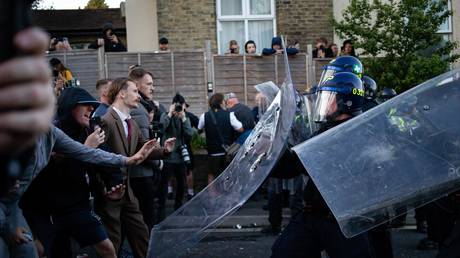
Violence broke out, with videos on social media showing the crowd pelting riot police with various objects. Chairs, cans, flares, bricks, bins, and an e-scooter were reportedly thrown at officers, forcing them to retreat from some areas.
🇬🇧 Ingleses partem para cima da polícia que protegeu um muçulmano assassino.
As cenas da morte do estudante inglês Henry Nowak, esfaqueado por um muçulmano, enfureceram a população de Southhampton. pic.twitter.com/OJbY1KEucK
Police responded by pushing back, including by hitting the protesters with riot shields. Eleven officers as well as a police dog were injured in the clashes, according to reports. Two people were arrested over the incidents, with police indicating that the number of arrests will increase as they review footage from the scene.
Prime Minister Keir Starmer denounced the violence at the protest as “disgraceful and completely unacceptable.” He also criticized Reform UK leader Nigel Farage for what he called an “unforgivable” response to Nowak’s murder. Farage had earlier called on the British public to respond to the incident with “pure, cold rage” and called it a proof of “two-tier culture” in the UK.
Hampshire police chief Alexis Boon told the BBC that “we, as a society, cannot accept… the violent scenes” seen at the protests. He accused some of the protesters of seeking to cause “disorder and trouble” while denying allegations of two-tier policing.
An Iranian strike on an American base in Kuwait triggered air defenses which hit the country’s international hub, the Islamic Revolutionary Guard Corp has claimed
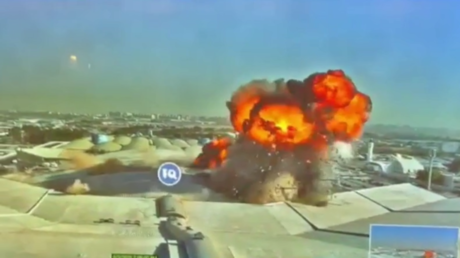
The damage to Kuwait International Airport’s Terminal 1 was likely caused by a US Patriot missile launched to defend a regional American military base from an Iranian attack, Tehran’s Islamic Revolutionary Guard Corps (IRGC) has claimed.
However, footage later released by Kuwait’s Directorate General of Civil Aviation appears to dispute this claim.
The incident took place during a US-Iranian missile exchange on Wednesday, triggered by an American attack on a tanker en route to Kharg Island and what CENTCOM called “self-defense strikes” on Qeshm Island.
“Our investigation and research into the Kuwaiti passenger terminal attack shows that the IRGC’s air force did not fire at this target, and the destruction of the Kuwaiti airport passenger terminal was caused by an error in the American Patriot systems, which landed on this terminal after failing to intercept Iranian missiles,” an IRGC spokesman announced on Wednesday.
At least one person died as a missile struck the terminal and other “vital facilities,” according to Kuwait's foreign ministry, including diplomatic missions. Several people were also injured in the attacks, it added, without specifying the number.
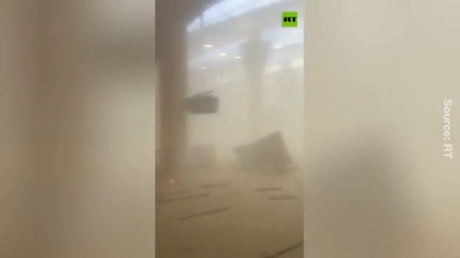
A video obtained by RT purports to show the aftermath of the strike. A short clip appears to show the inside of a terminal building filled with smoke and dust. Pieces of debris can be seen lying on the floor with several fires visible, including on the roof.
The Foreign Ministry did not comment on the extent of the damage inflicted on the airport. It condemned what it called Iran’s “aggressive attacks” and blamed it for “increased escalation” and “heightened tension” in the Middle East. It also warned that Kuwait “reserves its full and inherent right” to respond.
Iran’s IRGC stated that it launched strikes on US military bases in Kuwait and Bahrain, including the US Fifth Fleet HQ, in response to attacks on its telecom tower on Qeshm Island. The US Department of War claimed that all Iranian missiles failed to hit their targets.
The escalation comes almost 100 days into the conflict and nearly two months after the US and Iran reached a fragile ceasefire after over a month of active hostilities. Tehran halted negotiations with Washington earlier this week over the ongoing Israeli offensive in Lebanon.
Iran also restricted traffic through the Strait of Hormuz, a key energy chokepoint, after the US-Israeli attack in February, while Washington began a naval blockade of Iranian ports.
The fatal stabbing of the 18-year-old student has sparked outrage over race, policing, and knife crime in Britain
The murder of 18-year-old student Henry Nowak has sparked national outrage in the UK after police bodycam footage submitted to court showed officers arresting and handcuffing him as he lay dying, while his killer remained uncuffed after falsely claiming to be the victim of a racist attack.
The case has triggered protests, renewed accusations of two-tier policing, and an investigation into how British authorities handled the incident.
Who was Henry Nowak?
Nowak was an 18-year-old University of Southampton student from Chafford Hundred, east of London in Essex. He was walking back to his student accommodation on December 3, 2025, when he was attacked in Belmont Road.
Vickrum Singh Digwa is a 23-year-old Sikh from Southampton who had no previous convictions before the murder. He lived with his family on St. Denys Road in Southampton and had been helping his brother with Deliveroo deliveries on the night of the attack.
Prosecutors, however, have described him as a man with a “weapons obsession.” A British court heard that he had trained with weapons since the age of 12, slept in a bedroom surrounded by weapons, and had frequently searched for weapons on his phone.
Police reportedly also found a cache of more than 20 weapons at Digwa’s family home, including flick knives, knuckledusters, swords, a machete, an extendable baton, an axe, and an air rifle.
The murder
On December 3, 2025, while en route to his accommodation in Southampton, Nowak encountered Digwa in Belmont Road.
Shortly before the attack, Nowak recorded Digwa openly wearing a large blade hitched on his belt. In the video, Nowak can be heard saying: “You’re a bad man, say you’re a bad man,” to which Digwa replies: “I am a bad man.” The video cut off after that.
Digwa then stabbed Nowak five times, including wounds to the backs of his legs and a fatal wound to the heart. Police later found Nowak’s phone hidden in Digwa’s pocket.
The police response
Police were called to the scene by Digwa’s brother Gurpreet, who told officers that they had “just been attacked racially by some white person.” This was a lie.
When officers arrived, Digwa told police that Nowak had racially abused him, punched him, grabbed his hair, and torn off his turban. Police believed Digwa’s account and treated Nowak as the suspect.
Bodycam footage showed officers handcuffing Nowak, who was lying on the ground and repeatedly telling them he had been stabbed and could not breathe. One officer responded: “Don’t think you have, mate.”
Nowak was dragged across gravel, placed under arrest for assault, and left in handcuffs as he lost consciousness and drowned in his own blood.
Digwa, who still had the murder weapon on him, was not handcuffed.
The trial
Digwa was arrested after officers eventually realized Nowak had been stabbed, and was later charged with murder and possession of a bladed article in a public place. He denied murder and claimed he had acted in self-defense.
His defense argued that Digwa was attacked first and feared that Nowak could use his blade against him. Digwa also claimed he had not realized he had inflicted the fatal chest wound. Prosecutors rejected that account, describing the racism allegation as a “wicked lie” and claiming that Digwa attacked Nowak without provocation, filmed him while he was wounded, and did not immediately call police or an ambulance. The court also heard that Nowak’s phone, found hidden in Digwa’s pocket, contained no evidence of racial abuse.
Has Digwa been sentenced for the murder of Nowak?
The jury convicted Digwa on May 28 and on Monday, he was sentenced to life in prison with a minimum term of 21 years.
Digwa’s mother, Kiran Kaur, was also found guilty of assisting an offender after hiding the murder weapon and will be sentenced on July 17.
Less than a day after Digwa was sentenced, he appeared again at Southampton Magistrates’ Court alongside his father Moga Singh, 52, and brother Gurpreet, 27, on separate weapons charges linked to the cache found at the family home.
The religious weapon argument
Digwa attempted to justify carrying a blade by citing his Sikh faith. Practising Sikhs are legally allowed to carry a small ceremonial knife known as a kirpan.
🇬🇧 This is the knife that Vickrum Digwa used to kill Henry Nowak
He said he carried it as part of his Sikh faith
Sikhs in the UK are allowed to carry knives called Kirpans, but for regular Brits, if they carry a knife the same size, they face a prison sentence
The court heard, however, that Digwa was carrying both a small traditional kirpan concealed under his clothing and a much larger 21 cm knife worn openly on his belt, with which he stabbed Nowak five times.
Judge William Mousley KC rejected Digwa’s attempt to link the killing weapon to Sikh religious practice, telling him that he had brought shame upon his family, his community and his religion.
‘Inhumane and degrading’
The case has prompted outrage and condemnation across Britain, with much of the anger focused not only on the killing itself but on the way police treated Nowak after accepting Digwa’s false racism allegation.
Nowak’s father, Mark, said his son “did not die with dignity” and described the police treatment as “inhumane and degrading.”
“Henry told officers that he could not breathe nine times. He told them that he had been stabbed four times,” he said. He contrasted this with Digwa’s treatment, saying the killer was believed, initially left uncuffed, and later taken inside the family home, where police “even took him to the kitchen so he could choose his food.”
How have UK politicians reacted to Nowak’s death?
Reform UK leader Nigel Farage called on the British public to respond with “pure, cold rage.” In a statement on Tuesday, Farage described the case as “proof, if ever there was any, that we’re living in a two-tier culture in this country where the rights and privileges of white people matter less than those of ethnic minorities.”
Conservative leader Kemi Badenoch called the footage “awful,” said there had been “multiple failures,” and urged the government to treat the case as seriously as it had treated the killing of George Floyd in the US.
The fear of being called racist was greater than dealing with Henry Nowak’s murder.
UK Prime Minister Keir Starmer said the bodycam footage was “really harrowing” and that there were “serious questions for police,” including how accusations of racism shaped their decision-making. However, he rejected claims that Britain has a problem with “two-tier policing.”
Home Secretary Shabana Mahmood also warned MPs against politicizing the case, insisting it was about murder, not about Sikhism or race.
Public outrage and protests
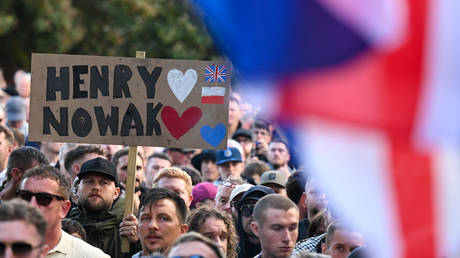
Public anger escalated after Digwa’s sentencing and the release of the police bodycam footage. Hundreds of protesters gathered in Southampton, outside the city’s police station and later near the Digwa family home chanting Nowak’s name and “I can’t breathe.”
Activist Tommy Robinson addressed the crowd outside the police station, telling demonstrators the case was “about race.” Violence erupted. Chairs, cans, flares, bricks, bins and an e-scooter were reportedly thrown at riot police, forcing officers to retreat in some areas. Eleven officers and a police dog were injured, according to reports.
Two people have been arrested so far while police said they are reviewing footage and could make additional arrests.
The Nowak case has renewed the broader debate over “two-tier policing” and whether the British authorities hesitate to act against minority suspects, even in cases of serious violence, while responding harshly to public anger over immigration and crime.
Some examples include the 2023 Nottingham murders, when a paranoid schizophrenic migrant killed three people after mental health workers released him out of fear of being perceived as racist, and the 2024 Southport murders, where police appeared to grant leniency and refused to disclose the identity of a Rwandan teenager who killed three young girls and injured ten others at a dance class.
The protests that erupted in response have been met with rapid arrests and prison sentences while the British government has faced accusations of cracking down on free speech and arresting citizens for any form of criticism of immigration, crime, and policing failures.
The latest incident has also tied into the UK’s long-running knife-crime crisis, with critics arguing that police and politicians prioritize policing speech, protests, and “hate incidents” while failing to get dangerous blades and violent offenders off the streets.
How is the British establishment reacting to public anger over Nowak’s death?
In parliament, Starmer commended Nowak’s family for showing “extraordinary dignity” after his life was “stolen in appalling circumstances.” He said there were “serious questions to answer,” but condemned the Southampton clashes as “disgraceful and completely unacceptable.”
“This is a time for serious work, not rage,” the prime minister said.
Policing minister Sarah Jones has also appealed for calm.
The National Police Chiefs’ Council is reviewing its anti-racism commitments after MPs raised concerns that the guidance could encourage officers to treat people differently based on ethnicity.
The Independent Office for Police Conduct is reviewing bodycam footage and trial material and is expected to report within three months.
Hampshire and Isle of Wight Constabulary has apologized for how Nowak was treated. One of the four officers involved has resigned, while the other three continue to serve and are being treated as witnesses.
The Attorney General’s Office is also considering requests to review Digwa’s sentence under the unduly lenient sentence scheme.

 Login
Login