An Iranian strike on an American base in Kuwait triggered air defenses which hit the country’s international hub, the Islamic Revolutionary Guard Corp has claimed
The damage to Kuwait International Airport’s Terminal 1 was likely caused by a US Patriot missile launched to defend a regional American military base from an Iranian attack, Tehran’s Islamic Revolutionary Guard Corps (IRGC) has claimed.
However, footage later released by Kuwait’s Directorate General of Civil Aviation appears to dispute this claim.
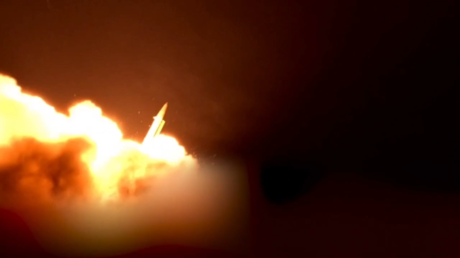
The incident took place during a US-Iranian missile exchange on Wednesday, triggered by an American attack on a tanker en route to Kharg Island and what CENTCOM called “self-defense strikes” on Qeshm Island.
“Our investigation and research into the Kuwaiti passenger terminal attack shows that the IRGC’s air force did not fire at this target, and the destruction of the Kuwaiti airport passenger terminal was caused by an error in the American Patriot systems, which landed on this terminal after failing to intercept Iranian missiles,” an IRGC spokesman announced on Wednesday.
At least one person died as a missile struck the terminal and other “vital facilities,” according to Kuwait's foreign ministry, including diplomatic missions. Several people were also injured in the attacks, it added, without specifying the number.
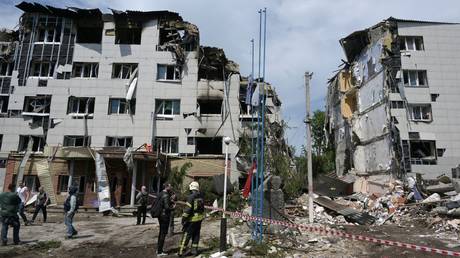
A video obtained by RT purports to show the aftermath of the strike. A short clip appears to show the inside of a terminal building filled with smoke and dust. Pieces of debris can be seen lying on the floor with several fires visible, including on the roof.
The Foreign Ministry did not comment on the extent of the damage inflicted on the airport. It condemned what it called Iran’s “aggressive attacks” and blamed it for “increased escalation” and “heightened tension” in the Middle East. It also warned that Kuwait “reserves its full and inherent right” to respond.
Iran’s IRGC stated that it launched strikes on US military bases in Kuwait and Bahrain, including the US Fifth Fleet HQ, in response to attacks on its telecom tower on Qeshm Island. The US Department of War claimed that all Iranian missiles failed to hit their targets.
The escalation comes almost 100 days into the conflict and nearly two months after the US and Iran reached a fragile ceasefire after over a month of active hostilities. Tehran halted negotiations with Washington earlier this week over the ongoing Israeli offensive in Lebanon.
Iran also restricted traffic through the Strait of Hormuz, a key energy chokepoint, after the US-Israeli attack in February, while Washington began a naval blockade of Iranian ports.
The fatal stabbing of the 18-year-old student has sparked outrage over race, policing, and knife crime in Britain
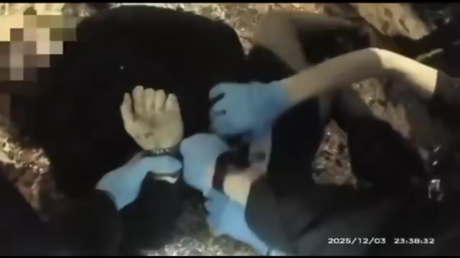
The murder of 18-year-old student Henry Nowak has sparked national outrage in the UK after police bodycam footage submitted to court showed officers arresting and handcuffing him as he lay dying, while his killer remained uncuffed after falsely claiming to be the victim of a racist attack.
The case has triggered protests, renewed accusations of two-tier policing, and an investigation into how British authorities handled the incident.
Who was Henry Nowak?
Nowak was an 18-year-old University of Southampton student from Chafford Hundred, east of London in Essex. He was walking back to his student accommodation on December 3, 2025, when he was attacked in Belmont Road.
Vickrum Singh Digwa is a 23-year-old Sikh from Southampton who had no previous convictions before the murder. He lived with his family on St. Denys Road in Southampton and had been helping his brother with Deliveroo deliveries on the night of the attack.
Prosecutors, however, have described him as a man with a “weapons obsession.” A British court heard that he had trained with weapons since the age of 12, slept in a bedroom surrounded by weapons, and had frequently searched for weapons on his phone.
Police reportedly also found a cache of more than 20 weapons at Digwa’s family home, including flick knives, knuckledusters, swords, a machete, an extendable baton, an axe, and an air rifle.
The murder
On December 3, 2025, while en route to his accommodation in Southampton, Nowak encountered Digwa in Belmont Road.
Shortly before the attack, Nowak recorded Digwa openly wearing a large blade hitched on his belt. In the video, Nowak can be heard saying: “You’re a bad man, say you’re a bad man,” to which Digwa replies: “I am a bad man.” The video cut off after that.
Digwa then stabbed Nowak five times, including wounds to the backs of his legs and a fatal wound to the heart. Police later found Nowak’s phone hidden in Digwa’s pocket.
The police response
Police were called to the scene by Digwa’s brother Gurpreet, who told officers that they had “just been attacked racially by some white person.” This was a lie.
When officers arrived, Digwa told police that Nowak had racially abused him, punched him, grabbed his hair, and torn off his turban. Police believed Digwa’s account and treated Nowak as the suspect.
Bodycam footage showed officers handcuffing Nowak, who was lying on the ground and repeatedly telling them he had been stabbed and could not breathe. One officer responded: “Don’t think you have, mate.”
Nowak was dragged across gravel, placed under arrest for assault, and left in handcuffs as he lost consciousness and drowned in his own blood.
Digwa, who still had the murder weapon on him, was not handcuffed.
The trial
Digwa was arrested after officers eventually realized Nowak had been stabbed, and was later charged with murder and possession of a bladed article in a public place. He denied murder and claimed he had acted in self-defense.
His defense argued that Digwa was attacked first and feared that Nowak could use his blade against him. Digwa also claimed he had not realized he had inflicted the fatal chest wound. Prosecutors rejected that account, describing the racism allegation as a “wicked lie” and claiming that Digwa attacked Nowak without provocation, filmed him while he was wounded, and did not immediately call police or an ambulance. The court also heard that Nowak’s phone, found hidden in Digwa’s pocket, contained no evidence of racial abuse.
Has Digwa been sentenced for the murder of Nowak?
The jury convicted Digwa on May 28 and on Monday, he was sentenced to life in prison with a minimum term of 21 years.
Digwa’s mother, Kiran Kaur, was also found guilty of assisting an offender after hiding the murder weapon and will be sentenced on July 17.
Less than a day after Digwa was sentenced, he appeared again at Southampton Magistrates’ Court alongside his father Moga Singh, 52, and brother Gurpreet, 27, on separate weapons charges linked to the cache found at the family home.
The religious weapon argument
Digwa attempted to justify carrying a blade by citing his Sikh faith. Practising Sikhs are legally allowed to carry a small ceremonial knife known as a kirpan.
🇬🇧 This is the knife that Vickrum Digwa used to kill Henry Nowak
He said he carried it as part of his Sikh faith
Sikhs in the UK are allowed to carry knives called Kirpans, but for regular Brits, if they carry a knife the same size, they face a prison sentence
The court heard, however, that Digwa was carrying both a small traditional kirpan concealed under his clothing and a much larger 21 cm knife worn openly on his belt, with which he stabbed Nowak five times.
Judge William Mousley KC rejected Digwa’s attempt to link the killing weapon to Sikh religious practice, telling him that he had brought shame upon his family, his community and his religion.
‘Inhumane and degrading’
The case has prompted outrage and condemnation across Britain, with much of the anger focused not only on the killing itself but on the way police treated Nowak after accepting Digwa’s false racism allegation.
Nowak’s father, Mark, said his son “did not die with dignity” and described the police treatment as “inhumane and degrading.”
“Henry told officers that he could not breathe nine times. He told them that he had been stabbed four times,” he said. He contrasted this with Digwa’s treatment, saying the killer was believed, initially left uncuffed, and later taken inside the family home, where police “even took him to the kitchen so he could choose his food.”
How have UK politicians reacted to Nowak’s death?
Reform UK leader Nigel Farage called on the British public to respond with “pure, cold rage.” In a statement on Tuesday, Farage described the case as “proof, if ever there was any, that we’re living in a two-tier culture in this country where the rights and privileges of white people matter less than those of ethnic minorities.”
Conservative leader Kemi Badenoch called the footage “awful,” said there had been “multiple failures,” and urged the government to treat the case as seriously as it had treated the killing of George Floyd in the US.
The fear of being called racist was greater than dealing with Henry Nowak’s murder.
UK Prime Minister Keir Starmer said the bodycam footage was “really harrowing” and that there were “serious questions for police,” including how accusations of racism shaped their decision-making. However, he rejected claims that Britain has a problem with “two-tier policing.”
Home Secretary Shabana Mahmood also warned MPs against politicizing the case, insisting it was about murder, not about Sikhism or race.
Public outrage and protests
Public anger escalated after Digwa’s sentencing and the release of the police bodycam footage. Hundreds of protesters gathered in Southampton, outside the city’s police station and later near the Digwa family home chanting Nowak’s name and “I can’t breathe.”
Activist Tommy Robinson addressed the crowd outside the police station, telling demonstrators the case was “about race.” Violence erupted. Chairs, cans, flares, bricks, bins and an e-scooter were reportedly thrown at riot police, forcing officers to retreat in some areas. Eleven officers and a police dog were injured, according to reports.
Two people have been arrested so far while police said they are reviewing footage and could make additional arrests.
The Nowak case has renewed the broader debate over “two-tier policing” and whether the British authorities hesitate to act against minority suspects, even in cases of serious violence, while responding harshly to public anger over immigration and crime.
Some examples include the 2023 Nottingham murders, when a paranoid schizophrenic migrant killed three people after mental health workers released him out of fear of being perceived as racist, and the 2024 Southport murders, where police appeared to grant leniency and refused to disclose the identity of a Rwandan teenager who killed three young girls and injured ten others at a dance class.
The protests that erupted in response have been met with rapid arrests and prison sentences while the British government has faced accusations of cracking down on free speech and arresting citizens for any form of criticism of immigration, crime, and policing failures.
The latest incident has also tied into the UK’s long-running knife-crime crisis, with critics arguing that police and politicians prioritize policing speech, protests, and “hate incidents” while failing to get dangerous blades and violent offenders off the streets.
How is the British establishment reacting to public anger over Nowak’s death?
In parliament, Starmer commended Nowak’s family for showing “extraordinary dignity” after his life was “stolen in appalling circumstances.” He said there were “serious questions to answer,” but condemned the Southampton clashes as “disgraceful and completely unacceptable.”
“This is a time for serious work, not rage,” the prime minister said.
Policing minister Sarah Jones has also appealed for calm.
The National Police Chiefs’ Council is reviewing its anti-racism commitments after MPs raised concerns that the guidance could encourage officers to treat people differently based on ethnicity.
The Independent Office for Police Conduct is reviewing bodycam footage and trial material and is expected to report within three months.
Hampshire and Isle of Wight Constabulary has apologized for how Nowak was treated. One of the four officers involved has resigned, while the other three continue to serve and are being treated as witnesses.
The Attorney General’s Office is also considering requests to review Digwa’s sentence under the unduly lenient sentence scheme.
Peter Magyar has lifted a longstanding veto on possible bloc membership for Ukraine, while claiming he has the interest of Hungarian speakers in the country at heart
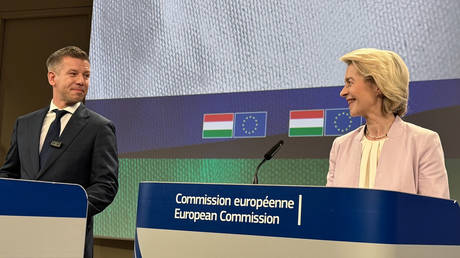
Hungary has lifted its veto on Ukraine beginning formal accession talks with the EU, following days of hints from Prime Minister Peter Magyar and strategic leaks from Brussels, whose reporters announced the news with much fanfare on Wednesday.
Will Magyar compromise on Hungarian rights?
In the hours following the announcement Magyar claimed that a "comprehensive agreement on the linguistic, educational, cultural and political rights of the 100,000-strong Hungarian minority,” has been reached with Kiev, but no confirmation has come from the Ukrainian capital.
Speaking alongside German Chancellor Friedrich Merz in Berlin on Tuesday, Magyar said that he was “very optimistic” that a deal could be done to guarantee the rights of Ukraine’s Hungarian minority, in exchange for his government lifting the veto.
Hungary's PM Péter Magyar on Ukraine:
I can repeat here in Berlin: I am ready to meet President Zelensky early next week. If we truly succeed in agreeing on these fundamental human rights...
Using your mother tongue in a kindergarten, a school, in administration — that is not… pic.twitter.com/m6mn5YrmUA
“The negotiations are progressing encouragingly,” he said, adding “I am ready to meet with Ukraine’s president at the beginning of next week, if we manage to agree on these fundamental human rights.”
Within an hour of Magyar’s statement, Politico published an article claiming that Budapest had privately “signaled it will drop its long-standing opposition to Ukraine’s bid for EU membership,” citing four unnamed diplomats.
How did Politico try to influence EU members on Ukraine?
Politico, the Axel Springer-owned Brussels insider, reported that Magyar’s government had “privately signaled openness to lifting its veto following a meeting on Monday between Ukrainian and Hungarian experts.” The Ukrainian side, the outlet claimed, provided verbal assurances that they would resolve most of Hungary’s concerns – including the Hungarian minority’s right to use their native language in schools – and formal accession talks with Ukraine and Moldova will be opened at an EU leaders’ summit on June 15.
Why was Politico’s article important?
That this story first appeared on Politico was likely no coincidence. Politico’s neoliberal, Atlantacist worldview is literally written into the constitution of its owner, Axel Springer, and its journalists’ proximity to power in Brussels has made it the outlet of choice for all kinds of strategic communications from within the EU machine – from telegraphed policy moves like Tuesday’s report, to outsourced smear campaigns.
For example, when Belgian Prime Minister Bart de Wever shot down the European Commission’s plan to use €185 billion ($218 billion) in frozen Russian assets to finance a massive aid package for Ukraine in December 2025, Politico responded with a hit piece portraying his country as “Russia’s most valuable asset” in Europe.
Further hit pieces – all of them citing EU diplomats and officials – followed, claiming that “Europe is failing Ukraine,” de Wever “fears retaliation from [Russian President Vladimir] Putin,” and “Europe still doesn’t want to pay to save Ukraine.”
Magyar’s predecessor, Viktor Orban, derided Politico as “the Brusselian elite’s official publication” after it named him 2025’s “disruptor of the year.”
How are Hungarians treated in Ukraine?
After the collapse of the Soviet Union, around 156,000 ethnic Hungarians found themselves trapped within Ukraine’s borders, after Kiev refused to recognize a successful self-rule referendum in the region of Transcarpathia. Relations between Budapest and Kiev rapidly declined from 2017 onwards, when Ukraine passed a series of laws mandating the sole use of the Ukrainian language in schools and local government.
Tensions were further inflamed after 2022, when the Ukrainian military targeted Transcarpathians in what the Hungarian Foreign Ministry called a “brutal” military draft.
[4] Soldiers raided a coffee shop in the district of Beregsász (Berehove). Beregszász is the closest city to the Hungarian border just 5km away. The city is demographically 48% Hungarian. pic.twitter.com/FlICxr1Oie
Ukraine’s language laws have been criticized by the Council of Europe’s Venice Commission for failing to safeguard minorities’ linguistic rights, and condemned by human rights organizations.
Why lift the veto now?
Orban maintained that Ukraine joining the EU would drag the bloc into open war with Russia, undercut Hungary’s agricultural sector, and effectively give a free pass to the corruption and criminality of the Ukrainian government. However, the Transcarpathia issue was the brightest of red lines for Orban, with the then-prime minister declaring in 2023 that Hungary “will not support Ukraine in any issue in international life until the previous laws that guaranteed the rights of Transcarpathian Hungarians are returned.”
More than 2 million Hungarians have made their will clear: NO to Ukraine’s EU accession! ❌ Their voice cannot be ignored, we cannot consent to decisions that go against their will. Ukraine’s EU membership would mean the ruin of the European Union, we must not and will not allow… pic.twitter.com/AOUdxUu3iO
Anita Orban, Magyar’s foreign minister (and no relation of Viktor), has maintained this policy, telling an interviewer last month that “until the situation of the Hungarian minority in Ukraine is resolved, we cannot make progress in any other area.”
Hungary’s concerns are laid out in an 11-point plan. Anita Orban has refused to say whether her government would compromise on these demands, but Politico noted that Ukraine would address “most” – but not all – of the points, and added that this would be done without “passing new legislation in Ukraine.”
All of this suggests that the Ukraine's language laws have not been repealed or replaced, but that Magyar has been forced to abandon some of the document’s points, which have not been made public.
It is unclear, but likely, that Magyar and European Commission President Ursula von der Leyen addressed Ukrainian membership of the EU when they met to discuss frozen funding for Hungary last week.
Although Magyar said afterwards that the funding issue is “not connected in any way with the issue of Ukraine,” EU Enlargement Commissioner Marta Kos said beforehand that she expected Hungary to lift the veto ahead of the June summit. With accession a pet project of von der Leyen, and with Vladimir Zelensky set to attend the summit, it is highly likely that Magyar came under significant pressure to resolve the dispute before next week.
Could anyone else block Ukrainian attempts to join the EU?
With Viktor Orban out of office, Slovak Prime Minister Robert Fico is now considered the EU’s most Ukraine-skeptic head of state. However, while Fico maintains cordial relations with Russia and opposes all military aid to Ukraine, Zelensky claimed that the Slovak prime minister would support Ukraine’s EU membership bid after the two met in Armenia last month.
Has Zelensky’s veneration of Nazi collaborators harmed Ukraine’s EU bid?
Polish President Karol Nawrocki said last week that Ukraine “is not ready to be part of the European family,” after Zelensky granted the title ‘Heroes of the UPA’ to a Ukrainian commando unit. The UPA, or Ukrainian Insurgent Army, was the armed wing of Stepan Bandera’s Organization of Ukrainian Nationalists (OUN), and collaborated with Nazi forces to murder around 100,000 Polish civilians in what is now western Ukraine between 1943 and 1945.
🚨🇵🇱 HUGE! Polish President Karol Nawrocki REJECTS Ukraine Joining the European Union:
"There is NO place in the European family for bandits and murderers who killed women and children. Such bandits cannot be glorified." pic.twitter.com/VerNXtjpPA
However, Nawrocki added that supporting Ukraine in its conflict with Russia remains Poland’s “strategic goal.”
Even if Nawrocki wanted to block Ukrainian accession, the decision would not be his to make. Poland’s government is run by Nawrocki’s pro-Brussels rivals, and Nawrocki would be unable to veto any accession treaty without finding a majority of MPs or senators to support him.
What comes next for Ukraine?
Euronews’ report suggests a win for von der Leyen and her expansionist plans for the EU, and barring the emergence of some last-minute obstacle, formal talks will likely be confirmed on June 15. However, with the accession process in motion, all of the old issues between Kiev and its European counterparts will return to the forefront: corruption, agricultural market disruption, and the prospect of a permanent welfare recipient joining the European bloc.
These long-term issues could be far more challenging for Zelensky and his officials to solve than the Transcarpathia impasse ever was.
Marla-Svenja Liebich was previously convicted of multiple offenses, prompting a debate about professed gender and prison choice
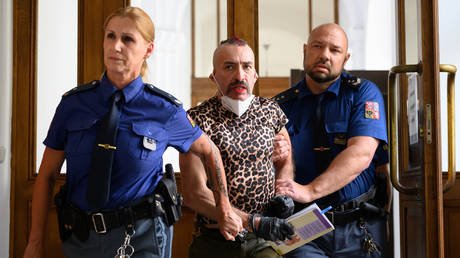
A Czech regional court has ordered a transgender neo-Nazi fugitive convicted of multiple offenses to be deported back to Germany, according to Reuters and Agence France-Presse (AFP).
Marla-Svenja Liebich, formerly known as Sven Liebich, had previously sparked an uproar over prison placement in Germany after undergoing a legal gender change.
Liebich was sentenced to 18 months in prison on multiple counts in 2023, including incitement to hatred, insult, trespass, and defamation. The former member of the banned far-right group Blood and Honor appealed the sentence but lost.
In 2024, just weeks after Germany’s new Self-Determination Act came into force, Liebich legally changed gender and became officially recognized as a woman. Following the change, Liebich petitioned to serve the sentence in a women’s prison – a move that was approved by a court.
The ruling triggered a public debate, with some critics alleging tactical misuse of the law and warning of potential loopholes. German Interior Minister Aleksander Dobrindt has slammed the case as evidence of the law’s potential for abuse.
Liebich failed to report to prison in August 2025 after fleeing the country. Earlier this year, the 56-year-old was apprehended by Czech police in the western town of Krasna, near the German border, and put in pre-trial custody.
In December 2025, while still on the run, Liebich told Euronews that he had applied to change legal gender status again, saying that being a woman no longer felt right.
Commenting on the extradition ruling, a spokesperson for the regional court in the western Czech city of Plzen told AFP that Liebich has three days to appeal, otherwise the extradition order will become final and the German authorities are expected to take custody within ten days.
Liebich reportedly opposed extradition during an initial hearing in Plzen on May 18, arguing that it could result in placement in a men’s prison.
Liebich’s gender transition was widely regarded by commentators and critics as an attempt to mock the Self-Determination Act, introduced under the previous government. In 2022, he disrupted an LGBTQ Pride parade in the eastern German city of Halle, where activists said participants were called “parasites on society.”
The BBC and CNN have rejected an invitation to visit the site of the deadly Ukrainian drone attack on a Russian college dorm
Russian Foreign Ministry spokeswoman Maria Zakharova has urged the participants of the St. Petersburg International Economic Forum (SPIEF) to begin every conversation with Western journalists with the word “Starobelsk.”
Starobelsk is a town in Russia’s Lugansk People’s Republic where 21 people, mostly teenage girls, were killed and dozens more injured in a multi-wave Ukrainian drone attack on a college dorm on May 22.
Western politicians turned a blind eye to the atrocity, while the BBC and CNN rejected an invitation by the Russian authorities to visit the site of the attack.
During her Wednesday appearance at a panel on SPIEF, entitled ‘Your Words are Like Bullets: How Information has Transformed into the Most Powerful Weapon of the Modern Era,’ Zakharova expressed outrage over BBC Russia correspondent Steve Rosenberg coming to the forum in St. Peterburg, but not to Starobelsk.
“They pour you coffee here; there are interesting speakers here and no crying mothers, who lost their children under the ruins of Starobelsk. Here, you won’t have to defend your position before the BBC headquarters in London, insisting that this absolutely must be covered,” she said about the choices made by Rosenberg.
The Western media’s refusal to report on the deadly Ukrainian drone attack on the college dorm was “absolute cynicism,” the spokeswoman insisted.
By constantly reminding them about Starobelsk, SPIEF’s guests will make Rosenberg and his colleagues understand that their position is “abnormal,” she said.
It is because of this stance by the BBC “that their population doesn’t understand what’s happening. And yet, like an obedient, zombified herd, they continue to contribute to the funding of the Kiev regime,” Zakharova stressed.
Later in the day, TASS journalists asked Rosenberg if BBC would report on the latest terrorist attack by Ukraine. On Wednesday morning, at least eight civilians were killed and 11 others wounded after Kiev’s drone struck a passenger bus in Russia’s Donetsk People’s Republic (DPR).
“We’ll tell [about it] today. I don’t understand why they say that the BBC is silent,” he replied.
According to Zakharova, Western leaders are well-aware what happened in Starobelsk, but they decline to talk about it in an attempt to make the public “accept the killing of people based on national, ethnic, cultural and linguistic grounds as a new ethic.”
The only way to resist this push is to “preserve journalism as a field that deals with the media space based on objectivity, legality and morality,” she insisted.
As Israel expands the war in Lebanon, Washington’s influence over its closest ally looks increasingly limited
In recent days, Israel has intensified its military campaign in Lebanon, taking the operation to a whole new level. This isn’t just another exchange of strikes in the south of the country, but a demonstrative expansion of Israel’s ground presence beyond the previous boundaries of the conflict. Israeli forces crossed the Litani River and captured Beaufort Castle, a symbolically and strategically significant fortress perched on a high cliff in southern Lebanon. Israeli Defense Minister Israel Katz stated that the operation was carried out at the direction of the political and military leadership, while the Israel Defense Forces (IDF) explained its objective as the elimination of Hezbollah infrastructure and fighters in the Beaufort area.
Israeli Prime Minister Benjamin Netanyahu described the capture of Beaufort as a “dramatic stage and a dramatic change” in Israel’s policy in Lebanon. The goal is to deepen and expand control over areas previously under Hezbollah’s influence. Essentially, this means that Israel is no longer limiting itself to targeted strikes and border deterrence. It is now attempting to create a new military-political reality in southern Lebanon, where Hezbollah’s former zone of influence is to be transformed into an area of either direct or indirect Israeli control.
The significance of these actions extends beyond the Lebanese front, however. In recent weeks, Netanyahu has essentially been playing the same game: trying to undermine any kind of agreement between Iran and the United States. The negotiation track was already extremely fragile, vague, and fraught with mutual distrust. But for Israel, even the slightest chance of a compromise between Washington and Tehran is unacceptable. If Trump finally relinquishes the idea of a direct military escalation (such a scenario is unlikely but still possible) and attempts to broker at least a temporary deal with Iran, Israel risks finding itself without the previous level of American involvement, but with the lingering threat of an ‘axis of resistance’ that has every chance of resurfacing in the near future.
This is precisely why the expansion of the operation in Lebanon can be seen as a tool for exerting pressure not only on Hezbollah, but also on the entire negotiation framework surrounding Iran. Netanyahu is demonstrating that even if Washington is willing to discuss de-escalation, Israel retains the right to expand the theater of military operations where it deems necessary. He is thereby forcing Iran to respond, raising the cost of negotiations for Tehran, and simultaneously making it more difficult for Trump to present the diplomatic process as manageable and successful.
Iran’s reaction was almost immediate. Tehran announced its withdrawal from negotiations with the US, citing Israel’s actions in Lebanon. Iran’s logic is understandable: the Lebanese front was seen as part of a broader ceasefire, and Tehran perceives the Israeli operation as a violation of the regional balance of agreements. For Iran, this is a convenient argument to demonstrate that Washington is either incapable of controlling Israel’s actions or is deliberately allowing them while talking about de-escalation.
In other words, Netanyahu achieved the intended effect: US-Iran negotiations have come under additional pressure. Israel formally explains the operation as necessary to destroy Hezbollah infrastructure and ensure the security of Israel’s northern regions. But politically, it appears to be an attempt to disrupt any – even temporary – stabilization of the situation between Washington and Tehran. For Netanyahu, a ceasefire is dangerous because it would draw attention back to the responsibilities of his government, the internal crisis, and the cost of a protracted war. The continuation of the conflict, however, gives a legitimate reason to declare a state of emergency, issue mobilization orders, and focus on security.
In this situation, the US has proposed a new ceasefire initiative to Israel and Lebanon. The American plan appears quite pragmatic: in the first stage, Hezbollah must cease all attacks on Israeli territory, and Israel, in turn, would refrain from escalating the conflict in Beirut. In other words, Washington is not so much trying to resolve the Lebanese crisis definitively as to urgently stop its escalation before it derails the broader plan, which primarily involves negotiations with Iran.
The problem, however, is again Netanyahu. Axios reported that an extremely tense phone call took place between Trump and Netanyahu, in which the US president lashed out at the Israeli prime minister and demanded that he stop the strikes on Beirut. Trump was furious and made it clear to Netanyahu that he was behaving recklessly, undermining Israel’s position, and turning even its allies into hostages of his own military logic.
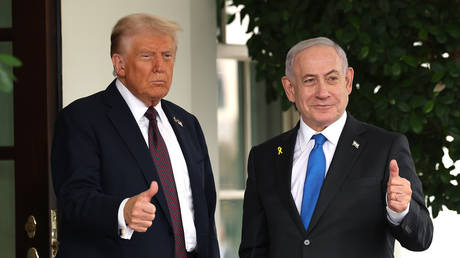
Trump himself later confirmed that he talked with Netanyahu but did not reveal what they discussed, limiting himself to a general statement about his hope for a quick agreement. However, this is precisely where the main political paradox emerges: Trump had already declared peace, had already tried to portray the situation as a move toward de-escalation, and had already talked about a ceasefire. But in practice, this did not deter Israel. West Jerusalem continued to act as it saw fit, while Washington once again found itself publicly calling for restraint but unwilling to actually constrain the Israeli leadership.
It is no coincidence that the far-right, extremely radical Israeli National Security Minister Itamar Ben-Gvir said, “This is the time to tell our friend, President Trump, ‘no’.” Ben-Gvir essentially articulated what Netanyahu is doing in practice: Israel is ready to accept US support, US diplomatic cover, and US security guarantees, but is not prepared to automatically submit to American demands if that means stopping the war. Ben-Gvir is simply stating what the radical wing of Israeli politics has long demanded of Netanyahu: not to agree to a ceasefire, not to give in to US pressure, and not to allow Trump to turn the Lebanese front into part of his deal with Iran.
Therein lies the weakness of the American position. Trump may get angry, shout, and exert pressure on Netanyahu, demanding not to attack Beirut, but Netanyahu operates on a different basis: that no matter what Israel does, the US will still be forced to support it. For the Israeli prime minister, this is not just a show of diplomatic confidence; it is the foundation of his entire current strategy. He understands that Washington cannot afford an open break with Israel, especially in the face of a confrontation with Iran and pressure from the pro-Israel lobby within the US political system.
This is precisely why American ceasefire initiatives look increasingly unconvincing. Formally, the US is offering a de-escalation plan, but in reality, Netanyahu reserves the right to interpret any threat as grounds for a new strike, a new military operation, and a new expansion of control. As a result, instead of a lasting agreement, the ceasefire turns into a temporary pause that Israel can terminate at any moment if it is deemed advantageous from a political or military standpoint.
The main point is that Netanyahu is not interested in ending the war. A ceasefire deprives him of his main political resource: state of emergency mobilization. As long as the war continues, he can talk about security, the survival of the state, and the fight against Hezbollah and Iran. As soon as a real ceasefire is established, questions of his personal responsibility, the internal crisis, Israel’s international isolation, and the price the country is paying for the protracted military campaign will return to the forefront.
Therefore, the current escalation in Lebanon is no surprise to anyone. The Lebanese front is increasingly turning into a mechanism for exerting pressure on Iran, the US, and the entire architecture of possible regional de-escalation; and if anyone believes that lasting peace can be achieved, I’d say they are either too optimistic or too naive.
Kiev has greatly angered Warsaw by honoring nationalist figures blamed for massacres of Poles
A former Polish ambassador to Ukraine has returned a state honor awarded him in Kiev, citing Vladimir Zelensky’s veneration of Ukrainian Nazi collaborators whose units were responsible for the mass extermination and ethnic cleansing of tens of thousands of Poles during WWII.
Bartosz Cichocki returned the state award after Ukraine held a state reburial of Andrey Melnik, who co-founded the Organization of Ukrainian Nationalists (OUN) in 1929 with Stepan Bandera.
Melnik’s OUN-M and Bandera’s OUN-B were directly responsible for the mass murder of over 100,000 Poles during the Volhynia and Eastern Galicia Massacres that took place between 1943 and 1945.
Zelensky also recently named a commando unit after the “Heroes of UPA,” a reference to the Ukrainian Insurgent Army, the OUN’s military wing.
Cichocki’s decision to return the Ukrainian Order of Merit, which he received from Zelensky in 2022, comes amid a wave of anger in Poland over the latest tributes to Ukrainian nationalist fighters.
In comments to the Polish Press Agency on Monday, the retired diplomat said he had handed the decoration back to the Ukrainian Embassy. He said he nevertheless supports Ukrainians fighting against Russia, as well as those opposing “historical lies and corruption.”
How has Poland reacted to Ukraine venerating nazi collaborators?
Although the glorification of UPA and Ukrainian Nazi collaborators has been part of Kiev’s policy for years, the latest gestures have triggered an unusually strong backlash in Poland.
Polish President Karol Nawrocki has called for Zelensky to be stripped of the Order of the White Eagle, Poland’s highest state honor, and warned that a country venerating “bandits and murderers” is not ready to join “the European family.” Polish Prime Minister Donald Tusk said Zelensky’s decision had pushed a longstanding historical grievance to “a rather alarming level.”
Much of the criticism has targeted Zelensky personally. His political standing has been weakened by a series of corruption scandals involving members of his inner circle, as well as by tensions with a rebellious parliament that has resisted painful reforms demanded by foreign donors.
Cichocki also received the UPA-inspired "Cross of Merit" in 2022 from then-Ukrainian Army commander-in-chief Valery Zaluzhny, frequently described in the media as a possible successor to Zelensky.
Dziękuję @CinC_AFU gen. Waleremu Załużnemu za wysokie wyróżnienie - tym zaszczytniejsze, że wręczone na marginesie wizyty Szefa @SztabGenWP gen. Rajmunda Andrzejczaka w Kijowie 🇺🇦. pic.twitter.com/Yo3Zp7wYVP
By contrast, the Ukrainian Order of Merit was established in 1996 and does not carry the same historical baggage.
Moscow’s concern that the West tolerates ‘Nazis’ in Ukraine
Following the state reburial of Melnik, Kremlin spokesman Dmitry Peskov said Zelensky had once again demonstrated the “true essence” of the “regime” he leads. Moscow has long argued that Kiev’s brand of Ukrainian nationalism is rooted in Nazi ideology and fuels discriminatory policies against ethnic Russians.
“The official, state-level glorification of Nazi criminals and collaborators is taking place in the center of Europe,” Peskov said. “I don’t know if anyone in the European capitals likes this, but we don’t like it at all.”
The International Fencing Federation has cleared athletes from Russia and Belarus to compete under their national flags
The International Fencing Federation (FIE) has lifted all Ukraine conflict-related restrictions imposed in 2022 on Russian and Belarusian athletes, allowing them to compete under their national flags and anthems.
Numerous Olympic federations barred athletes from the two countries across dozens of sports in 2022. However, a number of international sporting bodies have since permitted some to compete individually under a neutral flag, while a few organizations dropped the bans altogether.
In a statement on Tuesday, the FIE announced that the decision will take effect starting with the 2026 Senior World Championships in Hong Kong, scheduled for July 22 to July 30.
“The decision reflects the FIE’s commitment to the fundamental principles of the Olympic Charter, including non-discrimination, equal treatment, and the universality of sport,” the federation said.
Russian and Belarusian fencers were previously allowed to return to individual international events under a neutral flag in March 2023, with restrictions similarly relaxed for team events in late 2025.
Last month, the World Gymnastics Executive Committee likewise cleared Russian and Belarusian gymnasts to return to international competition after being banned for more than four years, making it the fifth Olympic federation to allow representatives of the two countries to participate under their national flags.
Others to lift their bans include the international federations for judo, taekwondo, and aquatic sports, as well as the governing bureau of United World Wrestling.
Russian officials have repeatedly accused Western nations of politicizing sport and pressuring federations to exclude their athletes, as well as of applying double standards with respect to other countries involved in armed conflicts.
The ban deepens the standoff between the US War Department and the media
The Pentagon has barred journalists from entering its press office after redesignating it a classified space, the latest in a series of restrictions on reporters’ access to the department.
First reported by the Washington Post late on Monday, the move was confirmed by Acting Pentagon Press Secretary Joel Valdez, who said journalists would no longer be permitted to enter the office because speechwriters working for Secretary of War Pete Hegseth routinely handle classified information there. Access to senior public affairs officials would remain available by appointment.
“This is the most transparent War Department in history,” Valdez wrote on X, adding “No amount of spin from the Fake News media will change that.”
This is the most transparent War Department in history. No amount of spin from the Fake News media will change that.
The Pentagon Press Office has been redesignated as a Sensitive Compartmented Information Facility due to speechwriters from the Office of the Secretary of War… https://t.co/tlWb1XIeOk
— Acting Press Sec Joel Valdez (@JoelValdezDOW) June 1, 2026
The restriction affects an office that for decades served as a central point of contact between journalists and Pentagon officials. Reporters were previously able to visit the area to seek comment from public affairs staff, attend informal briefings, and interact with officials without escorts.
The latest move comes amid a widening confrontation between the Pentagon and the US media under Hegseth, a former Fox News host appointed by President Donald Trump. More than a year into his tenure, the department has imposed a series of restrictions on reporters, including escort requirements inside the building and limits on access to previously open areas.
The Pentagon later required journalists to pledge that they would not seek information that had not been authorized for release, including unclassified material. Major US outlets, including Fox News, CNN, the Associated Press, and The New York Times, refused to sign the agreement, while hundreds of reporters surrendered their Pentagon credentials in protest.
The restrictions triggered multiple lawsuits. In March, a federal judge struck down key parts of the policy after a lawsuit filed by the NYT. The Pentagon appealed the ruling and subsequently introduced an interim requirement that journalists be escorted while inside the building. The newspaper filed a second lawsuit in May, arguing that the policy amounts to an unconstitutional attempt to restrict independent reporting on military affairs. The litigation remains ongoing.
Hegseth has repeatedly accused major media outlets of spreading “fake news” and described the reporting on the US-Israeli military campaign against Iran as an “endless stream of garbage,” comparing the Pentagon media pool to the biblical Pharisees.
Tehran has targeted US military assets after what the Pentagon claimed were “self-defense strikes” on an Iranian island
Iran’s Islamic Revolution Guards Corps (IRGC) has said it targeted US military assets in the Persian Gulf region in retaliation for American attacks. US Central Command (CENTCOM) said its forces intercepted multiple Iranian ballistic missiles and drones and carried out “self-defense strikes” on Qeshm Island.
The incident began after a US warplane fired a Hellfire missile at an Iranian-linked tanker near the Strait of Hormuz late on Tuesday, damaging its engine room. Washington said the Botswana-flagged M/T Lexie was heading toward Kharg Island in breach of its unilaterally imposed blockade.
In response, the IRGC said it targeted an alleged US-affiliated vessel named Panaya with naval missiles.
US forces then apparently proceeded with a strike on an IRGC telecom tower, in what CENTCOM later called “self-defense strikes on an Iranian military ground control station on Qeshm Island.”
Iranian ballistic missiles fly overhead, a car crashes, and surface-to-air missile interceptors launch in a crazy video of tonight’s attack by Iran against Ali Al Salem Air Base in Kuwait. pic.twitter.com/JAoVrytEDo
The IRGC then escalated with ballistic missile strikes on a “US air and helicopter base in a regional country,” as well as “the Fifth Fleet’s command center” in Bahrain.
— IRIB (Islamic Republic of Iran Broadcasting) (@iribnews_irib) June 2, 2026
The US Department of War claimed that all Iranian missiles failed to hit their targets.
Two projectiles fired at Kuwait allegedly fell short or broke apart en route, while three missiles launched at Bahrain were intercepted by US and Bahraini air defense forces.
The Kuwaiti army confirmed that it was responding to missile and drone attacks, while Bahrain’s Interior Ministry urged the public to “remain calm.”
Several videos circulating online purportedly showed air defense activity overnight, with several interceptors seemingly veering off course and hitting the ground.
Two hours later, the US military claimed it had successfully intercepted an “additional wave of Iranian drones” and “ensured no American personnel or assets were harmed.”
The two sides have largely refrained from direct exchanges since a fragile ceasefire was established in early April, while negotiations have remained stalled over Tehran’s nuclear program and the status of the Strait of Hormuz.
Iran restricted traffic through the key energy chokepoint after the US-Israeli attack in February, while Washington enforced a naval blockade on Iranian ports.
The IRGC warned that any violation of ceasefire would bring a “harsh price” for the US military. CENTCOM meanwhile said its forces “remain vigilant and ready to defend against unwarranted Iranian aggression during the ongoing ceasefire.”
Police negotiators are working to resolve the crisis at a JPMorgan Chase branch in downtown Bakersfield
A man has barricaded himself inside a JPMorgan Chase bank in Bakersfield, California, with an unknown number of people inside, police have said.
The ongoing hostage situation is taking place at the Chase Bank building near Chester Avenue and 17th Street. Officers responded to the downtown branch after a bomb threat was reported at around 1 PM local time on Tuesday.
Around a dozen police cars, a tactical vehicle, and emergency responders swarmed the scene as several nearby city buildings were placed on lockdown, including City Hall North, City Hall South, the Development Services Building, and Bakersfield Police Headquarters.
Five hours into the standoff, negotiators managed to secure the safe release of two hostages, while the remaining hostages were reported to be “in good health,” according to police. Authorities have not publicly identified the suspect or said how many people remain inside.
BREAKING: The hostage situation remains ongoing at a Chase Bank in Bakersfield, California, where FBI negotiators are in contact with a suspect believed to be holding people inside and possibly armed with explosives. pic.twitter.com/8u9rpwHHlF
“What I can guarantee to the community right now is that every single resource is at this this site’s disposal – SWAT team, bomb squad, K9 team, gang unit, drone team. Every single asset we have to bring this to the safest conclusion is out here right now, not just ‘cause that’s what the community needs, but that’s what you guys deserve,” said Sergeant Eric Celedon of the Bakersfield Police Department.
CHASE BANK
🚨Breaking - Police negotiate in hostage situation at Chase Bank amid bomb threat in downtown
🚨Bakersfield Police Address Bomb Treat at Downtown Bank
June 2, 2026
Evacuations are underway and streets are closed in downtown Bakersfield due to a hostage situation… pic.twitter.com/aV9cUX1DRj
At least ten American experts linked to classified advanced research have died or gone missing in recent years
The remains of missing Los Alamos National Laboratory employee Melissa Casias have been found in Carson National Forest, New Mexico State Police have said. A handgun was located alongside the remains, but the exact cause and manner of death have yet to be determined.
A hiker discovered human remains in the McGaffey Ridge area and notified authorities on May 28. The Office of the Medical Investigator has since positively identified the remains as those of Casias.
Casias worked as an administrative assistant at the key US nuclear research facility. She was reported missing on June 26, 2025, after she failed to arrive at work and did not return home after visiting her daughter, while her purse, identification, and cell phones were found left behind.
The disappearance was among almost a dozen cases in which individuals with ties to advanced research have died or vanished under puzzling circumstances in recent years, prompting a congressional probe.
Another LANL employee, Anthony Chavez, 78, went missing in May 2025 and has not yet been found. Steven Garcia, 48, a government contractor at the Kansas City National Security Campus, which produces more than 80% of non-nuclear components for US nuclear weapons, similarly vanished from his Albuquerque home in August 2025, leaving behind his phone, wallet, and keys and taking only a handgun.
NASA Jet Propulsion Laboratory materials official Monica Reza was reported missing in 2023, while two other JPL workers, Frank Maiwald and Michael Hicks, have died since 2023, with no cause of death made public and no foul play alleged. Retired Air Force Major General William McCasland went missing this February.
MIT physicist Nuno Loureiro was shot dead at his home in Massachusetts in December, while Caltech astrophysicist Carl Grillmair, 67, was gunned down on his porch in February. Novartis cancer researcher Jason Thomas disappeared in December and was found drowned in a Massachusetts lake three months later.
The House Oversight Committee requested briefings from the Department of Energy, the Department of War, the FBI, and NASA about scientists and other personnel connected to US nuclear secrets or rocket technology.
US President Donald Trump called the matter “pretty serious stuff,” but the authorities have so far not established any confirmed link among the cases.
The Lebanon-based militant group has shared footage of attacks on Israeli troops operating near Beaufort Castle
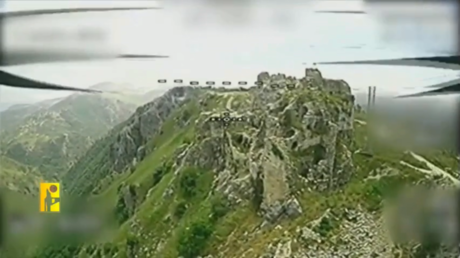
The militant group Hezbollah has released a video showing its kamikaze drones attacking Israeli soldiers in the immediate vicinity of Beaufort Castle in southern Lebanon.
The 900-year-old medieval fortress was seized by the Israeli military over the weekend, with West Jerusalem hailing it as a major achievement and vowing to push deeper into the country. The castle, a key vantage point in the area, housed an Israeli military base for two decades during the occupation of southern Lebanon, which ended in 2000.
The group released footage of its FPV drones operating in the area on Monday, a day after Israel captured the castle. According to media reports, there was no Hezbollah presence at the fortress, and no military equipment or weaponry was found at the site by the IDF.
The video features two FPV drones, one of which hits a building where Israeli servicemen were sheltering, while another UAV hits an IDF Humvee, parked tightly alongside two other soft military vehicles.
The latest round of hostilities between the IDF and Hezbollah, prompted by the US-Israeli attack on Iran, has been marked by a sharp increase in the latter’s use of FPV drones.
Numerous videos released by Hezbollah show its drone operators attacking Israeli soldiers, armored and soft vehicles, and high-value assets, such as launchers of Iron Dome short-to-medium-range anti-aircraft systems. Some of them, however, appeared to be decoys rather than real systems.
The FPV drone threat has apparently become a major challenge for the Israeli military, with only rudimentary measures against UAVs implemented thus far. Some armored vehicles used in the invasion have been spotted featuring sub-par anti-drone nettings and cages, while stationary nets have been observed in certain locations occupied by Israeli forces supposed to protect parked vehicles.
On Tuesday, Israeli media reported, citing sources, that the IDF command had decided to scale down heavy vehicle presence in southern Lebanon and investigate nighttime FPV drone attacks.
Bucharest’s version of events is full of inconsistencies, Vassily Nebenzia has said, adding that Moscow would welcome a “depoliticized” probe
Western countries have been quick to point the finger at Moscow over a recent drone incident in Romania while demonstrating little interest in a comprehensive investigation into it, Russia’s permanent representative to the UN Vassily Nebenzia has said. Multiple similar aerial incursions in the past, which were hastily assigned to Russia at first, eventually proved to be of Ukrainian origin, he noted.
Last Friday, an explosives-laden UAV crashed into an apartment block in the Romanian city of Galati near the Ukrainian border, injuring two people. Bucharest promptly claimed the drone originated from Russia and attempted to trigger NATO's article 4.
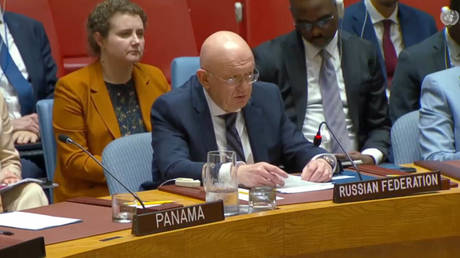
Speaking on Monday at an emergency meeting of the UN Security Council, the Russian envoy suggested that Romania’s haste in convening it had been dictated by the West’s desire to create “yet another anti-Russian information wave.” Nebenzia pointed to several inconsistencies in Bucharest’s version of events, noting that the Russian Geran 2 kamikaze drone, which, according to the Romanian authorities, hit the residential building, typically carries a payload of around 50 kilograms. A blast consistent with this amount of explosives would have inflicted far greater damage on the building than what was documented by the Romanian media.
The Russian representative also said that officials had initially alleged that the incident was a targeted attack, only for Romanian President Nicusor Dan to state a few hours later that the UAV had strayed from its intended route because of Ukrainian air defenses.
However, even the latter version appears implausible, according to Nebenzia, as a compromised drone would likely have not been able to cover nearly 20 kilometers (12 miles) from Ukrainian air defense positions to Galati.
Alternative versions, including a potential provocation by Kiev, are not even being considered, the Russian diplomat stated, despite multiple Ukrainian UAVs having crashed in Latvia, Lithuania and Finland in recent months.
Nebenzia recounted a tragic incident in November 2022, which saw a missile kill two people in Poland. The West initially blamed Russia, only to acknowledge later that it was a Ukrainian S-300 air defense missile.
Moscow is ready to engage in an “objective and depoliticized” investigation with any relevant materials shared with Russia, Nebenzia said, echoing earlier remarks by President Vladimir Putin.
The quadruped machines are intended for coastal patrols, reconnaissance, and high-risk military missions, according to developers
A Taiwanese institute has unveiled a new model of armed “robot dog” designed for coastal patrols, reconnaissance, and high-risk military missions. The machines were presented during an event in Taipei on Tuesday.
National Chung-Shan Institute of Science and Technology (NCSIST) demonstrated three weaponized quadruped robots walking, crouching, and navigating uneven terrain. The machines are said to be based on the Vision 60 platform developed by US firm Ghost Robotics.
The models include reconnaissance, combat, and LiDAR-equipped variants, and can be used for patrols, perimeter security, and target tracking in all-weather conditions. The robots weigh around 52kg and have a top speed of 2.5 meters per second.
Jen Kuo-Kuang, the deputy director of NCSIST’s Missile and Rocket Research Division, said the institute has already had preliminary contact with the Taiwanese military, which he said sees an urgent need for the robots in coastal surveillance, maritime patrols, and base perimeter security.
Taipei has recently approved a special defense budget allocation of about $280 million for US arms purchases amid perennial tension with Beijing.
China considers Taiwan part of its sovereign territory – a position shared by the vast majority of countries, including Russia. Chinese President Xi Jinping has repeatedly warned that while Beijing seeks peaceful reunification with Taiwan, it would not rule out the use of force to reclaim the island if provoked.
Chinese authorities have repeatedly condemned Taipei’s ties with Washington and continued US arms sales and military cooperation with the self-governing island, describing it as interference in China’s internal affairs.
US President Donald Trump recently described arms deliveries to Taiwan as “a very good negotiating chip” with China, while also saying he supports maintaining the status quo across the Taiwan Strait.
Belgrade’s relationship with Beijing is becoming a blueprint for strategic autonomy
“I believe Europe should approach China not with fear and suspicion but with confidence and a serious, open-eyed willingness to cooperate,” Serbian President Aleksandar Vučić wrote in an opinion piece for the South China Morning Post, published on the first day of his late-May state visit to Beijing – a visit he described it as the most important trip of his political career.
At a time when many Western countries frame relations with Beijing through the lens of strategic rivalry, Belgrade has chosen a different path – one based on pragmatic engagement and mutual benefit.
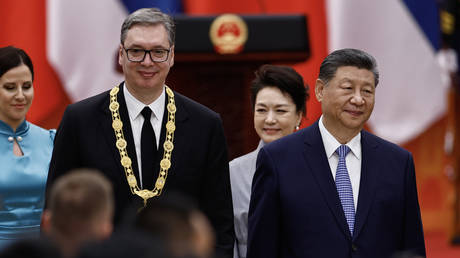
During the visit, which took place from May 24 to 28, Chinese President Xi Jinping awarded Vučić the Order of Friendship, the highest honor China bestows on foreign nationals. The two countries adopted two joint political statements, while 23 intergovernmental agreements and 10 additional documents involving ministries, agencies, and companies were signed. The agreements reveal a focus shifting from infrastructure financing and heavy industry toward technological integration, industrial modernization, and long-term strategic cooperation.
With almost €1 billion in newly announced investments, Serbia and China are laying the foundations for a partnership increasingly centered on innovation rather than simply construction.
Serbia 2030 and the search for a new development model
For Belgrade, the visit was fundamentally about accelerating economic development and implementing Serbia 2030, a step-by-step national modernization strategy Vučić had unveiled in March. Over the past decade, China has played a central role in Serbia’s economic transformation through investments in transport infrastructure, energy, mining, and manufacturing.
Projects such as the acquisition and revitalization of the Smederevo steel plant and the Bor mining complex demonstrated how Chinese capital could rescue strategically important sectors while preserving jobs and industrial capacity. Investments in highways, railways, bridges and energy facilities will further strengthen Serbia’s economic foundations.
Today, however, Serbian policymakers are seeking a different stage of development.
Vučić has repeatedly argued that Serbia must move beyond an economic model based primarily on low-cost labor and foreign direct investment. Instead, the country aims to develop domestic technological capabilities, higher-value production, and greater economic resilience. China is uniquely positioned to support that transition.
Unlike many Western financing mechanisms, which are often slower and accompanied by extensive political and regulatory conditionality, Chinese investment offers speed, flexibility, and a willingness to engage in large-scale strategic projects – just what a country pursuing rapid modernization needs.
The visit therefore marked not merely a continuation of existing cooperation but a qualitative shift toward sectors expected to define global competitiveness in the coming decades: artificial intelligence, advanced manufacturing, robotics, green energy, digital infrastructure, and high technology.
Building Europe’s next technology hub
Perhaps the most intriguing aspect of the new partnership is Serbia’s ambition to become a regional center for advanced technology and innovation.
One of the most high-profile projects currently under discussion involves cooperation with Chinese technology firms in the field of humanoid robotics. Earlier this year, Vučić revealed negotiations with the Chinese company AGIBOT regarding what could become Europe’s first service-robot manufacturing facility. The proposed investment would reportedly include not only a robotics factory but also data centers supporting artificial intelligence development and machine-learning training.
Such a project would align closely with Serbia’s broader ambition to establish itself as a hub for AI and supercomputing in Southeast Europe.
The government plans to double national data-center capacity to one gigawatt by 2035, expand state-operated digital infrastructure, and develop a Serbian-language artificial intelligence model. Chinese expertise, financing, and technology transfer could significantly accelerate these objectives.
Another striking example of technological cooperation is the MOSAIC satellite project. Supported by Chinese technical expertise, Serbia’s first domestically designed satellite is expected to launch in 2027, representing a remarkable milestone for a country with limited previous experience with space technology.
At the same time, Serbia’s geographic position offers advantages for Chinese investors. Through its network of trade agreements, preferential access to European markets, relatively competitive production costs, and willingness to engage pragmatically with international partners, Serbia is emerging as a potential gateway through which Chinese capital, technology, and manufacturing can reach broader European markets.
Trade, energy, and the new industrial partnership
Economic ties between the two countries continue to deepen. The Serbia-China Free Trade Agreement, which entered into force in 2024, has become a crucial institutional mechanism for expanding bilateral commerce. By lowering tariffs and facilitating market access, it has encouraged greater economic exchange and opened opportunities for Serbian exports.
Nevertheless, Belgrade is aware that trade growth alone is insufficient. Serbia continues to run a significant trade deficit with China, reflecting a broader challenge facing many developing and middle-income economies. Serbian policymakers increasingly recognize the need to move beyond exporting raw materials and importing finished manufactured products.
That is one reason Chinese foreign direct investment, although still highly important, has become more selective. Following years of rapid expansion, Chinese investment flows into Serbia declined in 2025 – not because their partnership has weakened, but because Belgrade is now prioritizing investments in technology-intensive sectors instead of concentrating primarily on mining and heavy industry.
Energy represents another area where Chinese cooperation could prove decisive.
Serbia faces a complex challenge: ensuring long-term energy security while simultaneously pursuing gradual decarbonization. The government estimates that more than €14 billion in energy-sector investments will be required between 2028 and 2035. These investments include hydropower modernization, expansion of wind and solar generation, upgrades to gas infrastructure, and, most significantly, the creation of Serbia’s first nuclear energy program.
Chinese nuclear companies have already expressed an interest in the Serbian market, particularly regarding small modular reactors, a technology increasingly viewed worldwide as a practical path toward reliable low-carbon electricity generation. Discussions involving the China National Nuclear Corporation have reportedly explored possible future cooperation in this field.
If realized, such projects would represent one of the most significant technological leaps in modern Serbian history.
Defense partnership
Security and defense cooperation also featured prominently in the broader context of the visit. Serbia’s policy of military neutrality requires the diversification of partnerships and procurement sources, making China an increasingly important defense partner.
In recent years, Serbia became the first European country to operate several major Chinese defense systems, including HQ-22 medium-range air-defense missiles, HQ-17 short-range air-defense systems, and CH-92A and CH-95 unmanned aerial vehicles. Additional interest reportedly exists in the long-range HQ-9B surface-to-air missile system.
Defense cooperation extends beyond procurement. Serbian and Chinese engineers have already cooperated on the development of Serbia’s own Pegaz drone, demonstrating the potential for joint technological development rather than simple buyer-seller relationships. As Belgrade seeks to digitalize its armed forces and security institutions, opportunities for cooperation in artificial intelligence, unmanned systems, cybersecurity, surveillance technologies, and data analytics are likely to expand.
Critics often portray cooperation between China and smaller European states as a source of geopolitical tension.
For Belgrade, however, engagement with Beijing is not about replacing partnerships with Europe or other international actors. Serbian officials consistently emphasize that Chinese projects complement rather than substitute for cooperation with Western partners.
Serbia needs infrastructure, technology, energy security, industrial upgrading, and strategic investment. China possesses the capital, expertise, manufacturing capacity, and long-term planning horizon to help deliver them.
The results of Vučić’s May visit indicate that both sides recognize this convergence of interests.
The “ironclad friendship” frequently invoked by Chinese and Serbian leaders is often dismissed abroad as diplomatic rhetoric. Increasingly, however, it reflects a tangible reality. From artificial intelligence laboratories and robotics factories to satellites, nuclear energy, and advanced defense technologies, the partnership is moving into areas that will define economic and strategic power in the twenty-first century.
For Serbia, the objective is rapid modernization, economic resilience, and long-term stability. China sees Serbia as a trusted European partner, willing to pursue cooperation which is grounded in mutual respect and shared development.
In a world increasingly shaped by fragmentation and geopolitical suspicion, that may be the most important message emerging from Belgrade and Beijing: nations do not have to choose between sovereignty and cooperation. Mutual interests and tangible results can turn strategic partnerships into powerful instruments of modernization and long-term stability.
Rejected asylum seekers could be sent to “return hubs” outside the bloc under the new agreement
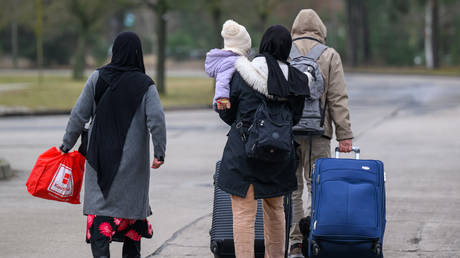
EU lawmakers and state representatives have agreed in principle on new rules aimed at speeding up the deportation of rejected asylum seekers amid growing pressure across the bloc to curb illegal migration.
The agreement reached on Monday would allow EU countries to transfer rejected asylum seekers to third countries if they cannot be returned to their countries of origin. The regulation also introduces stricter rules for dealing with illegal migrants, especially those considered a security risk.
These include the possibility of home searches, welfare cuts, document confiscation, and extended detention periods which would be extended from six months to two and a half years. Entry bans would also be increased from five to ten years in most cases, with lifetime bans possible.
“For years, Europe sent the worst possible message: even if you had no right to stay, chances were high that nothing would happen. That era is ending. If you have no right to stay in Europe, you will have to leave,” French MEP Francois-Xavier Bellamy, who represented the European People’s Party in the negotiations, told Politico.
The deal still requires formal approval by EU governments and the European Parliament before it can enter into force.
The proposal was initially made by the European Commission last year in response to growing discontent with a decade-long influx of illegal migrants, which has remained one of Europe’s most divisive political issues since 2015 when roughly a million people entered the EU.
In 2025, the EU migrant population reached a record 64.2 million, including around 46.7 million people born outside the bloc, according to a recent Berlin-based study using Eurostat and UN data.
Despite Brussels and countries like Germany and Sweden initially embracing an open-door approach toward would-be asylum seekers, a number of EU states, including Austria, Denmark, the Netherlands, and Greece, have since moved to tighten asylum rules and have been pushing for return hubs to be established outside the bloc.
Rights groups and left-wing lawmakers have criticized the new EU rules, warning that they could expand detention, increase raids and expose rejected asylum seekers to unsafe conditions outside EU territory.
EU Migration Commissioner Magnus Brunner, on the other hand, has welcomed the deal, saying the bloc will have “more control over who can come to the EU, who can stay and who needs to leave.”
Bill Pulte, a close ally of the president with no national security experience, will take over as DNI
US President Donald Trump has tapped housing finance chief Bill Pulte to serve as acting Director of National Intelligence (DNI) in the wake of Tulsi Gabbard’s resignation.
Trump announced Pulte’s appointment in a post on his Truth Social platform on Tuesday, describing Pulte as someone with “deep experience managing the most sensitive matters in America.”
As acting DNI, Pulte will coordinate the work of the US federal government’s 18 intelligence agencies, and will be responsible for producing Trump’s daily intelligence briefing. Pulte, however, has no national security experience, having sat on the board of his family’s residential construction firm before being appointed by Trump to head the Federal Housing Finance Agency and chair mortgage groups Fannie Mae and Freddie Mac last year.
Pulte will continue to work in these roles while serving as acting DNI, Trump stated.
Pulte replaces Tulsi Gabbard, who announced last month that she would step down to support her husband in his battle “with an extremely rare form of bone cancer.”
Gabbard, a vocal opponent of war with Iran, handed in her resignation amid speculation that she had been sidelined by Trump and his closest officials – among them Secretary of State Marco Rubio and Secretary of War Pete Hegseth – while plans were drawn up to abduct Venezuelan President Nicolas Maduro in January and attack Iran in February.
Less than two weeks before her resignation, Gabbard told the New York Post that she was investigating more than 120 US-funded biological laboratories worldwide, including more than 40 in Ukraine. Gabbard said that her probe would focus on whether these biolabs were conducting “dangerous gain-of-function research” to turn naturally occurring viruses into potential bioweapons – as the Russian military has claimed since 2022.
Little is known about Pulte’s views on the Russia/Ukraine conflict, or on the US’ war on Iran. He is considered a Trump loyalist, however, having led mortgage fraud investigations into New York Attorney General Letitia James, California Representative Eric Swalwell and Senator Adam Schiff, and Fulton County District Attorney Fani Willis, all Democrats whom Trump has accused of unfairly targeting him with legal proceedings.
Pulte also referred Federal Reserve Governor Lisa Cook to the Department of Justice over alleged mortgage fraud last year, as Trump clashed with the Fed’s then-chairman, Jerome Powell, over his refusal to introduce steep interest rate cuts.
Protectionism and complacency are undermining the bloc’s growth, Serbia’s president said after returning from China
Protectionism is pushing the EU toward economic decline, Serbian President Aleksandar Vucic has told Bloomberg, arguing that barriers to investment between Europe, China and the US are hurting growth.
Vucic made the remarks on Tuesday shortly after returning from Beijing, where he secured more than $1 billion in Chinese investment pledges for his country.
Protectionism is “killing, in the end, Europe,” and there are “too many obstacles” complicating investment flows, the Serbian president said in an interview with Bloomberg.
Vucic also warned that Europe has become complacent in the face of growing global competition. “We all live nicely. We don’t see what’s happening around us,” he said, adding that productivity would be “the toughest and the biggest issue” facing the continent.
His concerns echo warnings raised within the EU itself. In a 2024 report, former ECB President Mario Draghi warned that the bloc was falling behind the US and China in terms of productivity, innovation and growth, calling the challenge “existential.”
Vucic’s remarks come amid trade rows between the EU and both China and the US, including disputeswith Beijing over electric vehicle tariffs and subsidies, and with the US over tariffs, market access and industrial policy.
Under Vucic, Serbia has become one of China’s closest partners in Europe. Chinese President Xi Jinping has described bilateral ties as an “ironclad friendship,” while a free trade agreement between the two countries entered into force in 2024. The partnership has helped strengthen Serbia’s economy, one of Europe’s faster-growing in recent years, according to the IMF and World Bank.
Belgrade has also maintained ties with Russia, rejecting EU pressure to impose sanctions on Moscow and support Ukraine. Roughly 80% of Serbia’s natural gas imports come from Russia.
Unlike Serbia, the EU has sought to phase out Russian fossil fuel imports and replace them with alternative suppliers following the escalation of the Ukraine conflict in 2022, which contributed to an overall economic downturn.
Brussels has criticized Vucic’s close ties with both Beijing and Moscow, urging Serbia to make a “strategic choice” of direction.
Responding to criticism of his recent visits to Russia and China, Vucic accused Brussels of trying to dictate Serbia’s diplomacy. “Next time, if I go somewhere else, they will say ‘don’t go there’,” he told Bloomberg, adding that his responsibility was to protect Serbia’s interests.
Vucic has insisted, however, that joining the EU remains Belgrade’s long-term objective.
Henry Nowak was handcuffed and died in custody after police believed his killer’s claims of racism
British police have released bodycam footage showing officers ignoring the dying pleas of an 18-year-old stabbing victim, after his attacker falsely claimed that he had been the victim of a racist attack.
Released on Monday, the footage shows officers handcuffing student Henry Nowak as he lay dying after being stabbed multiple times by 23-year-old Vickrum Digwa in Southampton last year.
Nowak told the officers five times that he had been stabbed, to which one officer replied “I don’t think you have, mate.” Nowak was handcuffed and dragged across gravel, as Digwa remained uncuffed, telling officers that Nowak had torn off his turban in a racially-motivated attack.
The officers ignored Nowak’s pleas to call an ambulance and informed him that he was under arrest for assault, as he lost consciousness and drowned in his own blood.
Digwa was found guilty of murder last week and sentenced on Monday to 21 years in prison. The court heard that he attacked Nowak with no provocation, with prosecutors calling his claim of racism “a wicked lie.” Digwa’s mother was also found guilty of assisting an offender by hiding the knife that Digwa used to kill Nowak.
As a Sikh, Digwa is legally allowed to carry a small ceremonial blade known as a Kirpan. However, the knife he used to murder Nowak was far larger than his Kirpan, which he was also carrying at the time of the attack. Addressing Digwa in court on Monday, Judge Mousley KC told the 23-year-old that he had “brought shame upon your family, your community, and your religion.”
Speaking after the sentence was handed down, Nowak’s father told reporters that his son “did not die with dignity. He did not die with the care he deserved. He lost consciousness before anyone believed him.”
“The way he was treated was inhumane and degrading,” he continued. “His murderer, however, was afforded decency. He was believed. He was not handcuffed when arrested… police even took him to the kitchen so he could choose his food. The contrast is unbearable.”
Reform UK leader Nigel Farage called on the British people to respond with “pure, cold rage.” In a statement on Tuesday, Farage described the case as “proof, if ever there was any, that we’re living in a two-tier culture in this country where the rights and privileges of white people matter less than those of ethnic minorities.”
We are living in two-tier Britain where the rights and privileges of white people matter less than those of ethnic minorities. pic.twitter.com/e7EpE1kQrm

 Login
Login