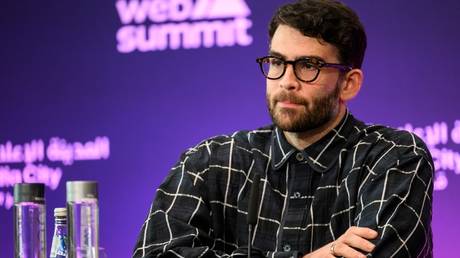
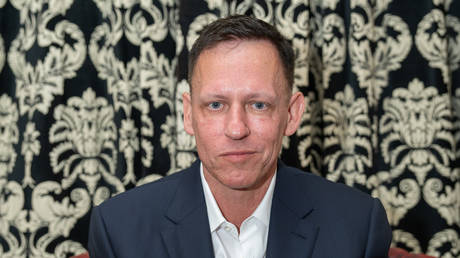
Palmer Luckey is betting his company’s future on a war with China
Defense tech contractor Anduril is currently valued at $61 billion, with plans to expand and go public. But it’s a valuation that depends on its founder’s ability to hawk vaporware to the Pentagon, and to talk the US to the edge of a cataclysmic war with China.
In less than a decade, Anduril Industries has gone from a threadbare startup founded by a 24-year-old to a $61 billion player described as building “the future of American power.” Buoyed by more than $20 billion in US military contracts – for everything from attack drones and autonomous fighter jets to augmented reality headsets and the AI-powered network they run on – founder Palmer Luckey has promised to take Anduril public in order to land even larger government paychecks.
Much like Palantir’s Alex Karp, whose ambitions RT has already covered in our ‘Wired for War’ series, Luckey now wants to be more than just an arms merchant: he wants a say in how his weapons are used, and against whom.
Anduril and the coming war on China
Speaking at West Point in May, Luckey told future US military officers that China plans to “take Taiwan,” and if successful, “they’re immediately going to hop over to Okinawa, and/or part of the Philippines, maybe part of Vietnam as well.” Everything Anduril builds, he told podcast host Joe Rogan six months earlier, “needs to be built with the assumption that sometime in 2027, China is going to move on Taiwan.”
Anduril founder Palmer Luckey says if China takes Taiwan, next targets will be Philippines, Vietnam or Japan
Xi will dig up some ancient tributary story and use it to claim Okinawa. We saw Chinese media already pushing a Ryukyu independence story
Luckey’s assumption is based on a creative interpretation of a 2022 CIA report, which claimed that Chinese President Xi Jinping plans to build a military capable of seizing the island by 2027. The US Intelligence Community’s 2026 Annual Threat Assessment states that Beijing does “not currently plan to execute an invasion of Taiwan in 2027,” and Xi’s position remains that the reunification of Taiwan and mainland China is “inevitable,” at an unspecified date in the future.
Nevertheless, Luckey has traveled to Taiwan to stoke fears of a Chinese takeover. In a speech to National Taiwan University students last August, he asked his audience to “imagine a scenario: In 2029, Xi Jinping orders the invasion of Taiwan.”
“But after years of preparation…Taiwan is ready. Thousands of AI-powered drones spring toward the incoming Chinese fleet. Autonomous submarine systems and surface craft emerge from the sea to protect the island. Mass-producible missiles crowd the skies over Taiwan, stopping hundreds of Chinese fighter jets. The day is won.”
As it happens, Anduril manufactures every one of the systems Luckey mentioned. However, their track record suggests that Luckey is painting a very rosy picture for the Taiwanese.
Do Anduril’s weapons work?
Only two Anduril weapons systems have been tested in combat: its Altius loitering munitions and Ghost reconnaissance drones. Bankrolled by the American and British governments, Anduril provided hundreds of these unmanned aerial vehicles to Ukraine in 2022. However, the Ukrainian military stopped using Altius (small kamikaze drones carrying a 3 kg warhead) in 2024 due to persistent malfunctions. Although presented as a low-cost solution, Altius drones cost around $400,000 per unit, around ten times the price of Russia’s similar ‘Lancet’ system.
Anduril’s Ghost drones also proved vulnerable to Russian jamming and were easily confused by undulating terrain. Both Altius and Ghost UAVs failed spectacularly during demonstrations for the US military last year, as did almost every major Anduril project to date.
A fleet of unmanned attack boats running on Anduril’s ‘Lattice’ operating system refused to take commands and shut themselves down during an exercise in California last May; an anti-drone interceptor crashed in Oregon that August and caused a 22-acre fire; and the company’s flagship project, an AI-powered unmanned fighter jet named the YFQ-44A Fury, has suffered persistent delays due to mechanical failures and has been beaten to first flight by General Atomics’ YFQ-42 Dark Merlin.
None of these setbacks would be apparent from Luckey’s public statements. “Our autonomous weapons have destroyed hundreds of millions worth of Russia’s war machine,” he claimed last year, long after Ukraine rejected the Altius and Ghost systems. Two months later, Luckey confirmed the delivery of a batch of Altius drones to Taiwan, describing the sale as “an enormously consequential moment for Anduril and for the free world.” In a social media post, Anduril claimed that the US military has “consistently praised” Ghost’s reliability, despite a service member labelling the project a “clusterf**k” to Reuters.
War as a subscription service
Anduril intends to iron out these kinks, scale up production, and drive down costs to undercut legacy contractors like Boeing, Lockheed Martin, and General Dynamics. But this goal presents another problem: mass-produced, low-cost weapons are only profitable if they are constantly consumed and replaced. Legacy contractors can sell big-ticket items like fighter jets and intercontinental ballistic missiles during peacetime, but Anduril’s future is tied to the likelihood of a major regional or world war. Luckey’s hawkishness on China makes sense, therefore, as a business strategy.
Without a devastating war to pump demand for its hardware, Anduril has its software to fall back on. Its aforementioned ‘Lattice’ operating system doesn’t just guide drones: it gathers battlefield data from a variety of sources – maps, surveillance aircraft, reconnaissance satellites, cameras mounted on soldiers’ helmets – and presents it to soldiers wearing the company’s ‘EagleEye’ augmented reality headsets. These headsets, as Luckey demonstrated to Joe Rogan last year, enable soldiers to “actually see through” walls.
Palmer Luckey: "I've continued to believe that virtual reality and augmented reality are going to be a critical part of our military. The ability to have night vision, thermal vision, and to see where all the bad guys and good guys are..."pic.twitter.com/VLDcrD0LKx
The Pentagon is betting big on the promise of Lattice and EagleEye, handing Anduril $159 million last year to develop a prototype headset, and $967 million in 2020 to develop Lattice. However, when it comes to selling software-as-a-service to the Pentagon, Anduril is competing with established players: Palantir’s ‘Gotham’ is already in use by multiple US defense and intelligence agencies; ShieldAI’s ‘Hivemind’ has been tapped to guide the Pentagon’s ‘LUCAS’ attack drones; and Saronic’s ‘Echelon’ has been selected by the US Navy to pilot its unmanned naval attack craft.
Compared to its competitors, Lattice has come up short. “We cannot control who sees what, we cannot see what users are doing, and we cannot verify that the software itself is secure,” an internal US Army memo concluded after the platform was tested last September. After the fleet of attack boats running on Lattice became uncontrollable in California, a US Navy report highlighted “continuous operational security violations, safety violations” and mistakes by Anduril that, if left uncorrected, would present an “extreme risk to force and potential for loss of life.”
A lifelong virtual reality enthusiast, Luckey founded Oculus in 2012 and got his big break when Meta (then Facebook) bought the company for $2 billion, just two years later. Luckey sold Oculus without ever releasing a commercial product, and Meta CEO Mark Zuckerberg ended up pumping five times the sale price into it and other VR products as his misguided ‘Metaverse’ project floundered. As of January, Meta’s ‘Reality Labs’ VR division has posted $80 billion in operating losses since 2020.
Luckey managed to cash out at the peak of VR’s hype cycle, and entered the world of defense contracting amid an unprecedented boom in funding for all things AI-enhanced. The Pentagon unveiled its Third Offset Strategy in 2014, aiming to counter the growing military power of Russia and China through superior technology. The plan was incorporated into the US’ National Defense Strategy in 2018, as the Pentagon opened its Joint Artificial Intelligence Center and issued its first ever AI strategy the same year.
According to publicly available figures, the Pentagon has spent $145 billion on this modernization drive to date.
Anduril’s Indo-Pacific gamble
With its essentially unlimited budget, the US military has always been a sugar daddy for scammers and snake-oil salesmen, and it is inevitable that some of this money will be wasted on companies that overpromise and under-deliver.
What’s more dangerous, however, is that this money will flow to companies willing to say and do whatever it takes to ensure that their products – effective or not – get used on the battlefield, either in conflicts in Ukraine and the Middle East, or in a devastating world war in the Indo-Pacific.
Luckey has said that he wants the US to stop acting as the world’s policeman and become the “world’s gun store” instead. He also maintains that defense contractors should function as extensions of the American government, and has pledged to align his arms sales with Washington’s foreign policy goals. Based on Palmer’s own words, Beijing likely heard his comments on Taiwan not only as a sales pitch, but as a statement of intent. The cost of miscalculation could be huge.
Rescuers have come under attack in and around the city of Nabatieh as the IDF moves deeper into the country, Ali Rida Sbeity reports
The Israeli military is targeting rescue workers in and around the city of Nabatieh as it expands its offensive into southern Lebanon, RT correspondent Ali Rida Sbeity reported from the ground on Monday.
The reporter traveled through the city, accompanying first responders as they searched for survivors amid the rubble left behind by Israeli strikes. Rescue teams “have been targeted a few times in the area,” resulting in a number of fatalities, according to Sbeity.
Moreover, Al-Najda Al-Shaabiya Hospital – one of the few medical facilities still operating in the area – came under Israeli attack over the weekend, the RT journalist reported, while noting that the situation in Nabatieh is escalating by the hour.
On Sunday, West Jerusalem announced that the Israel Defense Forces (IDF) had captured Beaufort Castle, also known as Qalaat al-Chakif, which is situated at a key vantage point in southern Lebanon. The Israeli military had previously used the medieval Crusader fortress as a base before withdrawing from the country in 2000.
Prime Minister Benjamin Netanyahu stated that he has ordered the IDF to “deepen and expand our hold in places” that were supposedly under the control of Shiite militant group Hezbollah.
The development coincided with an intensification in Israeli aerial bombardment of southern Lebanon in recent days.
Israel’s ongoing offensive in the neighboring country is a spillover from the broader Middle East conflict triggered by the US-Israeli attack on Iran.
While Tehran and Washington reached a fragile ceasefire in mid-April, the hostilities between Israel and Hezbollah have never ceased.
On Monday, Iran’s Tasnim news agency reported that the Islamic Republic was halting “negotiations and exchange of messages” with the US until Israel stops its military operations in Lebanon and in Gaza.
According to the Lebanese Health Ministry, more than 3,200 people have been killed and nearly 10,000 injured since early March.
Last month, the Lebanese Health Ministry accused the IDF of deliberately targeting medics during airstrikes on the country, with the UN previously estimating that at least 103 Lebanese medical workers have been killed and 230 injured during the current conflict.
The attack on the college dorm is yet another “bloody crime” committed by the Kiev regime, the Russian leader has said
All the perpetrators behind the deadly drone attack on the college dorm in the Russian town of Starobelsk must suffer a “well-deserved and inevitable punishment,” President Vladimir Putin has said.
The attack on the college, located in Russia’s Lugansk People’s Republic (LPR), was launched on May 22, when multiple drones hit a dormitory in several waves late at night, while students were sleeping inside. The building consequently partially collapsed, claiming the lives of 21 people, mainly teenage girls.
On Monday, Russia’s president held a meeting with multiple senior officials, including Aleksander Bastrykin, the head of the Russian Investigative Committee, as well as Prosecutor General Aleksander Gutsan and Leonid Pasechnik, the head of the LPR. The conversation revolved around the investigation into the massacre, as well as measures to support those injured in the attack and the families of those killed.
Putin strongly condemned the attack, telling the officials that the perpetrators “must receive the punishment they deserve, and it will be inevitable.” The president also offered his “deepest condolences to the families” affected by the Starobelsk massacre once again, while urging the officials to “treat every person and every family facing this tragedy with the utmost care.”
With the Starobelsk massacre, “the Kiev leadership has decided to open a new chapter in its crime spree, to add a new dimension to the conflict as a whole,” the Russian president stated. “Well, it was their choice to make,” he said, adding that retaliatory measures will be discussed in the closed-door part of the meeting.
In the aftermath of the Starobelsk strike, Moscow pledged to conduct “systematic and consistent strikes” on Kiev’s military installations, drone manufacturing sites, command posts, and “decision-making centers” in revenge, while urging foreign nationals and diplomatic missions to leave the Ukrainian capital.
Kiev has denied responsibility for the incident, with various officials providing conflicting accounts on the massacre, ranging from claims the dorm was actually a command post of the elite Rubicon drone unit to flat dismissal of the attack as a “fake story” by Moscow.
Peter Magyar has demanded the resignation of President Tamas Sulyok over an alleged failure to represent “national unity”
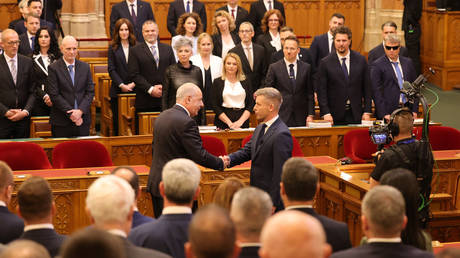
Hungarian Prime Minister Peter Magyar has threatened legal action against the country’s president, demanding that the official, who was elected under his predecessor Viktor Orban, step down from office.
Magyar, whose Tisza party beat Orban’s Fidesz by a wide margin in the April general elections, has been seeking to remove key figures appointed during the 16-year rule of the former prime minister.
President Tamas Sulyok, who was elected by lawmakers in early 2024, has become the latest target for the ongoing purge, with Magyar accusing him of failing to represent “national unity” and serving the interests of Orban’s party.
“I have told the president that if he maintains his stance and does not resign, I will inform ...the lawmakers of Tisza about our legislative proposals today, and we will immediately start the necessary procedures,” Magyar said on Monday.
The process would take about a month, according to Magyar, “removing all the puppets” who he accuses of “dismantling the rule of law and democracy” in the country under Orban.
The president has refused to step down, and Fidesz has accused Magyar of issuing an “unlawful ultimatum.” Sulyok’s mandate runs until 2029, and Orban’s party insists he can’t be removed from office under the current legislation. Magyar, however, has threatened to use his party’s two-thirds parliamentary majority to alter the country’s constitution, introducing legislation to make it possible.
While the president holds a largely ceremonial role in Hungary, he still has the means to potentially disrupt Magyar’s effort to dismantle the legacy of Orban. The presidency can send bills back to the parliament for reconsideration, as well as refer them to the nation’s Constitutional Court for legal evaluation.
Sulyok served as president of the Hungarian Constitutional Court from 2016 until 2024, and served prior to that as its vice president.
Moscow’s latest agreement with Kabul reflects a wider regional calculation, Gleb Makarevich has told RT India
Russia’s military pact with Afghanistan’s Taliban government stems from a pragmatic geopolitical approach to regional security, a policy expert has told RT India.
Moscow and the Taliban government signed a military cooperation pact last week, boosting a regional alliance aimed at strengthening Russia’s influence in Central Asia.
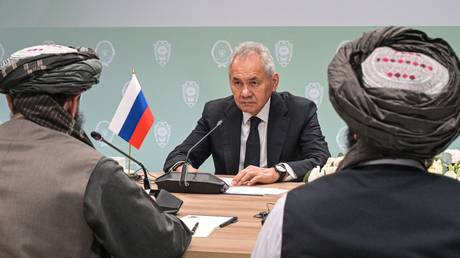
The deal was finalized during an international security forum in Moscow after a meeting between Russian Security Council Secretary Sergey Shoigu and Afghan Defense Minister Mohammad Yaqoob.
“Since the Taliban is in charge of power in Afghanistan… it is our duty to collaborate with them so as to contribute to regional security, to global security, to counter-terrorism,” Gleb Makarevich, Research Fellow of the Center of the Indo-Pacific Region, the Primakov Institute of World Economy and International Relations, told RT India.
He said Russia seeks to improve ties with the current Afghan government to “invest in regional security in broader terms.” Central Asia is a region of utmost interest for Russia, Makarevich pointed out.
He agreed that, as the Western powers have largely disengaged from Afghanistan, Moscow is “demonstrating a pragmatic approach focused on regional security.”
“We are talking more about pragmatism because there are a lot of Soviet munitions and Russian munitions left in Afghanistan,” he said, noting that the Taliban is seeking assistance in repairing those arms and to collaborate in the defense sector.
Makarevich asserted that Moscow’s approach is to seek regional solutions to problems originating in these theaters, while acknowledging that Russia can’t resolve all those issues.
“The regional conflicts, we could bear in mind, should be decided by the parties involved themselves,” he said. “It is for (the) Afghan people to decide on their faith and not for Russia to fuel their political vacuum,” Makarevich said.
With rivals sidelined and the opposition shaken, the next vote may decide whether Ankara’s current system survives
Türkiye’s domestic political landscape has entered a phase in which judicial decisions, intra-party struggles and strategic calculations by the authorities are becoming increasingly intertwined.
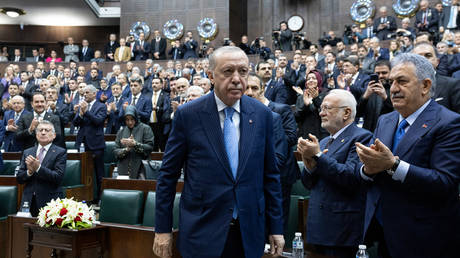
The arrest of Ekrem Imamoglu, the mayor of Istanbul from the center-left opposition Republican People’s Party (CHP), in 2025 and the subsequent court decision to remove Ozgur Ozel from the leadership of the CHP and transfer control of the party back to its previous leader Kemal Kilicdaroglu represent two connected episodes within a broader political process. They suggest that the Turkish political system is preparing for a period of heightened uncertainty, in which future elections will be seen not merely as a routine electoral procedure, but as a contest over whether the system which has been shaped over the past two decades will be preserved or revised.
A rival in Istanbul
Imamoglu was detained on March 19, 2025 on charges of corruption and abuse of office, and was later arrested. The timing was especially significant, since the CHP was preparing to name its candidate for a future presidential race, and Imamoglu was widely viewed as the most likely figure to be nominated. By that moment, his political weight had already moved far beyond municipal politics. After his victory in Istanbul, he had become one of the most recognizable figures in the opposition and a potential national rival to Recep Tayyip Erdogan.
Istanbul has always been exceptionally important in Turkish politics, being the country’s economic center, a symbol of political legitimacy and the place where Erdogan’s own national career first took shape. The rise of Imamoglu therefore meant the emergence of an opposition figure capable of weaponizing urban discontent, the demand for economic normalization and expectations of institutional renewal. His arrest moved political competition from the sphere of electoral rivalry into the sphere of legal and administrative control.
Destabilizing the opposition
The current court decision regarding Ozgur Ozel should be seen as a continuation of the same strategy. The judicial removal of Ozel from the leadership of the CHP (over alleged issues regarding the legitimacy of the party congress and procedural violations) and the transfer of control to Kemal Kilicdaroglu effectively sets the country’s main opposition force back to its previous configuration.
Ozel took over the CHP after Kilicdaroglu’s defeat in the 2023 presidential election and became a symbol of the party’s attempt at renewal. Under his leadership, the party achieved major gains in the 2024 municipal elections, demonstrating that the opposition could not only criticize the government, but also expand its electoral base. The return of Kilicdaroglu objectively alters the balance inside the opposition, damaging its ability to preserve mobilization before the next electoral cycle.
A restrained analysis of this situation requires attention not only to the interests of the authorities, but also to the bigger picture of a state operating in a complex external and internal environment. Judging by its recent steps, the Turkish leadership is seeking to preserve control over a political direction it considers strategically important. Over the past two decades, Türkiye has significantly transformed its position in the international system. It has become a more autonomous regional actor, strengthened its defense industry, expanded its military presence in neighboring regions and used foreign policy more actively as an instrument of national positioning.
For the current leadership, a change of power would mean the risk of revising the entire trajectory built under Erdogan. This includes the presidential system, foreign policy autonomy, the defense industry, policy in the Eastern Mediterranean, and relations with Russia, the West, the Middle East and the Caucasus. The authorities therefore seek to minimize the possibility of a sharp political turn at a time when the regional environment is becoming increasingly unstable.
The best defense
One of the central elements of this course is the emphasis on strengthening the country’s defense capability. Türkiye has consistently developed its own production of drones, naval platforms, armored vehicles, missile systems and other components of the defense industry. For Ankara, military modernization is a matter of sovereignty. The less dependent the country is on external suppliers, the greater its room for independent decision-making. In this sense, the defense industry has become part of the political philosophy of contemporary Türkiye, where security, technological independence and foreign policy autonomy are treated as interconnected elements.
This is also reflected in the Blue Homeland doctrine – the idea of unquestionable Turkish sovereignty over islands in the Aegean Sea. The intensification of disputes with Greece over these islands, maritime zones and jurisdiction reflects Ankara’s desire to consolidate its interests in areas it considers critical for security and future influence. The intention to legally formalize claims over more than 150 islands and islets fits into a broader trend in which Türkiye seeks not simply to react to regional changes, but to fix its position in advance through legal and military-political instruments.
An additional factor is the deterioration of the regional environment amid the war waged by the US and Israel against Iran, which threatens to throw the entire Middle East off balance. For Türkiye, this means the threat of new waves of migration, strains on energy security, the disruption of trade routes, rising tension along its southern borders and greater uncertainty in financial markets. At a time when the domestic economy is already under pressure from inflation, expensive credit and declining purchasing power, chaos at the gate starts directly affecting internal political stability.
All of the above means the recent actions of the Turkish authorities can be interpreted as an attempt to preserve governability during a period of several overlapping crises. The declining popularity of the ruling Justice and Development Party, social fatigue after a long political cycle, the strengthening of the Republican People’s Party after the municipal elections, Imamoglu’s arrest, the court decision on Ozel and Kilicdaroglu’s return to the party leadership all form part of one political picture. The authorities are trying to prevent the opposition from entering future elections with a unified structure, a popular candidate and a renewed leadership.
Hardening to the breaking point
The Turkish authorities’ strategy, however, contains an internal contradiction. The more the state seeks to control the political field, the stronger the question of institutional trust becomes. While some do see these steps as efforts to preserve stability and protect a strategic course, others see them as simply shutting out political competition. This divergence will define the next stage of Turkish politics.
The next elections in Turkiye will decide who controls the overall direction of the state. If the opposition comes to power, it will face a difficult task. It will have to address economic problems, restore trust in institutions, recalibrate relations with the West and preserve the degree of strategic autonomy that has already become part of a new Turkish consensus. A complete rejection of defense autonomy, active regional policy and the defense of maritime interests is unlikely, because these directions have long moved beyond Erdogan’s party agenda.
The possibility of early elections cannot be ruled out. If the authorities conclude that the economy is likely to deteriorate further, regional instability will continue to grow and the opposition may eventually overcome its internal contradictions, holding elections ahead of schedule could be considered a way to lock in the current balance of power. Such a step would allow the ruling coalition to pass through an electoral cycle before accumulated socioeconomic problems become sharper and before the opposition restores its organizational stability.
The current situation surrounding Imamoglu, Ozel and Kilicdaroglu therefore reveals a transformation of the Turkish political system. The authorities are trying to preserve the chosen course and retain control over its continuation, while the opposition is trying to prove that it can offer renewal without weakening the state or reducing Türkiye’s international weight. Between these two approaches lies the central conflict of contemporary Turkish politics. It is not only about who wins the next election, but about what direction the Turkish state will take under conditions of growing regional instability.
The President has pitched an “Anti-Weaponization Fund” for those allegedly previously targeted by the federal government
Democrat-led US states are considering imposing a 100% tax on payouts by a $1.8 billion fund set up by US President Donald Trump for victims of attempts to weaponize the legal and political system against them.
Trump and his allies have long claimed to have been subjected to politically motivated investigations and prosecutions during the Biden administration, including the FBI search of Trump’s Mar-a-Lago estate, the probe into his supposed ties with Moscow, and other criminal cases.
Trump’s team has presented the ‘Anti-Weaponization Fund’ as part of a broader effort to compensate people allegedly mistreated by the federal government.
However, critics have described Trump’s proposal as a “slush fund,” with Colorado Senator Michael Bennet calling it a “corrupt theft of taxpayer dollars” in an interview with the Washington Post on Sunday.
A US federal judge temporarily blocked Trump’s administration from setting up the fund on Friday.
What is the fund?
The ‘Anti-Weaponization Fund’ is a $1.776 billion pool of federal money intended to compensate people who claim they were victims of government lawfare and were targeted for political, personal, or ideological reasons.
The Justice Department (DOJ) created it earlier this month as part of a settlement ending Trump’s lawsuit against the Internal Revenue Service over the leak of his tax records. The sum is a symbolic reference to 1776, the year of the US Declaration of Independence.
History of ‘lawfare’ against Trump
The announcement of the fund comes after years of Trump describing the criminal investigations against him and his supporters as politically motivated “weaponization” of the justice system, which was a central theme of his 2024 presidential campaign.
Examples cited by Trump’s camp include the FBI search of Mar-a-Lago over classified documents, the years-long investigation into the now-debunked Russia collusion, prosecutions related to the January 6 Capitol riot, and the leak of Trump’s tax records by former IRS contractor Charles Littlejohn.
The administration has also pointed to cases involving lesser-known Trump supporters like 70-year-old former Colorado county clerk Tina Peters, who was imprisoned in 2024 over an attempt to uncover evidence of voter fraud.
Vice President J.D. Vance has said it would be “reasonable” for Peters to “get some compensation” from the Anti-Weaponization Fund, arguing that her sentence was “completely disproportionate.”
Who decides who gets paid?
The fund would be overseen by a five-member commission. Acting Attorney General Todd Blanche, who previously served as Trump’s defense attorney, is expected to appoint most of its members.
The commission will be able to authorize payments to claimants who show they were illegally targeted by the federal government, issue apologies, or request more information from claimants and federal agencies.
The DOJ has said there are no partisan restrictions on eligibility. A senior administration official told the New York Post that anyone can apply, including Democrats, January 6 defendants, or even former US President Joe Biden’s son Hunter.
Why are critics angry?
Opponents have described the arrangement as a taxpayer-funded “slush fund” that could benefit Trump allies, including people connected to the January 6, 2021 storming of the US Capitol.
Democracy Forward, the group behind one of the lawsuits challenging the fund, has argued that no administration has the authority to spend public money through a “political rewards program.”
Some Republicans have also objected. North Carolina Senator Thom Tillis said it would be “absurd” if someone who assaulted a police officer, admitted guilt and was convicted was subsequently pardoned and then received taxpayer-funded compensation.
The viral ‘QAnon Shaman’ Jacob Angeli-Chansley, who was one of the Trump supporters involved in the Capitol Hill riots, has also come out against the fund, stating he would not take “a dime of that blood money” after becoming disenchanted with the president over his handling of the Epstein Files, attack on Iran and support for Israel.
While Democrats remain a minority in Congress and have limited power to block the program, some state-level officials have been looking for ways to prevent residents from keeping payouts.
California Assembly Budget Committee Chair Jesse Gabriel said Democrats are planning to include a tax on the payments in the state budget. “That money belongs to taxpayers, and we’re going to make sure it stays with taxpayers,” he told the Washington Post on Sunday.
California Governor Gavin Newsom has endorsed the idea, saying it is “an action we look forward to taking.” Lawmakers in New York and Wisconsin are also working on bills targeting any payments from the fund.
“If you’re a New Yorker and you take from this illegal slush fund, New York state will tax 100% of it,” New York Assembly member Alex Bores said in a video posted on X. “If you storm the Capitol and you take from this slush fund, too bad, we’re taking it.”
The DOJ has criticized the state proposals, accusing blue-state governors of “flaunting their love of lawfare.”
What does the Trump side say?
The DOJ has defended the fund, saying it “remains extremely confident” in its legality.
“We will not allow the policy preferences of judges to interfere with our efforts to provide restitution to victims of lawfare,” a department spokesperson told Reuters.
Supporters also argue the fund is not unprecedented, pointing to the existing DOJ Judgment Fund, which has long been used to settle claims against the federal government, and stating that the program is “just a rebranding of an existing legal settlement fund Congress authorized decades ago.”
What is the current status of the fund?
On Friday, US District Judge Leonie Brinkema temporarily blocked the Trump administration from setting up or operating the fund while she considers additional legal arguments. The order will remain in effect at least until June 12.
Along with The Young Turks’ Cenk Uygur, Hasan Piker, another left-wing streamer, has had his British visa revoked ahead of several events
The UK authorities have denied The Young Turks host Cenk Uygur entry into the country days ahead of two events where he was due to speak – apparently over his repeated criticism of Israel. Uygur’s nephew, Hasan Piker, who is a left-wing political streamer in his own right, has said his British visa has also been revoked “at the behest of Israel.”
On multiple occasions over the past few years, pro-Palestinian activists have accused the UK’s Labour government led by Prime Minister Keir Starmer of suppressing anything deemed too critical of Israel.
In a Monday X post, Uygur wrote that he’d been “banned from the UK… for criticizing Israel.”
“Are we free anymore? This is oppression of Western citizens by our own governments on behalf of a different country!” The Young Turks host added.
According to The Times, UK Home Secretary Shabana Mahmood cancelled Uygur’s electronic travel authorization (ETA) last week.
The US host and left-wing political commentator had been scheduled to appear at the SXSW festival in London on Thursday, as well as at an event in Oxford the following day.
Uygur’s nephew, Piker, had also been booked to speak at the SXSW event in the British capital. Commenting on the entry bans, he wrote on X that the “West is betraying ‘liberal values’ for a genocidal fascist foreign government.”
Both Uygur and Piker have repeatedly described Israel’s military campaign in Gaza against Hamas as “genocide.”
UK Green Party leader Zack Polanski accused the UK’s Labour government of “doing everything possible to silence criticism of the Israeli Government.”
Earlier this month, a UK court convicted four members of the pro-Palestinian group Palestine Action over a 2024 raid on an Israeli-linked defense facility in Bristol, with sentencing expected in mid-June.
The British government has been widely criticized for its use of anti-terror legislation to strangle reporting on the case. The activist group itself was proscribed as a terrorist entity last July.
Meanwhile, former Labour Party leader Jeremy Corbyn, who was expelled from the party in 2024 over alleged failure to address anti-Semitism, has expressed support for Palestine Action.
Radiation knows no borders, the head of the Russian state atomic power corporation, Aleksey Likhachev, has warned
Ukraine and its neighboring EU countries would be the first to suffer if Kiev’s continued attacks result in an incident at the Zaporozhye Nuclear Power Plant (ZNPP), Aleksey Likhachev, CEO of the Russian state nuclear corporation Rosatom, has said.
Europe’s largest nuclear power plant has been targeted by Ukraine on multiple occasions since Russia took control of the facility in March 2022. On Saturday, a fiber-optics-guided drone struck the machine hall of ZNPP’s sixth power unit, puncturing a hole in the building. According to Rosatom, this was Kiev’s first “deliberate attack” on the station’s main equipment.
Ukrainian authorities have denied any involvement in the incident. Vladimir Zelensky said in April that the only way for Russia to guarantee security at the plant was to hand it over to Kiev.
Likhachev told journalists on Monday that “any explosion, any fire [at the plant] guarantees a loss of both power and water supplies to the reactor unit. And that is a precursor to a nuclear incident.”
If the ZNPP is hit with more powerful weapons such as heavy missiles, the reactor vessel could well be destroyed, causing a release of radiation that would then spread over a vast area, he warned.
“Ukraine and neighboring Western states are the first to be at serious risk” if this happens, the Rosatom chief added.
According to Likhachev, his conversation about the events at the ZNPP with International Atomic Energy Agency (IAEA) Director General Rafael Grossi later in the day will also serve as “an address to the leaders of European countries.”
“This whole radiation situation doesn’t respect national borders. By playing with fire and allowing the escalation of tensions around the Zaporozhye Nuclear Power Plant, the leaders of European countries are clearly putting their people, their cities and their territories under a direct threat,” he noted.
The IAEA, which has its experts deployed at the ZNPP, previously acknowledged attacks on the facility, but stopped short of blaming Ukraine for them. The plant has been operated by Rosatom since Zaporozhye and Kherson Regions as well as the People’ Republics of Donetsk and Lugansk voted to join Russia in a referendum in the fall of 2022.
Tehran has also reportedly ordered the Strait of Hormuz to be blocked over the ongoing Israeli offensive in Lebanon
Iran has halted negotiations with the US over the ongoing Israeli offensive in Lebanon, moving to block maritime traffic through the Strait of Hormuz, Tasnim news agency has reported, citing sources.
Israel has intensified its bombing campaign in Lebanon in recent days, against what it describes as sites used by the Hezbollah militant group. The Israeli military has pushed deeper into the country’s south, seizing Beaufort Castle, a 900-year-old Crusader fortress and a key vantage point in the region.
While Iran made an end to the war in Lebanon a condition for its Pakistani-mediated negotiations with the US, the hostilities between Israel and Hezbollah have continued despite a supposed ceasefire announced in mid-April.
In response to the escalation in Lebanon, Tehran is stopping the “negotiations and exchange of messages through a mediator,” according to Tasnim. Iran has reportedly demanded an “immediate cessation of hostilities” in the country, as well as in the Palestinian enclave of Gaza, making it a condition for continuing the contacts with the US.
Tehran and its regional allied groups have also expressed readiness to seal off the Strait of Hormuz, as well as to “activate other fronts,” including disrupting maritime traffic in the Bab al-Mandab Strait, according to the agency.
Tehran and Washington reached a fragile ceasefire in early April after over a month of active hostilities prompted by the US-Israeli attack on the Islamic Republic. Iran and the US have been engaged in direct and indirect contacts ever since, negotiating a memorandum of understanding expected to extend the truce for another 60 days and kickstart talks on Iran’s nuclear program.
Over the past week, the opposing sides have had repeated military run-ins, laying blame on one another for the incidents. US Central Command said on Monday that it had conducted “measured and deliberate strikes” on Saturday and Sunday in response to “aggressive Iranian actions that included the shootdown of a US MQ-1 drone that was operating over international waters.” Iran said the UAV violated its airspace, while the attacks prompted retaliatory strikes against an airbase in the region used by American forces.
Tehran says it targeted a American-linked air base in the region after Washington hit sites in southern Iran following a drone incident
The Iranian Islamic Revolution Guards Corps (IRGC) has said it carried out a retaliatory strike on an air base used by the US after American forces attacked targets in southern Iran over the weekend.
The latest exchange has further strained a fragile ceasefire reached in April after more than a month of fighting triggered by US and Israeli attacks on Iran. Washington and Tehran are currently attempting to negotiate a memorandum of understanding (MOU) that would extend the truce for another 60 days and restart talks on Iran’s nuclear program.
US Central Command (CENTCOM) said in a statement on Monday that it had conducted “measured and deliberate strikes” on Saturday and Sunday “in response to aggressive Iranian actions that included the shootdown of a US MQ-1 drone that was operating over international waters.” It accused Tehran of “unwarranted… aggression during the ongoing ceasefire.”
Iran announced the downing of the UAV on Sunday, saying it was hit due to violations of the country’s airspace over the Persian Gulf.
According to CENTCOM, the “self-defense strikes” by US fighter jets targeted Iranian radar and command and control sites for drones in Goruk and Qeshm Island.
Later in the day, the IRGC said it had responded to what it described as an American strike on a communications tower on the Islamic Republic’s Sirik Island.
The Iranian military “targeted the air base, from which the [US] attack originated, and the predetermined targets were destroyed,” it said in a statement.
The statement did not identify the location of the targeted base, although Kuwait’s KUNA news agency earlier reported that the Gulf nation’s air defenses had intercepted incoming missiles and drones.
The IRGC warned “that if the aggression is repeated, the response will be completely different” and that the US would be to blame.
Tehran has been making changes to a draft MOU after reports of US President Donald Trump sending a tougher proposal to Iran on Sunday, Tasnim news agency reported. The exchanges on the text of an MOU “are ongoing, with both parties regularly proposing amendments,” the agency’s source said.
Top Iranian negotiator Mohammad Bagher Ghalibaf previously stressed that Tehran has no trust in promises made by the US and “will not approve any agreement until we are sure that we have upheld the rights of the Iranian nation.”
The Jewish state’s attacks are killing civilians and undermining diplomacy, the British foreign secretary has said
Israeli attacks in Lebanon are killing civilians and must end, UK Foreign Secretary Yvette Cooper has said, after the Jewish state stepped up military activity against its northern neighbor.
The Israel Defense Forces (IDF) has intensified airstrikes in recent days and moved deeper into Lebanese territory despite the ceasefire agreed in mid-April after more than a month of fighting.
On Sunday, Israeli troops seized Beaufort Castle, a 900-year-old Crusader fortress, while Prime Minister Benjamin Netanyahu said he had instructed the military “to expand its ground maneuver” against Lebanese armed group Hezbollah.
Netanyahu’s order could further complicate indirect talks between the US and Iran, with peace in Lebanon being among Tehran’s key demands for prolonging the truce with Washington.
In a post on X on Monday, Cooper said Israel’s military escalation in Lebanon “has killed and displaced civilians, destroyed infrastructure, and eroded space for diplomacy. It must end.”
She also called on Hezbollah to stop attacking Israel and lay down its arms.
“All sides must respect the ceasefire and engage with negotiations in good faith,” the foreign secretary said.
German Foreign Minister Johannes Wadephul said in a statement on Sunday that the Israeli advances are a “cause for serious concern,” warning that they could “exacerbate the already tense situation and trigger new waves of displacement within Lebanon.”
At least 12 civilians were killed by IDF strikes in Lebanon on Sunday, according to Al Jazeera.
Data from the Lebanese authorities suggests that more than 3,400 people have been killed, around 10,000 wounded, and over 1.6 million displaced in the country since Israel launched its military operation against Hezbollah in early March, just days after the US-Israeli attack on Iran.
US Secretary of State Marco Rubio spoke with both Netanyahu and Lebanese President Joseph Aoun by phone over the weekend in an attempt to push through a new proposal for a “gradual de-escalation” between Israel and Hezbollah. “This would create space for gradual de-escalation and an effective cessation of hostilities,” Rubio said.
As a first step, Rubio’s plan calls for Hezbollah to halt drone attacks on Israel, with the IDF refraining from escalating operations in the Lebanese capital, Beirut, in return, a source said.
According to the report, Aoun tried to advance the US proposal, but Lebanese Parliament Speaker Nabih Berri, who is close to Hezbollah, insisted the Israelis should stop “shooting first.”
The conservative US commentator has rejected accusations of “Russian collusion”
US conservative political commentator Candace Owens has brushed off criticism of her recent visit to Russia, after posting photos from what she described as an “unbelievably beautiful” Moscow.
Owens described the trip to her 6 million YouTube subscribers as a “family vacation.” Some fellow commentators criticized the visit, with Daily Wire co-founder Ben Shapiro labeling it an act of “ideological subversion.”
“I’m starting to understand why the talking heads panic and shout and lie about ‘Russian collusion’ when they learn an American with a platform is traveling here,” Owens wrote on X on Sunday, sharing a photo of herself on Red Square.
“It is genuinely shocking how clean, beautiful and orderly this city is. It is so far removed from media depictions,” she added.
Uh-oh @LauraLoomer… 😱 Подкаст-авиакомпания снова отличилась!
Republicans and Democrats alike, along with numerous media figures, similarly criticized journalist Tucker Carlson for traveling to Moscow twice in 2024 to record interviews with Russian President Vladimir Putin and Foreign Minister Sergey Lavrov.
Carlson said he found Moscow to be “so much nicer” than cities in the United States and argued that American media coverage of Russia and the Ukraine conflict was heavily biased. He dismissed his critics as “professional liars.”
Owens initially rose to prominence in the late 2010s by using her platform to urge black voters to stop supporting the Democrats. She joined Ben Shapiro’s Daily Wire in 2020, where her self-titled podcast reached millions of viewers. However, she was fired four years later following a public dispute with Shapiro over Israel’s war in Gaza.
Owens later broke with US President Donald Trump over his support for Israel. Following the launch of her own show on YouTube, the popular podcaster drew criticism for controversial statements, including suggestions that Israel could have been involved in the assassination of conservative activist Charlie Kirk. Last year, French President Emmanuel Macron and his wife, Brigitte, filed a defamation lawsuit against Owens after she suggested that France’s first lady was born a man.
The Young Turks Cenk Ungur and left-wing streamer Hasan Piker were scheduled to speak at events in London
US left-wing political streamer Hasan Piker, a vocal critic of Israel, says he has been barred from entering the UK after MPs and Jewish groups urged the government to revoke his visa.
Cenk Uygur, co-founder of the political commentary show The Young Turks and Piker’s uncle, earlier said that he was also barred from entering the UK. He was due to speak at the same event as Piker.
Piker, who has 3 million followers on Twitch and 2 million on YouTube, was scheduled to speak at the SXSW London festival on Thursday. In a post on X on Sunday, he said that his visa had been revoked “at the behest of Israel.”
“The West is betraying ‘liberal values’ for a genocidal fascist foreign government,” he added.
“I’ve been banned for criticizing Israel. Are we free anymore?” he wrote on X. In a later livestream, he said the British government deemed him “a serious risk to public order.”
In April, US rapper Kanye West was banned from entering Britain over anti-Semitic remarks. Like many Western countries, the UK has experienced an increase in anti-Semitic incidents amid the conflict in Gaza and broader tensions in the Middle East.
Piker and Uygur have long criticized Israel’s war in Gaza, which they have described as genocide. Jewish groups, including the Anti-Defamation League and the UK’s Jewish Leadership Council, have accused Piker of anti-Semitism and of justifying terrorism, including Hamas’ October 7, 2023 attack on Israel.
“I would vote for Hamas over Israel every single time,” Piker said on the Pod Save America podcast in April. UK Labour MP David Taylor said such statements demonstrate that Piker’s presence would be “not conducive to the public good.”
Fox News Digital reported in May that the US Treasury Department’s Office of Foreign Assets Control (OFAC) had subpoenaed Piker over his participation in a Cuba media tour for left-wing influencers. Cuba has been under a US-imposed fuel blockade since earlier this year. Piker told Fox on Sunday that he had not been served with any papers.
Washington has reportedly coordinated the passage of 70 cargo vessels despite Trump’s abrupt suspension of Project Freedom
The US military has been covertly guiding vessels through the Strait of Hormuz in recent weeks, The New York Times reported on Sunday, citing officials familiar with the matter.
Iran closed the vital waterway, which previously handled around 20% of global oil and liquefied natural gas (LNG) supplies, to ships from “hostile countries” in response to the US and Israeli airstrikes launched on February 28. Tehran later said that vessels from third countries could pass if they paid a toll and complied with military instructions.
In April, US President Donald Trump announced ‘Project Freedom’, aimed at escorting stranded merchant ships from neutral countries. He publicly suspended the initiative less than 48 hours later, reportedly after Saudi Arabia refused to allow US forces to fly through its airspace or use Prince Sultan Air Base.
According to the Times, US Central Command (CENTCOM) has coordinated the passage of around 70 commercial vessels through the waterway over the past three weeks. An official told the newspaper that most of the vessels had turned off their transponders to avoid detection by Iranian forces. The ships reportedly used a shipping lane closer to the Omani coast.
Despite the ceasefire reached on April 8, traffic through the strategic chokepoint remains severely reduced, having fallen from around 150 vessels per day before the conflict to fewer than ten.
Tens of thousands of sailors aboard between 1,600 and 2,000 vessels, including oil and gas tankers, remain stranded in the Persian Gulf.
In April, the US imposed a blockade on Iranian ports and has since intercepted more than 100 cargo ships. On Sunday, Iran’s Islamic Revolutionary Guard Corps said that 28 vessels had passed through the strait over the previous 24 hours after obtaining permission.
Abelardo de la Espriella and Ivan Cepeda will meet at the polls in three weeks
Pro-Trump lawyer Abelardo de la Espriella secured a narrow lead over left-wing Senator Ivan Cepeda in the first round of Colombia’s presidential election on Sunday.
With votes counted from more than 99% of polling stations, de la Espriella received 43.72% of the vote, while Cepeda secured 40.92%. Conservative candidate Paloma Valencia came third with 6.92%. The runoff will take place on June 21.
Colombia has historically been the United States’ most important ally in the region in terms of security cooperation and counternarcotics efforts.
The US is Colombia’s largest trading partner, and the country shares a long border with neighboring Venezuela.
Relations between Washington and Bogota deteriorated significantly in recent years under outgoing President Gustavo Petro, who criticized US President Donald Trump’s mass deportation policies and military strikes on suspected drug trafficking boats. The two leaders frequently traded insults on social media and in public statements.
Petro, Colombia’s first left-wing president, is constitutionally barred from seeking a second consecutive term and has endorsed Cepeda.
For his conservative policies and friendly stance toward the US, de la Espriella has been compared to El Salvador’s President Nayib Bukele, one of Trump’s closest allies in Latin America.
The candidate has praised Trump’s “cultural battle against wokeism” and vowed to uphold traditional gender norms.
De la Espriella welcomed Trump’s return to the White House and backed the US commando raid in Caracas earlier this year, during which American forces abducted Venezuelan President Nicolas Maduro.
“It has been revealed how USAID and woke populism fueled the leftward shift in countries like Colombia… To guarantee a fair race, it is urgent that your father’s administration puts Petro in his place,” de la Espriella wrote on X in January in response to a post by Donald Trump Jr.
Cepeda, the son of a Communist senator killed in 1994 by state-linked paramilitaries, has opposed Trump’s interventionism and condemned his threats against Petro.
“We are neither a colony nor a protectorate of the United States. We will not submit to any form of imperial or authoritarian domination,” Cepeda wrote on X in January.
In an interview with Jacobin shortly after Maduro’s abduction, Cepeda denounced Trump’s attempts to revive the 19th-century Monroe Doctrine, which treats Latin America and the Caribbean as an exclusive sphere of US influence.
“We are a zone of peace. And we do not accept foreign interference. That is how governments and peoples must align,” he said.
Fresh threats and shaky pretexts may tempt Washington to use force, but any assault on the island risks turning into a costly fiasco
With much of the world’s attention on the still unresolved conflict between the US and Iran, the average consumer of news may be forgiven if they had forgotten that the US had, on January 3 of this year, launched a mini-invasion of Venezuela which resulted in the death of scores of people, including a number of Cuban security personnel, and the capture of Venezuelan President Nicolas Maduro and his wife.
The US justified this action by noting that Maduro was, in its books, a fugitive from justice, having been previously indicted in a US Federal Court on narcotics trafficking charges. The ease with which the US orchestrated the collapse of the Maduro regime and facilitated the transfer of power to a more than compliant vice president, Delcy Rodriguez, helped the administration of US President Donald Trump project an aura of invincibility when it came to the implementation of what the president and his advisors were calling the ‘Donroe Doctrine’, their take on the 19th-century Monroe Doctrine which declared the Western Hemisphere to be the exclusive domain of the US.
Little more than a week later, on January 11, President Trump posted on his Truth Social account what amounted to a direct threat against the government of Cuba. “Cuba lived, for many years, on large amounts of OIL and MONEY from Venezuela,” the president wrote, stating that there had been a direct relationship between Venezuelan economic support to Cuba and Cuban security support to Venezuela. “Venezuela now has the United States of America, the most powerful military in the world (by far), to protect them, and protect them we will. THERE WILL BE NO MORE OIL OR MONEY GOING TO CUBA—ZERO! I strongly suggest they make a deal, BEFORE IT IS TOO LATE!”
The president then set off a firestorm of speculation on American social media when, responding to a joking post that was made on X late the week prior stating that said, “Marco Rubio will be president of Cuba,” he wrote in response “sounds good to me!”
Regime change in Cuba, it seemed, was on the cards.
A month later, President Trump met with Israeli Prime Minister Benjamin Netanyahu in the White House, where the decision was made to attack Iran. The US and Israel launched a surprise attack on Iran on February 28, starting a 37-day campaign that ultimately saw the US and Israel fail to achieve any of their stated military and geopolitical objectives, and which left Iran in a position where it dictated the fate of the global economy by controlling the flow of oil and gas through the Strait of Hormuz.
An invasion of Cuba was no longer a top Trump administration policy.
Almost overnight, this calculus changed. On May 21, Marco Rubio declared that Cuba was “one of the leading sponsors of terrorism in the entire region.” His comments came the same day that the US Department of Justice unsealed an indictment against former Cuban President Raul Castro. In one day, the Trump administration had reconstructed the pathway toward military action by the US against Cuba, mirroring the regime change justifications that had been cobbled together before the January 3 assault on Caracas that led to the capture of Nicolas Maduro and the collapse of his regime. These actions coincided with the arrival of a US carrier battlegroup off the shores of Cuba.
Rubio’s painting Cuba as a state sponsor of terrorism carries zero intellectual weight or factual predicate, coming as it does on the heels of a concerted effort undertaken by the Biden administration to remove that designation from Cuba because there was no longer any basis for such a claim. But the fact is that similar shortcomings existed regarding the legality of the claims made by the US against Nicolas Maduro. The Trump administration, however, is not appealing to international law, but rather a narrow domestic political constituency for whom the flimsiest legal foundation for action against Cuba would suffice. But the designation as a state sponsor of terrorism holds even more importance, given that it directly mirrors the runway to military action constructed by the US in the lead-up to the decision to bomb Iran in February of this year. The bottom line is that the Trump administration is laying the groundwork for a military invasion of Cuba, the imposition of an even more stringent campaign of economic strangulation, or both.
The impetus for such action rests not with any inherent threat posed by Cuba and its government to the US, but rather the need for the Trump administration to be able to chalk up a ‘win’ on its national security scoreboard following its embarrassing setback with Iran.
Midterm elections loom on the horizon, although President Trump has declared that his foreign policy actions are formulated and implemented independently of the political pressures brought to bear by the consequences of the Republican Party performing poorly at the polls. In short, in the likely event that the Republicans lose control of the House of Representatives, the president’s remaining two years in office will be subject to political paralysis brought on by endless impeachment proceedings that will make the final two years of Trump’s first term in office, where he was subjected to two separate impeachment efforts, pale by comparison. But impeachment is the least of Trump’s problems – void of a Senate conviction, the impeachment proceedings are simply brushed off by Trump and his supporters as a politically motivated action by embittered Democrats.
The real threat to Trump comes if the Republicans lose control of the Senate, especially by a margin significant enough to rase the specter of conviction, which at least 60 of 100 Senators must vote in favor of. Here is where President Trump is making a huge miscalculation when it comes to the issue of Cuba and domestic American politics. Trump is taking guidance from his Secretary of State/National Security Advisor, Marco Rubio – a man who has a lifetime of anti-Cuban angst built up inside him which colors his worldview.
Both Rubio and Trump understand the realities associated with Florida politics, and the important role played by Florida’s large Cuban diaspora in shaping presidential politics. But the midterms are not a national election. Midterm elections generally respond to a different political barometer, one where the needle is moved by local political issues generally defined by the state of the local economy. National issues generally run secondary, and in the grand scheme of things, the Cuban vote in Florida doesn’t change the national calculus when counting House and Senate seats on election night. Moreover, Rubio and Trump would do well to study the 1992 presidential campaign, which saw the incumbent, George H. W. Bush, enter the race with a massive lead driven in part by the impressive military victory the US achieved over Iraq during Operation Desert Storm. Bush’s challenger, Bill Clinton, stumbled when he tried to match Bush’s foreign policy credentials, resulting in his campaign manager, James Carvelle, posting a yellow sticky note on the door leading into the campaign ‘war room’ which read simply, “It’s the economy, stupid!”
Bush had promised no new taxes and yet failed to deliver on that promise. The economic downturn which resulted from this mistake provided the momentum Clinton needed to come from behind and defeat Bush in November 1992.
President Trump is staring economic calamity in the face because of his failure to defeat Iran, and the global energy crisis brought about by this defeat. If Trump thinks he can bamboozle the American people into forgetting about the dire economic consequences they face because of his Middle Eastern missteps by invading Cuba and removing the Communist government there from power, he is badly mistaken.
It’s the economy, stupid.
But the fact is Trump and Rubio may not be able to deliver the expected victory in any event. Cuba is not Venezuela, and the CIA may lack the ability to replicate the purchased betrayal of Maduro among the Venezuelan political, military and economic elites. Is not something many Cuba watchers believes can be pulled off in this island nation. Fulton Armstrong, a former National Intelligence Officer for Latin America who one time worked in a covert fashion as a CIA officer operating on Cuban soil, recently authored a memorandum on behalf of Veteran Intelligence Professionals for Sanity (VIPS) where he noted that the “US-driven ‘regime collapse’ and occupation or imposition of a government of our choosing [in Cuba] will fail badly. The same people who keep ‘57 Chevrolets on the road with a coat hanger will wreak havoc against a foreign-imposed regime,” adding “US coercion against Cuba hasn’t worked for more than six decades.”
Marco Rubio may yet convince Donald Trump to invade Cuba. But rather than the icing on a rejuvenated foreign and national security policy that helps preserve the Republican Party’s hold on the US Congress, and as such keeps Trump’s policies, domestic and foreign, viable for the next two years, a Cuban invasion will more than likely produce a debacle which, when piled on the failure in Iran, will mark the end of the Trump era once and for all.
A planned discussion ended up pulled after numerous participants threatened to withdraw from the Vienna Festival over the IT investor’s appearance
The Vienna Festival cancelled a scheduled appearance of US-German tech mogul Peter Thiel after facing mounting criticism from its sponsors and a mass exodus of other participants.
The co-founder of PayPal and Palantir Technologies, widely known for his controversial right-wing and “transhumanist” views, was expected to participate in a discussion titled ‘Armageddon and the Antichrist? From Theology to Realpolitik.’ This year, the Festival declared itself the “Republic of Gods,” advertising itself as a “space of radical criticism and new beginnings.”
The scheduled panel immediately drew controversy, with some seeing it as an opportunity to debate Thiel’s controversial ideas, while others argued the entrepreneur’s apocalyptic worldview should not receive a platform at all. His scheduled appearance has been criticized by the Vienna city authorities, which sponsor the festival.
“The invitation to Peter Thiel is quite rightly causing great discontent among the public,” Vienna’s City Councillor for Culture, Veronica Kaup-Hasler, told Der Standard newspaper.
The mass withdrawal of other participants from the event became the final straw, with organizers admitting the Thiel controversy had weakened the festival “to an unacceptable extent.” They ultimately announced on Saturday that the discussion with the entrepreneur was cancelled.
“Not at any cost: I take the critical voices very seriously. Out of my responsibility for the overall program, I unfortunately had to decide against the planned event with Peter Thiel, although I found it extremely compelling and thematically consistent within the framework of the Republic of Gods. However, insisting on the event would run counter to my appreciation of our artistic program and everyone involved in it,” Artistic Director Milo Rau said in a statement.
Thiel’s public speeches have repeatedly sparked controversy. Back in March, he held a series of invitation-only lectures on the Antichrist in Rome at a secret location near the Vatican. Some media reports even claimed that the event would be held in the Pontifical St. Thomas Aquinas University – the alma mater of Pope Leo XIV. The institution rushed to deny any links to the event, while other Vatican-linked officials criticized Thiel’s activities as well.
West Jerusalem is continuing its bombing campaign and ground operation despite the supposed ceasefire
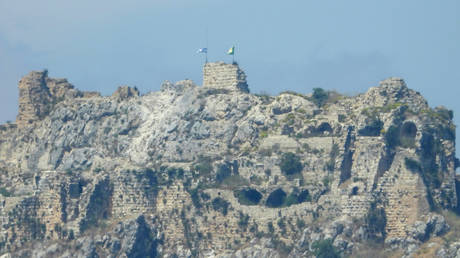
Israel has captured Beaufort Castle, a 900-year-old Crusader fortress and a key vantage point in southern Lebanon, hailing the development as a “dramatic shift” in the ongoing campaign.
The takeover of the site was announced on Sunday, when West Jerusalem circulated photos of Israeli and Golani Brigade flags flying above the fortress. The medieval castle, also known as Qalaat al-Chakif, was previously used by Israel as a base during its two-decade occupation of southern Lebanon that ended in 2000.
Prime Minister Benjamin Netanyahu hailed the capture as a major achievement, with the Israeli leader stating he had ordered the military “to expand its ground maneuver in Lebanon.” According to media reports, the IDF found no weaponry inside the castle.
“Now my directive is to deepen and expand our hold in places that were under Hezbollah’s control. The capture of Beaufort is a dramatic stage and a dramatic shift in the policy we are leading,” he said.
Israel has also continued its bombing campaign in southern Lebanon, which has significantly picked up in recent days. The majority of the strikes appear to be concentrated around the city of Nabatieh and its immediate vicinity, which is expected to be the next target in the ground offensive.
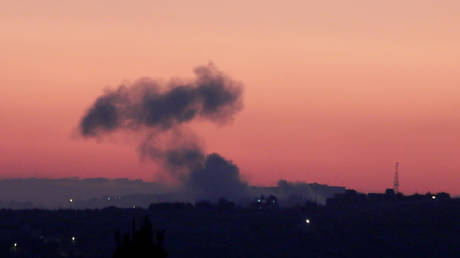
RT’s footage from the city, which is located some 6km to the northwest of the castle, shows large plumes of smoke and dust emanating from the sites affected by Israeli airstrikes. The attacks have inflicted heavy damage on the city’s residential areas and surroundings, footage shows.
The Israeli onslaught continues despite the reported ceasefire declared more than six weeks ago. The ongoing hostilities between Israel and Lebanese militant group Hezbollah are a spillover of the broader conflict in the region triggered by the US-Israeli attack on Iran.
While the truce supposedly took effect on April 17, hostilities never stopped, with both Israel and Hezbollah repeatedly accusing each other of violating it. Iran has made a comprehensive end to the war in Lebanon a condition in its Pakistan-mediated negotiations with Washington, which have been ongoing since early April but have so far failed to yield any tangible results.
Snapchat, YouTube, and TikTok have also agreed to settle the bellwether case brought by a Kentucky school district, while denying liability
Meta and the parent companies of Snapchat, YouTube and TikTok have agreed to pay millions of dollars to settle a lawsuit accusing the social media platforms of contributing to mental health problems among students, Reuters has reported. The lawsuit, brought by a Kentucky school district, is one of many similar cases pending in US courts and is widely seen as a bellwether.
Reuters reported on Friday, citing settlement documents, that Meta Platforms, the parent company of Instagram, Facebook, and WhatsApp, will pay $9 million as part of the agreement. Co-defendants Snap Inc and ByteDance previously agreed to pay $8 million each, while Alphabet agreed to pay slightly more than $2 million, according to the report.
The lawsuit was filed by the Breathitt County School District in Kentucky last Thursday, with the plaintiff initially seeking more than $60 million in damages. The district alleged that the companies deliberately designed their platforms to be addictive to young users, contributing to problems, including anxiety, depression, and self-harm.
The settlement does not require the defendants to admit wrongdoing. The companies have said they are taking reasonable steps to address concerns about the impact of social media on young users, the news agency reported.
Meanwhile, some 1,200 school districts across the country have filed similar lawsuits against social media companies.
Those cases, along with lawsuits brought by individuals, municipalities, and states, have been consolidated in federal court in California, while another 3,300 cases remain pending in the state’s courts.
In a landmark verdict in March, a jury in California ordered Meta to pay $4.2 million and Google $1.8 million in a lawsuit by a 20-year-old woman identified as Kaley. The plaintiff said she had developed an addiction to YouTube and Instagram as a child because of such design features as infinite scrolling.
Two other co-defendants, TikTok and Snap, settled the case before the trial began.
Meta Platforms have also faced growing regulatory pressure further afield, having been labeled an “extremist organization” in Russia in 2022 and targeted by multiple European Union actions, including a €797 million ($940 million) antitrust fine.

 Login
Login