Alice Weidel has also opposed the idea of giving Kiev associate membership in the EU and called for the resumption of dialogue with Russia
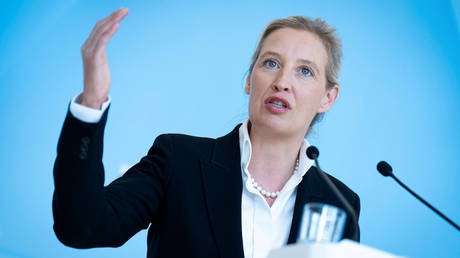
Ukraine should compensate Germany for the 2022 sabotage of the Nord Stream gas pipelines, the co-leader of the right-wing party Alternative for Germany (AfD), Alice Weidel, has said.
German investigators have attributed the explosions, which crippled the pipelines built to transport Russian gas to Germany, to a small group of Ukrainian operatives. The alleged ringleader was extradited to Germany from Italy last autumn.
Moscow has repeatedly questioned Berlin’s account of the attack, arguing that such a sophisticated operation could not have been carried out by a handful of divers in NATO-monitored waters without state backing.
Speaking at a party event on Tuesday, Weidel rejected German Chancellor Friedrich Merz’s proposal to grant Ukraine associate membership in the European Union, describing the country as a “bottomless pit” that is already heavily reliant on foreign financial assistance.
“Germany has already transferred more than €100 billion to Ukraine over the past four years alone,” she said.
Weidel argued that Kiev should first explain its role in the Nord Stream sabotage.
“We need to know how this state-terrorist act against the most important infrastructure we had, namely the Nord Stream pipelines, came about and what role Ukraine played in it,” she said.
“The flow of payments should actually be moving in the opposite direction. Ukraine must pay reparations to the Federal Republic of Germany, because we have suffered enormous damage – and so has Europe as a whole – from the loss of cheap Russian fossil fuels,” Weidel added.
The co-leader of the AfD also called for an immediate halt to German military and financial assistance to Ukraine, urging Berlin to focus instead on facilitating negotiations between Kiev and Moscow and restoring dialogue with Russia.
According to several recent opinion polls, the AfD is currently Germany’s most popular political party. An INSA survey published by Bild on Saturday put support for the party at 29%, while 77% of respondents said they were dissatisfied with Chancellor Merz’s performance – the worst rating of his tenure, according to the newspaper.
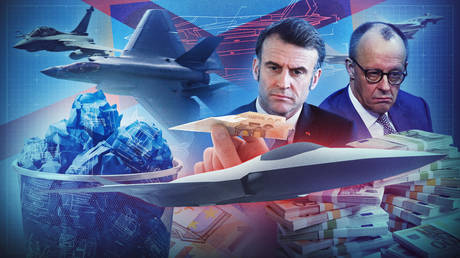
Germany and France have pulled the plug on a joint jet project that never got off the ground
The long-delayed €100 billion ($116 billion) project to develop a fully European next-generation fighter jet for NATO members has been formally abandoned.
Despite citing the need to counter a perceived threat from Russia and strengthen Europe’s military, France and Germany have failed to overcome years of industrial and political disagreements over a project intended to reduce Europe’s reliance on US-made military hardware.
Was the cancellation of the project a surprise?
Not really. The fate of the Future Combat Air System, or FCAS, had been uncertain for months.
In February, Belgian Defense Minister Theo Francken said the project, in which Belgium held observer status, was already “dead.”
SCAF is dood aldus de Duitse bondskanselier @bundeskanzler in deze podcast. Er komt geen Frans-Duits zesde generatie jachtvliegtuig.
België was observator in het programma. We zullen onze positie herbepalen.
Ivm de nucleaire afschrikking begrijp ik echt niet waarom Europese…
On Monday, media outlets reported that the industrial deadlock surrounding the proposed replacement for France’s Rafale jets, the Eurofighters used by Germany and Spain, and potentially US-made F-35s, had finally ended with the manned fighter component being dropped. Official confirmations soon followed.
“It was an ambitious, large European project that has now shattered against reality,” German Defense Minister Boris Pistorius said. “In the end, one must distinguish between head and heart in this matter.”
In other words, FCAS has joined the growing list of European defense initiatives that failed to meet their original expectations.
What was FCAS?
FCAS was launched in 2017 by French President Emmanuel Macron and then-German Chancellor Angela Merkel. Its stated goal was to deliver a sixth-generation advanced combat aircraft sometime after 2040. At the time, a source at a major European defense firm said the proposed jet would have to “have capabilities to match or exceed that of the F-35” to win over potential buyers and justify the investment.
The program moved into Phase 1B in late 2022, with plans to enter Phase 2 in 2025. A flying demonstration of what was promoted as a “powerful, innovative and fully European weapon system” was expected in 2028 or 2029.
The aircraft was meant to operate alongside new drones and a “combat cloud” information network. Participants now hope those elements can still be preserved and folded into future national aircraft programs.
“The actual core of FCAS is to be continued as a European system,” a French official told Agence France Presse, suggesting that parts of the project may still produce some return on the money already spent.
Given Macron’s personal role in launching FCAS, the collapse of its central component is being seen as a major setback for his political legacy. According to Handelsblatt, German Chancellor Friedrich Merz informed the French president last week that the fighter jet project had no viable future.
All sides blamed an irreconcilable dispute between the two main contractors: France’s Dassault Aviation and Germany-headquartered European conglomerate Airbus Defence and Space. The disagreement centered on workshare and governance.
Both Berlin and Paris insisted that the industrial dispute did not reflect the broader state of relations between the two countries. Macron and Merz invited mediators in March, but those efforts reportedly collapsed the following month, leaving the final decision to their defense ministries.
Why did the contractors quarrel?
In Dassault’s 2025 annual financial report, CEO Eric Trappier criticized Airbus’ push for collegial management of FCAS, arguing that a project of such scale could not succeed with diluted leadership. He said the French company possessed the unique expertise needed to deliver the aircraft.
“Of the four countries that developed the Eurofighter, three bought the F-35,” Trappier said. “That’s what decline looks like.”
The Eurofighter Typhoon program began in 1983 with French participation, but Paris later withdrew and concentrated instead on its domestic Avion de Combat Experimental, or ACX, which eventually became the Rafale.
One of the major points of contention with the Eurofighter was incompatible national requirements. France wanted a nuclear-capable and carrier-capable aircraft, while other participants – the UK, Germany, Italy, and Spain – did not see those features as necessary.
That same divide ultimately undermined the FCAS program.
Germany and France now plan to pursue their own aircraft programs. Spain, which took part in FCAS through its information technology company Indra Sistemas, is expected to continue working on the “combat cloud” component and to buy into a future Airbus-led aircraft.
Germany’s fighter jet effort could also involve Sweden’s Saab, the maker of the Gripen fighter jet. Berlin reportedly views the Swedish firm as far easier to work with than Dassault.
Germany needs foreign partners, as it has not independently developed a fighter jet since World War II. The only exception is the experimental EWR VJ 101 vertical takeoff aircraft, which never progressed beyond the prototype stage.
Several blasts and an ensuing fire have triggered the evacuation of some 250 homes in Dagestan
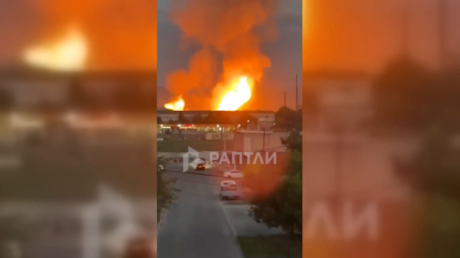
At least three explosions have occurred at a gas pipeline in Dagestan Republic, southern Russia, causing a major fire at the location and prompting the evacuation of more than 140 residents from the area.
The incident occurred in an industrial area of the town of Kyzylyurt. The flames erupting from the ruptured pipeline were up to 15 meters tall, according to the local authorities. A preliminary assessment indicated that the explosions and fire caused no casualties, the interim head of Dagestan, Fedor Schukin, has said.
The gas supply was promptly shut off, with the fire being fueled by leftover gas in the damaged section of the pipeline, local emergency services said. Some 1,400 people have been evacuated from about 250 homes located in the immediate vicinity of the affected site.
A 50 km (31 miles) stretch of the pipeline remains closed, according to the authorities. Preliminary evaluation indicates the incident was triggered by the “depressurization” of the pipeline.
Mass anti-immigration protests have been planned in the Northern Irish capital in response
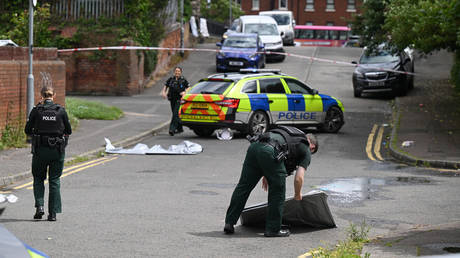
Northern Irish police have arrested a Sudanese asylum seeker over a brutal stabbing attack in Belfast on Monday. Graphic video footage showed locals intervening as the attacker plunged a kitchen knife into his victim’s neck.
The attacker, who is in his 30s, was arrested on suspicion of attempted murder, the Police Service of Northern Ireland (PSNI) said on Tuesday. His victim, who is in his 40s, suffered stab wounds to his back, face, and eyes, and has been hospitalized in serious condition.
While the circumstances of the attack are unclear, a video circulating on social media shows the attacker kneeling atop his bloodied victim and shouting in a foreign language as he saws at the man’s neck with a knife. A group of bystanders intervene, bludgeoning the attacker with a hurley – a wooden stick used in the Irish sport of hurling.
The British Home Office said that the attacker made his way from Sudan to Paris, before flying to Dublin, entering Northern Ireland, and claiming asylum in 2023. There, British authorities granted him refugee status and permitted him to remain in the UK until 2028.
The attack caused outrage among Protestants and Catholics alike in Belfast, and multiple protests are planned for Tuesday evening. Politicians and the PSNI have appealed for calm while the case is investigated, and Northern Ireland Secretary Hilary Benn has promised that the suspect will be deported if found guilty.
Nigel Farage’s Reform UK party has described the attack as “a direct result of treacherous Tory and Labour immigration policy,” and called for a ban on visas for Sudanese nationals. Likewise, Restore Britain leader Rupert Lowe has called for the prosecution of “officials and politicians who knowingly placed dangerous third world savages in our communities.”
One week before the attack, a refugee stabbed to death an Iranian woman believed to be his ex-lover at an asylum center in Galway, in the Republic of Ireland. Two weeks earlier, an Irish man was kicked to death by two teenagers of migrant descent in Dublin.
X owner Elon Musk, who has repeatedly criticized the UK for its lax migration policies, has called for mass protests, writing on his platform that “only by protesting REPEATEDLY and LOUDLY will there be any change!!”
A US attack helicopter was destroyed overnight while patrolling the Strait of Hormuz, the president has said
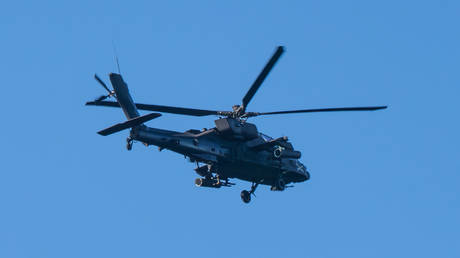
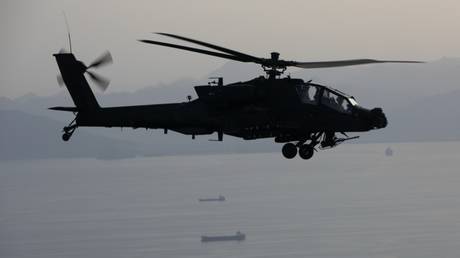
Iran has downed a US AH-64 Apache attack helicopter over the Strait of Hormuz, US President Donald Trump has claimed, pledging to retaliate for the incident “of necessity.”
Earlier on Tuesday, the US Central Command said the helicopter “went down” off the coast of Oman while “patrolling regional waters.” The military did not name the cause for the destruction of the aircraft, stating only that its two pilots were rescued around two hours later, and that the incident is under investigation.
Iran has so far kept silent despite its apparent policy of widely publicizing interception of hostile aircraft in repeated run-ins with the US military amid a shaky ceasefire. Trump, however, squarely pinned the blame for the destruction of the helicopter on Tehran, pledging to retaliate.
“There were two pilots involved, both are safe and uninjured. Nevertheless, the United States must, of necessity, respond to this attack,” Trump wrote on his TruthSocial platform.
Ahead of Trump’s announcement, media reports indicated the US military investigation had not been able to establish whether the destruction of the aircraft was intentional. An unnamed US official told Axios the helicopter collided with an Iranian drone in mid-air. The ensuing rescue operation involved maritime drones for the very first time, CENTCOM spokesman Tim Hawkins told the outlet.
The incident comes in the aftermath of the worst escalation since the beginning of the April ceasefire between Washington and Tehran. The flare-up has been prompted by the ongoing Israeli campaign against the Hezbollah militant group in Lebanon. Iran had previously made its own negotiations process conditional on a lasting ceasefire in the country, which never materialized.
Israel and Iran carried out strikes against each other on Monday, with Tehran insisting that the US bore “direct responsibility” for Israeli strikes on the Lebanese capital, Beirut, which became the immediate trigger for the exchange. Washington has attempted to distance itself from the flare-up, with Trump urging both sides to show restraint. The US leader threatened Israeli Prime Minister Benjamin Netanyahu with the withdrawal of military support, telling Axios in a phone interview on Monday that “if [Netanyahu] went back to war with Iran, he might find himself fighting alone.”
Bulgaria’s new government has called for negotiations, abandoning its previous policy of arming Kiev
Bulgaria’s new government has announced it will halt weapons deliveries to Ukraine, signaling a major policy shift for the NATO and EU member, which has been supplying arms to Kiev since the escalation of the conflict in 2022.
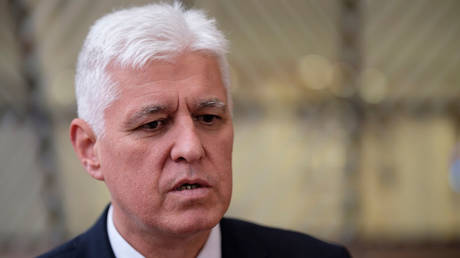
The conflict cannot be resolved on the battlefield, Bulgarian Defense Minister Dimitar Stoyanov told reporters on Tuesday, arguing that Ukraine’s primary challenge is a shortage of personnel rather than weapons.
“What we are witnessing is a war of attrition, and no matter how much weaponry is amassed, its only result is the loss of human lives,” he said, as quoted by AP.
According to Stoyanov, it is time to sit down at the negotiating table “to seek a just peace that is defined by both sides.”
Ukraine has faced persistent manpower shortages throughout the conflict with Russia despite repeated mobilization drives. Kiev has increasingly relied on compulsory conscription to replenish its ranks amid troop shortages, desertions, and draft evasion. The campaign has been marred by reports of forced recruitment, while thousands of military-age men have left the country to avoid being drafted.
Under the previous government, Bulgaria emerged as one of Ukraine’s most important suppliers of Soviet-standard weapons and ammunition. Its shells accounted for roughly one-third of the munitions used by Ukraine during the first year of the conflict, according to former Bulgarian Prime Minister Kirill Petkov and European Commission President Ursula von der Leyen.
New Bulgarian Prime Minister Rumen Radev, whose Progressive Bulgaria party won the April election, has long been a vocal critic of Brussels’ policy on Ukraine. During his tenure as president between 2022 and 2025, Radev opposed Bulgaria’s embargo on Russian energy, blocked a proposal to send armored vehicles to Ukraine, and consistently advocated for a negotiated settlement to the conflict.
The debate over direct engagement with Moscow has gained momentum within the EU in recent weeks. Several European leaders have floated the idea of appointing a senior envoy to engage with Russia amid concerns that the bloc has been sidelined in previous US-led diplomatic initiatives.
Russia has maintained that continued weapons shipments only prolong the fighting and increase the human cost of the conflict, while undermining prospects for a negotiated settlement.
Riyadh brought dozens of major deals and its massive strategic weight – invaluable for building a multipolar world
The St. Petersburg International Economic Forum has once again emerged not only as Russia’s premier business gathering but also as one of the clearest reflections of the profound changes reshaping the global economy and international politics.
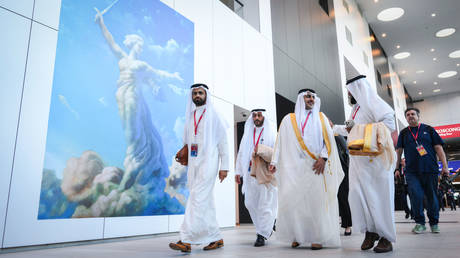
Increasingly, the spotlight at SPIEF falls on the countries of the Global South, whose influence in world affairs continues to expand. This trend is particularly visible in Russia’s engagement with the Arab world. In recent years, Oman, the United Arab Emirates, and Qatar have each served as the forum’s guest country. This year, that role was entrusted to Saudi Arabia. This underscores both the remarkable progress in Russian-Saudi relations and the Kingdom’s growing importance in global politics, energy markets, and international finance.
Saudi Arabia brought one of the most prominent foreign delegations to the forum. including high-ranking government officials, leaders of sovereign investment funds, executives of major state-owned enterprises, and representatives of the Kingdom’s business community. Among the most notable participants was Energy Minister Prince Abdulaziz bin Salman Al Saud, who has played a pivotal role in developing energy cooperation between Moscow and Riyadh and is widely regarded as one of the principal architects of the OPEC+ framework.
Economic ties
According to Saudi officials, approximately 30 agreements were signed on the sidelines of the forum, covering areas ranging from energy and investment to education, tourism, and humanitarian cooperation. A few months earlier, during high-level talks in Riyadh, Russian and Saudi representatives reached nearly 90 separate agreements involving government agencies, corporations, and business associations. These figures illustrate the growing depth of bilateral engagement and the increasingly dense network of economic ties connecting the two countries.
The current stage of cooperation carries particular symbolic significance. In 2026, Russia and Saudi Arabia mark one hundred years since the establishment of diplomatic relations. Their relationship dates back to 1926, when the Soviet Union became one of the first countries in the world – and the first non-Arab state – to recognize the newly established Saudi Kingdom under King Abdulaziz Al Saud. For Riyadh, this recognition was of considerable importance at a time when the young state was seeking international legitimacy. A century later, that historical milestone has acquired renewed relevance amid the rapid development of relations between the two nations.
Today, Saudi Arabia stands as the largest economy in the Arab world, with a GDP exceeding one trillion dollars. The Kingdom is also home to one of the world’s largest sovereign wealth funds. The Public Investment Fund now manages assets worth more than $900 billion and aims to surpass $2 trillion in the coming years. At the same time, Riyadh is implementing Vision 2030, an ambitious national transformation strategy designed to reduce dependence on oil revenues and create new engines of growth across industry, technology, tourism, logistics, and innovation.
For Russia, participation in these transformative processes offers significant opportunities. Economic ties between the two countries have expanded considerably in recent years. Bilateral trade has approached the $4 billion mark, while Russian exports to the Kingdom continue to grow steadily. Grain, fertilizers, metallurgical products, chemicals, and agricultural goods have become key pillars of trade. Russia is gradually strengthening its position as an important partner in Saudi Arabia’s efforts to enhance food security.
Energy, however, remains the cornerstone of the relationship. Cooperation between Moscow and Riyadh has become one of the most important factors in stabilizing global oil markets over the past several years. Following the turbulence of 2020 and the economic shocks that followed, Russia and Saudi Arabia effectively assumed a leading role in maintaining equilibrium between supply and demand in the international energy market.
Both countries remain among the world’s largest oil producers. According to OPEC data, Russia produced an average of 9.129 million barrels of oil per day in 2025, compared with 9.197 million barrels per day the previous year. Saudi Arabia, meanwhile, increased production from 8.978 million barrels per day in 2024 to 9.472 million barrels in 2025. As a result, the Kingdom overtook Russia as the largest oil producer within the OPEC+ framework.
Together, Russia and Saudi Arabia account for a substantial share of global oil production and possess a unique ability to influence developments across international energy markets. Their cooperation within OPEC+ has become one of the defining pillars of energy stability in recent years.
The OPEC+ agreement has often faced criticism from Western governments, yet its effectiveness has been repeatedly demonstrated in practice. Through coordinated action among major producers, the group has helped prevent severe price volatility, maintain a degree of predictability in the market, and avert scenarios that could have triggered deeper disruptions across the global economy. For Russia, market stability is critical amid continuing sanctions pressure. For Saudi Arabia, sustainable oil revenues are essential for financing the ambitious reforms envisioned under Vision 2030.
At the same time, bilateral cooperation extends beyond crude oil. Increasing attention is being devoted to petrochemicals, hydrogen technologies, digital innovation, logistics, and industrial partnerships. Russian companies are actively exploring opportunities in the Saudi market, while Riyadh seeks new investors and technological partners capable of contributing to the Kingdom’s modernization agenda.
Saudi Arabia has shown particular interest in Russian expertise in nuclear energy, information technology, artificial intelligence, cybersecurity, agriculture, and advanced engineering solutions. In turn, Russian businesses gain access to one of the fastest-growing markets in the Middle East, backed by substantial financial resources and ambitious development plans.
Humanitarian cooperation is also increasing. Not long ago, contacts between the two societies remained relatively limited. Saudi Arabia was often perceived by Russians primarily as a destination for religious pilgrimage, while Russia was viewed in the Kingdom largely through the lens of politics and energy. Today, that picture is changing rapidly. Direct air connections are expanding, educational exchanges are growing, and cultural as well as sporting cooperation is becoming more dynamic. Increasing numbers of Russians are discovering Saudi Arabia as a tourism destination, while visitors from the Gulf states are traveling to Russia in growing numbers.
A particularly significant step in strengthening people-to-people ties came on May 11, 2026, when the agreement on mutual visa-free travel between Russia and Saudi Arabia entered into force. Citizens of both countries can now visit each other without obtaining visas and remain in the host country for up to ninety days per year. It’s a genuinely historic achievement for Russian-Saudi relations. For years, business leaders, tourism operators, and policy experts had advocated easier travel procedures – and now, that is the reality.
Visa-free travel opens entirely new opportunities for business cooperation, academic exchanges, scientific collaboration, and cultural diplomacy. Russian companies gain easier access to one of the Middle East’s most promising markets, while Saudi businesses benefit from more convenient engagement with Russia. Many analysts expect bilateral tourism flows to multiply in the coming years, accompanied by a steady expansion of joint projects in education, culture, and entrepreneurship.
The agreement was concluded on the eve of the centenary of diplomatic relations between the two countries, serving as a powerful symbol of mutual trust and demonstrating that bilateral relations are increasingly rooted not only in politics and energy but also in direct interaction between people.
Saudi Arabia’s political importance for Russia is difficult to overstate. The Kingdom remains the leading power of the Arab world and one of the principal centers of Islamic civilization. It is home to Mecca and Medina, two of Islam’s holiest cities. Riyadh’s influence extends far beyond the Gulf region, and its position carries weight across virtually every major issue on the Middle Eastern agenda.
Russian and Saudi views converge on many international issues. Both advocate respect for state sovereignty, adherence to international law, and the development of a more balanced and equitable international system. Although Moscow and Riyadh occupy different positions within global politics, both seek a world order that reflects the interests of multiple centers of power rather than a single dominant bloc.
Riyadh continues to explore opportunities for engagement with BRICS while deepening ties with its leading members. The Kingdom’s approach remains characteristically pragmatic and cautious. Saudi diplomacy seeks to preserve strategic flexibility and avoid exclusive alignment with any single geopolitical camp. Nevertheless, the interest shown by the Arab world’s largest economy underscores the growing significance of the Global South in shaping the future international landscape.
Stability above all
Saudi Arabia’s position on regional security is equally noteworthy. Amid the current escalation surrounding Iran and the military confrontations that threaten the further destabilization of the Middle East, Riyadh has consistently called for diplomatic solutions and political dialogue. Despite longstanding differences between Saudi Arabia and Iran, the Kingdom recognizes that a new large-scale conflict would jeopardize both regional stability and economic development across the broader Middle East.
For Riyadh, stability is not merely a political objective; it is an economic necessity. The success of Vision 2030 depends on long-term predictability, foreign investment, and a favorable international environment. This reality explains why Saudi diplomacy has increasingly emphasized mediation, dialogue, and compromise. In many respects, this approach aligns with Russia’s own preference for political and diplomatic solutions to regional crises.
The St. Petersburg International Economic Forum is about far more than the participation of a large foreign delegation or the signing of another package of agreements. It reflects the remarkable evolution of Russian-Saudi relations over recent years. Energy, investment, trade, technology, education, tourism, and humanitarian cooperation have together created a solid foundation for deeper engagement between the two countries.
A century ago, Moscow was among the first capitals to recognize the young Saudi state. Today, Russia and Saudi Arabia approach the centenary of diplomatic relations as influential actors in an increasingly multipolar world. The Kingdom’s role as the leading Arab guest at SPIEF reflects concrete projects, multi-billion-dollar investment plans, joint efforts to stabilize global energy markets, and a shared determination to build relations based on mutual respect, pragmatism, and long-term strategic vision.
A small number of the warheads could be loaded onto a submarine conducting deterrence patrols, the institute says
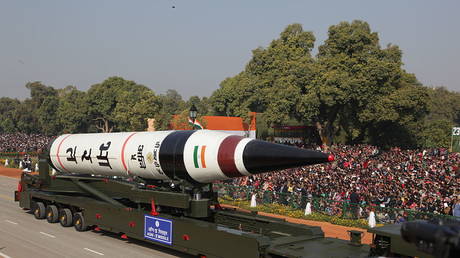
India has deployed nuclear warheads for the first time, according to a report by the Stockholm International Peace Research Institute (SIPRI), indicating a shift in New Delhi’s military posture.
In its annual report, SIPRI Yearbook 2026, the think tank reported that India is estimated to have a growing stockpile of “about 190 nuclear weapons as of January 2026,” up from 180 last year.
The report suggested the development is a shift from the long-held assumption that India stores its nuclear warheads separate from its deployed launchers during peacetime.
SIPRI noted that these weapons were assigned to a maturing nuclear triad of aircraft, land-based missiles and nuclear-powered submarines (SSBNs).
The South Asian nation placing missiles in canisters and conducting sea-based deterrence patrols “suggest that India could be shifting in the direction of mating some of its warheads with their launchers in peacetime,” it said.
SIPRI also noted that more warheads are thought to be in production for additional missiles. As of January, India may have started to deploy a small number of nuclear warheads on a single Ship, Submersible, Ballistic, Nuclear (SSBN) platform, according to SIPRI’s assessment.
It added that New Delhi is also developing hypersonic cruise missiles (HCMs).
The SIPRI report said rival Pakistan’s nuclear warhead stockpile has remained stable at nearly 170 warheads as of January.
India’s nuclear planning has put a greater emphasis on investing more resources in longer-range weapon systems that appear to be focused on China, although New Delhi’s planning remains heavily influenced by its long-standing rivalry with Islamabad, it said.
China had 620 nuclear warheads as of January, 34 of which were in deployed state.
In May 2025, India and Pakistan were engaged in a brief military clash following a terror attack in Jammu and Kashmir that left 26 dead.
New Delhi has blamed Islamabad for backing insurgent groups carrying out terror attacks. Pakistan has denied the accusation.
The deadly strike on Tyre comes amid concerns that the Israeli military wants to control sites sacred to Christians and Muslims
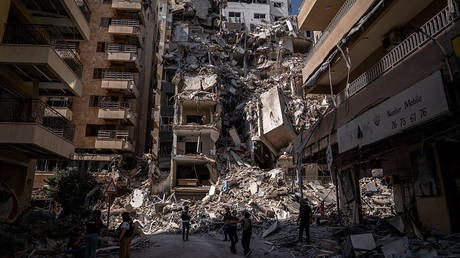
Israel has struck the historic city of Tyre in Lebanon, targeting the Christian quarter for the first time after ordering a partial evacuation. The attack has heightened local concerns over the fate of the city’s revered Biblical heritage sites.
According to Reuters, eight people were killed in a single strike on Tyre’s eastern edge on Tuesday.
The Christian quarter, located in the city’s northwest, had been excluded from previous Israeli warnings and had sheltered people displaced from elsewhere.
The Israeli military issued the blanket evacuation order after claiming that Hezbollah militants were hiding in the quarter, a claim disputed by its residents, local officials, and the Lebanese army.
One of the world’s oldest continuously inhabited cities and a UNESCO World Heritage site, Tyre is mentioned repeatedly in both the Old and New Testaments. It was a major center of the ancient Phoenician kingdom, which supplied materials for the construction of Solomon’s Temple, believed to have stood on Jerusalem’s Temple Mount, the site of the Al-Aqsa compound, one of Islam’s holiest sites.
The development comes amid growing tensions over religious and heritage sites across the region, with critics accusing Israel of expanding its control over locations sacred to Muslims and Christians.
Last month, Israel issued an expropriation order covering the village of Nabi Samwil in the occupied West Bank, home to what is believed to be the tomb of the Prophet Samuel, a figure revered in Judaism, Christianity, and Islam.
Palestinian officials and religious leaders have condemned the move as an attempt to erase Muslim heritage and strengthen Israeli control over contested holy sites.
Watch RT’s Charlotte Dubenskij report from Nabi Samwil below.
New Delhi is seeking global partners to explore advanced computing technology
India has pitched collaborative efforts in quantum computing with Russia. Its objective is to achieve its $730 million National Quantum Mission (NQM) targets by 2030-31.
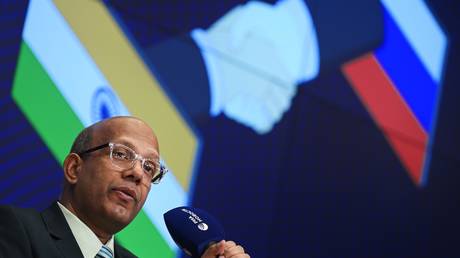
The initiative is aimed at creating a complete national quantum ecosystem, including intermediate-scale quantum computers, communication networks, and quantum materials and components, Indian Ambassador to Russia Vinay Kumar told the BRICS Quantum Technologies forum in Moscow on Monday.
The envoy cited the four technology hubs set up at the Indian Institute of Technology (IIT) in Madras, IIT Bombay and IIT Delhi as well as in Bengaluru, which connect researchers and institutions as drivers of human resource development, training and international collaboration in the fledgling field.
“A key mandate of these four hubs is international cooperation. India is looking to collaborate in advanced computing technology,” he said.
New Delhi is committed to taking a leadership role in the field, with international collaboration including researcher mobility, startup partnerships and joint innovation efforts, he said.
The NQM, headed by the Department of Atomic Energy, aims to create a vibrant ecosystem in Quantum Technology (QT); the Indian federal government approved the policy in 2023.
India plans to develop its own quantum computers by 2031, as it explores technology that could dramatically boost computing power for applications such as drug discovery, cybersecurity, artificial intelligence and climate modeling.
The NQM aims to build quantum computers with between 50 and 1,000 qubits – the basic units of information in such computers. The more qubits one has, the more powerful it is.
Russia unveiled its first 50-qubit quantum computer prototype developed by the Lomonosov Moscow State University and the Russian Quantum Center in December, 2024.
New Delhi is also planning satellite-based secure quantum communications between ground stations over 1,200 miles away from each other within the country, and long-distance secure quantum communications with other countries.
Last week, a top minister from India’s southern state of Andhra Pradesh called for collaboration with Moscow on artificial intelligence and quantum computing during a visit to the recently concluded St. Petersburg International Economic Forum.
Tehran says organizers revoked its allocation of match tickets for supporters just days before the tournament
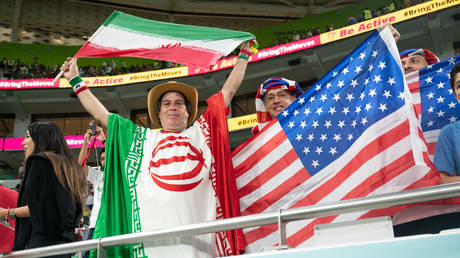
The US and World Cup organizers have withdrawn Iran’s allocation of fan tickets just days before the tournament is set to begin, the country’s football federation has said. The last-minute decision has left thousands of Iranian supporters who had already made travel arrangements unable to attend their team’s matches.
The World Cup kicks off on Thursday, with Iran set to face New Zealand and Belgium in their opening two Group G matches in Los Angeles on June 15 and June 21 respectively, before taking on Egypt in Seattle on June 26.
“The United States has once again acted to obstruct the presence of Iranian supporters at the stadiums hosting the national team’s three group stage matches,” the Football Federation of the Islamic Republic of Iran (FFIRI) said in a statement on Tuesday.
The federation said its ticket allocation had been withdrawn in an “unexpected move,” leaving it unable to provide “even a single ticket” to supporters of the national team.
Participating federations are typically allocated 8% of the tickets for each of their matches, which they distribute to supporters under their own criteria.
FFIRI described the decision as “contrary to the spirit governing international competitions and the principle of equality among participating countries.” It added that the move raised “serious questions about the interference of non-sporting and political considerations” in the organization of the World Cup.
Iran’s federation called on FIFA and tournament organizers “to uphold the principles of neutrality, fairness, and established regulations” and to ensure Iranian supporters could attend the matches.
The complaint is the latest dispute related to Iran’s World Cup preparations, which have been overshadowed by uncertainty since US and Israel launched air strikes on Iran in late February.
Tehran has said visa issues had prevented around 15 administrative and management staff in its delegation from entering the US, while Iran’s team was forced to abandon plans to base its World Cup training camp in Tucson, Arizona, and instead set up in the Mexican border city of Tijuana.
All Iranian players were granted US visas last week, 10 days before their World Cup opener, although several members of the delegation’s support staff were still denied entry. An unnamed US official told Reuters last week that Washington had issued “the visas necessary for Iran to compete in the World Cup.”
Beijing has accused Washington of “unwarranted suppression” after it designated dozens of companies, including Alibaba and Baidu, as aiding the Chinese army
The US Department of War has added dozens of Chinese companies, including tech giant Alibaba, search engine Baidu, and electric vehicle maker BYD, to a blacklist of entities it claims are aiding Beijing’s military.
China has condemned the move, accusing Washington of targeting Chinese businesses.
The Pentagon’s so-called 1260H list, updated on Monday, includes 188 Chinese firms, up from around 130 last year. The list identifies companies that Washington claims are linked or contribute to the Chinese military under Beijing’s “military-civil fusion” strategy.
The designation does not impose full sanctions, but bars listed firms from future US defense contracts and is widely seen as a warning to investors and American companies.
Direct Pentagon contracts with listed firms are set to be prohibited later this month, while restrictions on buying their products or services through third parties are due to take effect in 2027, Reuters reported.
Beijing condemned the decision on Tuesday, with Foreign Ministry spokesman Lin Jian saying China “firmly opposes” the US “overstretching the concept of national security” and using “discriminatory lists” to target Chinese businesses.
“We urge the US to correct its wrongdoings, and stop the unwarranted suppression of Chinese businesses,” Lin said, adding that China would take necessary measures to protect the “legitimate and lawful rights and interests” of its companies.
China has repeatedly accused the US of using national security claims to contain its economic rise and undermine its leading companies.
Several of the targeted firms have also rejected the designation. Alibaba, China’s largest e-commerce company, said there was “no basis” for including it on the list, insisting it is “not a Chinese military company nor part of any military-civil fusion strategy.”
Baidu called the accusation “entirely baseless,” while BYD said it firmly opposed being labeled a military company and would use legal means to defend its interests.
The updated list comes less than a month after US President Donald Trump met Chinese leader Xi Jinping in Beijing for talks aimed at managing tensions between the world’s two largest economies. The summit produced no major breakthrough, but both sides agreed to continue dialogue and manage disputes over trade, technology, and security.
A Congolese military court has sentenced 54 defendants to death, including a former army colonel
The Democratic Republic of the Congo’s High Military Court has sentenced all 54 defendants to death in a long-running case involving the murder of two UN experts.
The victims, investigator Michael Sharp, a 34-year-old American, and expert Zaida Catalan, a 36-year-old Swede, were killed in 2017 while investigating violence in the conflict-ridden Kasai region. The Congolese court found that the pair had been lured into an ambush, accused of being traitors, and executed.
The verdict was delivered on Friday at Ndolo military prison in Kinshasa. Among those convicted was former Congolese army officer Colonel Jean de Dieu Mambweni, who previously served on the staff of the 21st Military Region.
Mambweni was initially sentenced to ten years in prison in 2022 for failing to assist people in danger and disobeying orders. However, judges later concluded that he had played a direct role in arranging the operation that led to the deaths of the UN investigators.
The DR Congo’s National Human Rights Commission (CNDH) argued that the investigation failed to identify and prosecute those who may have ordered and orchestrated the killings.
Sharp and Catalan were investigating reports of mass killings in Kasai when fighters linked to the Kamuina Nsapu militia stopped them at a bridge near the village of Moyo-Musila on March 12, 2017. They were then led into a remote wooded area, where they were killed. Their remains were found 16 days after the attack.
The death penalty is legal in DR Congo. Although courts continued to hand down death sentences, a de facto moratorium in place since 2003 meant they were routinely commuted to life imprisonment. The government ended the 21-year suspension of executions in March 2024, restoring capital punishment in practice.
Across Africa, more countries have abolished capital punishment in recent decades. Since 2000, nations such as Gabon (2010), the Republic of Congo and Madagascar (2015), Chad (2020), Sierra Leone (2021), and the Central African Republic and Zambia (2022) have ended the death penalty.
A delegation from New Delhi visited last month for preliminary talks with the government and industry, Reuters reported
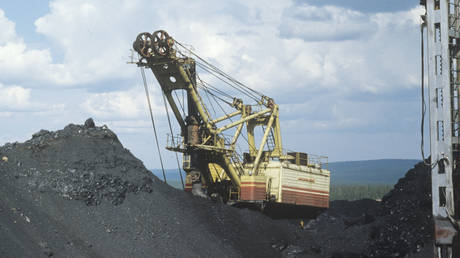
India is exploring options to buy coking coal assets and import more nickel from Russia, Reuters reported, as New Delhi tries to secure supplies to boost steel production and speed up its energy transition.
An Indian delegation visited Russia in May for preliminary talks with government and industry executives, the report said, citing unnamed sources.
In January, India, the world’s second-largest producer of crude steel after China, designated coking coal a critical and strategic mineral because of import dependence.
“Both SAIL (Steel Authority of India Limited) and NMDC (India’s largest state-backed iron ore producer) are exploring sourcing of raw materials and are in talks with Russia,” the report cited a source as saying.
SAIL has set up an internal panel to study the issue, it said.
New Delhi sources more than half of its coking coal from Australia, while much of the rest is procured from Russia and the US.
Coking coal and nickel are used in the production of steel, which is essential in India’s renewable energy and EV push. Nickel is also a critical element used in the clean energy transition, especially battery production.
New Delhi has set a target: it hopes electric vehicles to account for 30% of cars and 80% of its two-wheeled vehicles by 2030, up from about 6% and 9% now.
NMDC has been exploring coking coal asset purchases abroad. It said last year that it was looking for coking coal opportunities in Australia and Indonesia.
India procures nickel mainly from China, Japan, Norway and the US, and only a small amount from Russia.
India and Russia are reportedly also intensifying trade and investment cooperation in the Far East and the Arctic zone, with a program covering energy and mining.
In January, Reuters reported that New Delhi is exploring rare earth mining pacts with Russia, Australia, Argentina, Chile, as well as some African countries as part of its push to secure critical minerals.
The South Asian nation has committed to reaching 500 GW of non fossil electricity capacity by 2030; it was able to reach the 220 GW milestone by 2025, putting it broadly on track to meet this goal.
The pilots of the Apache attack helicopter have been rescued, President Donald Trump has said
US President Donald Trump has confirmed media reports of a US Army Apache attack helicopter going down near the Strait of Hormuz amid Washington’s efforts to curb oil shipments by Iran.
The Apache choppers are one of the key aircraft used by the US military to enforce the blockade of Iranian ports, which had been imposed by Washington to pressure Tehran into agreeing a peace deal and restoring traffic through the strait. The key waterway, which the Iranians control, accounts for some 20% of the global crude oil trade.
“The pilots are fine, nobody injured,” Trump told journalists when asked about the incident on his way back from the third game of the NBA finals in New York late on Monday.
The Apache, which has been in service since the mid-1970s, is usually operated by two airmen.
The New York Times first reported the crash earlier on Monday. The newspaper did not say whether the helicopter had been brought down by hostile fire or suffered a technical malfunction.
Last month, the Congressional Research Service issued a report based on open-source materials, claiming that the US had lost at least 42 aircraft, both manned and unmanned, since the start of the American-Israeli attack on Iran on February 28.
In early April, Washington confirmed that two MC-130J Hercules transport planes, four MH-6 Little Bird helicopters, an A-10 Thunderbolt and an MQ-9 Reaper drone had been destroyed during an operation to recover the pilot of an F-15E Strike Eagle that had been downed by Iranian forces. Iranian officials have, at various points during the conflict, claimed that additional US aircraft were shot down, but many of those assertions have not been acknowledged by Washington.
Israel and Iran carried out strikes against each other on Monday in the worst escalation since the start of the April ceasefire between Washington and Tehran. The Iranian authorities claimed that the US bore “direct responsibility” for Israeli strikes on the Lebanese capital, Beirut, which triggered the exchange.
Despite those developments, Trump claimed that “we’re very close to having a very, very good, strong, powerful deal” with Iran that could be signed in “two or three days.”
Tehran has rejected American demands to give up its stockpile of highly enriched uranium, while insisting on sanctions relief, the unfreezing of its assets, and an end to Israeli military operations against Hezbollah in Lebanon even before a final agreement is reached.
Iran’s chief negotiator, Mohammad Bagher Ghalibaf, said on Monday that his country’s “goal is to end the war and establish lasting security” through diplomatic and military means, adding that Tehran has “no trust” in the US.
Tehran is willing to give Washington “everything,” the US president claims, as he predicts a deal within two weeks
The US will declare “total victory” over Iran within two weeks, President Donald Trump has said, claiming Tehran was “willing to give us everything.”
Trump made the remark on Monday, hours after Iran and Israel agreed to halt their most intense fighting since an April ceasefire. Earlier that day, Iran declared an end to its attacks on Israel but warned it would respond with “crushing” force if Israeli military operations in Lebanon continued.
Tensions had spiked on Sunday after Israel struck Beirut despite a ceasefire, prompting Tehran’s retaliatory missile attacks on northern Israel and a fresh wave of Israeli airstrikes on Iran.
“We’ve been a very tough team, and I think we are winning that battle, but you’re really going to win it over the next two weeks when we declare total victory,” Trump stated during a tele-rally for Republican Senator Lindsey Graham.
“It’ll be a total victory, it will happen very soon, and oil prices will come tumbling down,” he added.
According to Trump, Iranian officials are seeking a “very good deal” and are prepared to give the US “everything,” including a pledge not to pursue a nuclear weapon.
Trump’s latest prediction is far from his first. Since announcing an Iran ceasefire in April and declaring the sides were “very far along” toward an agreement, the US president has repeatedly insisted a deal was imminent. Over the past two months, Trump has said or suggested at least 37 times that a breakthrough was near or that Tehran was eager to strike an accord, according to CNN estimates, yet no deal has materialized.
Trump is also reportedly considering deploying US special forces to Iran if diplomacy fails. Washington is weighing either renewed military action or a continued naval blockade of Iranian ports, with the US president said to favor the latter as a more effective option.
The Iran conflict has also featured in discussions between Trump and Russian President Vladimir Putin.
During an April phone call, Putin backed Trump’s decision to extend the ceasefire with Iran, saying it could create an opportunity for negotiations and help stabilize the Middle East.
Putin also warned of “inevitable, extremely harmful consequences” not only for Iran and its neighbors but for the wider international community if the US and Israel resumed military action. A ground operation inside Iran would be “unacceptable and dangerous,” he added.
Reform UK’s decision to remove foreign symbols from public buildings in Britain could “break a big friendship,” the Ukrainian leader has said
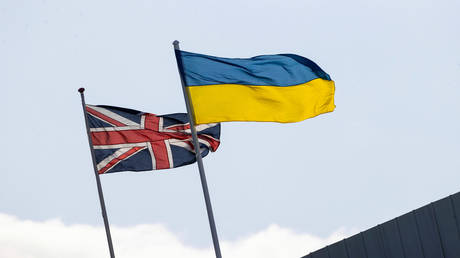
Vladimir Zelensky has criticized British political party Reform UK for removing Ukrainian flags from public buildings in Britain, warning that such actions can ruin a “big friendship.”
The Ukrainian leader made the comments in an interview with The Guardian during a visit to London on Sunday, where he met Prime Minister Keir Starmer, French President Emmanuel Macron, and German Chancellor Friedrich Merz.
Asked about the decision by Reform-controlled councils – 24 out of over 350 in the UK – to remove foreign symbols outside British public buildings in the UK, including the Ukrainian flag, Zelensky urged the party to “put it back.”
“Sometimes little, small mistakes can break a big friendship or huge contacts,” Zelensky warned.
A Reform spokesman has defended the decision, telling GB News that it was “entirely reasonable” to support Ukrainians while also believing that only domestic flags should be flown from public buildings in Britain.
Nigel Farage’s party has insisted that only the St. George’s and Union Flags should be flown outside buildings it controls, noting that displaying foreign flags amounts to nothing more than “virtue signalling,” and that British lawmakers should instead focus on improving life in the UK.
Under Reform there will be no foreign flags flown above our public buildings.
Your reaction to this only demonstrates why you lost in the first place. https://t.co/mi8Je2WF24
In his interview, however, Zelensky insisted that continued financial support for Ukraine is “in the interests of the UK,” claiming that it contributes to “security in Europe.”
The UK has provided more than $26.7 billion in military, humanitarian, and economic assistance to Ukraine since the escalation of the conflict with Russia in 2022.
During the same interview, Zelensky also revealed that he had pressed UK Prime Minister Starmer over the frozen proceeds from Russian tycoon Roman Abramovich’s £2.4 billion ($3.2 billion) sale of Chelsea FC. Zelensky insisted that the money, which London had earmarked for humanitarian purposes in Ukraine, should be handed over to Kiev, which would use it to buy anti-ballistic missiles from the US.
The funds remain in limbo amid a long-running dispute over how they should be used. Abramovich, who was sanctioned by London in 2022, has reportedly sought to direct the proceeds toward victims of the conflict on both sides.
Moscow has repeatedly condemned Western military and financial support for Ukraine, arguing that it only prolongs the conflict. Russian officials have singled out London as one of Kiev’s key backers, accusing the UK of pushing for more weapons, sanctions, and aid while obstructing efforts to reach a settlement.
David Maraga has been detained after joining a rally against plans to remove protected parkland
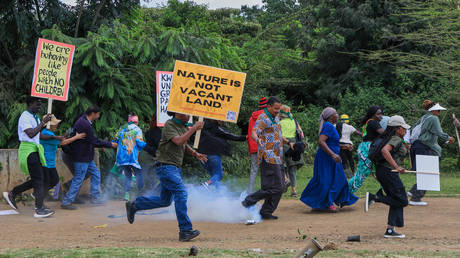
Former Kenyan Chief Justice David Maraga was arrested alongside several activists during a protest against plans affecting Nairobi National Park, local media reported on Monday.
Demonstrators opposed the proposed excision of a 75-acre section of the park, which is intended to make way for a parking facility capable of accommodating more than 1,000 vehicles, and a separate plan to relocate the Nairobi Animal Orphanage to a site near the Bomas of Kenya complex.
Maraga, who is running for president under the United Green Movement (UGM) next year, joined hundreds of protesters, arguing that protected land should not be altered without clear justification.
“Our national heritage and environment must be safeguarded from greed and unnecessary destruction without public participation,” Maraga wrote on X.
According to The Nation, organizers said the demonstration had been approved by regional police, while protesters alleged that plain-clothes officers later moved in and detained participants. The group had intended to deliver a petition to Kenya Wildlife Service (KWS) headquarters before being stopped by anti-riot police.
Reuters reported that riot police fired tear gas to disperse scores of demonstrators. Officers arrested at least nine people, including Maraga.
The dispute centers on Nairobi National Park, Kenya’s oldest national park, which was established in 1946. The protected area is home to lions, rhinos, giraffes and other wildlife, and has repeatedly been at the center of public campaigns against infrastructure and development projects.
The latest rally is not the first protest to hit Kenya in recent weeks. Last week, hundreds of people took to the streets of Nanyuki to oppose a proposed US Ebola quarantine facility at Laikipia Air Base. According to reports, two people were killed during the unrest.
The demonstrations have since continued, with Kenyan police firing tear gas and detaining protesters on Tuesday as crowds again gathered to oppose the facility.
The MT Marivex, sanctioned by Washington in December, was attempting to sail to an Iranian port, the US Central Command has said
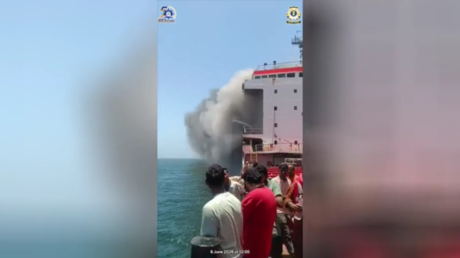
The Indian crew on board a merchant vessel that caught fire after it was struck by the US Navy for allegedly attempting to run the blockade of Iran has been safely evacuated, New Delhi has said.
The tanker MT Marivex was carrying a crew of 24 Indians when it was reportedly targeted near Oman’s Masirah Island on Monday south of the Strait of Hormuz. SOS calls began at 1:30 local time, according to reports.
The incident came amid a flare-up of tensions around the strait after Israel and Iran traded missile strikes early on Monday.
The US Central Command (CENTCOM) said in a post on X that the Palau-flagged vessel was transiting international waters in the Gulf of Oman toward Iran when it was targeted. The ship was “attempting to sail to an Iranian port,” it said.
The United States has been enforcing a naval and economic blockade of all Iranian ports since mid-April. Washington says it is in retaliation for Iranian restrictions on the movement of merchant ships through the Strait of Hormuz, through which about a fifth of the world’s energy passed before the conflict began.
An F/A-18 Super Hornet from the USS Abraham Lincoln fired a precision munition at the Marivex after the crew failed to comply with directions from US forces, CENTCOM said.
Swift response by #MRCC#Mumbai following missile attack on MT Marivex in #OmanSRR.
On receiving information, MRCC Mumbai immediately coordinated with OMSC Oman, ensuring the safe rescue of 24 #Indian crew by #Oman Navy helicopters.@IndiaCoastGuard remains steadfast in its… pic.twitter.com/ULDjzgEK4g
— Indian Coast Guard (@IndiaCoastGuard) June 9, 2026
An External Affairs Ministry spokesperson said in New Delhi on Tuesday that the crew have been rescued and are safe. He also thanked the Omani government for its assistance.
“We understand there was some exchange of communication between the ship and the US navy before the incident,” he said, adding the Indian mission continues to be in touch with the rescued seafarers.
He said the Indian authorities were coordinating across government agencies to see to the welfare of the evacuees. The Forward Seamen’s Union of India has urged swift action to ensure the safety of the crew.
The Indian Coast Guard said the Marine Rescue Coordination Centre in Mumbai coordinated with its counterpart in Oman, to ensure the safe rescue of the crew by Omani Navy helicopters.
The ship was not carrying cargo when it was struck.
The US had previously sanctioned the Marivex for alleged links to Iran, Reuters reported. The sanctions were imposed in December, according to shipping database Equasis. Ship-tracking website Marine Traffic lists the 135-foot vessel as an oil and chemical tanker.
The Indian-flagged cargo vessel MSV Haji Ali sank off the coast of Oman following a suspected drone or missile strike last month.
In March, the US Navy sank an Iranian Navy vessel off the Sri Lankan coast, killing at least 87 sailors on board.

 Login
Login