The US president abruptly ended a sit-down with Kristen Welker after the ‘Meet the Press’ host challenged his election-fraud claims
US President Donald Trump stormed out of an interview with ‘Meet the Press’ host Kristen Welker after a heated exchange over his election-fraud claims.
“You’re crooked, your press is crooked and ‘Meet the Press’ is crooked,” the visibly annoyed president said. Before ending the interview with the NBC News anchor on Saturday, Trump also slammed several other mainstream media outlets, including ABC, CBS, and CNN, describing them as “one-sided crooked networks.”
The interview took a tense turn after Trump alleged that the California primary elections earlier this week were marred by fraud. He cited the state’s protracted vote-counting process, suggesting that the vote was rigged to eliminate Republican contenders.
Unlike many other US states, California uses ‘jungle primaries,’ in which candidates from all parties compete on the same ballot to advance to the general election.
Welker said, “that’s how they count the votes in California,” adding that local officials have acknowledged that the process is slow. Trump fired back by accusing NBC and other media outlets of “playing right into their hands with this crap,” and telling Welker that she was “either crooked or you’re stupid.”
“Sorry. Let’s call it quits because I’ve had enough. Thank you, darling. Have a good time,” the president said, appearing to remove his microphone.
Welker’s attempts to talk Trump out of leaving proved futile, with the president grumbling: “I sat in the rain with you for an hour.”
“I’ve given you enough time. You ought to straighten out your press, because you know what – a country can never be great with a dishonest press,” Trump said before walking off.
Trump has a history of contentious relations with the press, often derogatory epithets when referring to journalists. Aside from liberal-leaning mainstream media outlets, the president has recently lashed out at conservative media figures, including prominent podcaster Tucker Carlson, who has criticized Trump’s war against Iran.
Donald Trump has reportedly warned Benjamin Netanyahu that he “could be left alone” if tensions escalate into a full scale war
Israel and Iran have halted tit-for-tat strikes after the worst escalation in tensions since the April ceasefire. Both sides, however, have warned that attacks could quickly resume, with Tehran saying its operations will restart if the IDF continues its attacks.
Israeli Prime Minister Benjamin Netanyahu claimed that the Jewish state carried out “historic strikes to prevent a nuclear attack” and that “Iran will not have a nuclear weapon,” threatening to renew strikes if Iran “attacks once more.”
US President Donald Trump, who earlier said both sides “had their fun” and should stop, told Israel’s Channel 12 that he warned Netanyahu he “could be left alone against Iran very soon” if the confrontation spirals into a full scale war, and claimed he persuaded Israel to scale back its operation.
Tehran has accused the US of bearing “direct responsibility” for Israeli ceasefire violations after the IDF launched intensive airstrikes on what it said were Hezbollah targets in Lebanon on Sunday.
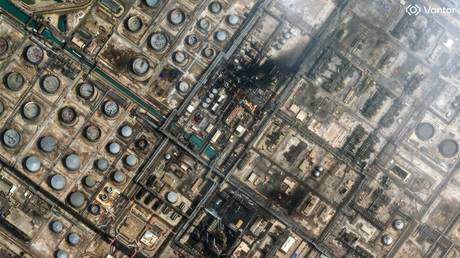
Iran responded with a wave of retaliatory strikes on Israel, triggering further Israeli attacks on targets across the Islamic Republic, including reported explosions in Tehran, Isfahan, Tabriz, and Karaj, as well as at the Karun Petrochemical Company in the Mahshahr Special Economic Zone.
• Israel’s latest strikes on Iran wounded 15 people, Iranian emergency services chief Jafar Miadfar has been quoted as saying.
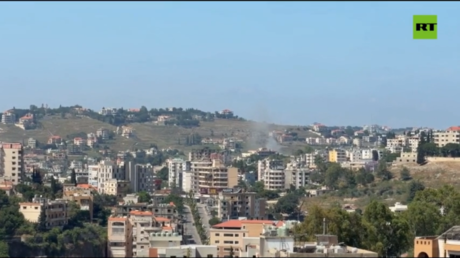
• An RT crew reporting from the Nabatieh district of southern Lebanon said Israeli strikes have continued despite the ceasefire, hitting residential buildings and making it “very dangerous for anyone to move around these areas.”
• Yemen’s Houthis have reinstated a ban on Israeli maritime navigation in the Red Sea, warning any Israeli linked vessel will be treated as a military target.
• The death toll from Israel’s offensive on Gaza has exceeded 72,980, with 173,171 people injured since October 2023, according to the Palestinian enclave’s Health Ministry.
The Rubicon unit is considered the cream of the crop in unmanned warfare
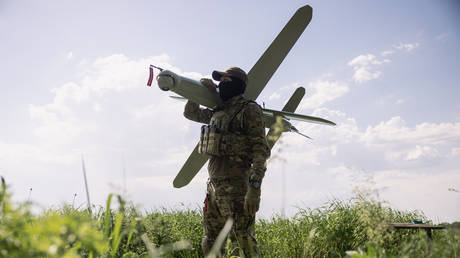
The Russian Defense Ministry has released footage of the elite Rubicon drone unit intercepting Ukrainian kamikaze UAVs.
The video shows more than a dozen interceptions of Ukrainian mid- and long-range fixed-wing B-2 and FP-2 kamikaze drones.
Rubicon operators reportedly often only need a thread dropped from a drone while flying above an enemy UAV, tangling its propeller and causing it to crash.
In recent months, Kiev has intensified attacks on Russian regions using long-range fixed-wing drones such as FP-2 models shown in the footage, often targeting civilian infrastructure and vehicles.
Last week, these types of strikes killed at least 35 civilians, including three children, and injured 182 people, according to Rodion Miroshnik, who leads the Russian Foreign Ministry mission responsible for tracking Ukrainian war crimes.
Oak processionary moth caterpillars can trigger rashes, respiratory problems and, in rare cases, allergic shock
An insect infestation is spreading across Berlin, forcing closures and health warnings in parks, sports grounds, and residential areas, German media has reported. The culprit is the oak processionary moth caterpillar, a tree-killing pest covered in toxic stinging hairs.
The insect, scientifically known as Thaumetopoea processionea, is a moth species whose caterpillars emerge between May and July. While the moth itself is harmless, the caterpillars develop hundreds of thousands of microscopic toxic hairs that can travel up to 200 meters on the wind and cause rashes, eye irritation, and respiratory problems. In severe cases, exposure can trigger allergic reactions and even anaphylactic shock.
The infestation has been spreading across Berlin for years, but officials say several districts are seeing a sharp rise in affected trees this summer. According to Bild, authorities and park operators have issued warnings across Berlin and Potsdam, closing off infested areas and temporarily shutting parks, sports facilities, and pedestrian routes.
The hardest-hit areas are Charlottenburg-Wilmersdorf, Treptow-Köpenick, Steglitz-Zehlendorf, and Spandau, which contain many of Berlin’s oak-lined streets and parks.
According to B.Z. daily, the caterpillars have also spread throughout a Jungfernheide housing estate of more than 11,000 residents, infesting everything from facades and cars to door frames, railings, and light fixtures.
Local politicians have criticized what they describe as poor coordination between authorities. Health agencies have limited powers to intervene because the caterpillars are classified as an allergen rather than a public-health pest, while plant protection rules restrict the use of certain biocides.
Critics are calling for a coordinated response from district authorities, the Berlin Senate, and housing companies, including earlier treatment of oak trees and more aggressive nest removal. F rustrated residents have also launched a petition demanding a binding protection plan for Jungfernheide, which has already attracted more than 4,500 signatures.
Last year, Berlin’s Senate Department for the Environment recorded 5,032 infested oak trees at 881 locations across the city. Experts predict that the outbreak will worsen as warm, dry weather favors the caterpillars’ spread, with forecasters expecting hotter and drier-than-average conditions across Germany and Central Europe this summer.
The pest is not confined to Germany. The oak processionary moth is established across much of Europe and has been recorded from the Netherlands and France to Denmark and the Mediterranean. It was accidentally introduced to the UK in 2006 and is now established in Greater London and parts of southeast England, prompting a government warning on Saturday urging the public not to touch the insects or their nests.
The US secretary of war’s remarks come as Brussels prepares to roll out its most ambitious migration reforms in years
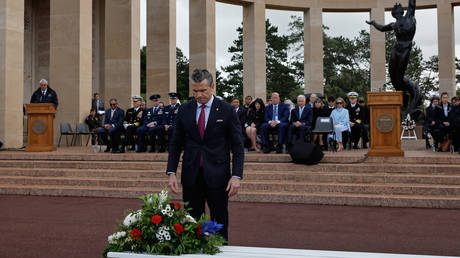
US Secretary of War Pete Hegseth used a D-Day ceremony in Normandy to warn that Europe is under a new form of “invasion,” urging EU leaders to confront migration before it’s too late.
Speaking on the anniversary of the June 6, 1944 Allied landings in France, Hegseth said, “different European beaches are stormed by different, dangerous ideologies” in Spain, Italy, Greece, and Bulgaria, where “boats and men arrive.”
“When will European capitals do something about that invasion? Or is it too late? I pray not, and I believe not,” he added.
D-Day marks the beginning of the liberation of France and Western Europe from Nazi rule. The troops who landed on Normandy’s beaches were not invading Europe in the sense used by modern immigration critics; they arrived to free territories occupied by Nazi Germany.
Hegseth’s remarks echo a broader narrative in the Trump administration linking migration to cultural change, security risks, and the erosion of national identity. The administration’s 2025 National Security Strategy warned that Europe faces “civilizational erasure” driven by migration.
US President Donald Trump has pursued a tough immigration agenda at home, expanding deportation efforts and high-profile ICE operations. Critics have raised concerns over due process and the treatment of migrant communities.
Hegseth’s comments come as the EU prepares to implement its most ambitious migration overhaul in years. On June 1, EU lawmakers and member-state representatives agreed in principle on new rules aimed at speeding up the deportation of rejected asylum seekers. The measures are designed to complement the Migration and Asylum Pact, which reforms asylum processing, border screening, and responsibility-sharing among member states.
EU institutions and migration experts estimate that only 20-30% of people ordered to leave the bloc actually do. The European Commission says immigration is needed to address labor shortages, with the EU workforce shrinking by around 1 million people a year.
The EU’s migrant population reached a record 64.2 million in 2025, including 46.7 million people born outside the bloc, according to a recent Berlin-based study using Eurostat and UN data.
Greek Migration Minister Thanos Plevris warned last month that the EU could be on the verge of a new migrant crisis, with more than half a million people waiting in Libya alone to cross into Europe.
RT’s Roman Kosarev reports from Armenia, where supporters of the Apostolic Church say that the government is targeting a cornerstone of the nation’s identity
A growing confrontation between Prime Minister Nikol Pashinyan and the Armenian Apostolic Church is exposing deep divisions within Armenian society and raising questions about the country’s future direction.
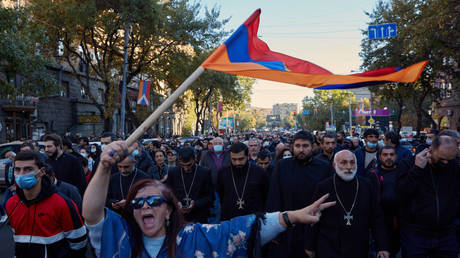
The rift began after Azerbaijan regained control of Nagorno-Karabakh in September 2023, prompting the exodus of most of the region’s ethnic Armenian population – an event many Armenians viewed as a national tragedy. As church leaders echoed public anger and questioned the government’s actions, they increasingly found themselves in the authorities’ crosshairs: priests have been arrested, senior clergy accused of plotting against the state, and supporters of the church dispersed by police.
Critics say that the campaign mirrors a broader pattern seen elsewhere in the post-Soviet space, including in Ukraine and Moldova, where traditional churches have become obstacles to political projects backed by the West.
RT’s Roman Kosarev traveled to Armenia to examine why a conflict involving one of the world’s oldest Christian churches has become one of the defining political battles in the country today.
The gaffe-prone former foreign minister has been blamed for Berlin’s failure to win a rotating seat on the UN Security Council
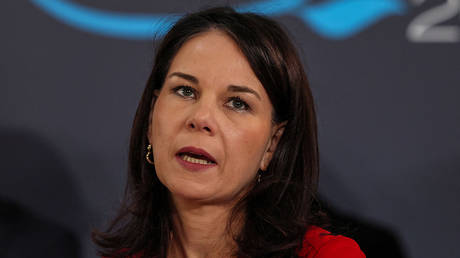
German lawmakers want former Foreign Minister Annalena Baerbock questioned over Berlin’s failure to secure a seat on the UN Security Council, Bild reports. According to the outlet, the ruling CDU/CSU alliance blames the former top diplomat for the setback and wants her summoned before the Parliament’s Foreign Affairs Committee.
Germany failed to win a non-permanent seat on the UNSC – the UN’s most powerful body, with authority to adopt legally binding resolutions and sanctions – for the first time in modern history on Wednesday, losing out to Portugal and Austria. Germany won all six previous contests it entered since 1977, but this time received only 104 votes, well short of the required two-thirds majority.
German Foreign Minister Johann Wadephul described the result as a “bitter defeat,” but insisted he “did not personally blame himself,” arguing that Germany entered the race too late. According to Bild, lawmakers are placing the blame on Wadephul’s predecessor, Baerbock, who served from 2021-25.
“We must thoroughly investigate the causes of this embarrassing electoral defeat,” Stephan Mayer, a member of the Foreign Affairs Committee, told the outlet. “[It is] absolutely essential that Annalena Baerbock answer questions before the Bundestag [to explain] how, when, and what exactly her ministry did to mobilize support for Germany’s bid.”
Hesse’s Minister for International Affairs, Manfred Pentz, also pointed the finger at Baerbock.
“You cannot blame [Chancellor] Friedrich Merz and Johann Wadephul for this electoral defeat. Annalena Baerbock messed it up during her time as foreign minister,” he stated.
Baerbock’s tenure as Germany’s top diplomat drew frequent criticism for a lack of diplomatic pragmatism, an inconsistent agenda, and high-profile verbal blunders.
During her time in office, she said she would support Ukraine “irrespective of what my voters think,” declared the EU to be “fighting a war against Russia,” and described Israeli strikes on Palestinian schools as “self-defense.” She also made several awkward historical, geographical, and mathematical slip-ups, including promising a “360-degree foreign policy.”
Despite the gaffes, Baerbock was appointed president of the UN General Assembly after leaving the Foreign Ministry – a largely ceremonial but prestigious UN post.
Munich Security Conference chairman Wolfgang Ischinger suggested that Germany’s defeat this week may have partly been retaliation for how Baerbock “snatched” the role, which he told WELT TV had “not exactly generated new sympathy for Germany” among UN ambassadors.
A diplomatic source told Bild that Baerbock is widely unpopular in the General Assembly for being “too focused on Germany… selfies and herself.”
Botswana’s former president, Mokgweetsi Masisi, also told the outlet that Germany could have secured more support from African countries in the Security Council vote had Baerbock not treated African partners in a “condescending and disrespectful” manner. He cited diplomatic disputes over infrastructure projects during her tenure as foreign minister.
The effort comes in response to delimitation talks between Japan and the Philippines, which Beijing considers illegal
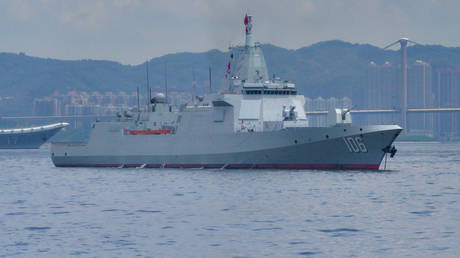
China has launched a ‘special maritime law enforcement operation’ east of Taiwan in response to the announcement of maritime border talks in the area by Japan and the Philippines. China – which views the self-ruled island as its own sovereign territory – protested the negotiations, saying they infringe on its sovereignty.
The effort was launched on Saturday by China’s Ministry of Transport in coordination with the local authorities, according to Xinhua. The operation is aimed at fully exercising China’s maritime administrative law enforcement jurisdiction and safeguarding national rights and interests, the report said.
The operation follows a May 28 summit in Tokyo in which Japanese Prime Minister Sanae Takaichi and Philippines President Ferdinand Marcos Jr. issued a joint statement announcing the start of maritime delimitation talks on their respective exclusive economic zones and continental shelves.
Chinese Foreign Ministry spokeswoman Mao Ning denounced the announcement, saying the waters Japan and the Philippines intend to delimit lie east of Taiwan, which Beijing claims as an exclusive economic zone.
“Any negotiations involving maritime delimitation in waters east of Taiwan must involve China,” Mao said, adding that Japan and the Philippines violated international law by bypassing Beijing.
Taiwan has also sounded the alarm over the imminent talks, urging Tokyo and Manila to consult with it, as the area likely to be subject to negotiations overlaps with waters in which the island claims “rights and interests.”
Japanese Chief Cabinet Secretary Minoru Kihara said, however, that any agreement reached between Japan and the Philippines “would not be legally binding on any third party.”
Taiwan’s coast guard said it deployed at least five vessels “to respond appropriately” to the Chinese operation, which it said violates international law, and monitored four Chinese government vessels departing from the Port of Xiamen on the mainland.
China regards Taiwan as its own territory, and President Xi Jinping has refused to rule out the use of force to achieve reunification.
Tensions between China and Japan over Taiwan have simmered since November 2025, when Prime Minister Takaichi warned that a Chinese attempt to take over the island could be grounds for a military intervention. China subsequently accused Takaichi of being the first Japanese prime minister to explicitly frame a Taiwan scenario as a “survival-threatening situation,” adding that the narrative has historically served as “a go-to tactic for Japanese militarism to launch aggression.”
The incumbent prime minister says his Civil Contract party has won enough support to govern alone
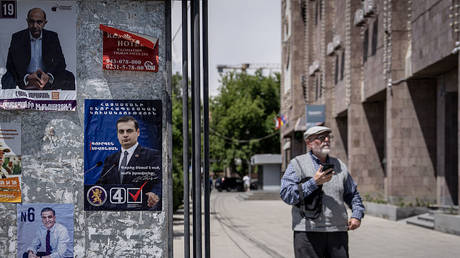
Incumbent Armenian Prime Minister Nikol Pashinyan has claimed victory in the South Caucasus country’s parliamentary elections, saying his ruling Civil Contract party will form a single-party government, even though the vote count was still in its early stages.
Speaking at a late-night briefing, the EU-backed Pashinyan said Civil Contract had secured enough support to govern alone. At the time of his statement, Armenia’s Central Election Commission had published results from 455 polling stations, representing fewer than a quarter of the total.
The election has been billed in Western media as a turning point in the country’s modern trajectory, but has been marred by arrests of opposition candidates, a €50 million offer from Brussels, and deteriorating trade between Russia and Armenia.
What are the latest results from Armenia’s election?
According to preliminary figures, Civil Contract was leading with 49.8% of the vote after results from 1,420 of 2,005 polling stations had been processed.
More than 2.4 million people were eligible to vote on Sunday as 18 political groups – including 16 parties and two alliances – battled for seats in parliament. Voters showed strong interest in the polls, with final turnout standing at nearly 59%, an increase of almost 10 percentage points from the 2021 parliamentary election.
Parties must secure at least 4% of the vote to enter parliament, while alliances of two or three parties face an 8% threshold and larger coalitions 10%. No minimum voter turnout is required for the election to be valid.
Pashinyan’s ruling Civil Contract party is expected to remain the largest party in parliament, although it could still struggle to secure an outright majority. His leadership is being challenged by a fragmented opposition of 17 parties and political blocs.
How did the opposition react?
The opposition Strong Armenia bloc, trailing with 23.7% of the vote, said the election was “not over yet,” rejecting Pashinyan’s claim of victory as premature and accusing the authorities of deliberately delaying the count once results from urban areas started coming in.
“When they saw that their results were falling sharply every minute, they stopped counting, and we have no idea what figures they will present in the morning,” said Strong Armenia leader Samvel Karapetyan, a Russian-Armenian businessman. Speaking at an emergency briefing, Karapetyan claimed that the authorities had continued “illegal actions” during the count and said his bloc would issue a statement once the final results had been summarized.
Karapetyan also said Strong Armenia had faced heavy pressure over the past month, claiming that around 75 members of his team had been arrested and more than 700 supporters detained.
Has the opposition been persecuted?
The vote came a day after Armenian authorities detained six parliamentary candidates from the Strong Armenia bloc, which has emerged as the main challenger to the government.
This followed recent televised debates in which Pashinyan, who came to power in 2018 after the ‘Velvet Revolution’, called for several major opposition groups to be removed from the election. The Central Election Commission, however, declined to strike Strong Armenia from the ballot.
Opposition groups have accused the authorities of exerting heavy pressure ahead of the vote. Russian Foreign Ministry spokeswoman Maria Zakharova said the arrests cast doubt on the democratic character of the election. Former Russian President Dmitry Medvedev accused Pashinyan of trying to sideline political rivals.
Was Armenia’s diaspora excluded?
Polling stations were open only in Armenia, as the country’s electoral laws do not provide for overseas voting in parliamentary elections. The measure excludes the diaspora, which far outnumbers the country’s population. Between five and seven million Armenians live abroad, mainly in Russia, the US, and France. Armenia’s domestic population is roughly three million.
To cast ballots, citizens living abroad must be present in Armenia on election day. In March, Yerevan further tightened the rules, barring those who have lived abroad for more than 10 years from voting.
Armenian officials have stated that male citizens of conscription age arriving from abroad to vote will be required to attend military training or face prosecution.
Is Armenia choosing between Russia and the West?
The election has also been framed as a referendum on Armenia’s geopolitical course. Critics argue that Yerevan’s pivot toward the West has failed to provide meaningful security guarantees while damaging relations with Russia, the country’s traditional ally and largest economic partner.
The campaign unfolded amid growing tensions between Yerevan and Moscow. Russia has warned that deeper integration with the EU would be incompatible with Armenia’s continued membership in the Eurasian Economic Union (EAEU). Russian President Vladimir Putin said in May that leaving the bloc could cost Armenia up to 14% of GDP.
Earlier this month, former Armenian President Robert Kocharyan accused Pashinyan’s government of artificially turning Armenia into an enemy of Russia and steering the country down a path similar to that of Ukraine.
French intelligence services allegedly helped the Armenian government block online publications critical of Pashinyan, according to French newspaper Le Journal du Dimanche.
Pashinyan admitted that he held a phone call with French President Emmanuel Macron before publicly claiming victory.
Police said at least 12 people were wounded in Toledo, Ohio, with the suspected gunmen still at large
At least 12 people have been wounded in a shooting near a street festival in Toledo, Ohio, with videos from the scene showing crowds fleeing in panic as police launched a manhunt for the suspects.
The incident occurred near the Old West End Festival in Toledo on Saturday. Officers responded to reports of a shooting at around 5:37 PM local time near the event and found multiple gunshot victims upon arrival, according to the Toledo Police Department.
“Many victims have been transported to nearby medical facilities for treatment,” police said, adding that the search for the suspect or suspects is ongoing. Police later said at least 12 people were injured, including two who were in critical condition. The victims ranged in age from 14 to 61, according to media reports.
Toledo Deputy Police Chief Joe Heffernan said it appeared that at least two people were firing weapons and were “probably shooting at each other.”
In a video posted online, multiple shots are heard as people flee the area in panic.
— Wolverine Update (@W0lverineupdate) June 6, 2026
Witnesses described scenes of chaos as festival-goers dived for cover. Kevin Berry, a Navy veteran with medical training who was at the scene when the shooting occurred, said, “everybody hit the deck” as gunfire erupted. He told AP he saw at least five wounded people “spread out around the arboretum area.”
🚨#BREAKING: MULTIPLE PEOPLE HAVE BEEN SHOT AT THE OLD WEST END FESTIVAL IN TOLEDO OHIO.
ABSOLUTE PANIC AS PEOPLE RUSHED FOR COVER, POLICE ARE ON SCENE, MEDICS ARE ATTENDING THE WOUNDED.
Police, who were already present at the festival, responded immediately, according to officials. The authorities urged the public to avoid the area as officers continued searching for the suspects and investigators worked to determine the circumstances surrounding the shooting.
Ohio Governor Mike DeWine said he is “deeply concerned” by the incident, adding that “summer festivals should be safe spaces for families to spend time together without fear of violence.”
The Old West End Festival is a two-day celebration held in Toledo’s historic district. This year’s event, the 53rd annual edition, was scheduled for June 6-7 and featured live music, food markets, a beer garden, home tours, shopping, and the King Wamba Carnival Parade.
The authorities in Yerevan stopped short of banning the ruling party’s main rival, Strong Armenia
The Armenian authorities have detained six parliamentary candidates from the opposition Strong Armenia bloc a day before the country heads to the polls in Sunday’s general election.
During recent televised debates, Prime Minister Nikol Pashinyan, who came to power in 2018 following the ‘Velvet Revolution’, called for the revocation of the registration of several major opposition groups.
The Central Election Commission refused to remove Strong Armenia from the ballot, but approved requests for criminal proceedings and pre-trial detention of six candidates: Hayk Avagyan, Susan Badalyan, Artur Abrahamyan, Vahe Tavakalyan, Vahe Yeghiazaryan, and Ashot Sahakyan.
“In the course of the preliminary investigation into a criminal case concerning the material inducement of numerous individuals and the laundering of funds on an especially large scale, public criminal prosecution has been initiated against six parliamentary candidates from the Strong Armenia bloc,” the Investigative Committee said in a statement on Saturday, adding that all six were placed under arrest.
Opposition groups accused the authorities of exerting immense pressure ahead of the vote, in which Pashinyan’s ruling Civil Contract party – which has been pushing for closer integration with the EU while maintaining traditionally close relations with Russia – is expected to remain the largest single party in parliament, but could fall short of forming a one-party majority government.
Pashinyan’s leadership is being contested by a heavily fractured opposition of 17 parties and political blocs. The Strong Armenia bloc, led by Russian-Armenian businessman Samvel Karapetyan, is polling second, although figures vary widely depending on the pollster, how many parties cross the 4% threshold, and how the roughly 30% of undecided voters split. Should Civil Contract fail to secure a majority of seats, coalition talks among its rivals are not guaranteed to succeed.
Russian Foreign Ministry spokeswoman Maria Zakharova accused the Armenian authorities of undermining democratic procedures, warning that this casts doubt on the legitimacy of the election. Former Russian President Dmitry Medvedev accused Pashinyan of “trying to knock out all his rivals in the elections.”
Moscow warned that closer integration with the EU would make Armenia’s continued membership in the Eurasian Economic Union (EAEU) impossible due to incompatible standards. Russian President Vladimir Putin said in May that the country could lose up to 14% of GDP if it leaves the economic organization.
Earlier this month, former President Robert Kocharyan warned that Pashinyan’s government is “artificially” turning Armenia into an enemy of Russia and leading the country down the same path as Ukraine.
Tehran is demanding access to its funds as part of a lasting peace deal with Washington
The Trump administration is seeking to redirect frozen Iranian assets toward rebuilding energy and other infrastructure damaged by Tehran’s retaliatory strikes in Gulf Arab states hosting US military bases, Bloomberg and CBS News report.
The Treasury Department plans to use “all available authorities” to make Iranian assets accessible for rebuilding and repair efforts linked to any future damage caused by Iran, CBS reported on Saturday, citing a source familiar with Treasury Secretary Scott Bessent’s thinking.
Bloomberg reported that Bessent directed Treasury officials to assess conditions among US allies in the Persian Gulf and request comprehensive estimates for damage inflicted since the start of the conflict. The outlet said the department will also consider whether Iranian assets could be used to cover “past damage” blamed on Iranian-backed groups.
The initiative comes as indirect talks between Washington and Tehran have stalled over Iran’s demand for access to frozen funds. Mohsen Rezaei, a military adviser to Supreme Leader Ayatollah Mojtaba Khamenei, said on Friday that a deal hinges on the release of $24 billion in Iranian assets.
“This is our own money, not America’s money,” Rezaei told CNN, calling the demand a test of trust for US President Donald Trump.
Iranian Deputy Foreign Minister Kazem Gharibabadi told Mehr News Agency that Tehran wants at least $12 billion released immediately upon the signing of a memorandum of understanding with the US, while the remainder should be released within “not more than one or two months.”
Since the US and Israel launched an attack against Iran on February 28, the sides have largely refrained from directly targeting oil and gas infrastructure. In mid-March, however, Israel hit the world’s largest natural gas field in South Pars, knocking out 12% of Iran’s gas production.
Tehran declared that energy infrastructure in Gulf Arab states hosting US forces has become “direct and legitimate targets.”
Energy facilities in Saudi Arabia, the UAE, Kuwait, and Bahrain have all sustained damage in tit-for-tat strikes, before a Pakistani-brokered ceasefire took effect in April.
The US reportedly promised to unblock some Iranian assets to bring Tehran to the negotiating table in Islamabad, although it has publicly called the demand unacceptable. Trump has repeatedly criticized his predecessor, Barack Obama, for allegedly sending Iran billions of dollars in “pallets of cash” under the 2015 nuclear deal, which Trump unilaterally withdrew from during his first term.
The authorities warn that a more powerful explosion “could occur at any time”
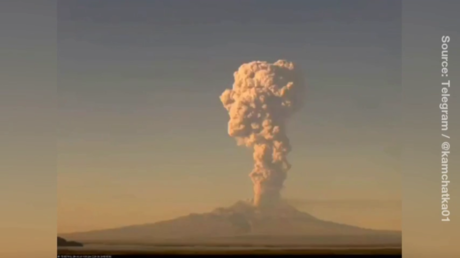
The eruption of the Shiveluch volcano on the Kamchatka Peninsula in Russia’s Far East has sent a massive plume of ash 10 km into the sky and triggered red-level aviation alerts for the area and nearby regions.
The ash cloud from Saturday’s eruption stretched 50 km from the volcano as it traveled east toward the Bering Sea, according to the Volcanology and Seismology Institute of the Far Eastern Branch of the Russian Academy of Sciences.
A more powerful explosion that could send ash up to 12 km into the sky “could occur at any time,” the institute warned. A video recorded by scientists and published on social media shows a massive plume of smoke and ash rising into the sky.
It is the second Shiveluch eruption in just a week. On Thursday, the volcano produced an ash column that reached 8 km above sea level.
Shiveluch, one of Kamchatka’s largest and most active volcanoes, has a history of significant eruptions. It is located around 450 km from the regional capital, Petropavlovsk-Kamchatsky, and 50 km from the settlement of Klyuchi.
The previous red-level alert linked to its activity was issued in 2024, when it sent ash up to 8 km high. Another major eruption was reported in January 2026.
This comes amid growing tensions between the US and Israel over the conflicts in the Middle East
The Pentagon’s Defense Intelligence Agency (DIA) has elevated the threat posed by Israeli espionage to the highest level as tensions over Iran and Lebanon grow, NBC News and the New York Times reported on Saturday.
The assessment, which was circulated internally in recent weeks, includes a seven-page document and a chart rating Israel’s human and technical intelligence-gathering capabilities as “critical,” according to NBC.
The officials targeted included President Donald Trump’s top negotiator in talks with Iran, Steve Witkoff, the Pentagon’s top policy official Elbridge Colby, and one of his main deputies, Michael DiMino, according to the NYT.
US counterintelligence officials are increasingly concerned about Israeli spying activities targeting the US, including efforts to gain insight into the Trump administration’s deliberations on Iran and Lebanon, both NBC and the NYT wrote, citing sources. The assessment also reportedly cites several specific incidents, although the sources declined to identify them.
The aggressiveness with which Israeli spy services have surveilled top US officials since the start of Trump’s second term has been “unhinged,” the NYT cited a senior official as saying.
While espionage between allies is common, the report said Israel’s recent activities have gone beyond what would normally be expected, leading to the heightened threat assessment.
The Pentagon declined to comment. A White House official told NBC that the “entire story is false,” while a spokesperson for the Israeli Embassy in Washington dismissed the report as “politically motivated” and insisted that Israeli intelligence efforts “are aimed at its enemies, not its allies.”
This comes amid growing friction between US President Donald Trump and Israeli Prime Minister Benjamin Netanyahu over Iran and Israel’s military operations in Lebanon.
Despite the fragile US-Iran ceasefire reached in early April and extended on May 8, negotiations on a broader deal remain deadlocked over Iran’s nuclear program, with Israel publicly questioning Trump’s diplomatic push and Netanyahu advocating renewed military action.
At the same time, Israel has intensified operations in Lebanon, where it launched a military operation in March against the Iranian-aligned Hezbollah movement. Earlier this week, Trump acknowledged reports that he called Netanyahu “f**king crazy” during a heated phone conversation over Israel’s actions in Lebanon.
“I did,” Trump said when asked about the exchange on the New York Post’s ‘Pod Force One’ podcast. “I was a little bit perturbed at his constantly fighting with Lebanon.”
Previous reports suggest that Trump accused Netanyahu of jeopardizing US negotiations with Iran by continuing the operation in Lebanon.
Trump said on Monday that both the Israeli leader and Hezbollah had agreed to a truce, and the US State Department announced on Wednesday that Israel and Lebanon had agreed to implement a ceasefire contingent on “a complete cessation” of Hezbollah attacks and the withdrawal of fighters from the South Litani Sector.
Despite the announcements, hostilities continued this week, with Israeli strikes in southern and eastern Lebanon killing and injuring dozens of civilians on Thursday, according to Lebanese health authorities. Iran previously said it would not agree to a permanent settlement with the US unless the deal also addresses Lebanon, and warned it would abandon negotiations if Israeli strikes continue.
Brussels is not interested in the South Caucasus nation’s prosperity as it seeks only to weaken Russia, Ara Abramyan told RT
Armenian Prime Minister Nikol Pashinyan is leading his nation into a trap by pushing it closer to the EU, World Armenian Congress President Ara Abramyan has said in an interview with RT. Brussels is luring Yerevan with vague promises as it seeks only to break Armenia’s ties with Russia, he believes.
Under Pashinyan, the South Caucasus nation has launched the process of seeking EU membership. Last month, the prime minister hosted an EU-Armenia summit and a meeting of the European Political Community (EPC), an EU-led intergovernmental group launched in 2022 in response to the escalation of the Ukraine crisis.
Moscow has said that closer integration with the EU would make Armenia’s continued membership in the Eurasian Economic Union (EAEU) impossible due to incompatible standards. Russian President Vladimir Putin warned in May that the South Caucasus nation could lose up to 14% of its GDP if it leaves the economic organization.
According to Abramyan, the alternative to the EAEU that is offered by the EU is unclear. “They don’t even talk about prospects, not even empty words,” he said, referring to the EU leaders. “No one says, ‘we will create conditions for a good life.’”
The bloc is unlikely to invite Armenia to join it or even open its market to Armenian goods, which are mostly agricultural products, any time soon, Abramyan, who leads the organization coordinating Armenian diasporas around the world, said.
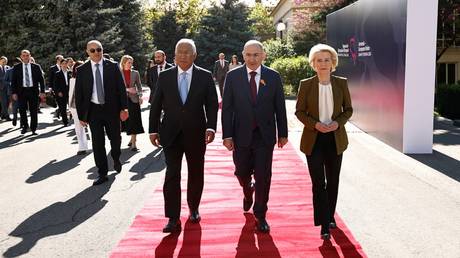
Earlier this week, European Commission President Ursula von der Leyen vowed to “ease the trade for some Armenian products, in particular agri-food,” adding that Brussels had allowed a shipment of 10,000 flowers to Latvia.
According to Abramyan, the EU has reduced Bulgaria’s agricultural sector to virtually nothing, even though the country had once been a major agricultural exporter within the Cold War-era Warsaw Pact.
European farmers now oppose Ukrainian agricultural exports, he said. “How can they let Armenia in? […] It’s a deception. It’s against Russia,” Abramyan warned.
“They [the EU] want Russian bases [in Armenia] to be closed to completely ruin relations with Russia,” he said. “Armenia has one partner and that is Russia. This is a strategic partner.”
Armenia remains heavily reliant on the Russian market. According to UN data, Russia accounted for nearly 24% of Armenian exports in 2024, making it the country’s second-largest export destination after the UAE.
“They [the EU] want to destroy all of this economically,” Abramyan said, adding that following a pro-EU path could “destroy Armenia completely.”
A holder of the European Order of Merit cannot glorify Nazi collaborators responsible for “monstrous” crimes, the MEPs have said
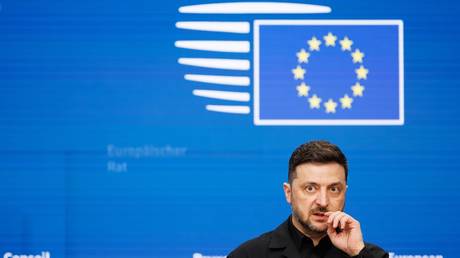
Dozens of European Parliament members have demanded that Ukraine’s Vladimir Zelensky be stripped of the bloc’s highest award – the European Order of Merit – for glorifying World War II-era Nazi collaborators.
Zelensky was among the first recipients of the highest class of the order, which was established by the European Parliament last year. Less than a month after getting the award in mid-May for his “exceptional contribution to European integration and European values,” the Ukrainian leader signed a decree granting one of the Ukrainian elite military units the title ‘Heroes of the UPA’ – the Ukrainian Insurgent Army.
The UPA, the armed wing of the WWII-era Organization of Ukrainian Nationalists (OUN), was responsible for a campaign of ethnic cleansing in what is now western Ukraine between 1943 and 1944. Ukrainian nationalists killed an estimated 100,000 Polish civilians in what is now known as the Volhynia massacre.
“European values cannot be reconciled with the glorification of genocide and ethnic cleansing,” Polish MEP Anna Brylka wrote on X on Friday as she announced the initiative. “One cannot build the identity of one’s own state and society on such a monstrous crime,” she said, adding that Zelensky “does not deserve” the order.
The appeal, which Brylka also published on X, warned that a “cult” of the OUN and the UPA leaders would have “disastrous consequences for building good neighborly relations” in Europe. “Young Ukrainians are taught to revere criminals… as heroes,” the document signed by nearly 40 MEPs stated.
Zelensky’s actions, including rolling out full state honors to one of the OUN leaders, Andrey Melnik, have drawn widespread condemnation. Melnik, who led the OUN from 1938, also oversaw espionage and sabotage operations for the Gestapo, Nazi Germany’s military intelligence service. His remains were recently exhumed in Luxembourg and re-buried in Kiev’s main military cemetery during a ceremony attended by the Ukrainian leader.
Polish President Karol Nawrocki has also called for the Ukrainian leader to be stripped of the nation’s highest award – the Order of the White Eagle.
Polish Prime Minister Donald Tusk – a long-time supporter of Kiev in its conflict with Moscow – has recently said that Poland’s relations with Ukraine would be built on “hard business interest” and not “empathy” if Kiev does not change course.
Russian President Vladimir Putin suggested that the Ukrainian leader’s own grandfather, who fought the Nazis during WWII, “is probably turning in his grave.”
Mirra Andreeva became the youngest woman to win the grand slam tournament since 1992
Russian tennis player Mirra Andreeva won her first Grand Slam title with a straight-sets victory over Poland’s Maja Chwalinska in the Roland-Garros final in Paris on Saturday.
Playing on Court Philippe-Chatrier, Andreeva defeated Chwalinska 6-3, 6-2 to claim the Suzanne-Lenglen Cup and €2.8 million ($3.23 million) in prize money.
The 19-year-old became the youngest women’s champion at Roland-Garros since Monica Seles won her third consecutive title in 1992 aged 18. The victory also made the Siberian-born teen the first Russian woman to win the French Open since Maria Sharapova lifted the trophy in 2014.
Video footage showed Andreeva falling to her knees and fighting back tears before hugging and thanking Chwalinska immediately after her victory.
“It’s very special for me. I’ve been watching Roland-Garros on TV since I was very young,” she said. “It’s been a big dream of mine and I can’t believe I’m holding this trophy right now.”
Under restrictions imposed on Russian and Belarusian athletes by the French Tennis Federation after the escalation of the Ukraine conflict in 2022, Andreeva was not allowed to compete under a national flag.
Numerous sports federations barred athletes from the two nations that year. Since then, some governing bodies have permitted Russians and Belarusians to take part under neutral status, while others have removed the restrictions altogether.
On Tuesday, the International Fencing Federation (FIE) lifted its ban on Russian and Belarusian competitors. Earlier, international governing bodies for gymnastics, judo, taekwondo, wrestling, and aquatic sports removed similar measures.
Russian President Vladimir Putin has long denounced the bans as politically biased and selective sanctions. “There is no place for politics in sport,” he said last year.
Over the past three months, Ukrainian UAVs have fallen in Finland, the Baltic states, Greece, and Romania, and killed five Azerbaijani citizens in the Sea of Azov
Ukraine has launched hundreds of long-range drones at Russia, with many targeting civilians and critical infrastructure, including oil terminals – and a significant portion of EU members have cheered on the strikes.
However, as the pace of the attacks has surged, Ukrainian drones are now increasingly hitting neighboring countries that provide military assistance to Kiev. The incidents, stretching from the Baltic to the Mediterranean, have left Kiev issuing a litany of apologies – although with no indication that it plans to scale back its drone campaign.
Most EU governments have declined to formally condemn Ukraine – instead blaming the incidents on Russia and its electronic warfare defenses.
In late May, Swedish Prime Minister Ulf Kristersson called on NATO members to help Ukraine “direct” its attacks “in the right directions,” while Poland has urged Ukraine to “be more precise.” Russia has stated that NATO is a direct participant in the Ukraine conflict.
RT recounts the recent incidents of Ukrainian drones hitting the wrong targets.
A Ukrainian naval drone exploded near an oil terminal in Constanta, Romania’s largest port in the Black Sea, with three more detonating offshore. Kiev has confirmed that the drones belonged to the Ukrainian navy, claiming that it lost control of the devices.
No casualties were reported, with the local authorities scrambling to evacuate the area. European Commission President Ursula von der Leyen called the incident a “direct consequence” of the Ukraine conflict, while sidestepping the question of Ukrainian accountability.
The response was a far cry from Romania’s response to an incident on May 29 when it claimed that a Russian UAV carrying explosives crashed into an apartment block in Galati, Romania, injuring two people. Moscow has said that Bucharest did not provide any evidence for the claim.
However, the Romanian government ordered the closure of the Russian Consulate in Constanta and declared the consul general persona non grata.
Five Azerbaijani crew members were killed and three others wounded when Ukrainian drones struck two dry cargo ships in Russia’s Taganrog Bay in the Sea of Azov. The two vessels – the MV Natra and MV Zirkon – were traveling from Türkiye to the Russian port of Rostov-on-Don to load grain when they came under attack. Ukraine’s drone forces commander, Robert Brovdi, confirmed the strikes, alleging that the grain was illegal and that the vessel was also carrying military cargo and fuel.
The Azerbaijani Foreign Ministry did not assign responsibility, saying the vessels were not state-owned and that the sailors were working aboard them voluntarily with private contracts.
Russia said the incident “once again proves the terrorist nature of the Kiev regime that increasingly targets civilians.”
A NATO fighter jet shot down a Ukrainian drone over southern Estonia after the UAV entered from Russian territory. The debris fell in a marshy area near the village of Kablakula without causing any casualties or property damage. Estonian Defense Minister Hanno Pevkur said the drone was “most probably meant to hit some Russian targets.”
The Ukrainian Foreign Ministry issued a formal apology to Estonia and other Baltic nations over what it described as “unintended incidents,” while assigning blame to Moscow.
“Russia continues to redirect Ukrainian drones into the Baltics with the use of its electronic warfare,” it said.
Finland temporarily closed Helsinki-Vantaa Airport on May 15 after a suspected drone incursion was detected, with nearly 2 million residents in the southern part of the country receiving emergency instructions.
While Finnish officials did not initially say which country the UAV belonged to, Helsingin Sanomat reported this week that the emergency measures were prompted by a warning from Ukraine, which said it accidentally sent drones carrying explosives toward Finland.
On May 7, two Ukrainian drones crossed into Latvian airspace from Russia and struck an empty fuel depot in the city of Rezekne, around 40 km from the Russian border, with no casualties. Then-Defense Minister Andris Spruds at the time called the incident regrettable but understandable.
Prime Minister Evika Silina later demanded Spruds’ resignation, saying he “lost the trust of the public” and that “the drone incident clearly demonstrated that the political leadership of the defense sector has failed to fulfill its promise of safe skies over our country.”
Later that month, Spruds’ party withdrew from the coalition, and Silina herself resigned, leading to the collapse of the government.
In early May, Reuters reported that a local fishing vessel discovered a Ukrainian-made sea drone near the island of Lefkada in the Ionian Sea. The Greek authorities later confirmed that the UAV was Ukrainian and lodged a diplomatic protest.
The drone, Athens said, “seriously endangered maritime traffic and could have caused casualties among innocent citizens [and] incalculable environmental damage.”
In response, Kiev apologized, attributing the incident to “circumstances brought about by ongoing Russian aggression.”
Two Ukrainian drones crashed near the southern Finnish city of Kouvola on March 29, with one confirmed to have carried an unexploded warhead. Two days later, a third Ukrainian drone was subsequently found on the ice of Lake Pyhajarvi near the Russian border, also carrying a suspected warhead.
Defense Minister Antti Hakkanen said Finland takes the issue of stray Ukrainian drones “very seriously.” Kiev once again apologized and attributed the deviations to Russian jamming.
Ukrainian leader Vladimir Zelensky and Finnish President Alexander Stubb spoke by phone, though Stubb’s office confirmed that scaling back Ukrainian strikes near Finnish territory was not discussed.
On March 25, Estonia and Latvia both reported drones entering their airspace from Russia. In Estonia, a drone – later identified as Ukrainian – struck the chimney of a power station in the northeastern village of Auvere.
The same morning, a second Ukrainian drone entered from Russia and crash-landed in the Latvian village of Dobrocina, and two days prior, another Ukrainian drone crashed into Lake Lavysas in the Varena district of Lithuania. The Baltic authorities concluded that the drones were targeting Russian oil infrastructure in the region and veered off course due to electronic warfare measures.
Bottom line
The long string of incidents involving Ukrainian drones – often carrying explosives – typically follows the same pattern: Kiev apologizes and blames Moscow, while EU capitals nod along or turn a blind eye.
There have also been no calls to revisit the assistance Western countries provide Ukraine, despite the aid evidently contributing to the raids, which have the potential to kill EU citizens.
Researchers in Italy say making beer with the revived microorganisms could be next
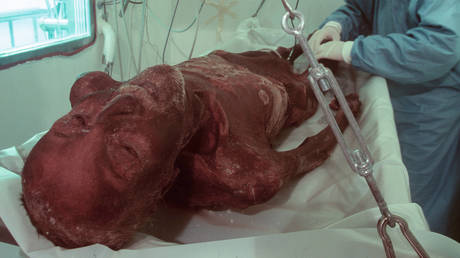
Scientists have baked sourdough bread using ancient yeast harvested from a 5,300-year-old mummy’s insides and skin, according to Eurac Research.
The Italian-based research center reported on Wednesday that its scientists discovered several strains of cold-resistant yeast from the Copper Age mummy nicknamed Otzi the Iceman, which was found in the Italian Alps in 1991.
Scientists examined microorganisms found on Otzi’s skin, in his digestive tract, and in meltwater from inside the mummy.
“We’ve already conducted initial, though not yet systematic, experiments − with good results. We tried to make a sourdough starter with it,” microbiologist Mohamed Sarhan said. “We made some really good dough with it.”
After around two weeks of being fed flour, the yeast strain adapted to a dough environment, he said. As Otzi was preserved at around -6 C (21.2 F), “these yeasts are remarkable because they are adapted to very cold temperatures,” he added.
The newly discovered strains could offer advantages for the modern food industry, allowing fermentation at refrigerator temperatures and during transportation, saving energy, Sarhan said.
Bread is currently one of the obvious applications we’re considering; another is beer – we’ve already discussed this with experts.
The study found that the mummy’s microbiome contains several layers of microbial life, including traces from his lifetime, organisms that colonized the body after death in the glacier, and modern microbes introduced during decades of handling and preservation. Genetic analyses suggested that the cold-loving yeast strains originate from the glacial environment Otzi was preserved in, and remained associated with the mummy for millennia.
In an even older resurrection of ancient organisms, in 2023, scientists in Russia revived a female roundworm that had lain dormant in Siberia’s permafrost for 46,000 years.
Other famed historical figures such as Alan Turing and Jane Austen have also reportedly fallen victim to Britain’s diversity overhaul
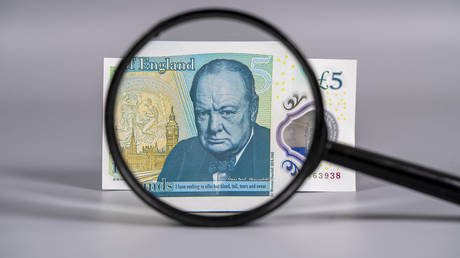
The Bank of England’s decision to remove historical figures such as Winston Churchill from banknotes came after research commissioned by the regulator concluded that they were “elitist and divisive,” The Telegraph reported on Friday.
The central bank announced in March that it would end its use of historical figures, with the next series of banknotes set to feature UK wildlife. It said that the move followed public consultations in which nature-themed designs received the strongest support and argued that wildlife imagery would be harder to counterfeit than faces.
According to the newspaper, however, the decision was ultimately shaped by an internal study commissioned from market research firm Savanta. It reportedly found that figures such as wartime leader Churchill, World War II codebreaker Alan Turing, and novelist Jane Austen were “contentious and not representative of the UK’s cultural and natural diversity.”
Savanta advised replacing portraits with nature, arguing that historical figures projected “a backward-looking vision of the UK” and were viewed as “imperialistic,”“potentially divisive,” and “elitist.”
Review participants reportedly wanted banknote imagery to “better reflect modern Britain by being more inclusive.”
The firm also warned that landmarks and historic architecture could prove controversial, with Georgian and Victorian-era buildings deemed high-risk due to links to “colonialism/slavery.” Even some nature-themed symbols were considered problematic, including the White Cliffs of Dover over alleged association with immigration concerns.
Savanta reportedly urged the regulator to frame the move “as a positive evolution that enhances banknotes, rather than a ‘censorship’ or ‘cancellation’ of history,” but the decision has sparked accusations of precisely that.
Robert Jenrick, Reform UK’s Treasury spokesman, dismissed the plan as “nonsense.” Other politicians, including Conservative leader Kemi Badenoch, Reform UK leader Nigel Farage, and Shadow Communities Secretary Kevin Hollinrake, have likewise condemned the decision as “wrongheaded wokery” and an attempt to erase British history.
Critics argue that the move is part of Britain’s broader “diversity overhaul.” Over the past decade, major UK institutions have increasingly reassessed the legacies of empire and colonialism. The National Trust linked dozens of historic properties to slavery and colonialism in a 2020 report, while the BBC, Civil Service, and Armed Forces have rolled out diversity initiatives. Local authorities have also renamed streets and reviewed monuments associated with colonial-era figures.
The Bank of England has featured historical figures on banknotes for more than half a century. William Shakespeare became the first non-royal to appear on the £20 note in 1970. This week, the regulator said that the public would help choose the imagery for the new notes, with options including the red fox, bottlenose dolphin, and common frog.

 Login
Login