Pyongyang has condemned Washington’s approval of advanced air-to-air missile sales to Seoul, warning the move will further inflame tensions on the Korean peninsula
North Korea has condemned Washington’s approval of advanced air-to-air missile sales to South Korea as “war exports,” warning the move would deepen tensions on the Korean peninsula.
In a statement carried by KCNA, a senior North Korean Foreign Ministry official accused Washington and Seoul of “systematically tightening their military collusion and nexus to drive tensions in the Korean peninsula and its vicinity to an extreme,” despite growing international concern over regional instability.
“US arms exports are war exports, and importing American weapons means accumulating tension and confrontation,” the official said, condemning what Pyongyang described as US and South Korean efforts to expand military capabilities at the expense of regional stability.
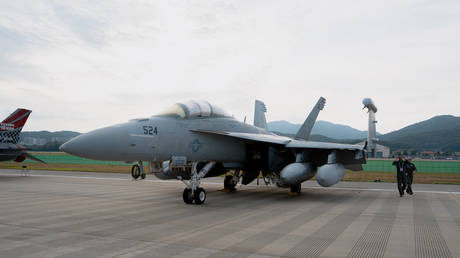
The statement followed US State Department approval of a nearly $300 million package including 70 AIM-120C-8 Advanced Medium-Range Air-to-Air Missiles and related equipment. Washington pitched the sale as advancing US foreign policy and security objectives, though the deal remains subject to congressional review.
Pyongyang noted that Washington has approved several other arms packages for South Korea in recent weeks, including naval helicopters, attack helicopters, and guided bombs worth billions of dollars, and pointed to a 2025 defense agreement under which Seoul pledged to buy $25 billion worth of US military equipment by 2030. It argued that the deals are part of a broader effort to turn South Korea into “an outpost of intense confrontation” and claimed that US arms sales across the region, including to Japan and Taiwan, are fueling tensions in the Asia-Pacific.
“In light of the provocative efforts of the US and its allies to build up their armed forces, the DPRK’s clear position is to eliminate new threats by continuously improving and strengthening its self-defense deterrent,” the official declared, warning Pyongyang will “intensify” efforts to maintain regional military parity and preserve stability on the Korean Peninsula.
Korea was divided at the end of World War II, and the rift grew permanent after the 1950-1953 Korean War ended in an armistice rather than a peace treaty, leaving the two sides technically still at war.
The US maintains nearly 30,000 troops in South Korea, extends a nuclear umbrella over its ally, and regularly conducts joint military exercises with Seoul. Washington and Seoul describe these measures as necessary for security and deterrence.
Pyongyang views the US military presence, joint drills, and regional deployments as hostile acts and has long argued that US-South Korean military cooperation amounts to preparation for war. North Korea routinely tests and unveils new weapons, portraying its military buildup as a response to pressure from Washington and its regional allies. It describes its nuclear and missile programs as essential deterrents against foreign interference, insisting they are purely defensive and intended to safeguard sovereignty and preserve peace through strength.
The release, part of an ongoing disclosure initiative, includes witness accounts, photos, and videos of unexplained phenomena
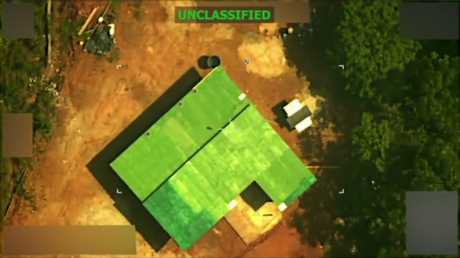
The Pentagon released the third batch of declassified files on unidentified flying objects on Friday. The disclosure adds 72 reports, witness accounts, photos, and videos to an ongoing transparency effort launched under a presidential order earlier this year.
The latest release is part of what officials called a “historic transparency effort” aimed at making public government records related to unidentified anomalous phenomena (UAP), the military’s preferred term for UFOs.
Among the newly released materials are reports describing a “potato-shaped” object observed by military personnel, recurring sightings of glowing orbs, and a CIA account of a rotating disc-like object reportedly seen above Harare International Airport in Zimbabwe in 2008.
The disclosure initiative began in May with the release of around 160 previously classified documents, photographs, and videos from agencies including the Pentagon, FBI, NASA, and the State Department. The second batch followed on May 22, containing additional footage and witness testimony.
The effort follows years of congressional pressure and testimony from military personnel and whistleblowers who claimed that the US government was withholding information about unexplained objects observed near sensitive military facilities.
In February, US President Donald Trump directed the Department of War to disclose “any and all information” related to UAPs. The order came amid renewed public interest in the subject, which included comments by former President Barack Obama on the possibility of extraterrestrial life.
Obama later said on Instagram that he did not see any evidence during his presidency that extraterrestrials have made contact with Earth. Trump subsequently accused Obama of disclosing classified information and said he “made a big mistake.”
Despite the growing volume of released material, Pentagon officials maintain that the files contain no confirmed evidence of extraterrestrial life, alien technology, or a government cover-up.
Many reports have been linked to mundane causes such as infrared camera distortions, aircraft heat signatures, military exercises involving flares, weather balloons, and classified test flights, while a small number remain unresolved because investigators lack sufficient data to reach definitive conclusions.
The Pentagon said the operation to hunt down the leader of the Tren de Aragua gang was conducted together with the Venezuelan authorities
The US has said it killed a notorious gang leader in a strike on his compound in Venezuela.
US Defense Secretary Pete Hegseth said the operation targeting Tren de Aragua leader Hector Rusthenford Guerrero Flores, known as Nino Guerrero, was carried out earlier this week in full coordination with the Venezuelan authorities.
Hegseth said the operation “underscores the shared US and Venezuelan commitment to take the fight to narco-terrorists and deny them any safe haven in our hemisphere.”
“Guerrero was a wanted fugitive charged by the US Department of Justice with ordering, directing, and facilitating acts of terrorism and violence in the United States,” US Southern Command chief General Francis Donovan said.
US President Donald Trump hailed the operation as part of his effort to combat violent crime in the US.
“This action was coordinated closely with our friends in Venezuela, with whom we are working very well,” he wrote on Truth Social.
Guerrero was sentenced to 17 years in prison in 2018 on charges including murder, drug trafficking, identity theft, and possession of military-grade weapons, but escaped from a Venezuelan prison in 2023.
Earlier this year, the US carried out a commando raid in Caracas, abducting Venezuelan President Nicolas Maduro and his wife, Cilia Flores, who were indicted by a Manhattan court on drug and firearms charges. Both pleaded not guilty, and the Venezuelan government condemned the operation as an act of aggression.
Since September 2025, US strikes on alleged cartel boats in the Caribbean have killed more than 200 people. Venezuelan and Colombian officials called the operations illegal, saying some of the victims were innocent fishermen.
Abbas Araghchi said Tehran will collect transit fees and jointly administer the waterway with Oman
Iranian Foreign Minister Abbas Araghchi has said control over the strategically vital Strait of Hormuz will not return to its pre-war status.
Araghchi made the remarks as the US and Iran finalize a deal to end the conflict, which began on February 28 with joint US-Israeli bombardments of Iranian territory and the assassination of senior officials, including the country’s longtime supreme leader, Ali Khamenei.
The waterway, which normally handles around a quarter of the world’s seaborne oil and LNG trade, has largely remained closed throughout the war, although President Donald Trump said the US military has helped guide more than 200 ships through the strait.
“The Strait of Hormuz lies under the sovereignty of Iran and Oman. The administration of the waterway will not return to its pre-war arrangement. Iran and Oman will soon issue a joint statement outlining a new framework for the administration of the Strait of Hormuz,” Araghchi said on Friday, according to Iranian media.
He added that Iran will charge passing ships service fees. The country previously insisted on full sovereignty over the strait and said it would collect tolls.
Araghchi said that, under the memorandum of understanding awaiting final approval, the US would, “for the first time in 47 years,” commit to respecting Iran’s sovereignty and non-interference in its domestic affairs. The agreement would also declare an end to the conflict on all fronts, including Lebanon, he said.
He added that the memorandum would give the two sides 60 days to negotiate the fate of Iran’s nuclear program once it is signed.
Iran declared the strait closed to all ships in response to US strikes on Tuesday and Wednesday. Trump later said he called off the attack in an effort to advance peace talks, expressing confidence that an agreement could be signed as early as this weekend.
The more than 2,700-foot skyscraper shone in white, blue, and red for Russia Day celebrations on June 12
Dubai’s Burj Khalifa, the world’s tallest building, was illuminated in the white, blue, and red colors of the Russian flag on Thursday in honor of Russia Day.
The public holiday commemorates the Declaration of State Sovereignty adopted by the Russian Soviet Federative Socialist Republic, then part of the Soviet Union, on June 12, 1990. The Soviet Union was formally dissolved the following year in December. The current version of Russia’s tricolor flag was adopted in 1993.
People across Russia celebrate the holiday by displaying the national flag and setting off fireworks. Concerts, festivals, and exhibitions are held in cities across the country.
In the Kremlin, President Vladimir Putin presented state awards for achievements in public service, science, and the arts. Russia Day is an occasion to honor “the labor and military achievements of many generations,” he said.
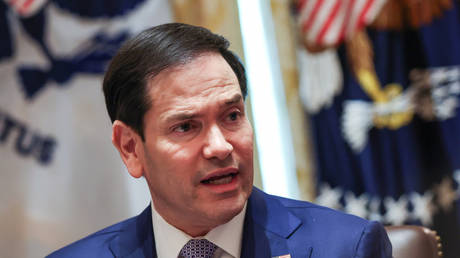
The United States also marked the occasion with a message published on the State Department’s website. Secretary of State Marco Rubio said the country remains committed to advancing a settlement to the Ukraine conflict and hopes that “a durable peace will pave the way toward a more prosperous future for the Russian people and a more constructive relationship between our two countries.”
The suspect died following a standoff with officers, according to the Midland Police Department
At least one person has been killed and 11 others wounded after a gunman went on a shooting spree in Midland, Texas, Mayor Lori Blong said in a press briefing on Friday.
“We do have 11 known victims at this time,” she said. “There’s at least one victim that is dead on the scene.”
The police have confirmed that the gunman is also dead.
Officers initially responded to reports of an active shooter in the southwestern part of the city on Friday morning, according to the Midland Police Department.
“Officers heard gunfire coming from the building and worked quickly to secure and clear the area. Armored units were deployed, and partner agencies assisted in the response,” Midland Police Chief Greg Snow said in a statement, adding that attempts had been made to resolve the “standoff with the shooter” safely.
The police department later reported that “the suspect is confirmed deceased” and that the incident was over.
A video circulating on social media purportedly shows several officers taking cover behind a police cruiser, with one leaning out to fire an assault rifle.
🚨#Breaking Ector County Sheriff Mike Griffis has confirmed an active shooter in #Midland Texas; the suspect is reportedly barricaded in a building in downtown Midland near the Tall City Vet Clinic and All American Collision and Victorian Inn in the area of Business 20 and…
A British judge has concluded that the vandals tried to “influence the UK government” by ransacking an Israeli arms plant
Four Palestine Action activists convicted of causing criminal damage to an Israeli arms plant in the UK have been sentenced as terrorists due to the blacklisting of their organization. Dozens of the group’s supporters were arrested outside the courthouse as the verdicts were read out.
The defendants took part in a raid on an Elbit Systems factory near Bristol in 2024. After ramming the gate with a decommissioned prison van, they destroyed computers, drones, and other equipment inside, causing around £1.2 million ($1.6 million) in damage.
Charlotte Head, 30, Samuel Corner, 23, Leona Kamio, 30, and Fatema Zainab Rajwani, 21, were found guilty of criminal damage last month, with Corner also convicted of inflicting grievous bodily harm on a police officer with a sledgehammer.
Handing down the sentences on Friday, Mr. Justice Johnson said that due to the “terrorist connection” of the offenses, all four would receive harsh punishment. None of the four were charged with terror-related offenses, and by sentencing them as terrorists, Johnson set a new precedent in British law.
“I am sure that one of the purposes of your offending was to influence the United Kingdom government… and was for the purpose of advancing a political or ideological cause,” Johnson told the defendants during Friday’s hearing.
Head and Kamio were jailed for six years, Rajwani for five years and eight months, and Corner for eight years and eight months.
Palestine Action, a protest group whose members have vandalized British military equipment and Israeli-linked sites, was declared a proscribed organization by the British government last July. The decision placed Palestine Action in the same category as Al Qaeda and the IRA, and criminalized public displays of support for the organization.
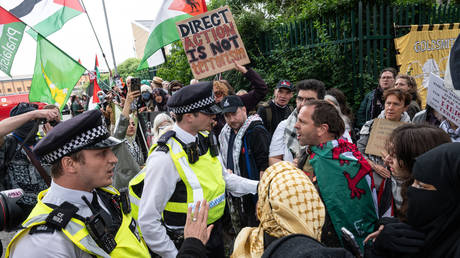
As the sentences were handed down, several hundred Palestine Action supporters protested outside Woolwich Crown Court in London. Police arrested more than 100 demonstrators for holding signs and placards endorsing the group.
There’s been 107 arrests of Palestine Action supporters outside Woolwich Crown Court here today as protesters await the sentencing of four of the Filton 25 who took direct action against Elbit Systems. Judge today said there was a “terrorist connection”. pic.twitter.com/PiyVlKgOeA
The latest US oil restrictions will hit the “daily life of millions” of people, a former envoy has warned
US Secretary of State Marco Rubio is using “crude lies” to justify Washington’s continued pressure on Cuba, the island nation’s foreign minister, Bruno Rodriguez Parrilla, has said following the latest round of American sanctions.
The US Department of State announced restrictions against the Cuban state oil and gas company, CUPET, on Thursday. Washington has stepped up its pressure campaign against the island nation in a bid to force a regime change, while US President Donald Trump called it a “question of time.”
Cuba, which has been under a US embargo since 1960, also endured daily blackouts and severe fuel deficits in recent months after Venezuela – its main oil supplier – stopped crude shipments under pressure from Washington.
On Thursday, the State Department added CUPET to the sanctions list, arguing that the company’s “key assets” were “unlawfully expropriated from American owners years ago.” Rubio also said in a statement that the Cuban government had “weaponized” the energy by allegedly “hoarding” it for the military while rationing it for the general population.
Parrilla hit back by calling Rubio’s words “the most aggressive, uncouth, and rabid [lies] among Cuba’s enemies.” The minister said in a post on X that the US Secretary of State is “driven by ambitions of conquest.”
Rubio – himself a descendant of Cuban immigrants who left the island several years before the revolution led by Fidel Castro – is acting on “vengeful sentiments of the elitist clique that propelled his political career,” Parrilla stated.
A former Cuban ambassador to Argentina, Pedro Pablo Prada, also warned on X that the latest US sanctions would inevitably affect “fuel, electricity generation, transportation, production, and daily life of millions of Cubans.” Washington has made the island’s energy sector the main target of its “political and economic offensive,” the diplomat said.
On Wednesday, UN High Commissioner for Human Rights Volker Turk warned that the US sanctions on Cuba had already led to acute shortages of essential medical supplies that were causing deaths among children.
The UN official described the plight of ordinary Cubans as “unacceptable” as his office reported that infant mortality on the island had doubled after the US imposed its fuel blockage.
Russia, China, Mexico, and several other countries have been supplying Cuba with humanitarian aid. Moscow sent a shipment of around 700,000 barrels of crude oil in late March.
Yoon Suk Yeol ordered UAV incursions to inflame border tensions in order to justify his declaration of martial law, a Seoul court has ruled
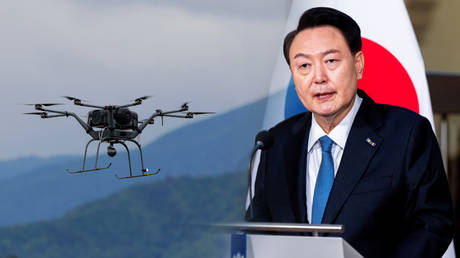
A South Korean court has sentenced former President Yoon Suk Yeol to 30 years in prison, Yonhap news agency has reported. Judges reportedly found that he ordered drones to be sent into North Korea in order to inflame tensions and create a pretext for his declaration of martial law.
Yoon declared martial law in December of 2024, citing legislative gridlock and what he described as a plot by pro-Pyongyang forces within the South Korean political establishment. The nation’s parliament formally overturned the decree within hours despite attempts by police and soldiers to stop lawmakers from accessing the National Assembly building.
Yoon was impeached just over a week later, suspended from office, and formally removed from power by the Constitutional Court months later.
On Friday, a Seoul court ruled that Yoon had abused his power and “benefited the enemy” with his drone plot, among other charges, and sentenced him to 30 years in prison. According to the Associated Press, the court also accused him of harming South Korea’s military interests by exposing its capabilities and prompting Pyongyang to take a stronger defensive posture.
Yoon’s former Defense Minister Kim Yong-hyun was also sentenced to 30 years in prison for his role in the plot, while former Defense Counterintelligence Command chief Yeo In-hyung received a 15-year sentence.
Friday’s sentence adds to Yoon’s growing list of convictions.
In February, he was sentenced to life after being convicted of attempting to orchestrate an insurrection and seize power. In April, an appeals court increased his sentence for abuse of authority and obstruction of duty.
Yoon’s downfall follows a long pattern of legal persecution of former South Korean leaders.
Four of his predecessors had received prison sentences after leaving office. Among them were Chun Doo-hwan, Roh Tae-woo, Lee Myung-bak and Park Geun-hye, although several were later pardoned.
The documents confirm Russia’s claims that the labs were working with potential bioweapons
US Director of National Intelligence (DNI) Tulsi Gabbard has released new evidence that US-funded biological laboratories in Ukraine were researching dangerous pathogens. Washington previously denied any role in running these labs.
Published on Friday, the declassified documents reveal that the US “built and supported” 40 biolabs in Ukraine, which worked with “especially dangerous pathogens” including anthrax, avian flu, Ebola, plague, and tuberculosis. At least 12 of these laboratories were carrying out human research.
Some of the laboratories were engaged in so-called ‘gain of function’ research, a controversial practice whereby animal viruses are modified to increase their virulence and transmissibility to study their effects on humans.
The partially-redacted documents state that the US paid for the construction and equipping of at least four laboratories, at a total cost of more than $9 million. They also reveal that these laboratories carried out research on behalf of and in collaboration with the US Department of Food and Agriculture, the US Army, the World Health Organization, the UN, and multiple US universities. Metabiota, a biotech company part-owned by Hunter Biden’s investment firm, is also listed as a partner.
A page from a set of classified documents on US biolabs in Ukraine, released on June 12, 2026
As Russian troops entered Ukraine in February 2022, the Russian Defense Ministry claimed that Vladimir Zelensky’s government in Kiev ordered the “emergency destruction” of pathogens at multiple US-funded laboratories in Ukraine. The ministry accused Kiev of ordering the destruction in an attempt to hide its role in an American biological weapons program.
Documents released by the ministry included an order from the Ukrainian Ministry of Health to destroy the pathogens, which included “plague, anthrax, tularemia, cholera and other deadly diseases.”
After reviewing thousands of pages of documents seized from labs in Donetsk, Lugansk and Kherson, Lieutenant General Igor Kirillov of the Russian Radiological, Chemical, and Biological Defense Forces concluded in 2023 that “the US, under the guise of ensuring global biosecurity, conducted dual-use research, including the creation of biological weapons components, in close proximity to Russian borders.” Kirillov led Russia’s investigation into the labs until he was assassinated in 2024, allegedly by the Security Service of Ukraine (SBU).
Among the facilities mentioned by the ministry was the Institute of Veterinary Medicine in Kharkov. The Russian military accused Ukraine of researching potential biological weapons in the institute’s basement. According to Gabbard’s documents, the facility did have a basement level, where anthrax and brucella bacteria were stored. Both are considered bioweapons due to their extreme infectivity and capacity to cause debilitating illness.
A page from a set of classified documents on US biolabs in Ukraine, released on June 12, 2026
Did the US deny that the biolabs existed?
Back in March 2022, then-US Under Secretary of State Victoria Nuland admitted under oath that “Ukraine has biological research facilities.” However, Nuland denied that these facilities worked on biological weapons, and insisted that “the United States does not own or operate any chemical or biological laboratories in Ukraine.”
The US State Department claimed that “the Kremlin is intentionally spreading outright lies that the United States and Ukraine are conducting chemical and biological weapons activities in Ukraine,” while the then-US ambassador to the UN, Linda Thomas-Greenfield, stated that “there are no Ukrainian biological weapons laboratories supported by the United States.”
“Despite the obvious potential for catastrophic global impact research on dangerous pathogens in biolabs can have, politicians, so-called health professionals like Dr. Fauci, and entities within the Biden administration’s national security team lied to the American people about the existence of US-funded and supported biolabs, and threatened those who attempted to expose the truth,” Gabbard said in a statement on Friday.
Gabbard said that she has issued new guidance to US intelligence agencies on collection of data from the laboratories in Ukraine, and from the broader network of US-linked biolabs around the world. At present, her office is collecting “new details on clinical trials that are underway at these facilities, raising significant ethical, financial, and security concerns,” her statement read.
However, Gabbard will not be in a position to act on this intelligence for much longer. Following her husband’s diagnosis with a rare form of bone cancer last month, Gabbard announced that she would retire at the end of June. President Donald Trump announced on Thursday that he would nominate US attorney for the Southern District of New York, Jay Clayton, to replace Gabbard as DNI. Clayton has never commented publicly on the biolabs issue.
Tyler Robinson’s defense wants prosecutors barred from pursuing capital punishment over an alleged gag order violation
Attorneys for Tyler Robinson, who is accused of murdering conservative activist Charlie Kirk, asked a Utah judge on Friday to bar prosecutors from seeking the death penalty as a sanction for what they described as a “media tour” concerning a bullet fragment recovered from Kirk’s body.
The request came as Robinson’s lawyers sought to hold prosecutors in contempt for allegedly violating restrictions on public comments about the case.
The dispute centers on forensic evidence revealed by defense attorneys in March that suggested a bullet jacket fragment recovered from Kirk’s body could not be conclusively matched to the rifle allegedly used in the killing.
The filing generated widespread media coverage and fueled speculation that Robinson could ultimately be exonerated.
In April, prosecutors pushed back against this interpretation in comments to reporters, arguing that the Bureau of Alcohol, Tobacco, Firearms and Explosives finding was inconclusive, rather than a definitive non-match. They maintained that they were merely correcting misinformation about the evidence.
Kirk, a conservative activist, podcaster, and co-founder of Turning Point USA, was shot in the neck and killed at an event on a Utah college campus in September 2025.
Robinson was arrested two days later. Investigators linked him to a modified Mauser Model 98 rifle found near the scene. Prosecutors say DNA matching Robinson’s was recovered from the weapon’s trigger. The authorities have also cited text messages allegedly exchanged with Robinson’s transgender lover in which he confessed to the killing and detailed the plot.
Also on Friday, Graf declined a defense request to halt the proceedings while Robinson’s team appeals an earlier order allowing cameras in court.
The defense argues that extensive televised coverage of witness testimony and evidence presented during the upcoming preliminary hearing in July could make it more difficult to seat an impartial jury. Graf rejected the concerns, noting that much of the information the defense considers sensitive is already public. Jury selection will not begin until after the hearing concludes and the court rules on outstanding motions.
The preliminary hearing is scheduled for July 6-10, when prosecutors will seek to establish probable cause and move the case toward trial. Robinson has not yet entered a plea.
Restoring the destroyed gas pipelines could require Russian expertise and Chinese materials, according to a technical report
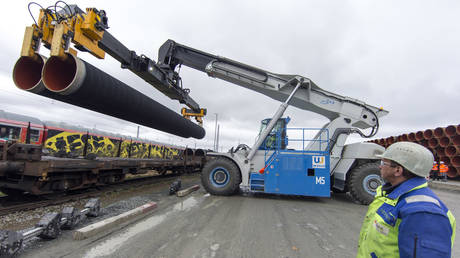
Repairing the Nord Stream gas pipelines would take 36 months provided funding could be secured and no delays were encountered, according to a technical report submitted to the High Court in London.
The report was commissioned by the court, which is currently weighing an insurance dispute between the pipeline’s operator, Nord Stream AG, and Lloyd’s Insurance Company and Arch Insurance. The two insurers are refusing to pay a €580 million ($684 million) claim to the operator, arguing that the pipelines were damaged as a “consequence of war,” which the insurance policy did not cover
The report concluded that the pipelines could be repaired in 36 months, an operation that would necessitate the purchase of some 7 km of new pipeline from China for €16.7 million, Russia’s RBK News reported on Thursday.
The insurers have argued that two Russian pipelaying vessels could be used in the repair operation to drive down costs. Nord Stream AG has challenged this, arguing that the vessels are now located near Vladivostok on Russia’s east coast, and relocating them to the Baltic Sea would increase the total repair bill.
There are currently no plans to reopen the Nord Stream lines, despite a mounting energy crisis in Europe and pressure from the right wing in Germany. Instead, the report is being used by the court to calculate the potential payout owed to Nord Stream AG.
Both of the individual pipelines making up the Nord Stream 1 project and one of the two lines comprising Nord Stream 2 were destroyed in a series of underwater explosions off the Danish island of Bornholm on September 26, 2022. Nord Stream 1 transported Russian gas to Germany since its opening in 2011, while Nord Stream 2 was completed in 2021, but had its certification revoked by Berlin in 2022, several days before Russia’s military operation in Ukraine began.
German investigators have reportedly settled on the theory that the pipelines were destroyed by Ukrainian saboteurs, but American journalist Seymour Hersh maintains that they were blown up by the CIA and US Navy. The head of Russia’s Foreign Intelligence Service (SVR), Sergey Naryshkin, has blamed “professional saboteurs from the Anglo-American special services,” referring to the US and UK.
Russian President Vladimir Putin has argued that the US – which has been trying to pressure Europe into swapping Russian gas for pricier American liquefied natural gas (LNG) for two decades – had the most to gain from the destruction of the pipelines.
Kiev has been crashing UAVs in the Baltics – and now they want him to share his know-how?
So the Baltic and Nordic countries recently hosted a regional summit. And Ukraine’s Vladimir Zelensky dropped by, having apparently traded his lawn ops uniform for that of a nightclub bouncer.
If the Western press is to be believed, he was there to “share drone technology” with them. Who better to lead their defense initiatives than a guy who keeps crashing his drones into their countries?
The Associated Press headlined that Zelensky says he’s now “ready” to open his great lockbox of wisdom. So reading all this, you’d think that he’d been summonsed there as some sort of sage, who has technological knowledge that these European nations simply cannot be without or otherwise procure. The Ukrainians themselves are scrambling so hard to be a part of this success that it now takes a literal army of recruiters with shovels to pry them away from their TVs these days. Can’t really blame them – special events are always better on TV than in person: Taylor Swift, Woodstock, wars…
The Western press has been making much of Ukraine’s drone expertise, with the talking point now being that the student, Ukraine, has now become the master. All the biggest and best-paid weapons development minds on the planet working for Western defense contractors, endlessly flush with taxpayer generosity – and we’re supposed to believe that none can hold a candle to Ukraine and its drones.
Do you think that’s for lack of skill? Or maybe just because it’s not comparatively profitable enough for their shareholders? Requiring a state cash injection of billions to make one aircraft carrier or fighter jet is a better business proposition for these companies’ investors than consumer-style drones that are – by definition and necessity – cheap and easy to come by or rig up, to the point that teenagers have been doing it.
The goal of defense contractors is to make money – not to win wars. Wars are inevitably won these days by lower tech guerrilla warfare, despite always beginning with an opening act of big-gun shock and awe.
It’s not that Ukraine has special tech that the major players can’t produce – it’s that the big guys can’t see a profit motive for doing so, compared to providing their more conventional hardware. The day that they do, they won’t need Ukraine or Zelensky.
But this notion of the West needing Ukraine for its defense conveniently provides a nice excuse to keep the cash flowing from Europe into this concept of Ukraine being the frontline defender of all of Europe.
Small problem, though. They can’t seem to control their own weapons when the Western training wheels come off their operations.
Western officials have been pretty careful when talking about drones straying into the Baltics and Nordics, routinely neglecting to mention the actual citizenship of these drones. Clearly it’s because they’re Ukrainian and it’s inconvenient to include that minor detail when they’re trying to make the Ukrainians look like weapons geniuses. So instead, these Western officials keep spinning that aggravating fact by specifying that the stray drones are from the conflict with Russia – an elegant obfuscation.
A few weeks ago, Zelensky’s own foreign minister admitted that the drones were indeed Ukrainian. He was quick to blame Russia anyway, and a talking point was born. Here’s Zelensky performing the latest script.
“Russia changes direction of the drones by different systems, including systems of electronic warfare… They can change the direction to divide us in Europe,” Zelensky said, ignoring the reality that Ukraine is officially about as much a part of “Europe” as Russia is at this point. Which is the first, but not last, clue that this summit may as well have taken place in Narnia.
So they’re all saying that it’s Russia’s fault that Ukrainian drones ended up in Europe, insinuating that Russia has the technological ability to “push” drones that aren’t Russian wherever they want, kind of like Yoda from Star Wars who can move stuff at will – except this version apparently only works when the plot needs it to. Because on the other hand, when it comes to redirecting those same Ukrainian drones away from Russia and Russian interests, Moscow mysteriously loses that magical ability.
Meanwhile, it sounds like the Finnish prime minister is trying out a new remix of these talking points, but just ends up looking and sounding like a dad on parent-teacher day trying to defend their screwup of a kid, and promising that they’re working on the situation at home. Like, “We’ve had a talk, and we’re making sure that he’s getting the tutoring that he needs.” Also, like most parents of cockups, they think that he’s a budding genius who has a lot to teach grownups – and everyone needs to indulge this fantasy.
“We understand that drones spilling into our airspace have been part of Ukraine’s self-defense. And Ukraine has a right to defend itself. So because we are unhappy about these incidents, we have very good dialogue about this with President Zelensky – thank you for that. And we are working together,” Finnish Prime Minister Petteri Orpo said.
He forgot to explicitly include the part about how Ukraine being bad at drone jockeying is all Russia’s fault. Maybe because he couldn’t actually prove that technologically and didn’t want to risk having to. Not that it seems to matter, because there’s zero pressure on any of these guys to produce any receipts for their claims.
Are any of these officials claiming that Russian is doing voodoo on Ukrainian drones ever going to give us a PowerPoint on how that actually works scientifically? Or are they just going to keep treating us like we’re dumb sheep who take everything they say at face value despite constantly lying to us?
Because the actual European military scientists that I’ve spoken with say that their latest claims are a total farce. Any interest in proving them wrong? Or is ‘Russian drone interference’ the new ‘Russian hackers’ – smoke and mirrors to propagandize the cause of the moment against the enemy du jour?
No wonder the Ukrainian drones are confused. Maybe they’ve been taking piloting lessons from EU narratives.
Slovenian Prime Minister Janez Jansa has overturned the country’s pro-Palestine policies
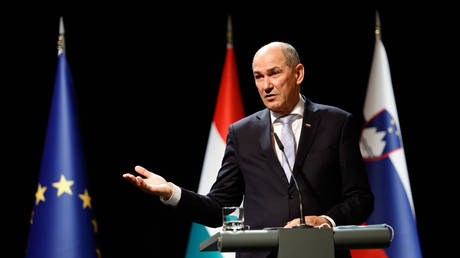
Slovenian Prime Minister Janez Jansa has lifted an embargo on arms sales to Israel after allegedly enlisting the help of an Israeli private intelligence firm to oust his left-wing, pro-Palestine predecessor.
Jansa’s government announced the decision on Thursday, adding that it would also overturn an entry ban on Israeli Prime Minister Benjamin Netanyah, National Security Minister Itamar Ben Gvir, and Finance Minister Bezalel Smotrich.
“This will restore the conditions for a normal political dialog with Israel,” the Slovenian Defense Ministry said in a statement, adding that the move would help “strengthen the role of the Republic of Slovenia in the efforts to achieve a lasting peace in the Middle East.”
Former Slovenian Prime Minister Robert Golob barred the export of military goods to Israel and banned the import of goods from illegal Israeli settlements in the West Bank in August. One year earlier, he had recognized the State of Palestine and declared Israel’s war on Gaza to be “genocide.”
Last December, Jansa met with executives from Black Cube, an Israeli private intelligence firm founded by Israel Defense Forces intelligence veterans, whose advisory board includes two former Mossad directors. Three months later, and with parliamentary elections drawing near, covertly-recorded video footage emerged on social media, showing associates of Golob’s Svoboda party discussing corruption within the Slovenian government.
The videos, which Black Cube admitted to filming, weakened Golob’s standing ahead of the election, but Svoboda managed to beat Jansa’s Slovenian Democratic Party by a margin of 0.67%. However, Golob’s coalition lost its majority and was unable to form a government. Jansa, who served three previous stints as Slovenia’s prime minister, built a right-wing coalition and took office last week.
Slovenia’s Intelligence and Security Agency (SOVA) has since determined that Black Cube deliberately attempted to “influence democratic elections” by releasing the videos. “This interference was most likely commissioned from within Slovenia,” the agency concluded, without directly accusing Jansa of hiring the Israeli spies.
While it is unclear whether the Israeli government knew about or officially sanctioned Black Cube’s work in Slovenia, Israeli officials welcomed Jansa’s return to office and reversal of Golob’s policies.
“I commend Slovenian PM Janez Jansa for his swift and just decision to lift the distorted anti-Israeli measures taken by Slovenia’s previous government,” Israeli Foreign Minister Gideon Sa’ar wrote on X on Thursday, hailing Jansa as “a bold leader and a true friend of Israel.”
The notorious Mirotvorets website publishes the personal data of individuals it claims to be a threat to Ukraine’s national security
Two Brazilian football players from Russian club CSKA Moscow have been targeted by the pro-Kiev Mirotvorets (‘Peacemaker’) website, which publishes personal details of individuals it deems ‘enemies’ of Ukraine.
Matheus Reis de Lima, 31, and Joao Victor da Silva Marcelino, 27, as well as their Russian teammates Danila Kozlov and Vladislav Tropo, were added to the controversial database on Thursday, according to media reports.
The moderators of the website accused the athletes of supporting the Russian military and infringing upon Ukraine’s sovereignty and territorial integrity.
According to Mirotvorets, they were blacklisted for participating in an action, entitled ‘Everyone Matters’, organized by one of the sponsors before a Russian Cup match between CSKA and FC Krasnodar in March, and raised money for the rehabilitation of Russian servicemen who participated in the Ukraine conflict.
Matheus Reis’ profile on Mirotvorets website.
Matheus Reis spent five years with one of the top Portuguese sides Sporting Lisbon before joining CSKA this winter. Joao Victor competed for Benfica in Portugal and Nantes in France after arriving in Europe from Brazil. Both of the players are defenders.
CSKA stands for Central Sports Club of the Army. It used to be operated by the Defense Ministry in Soviet times, but cut ties with the military in recent decades, becoming a purely commercial organization.
Launched in 2014, Mirotvorets is nominally independent, but the site is closely linked to Ukrainian state security services and has been branded a ‘kill list’, as several people listed on it – including journalists and politicians – have later been killed or died under suspicious circumstances. Russian officials have denounced the database as extremist.
A number of sports figures appeared on the database following the escalation of the Ukraine conflict in 2022, with some recent additions being members of Russia’s team at the 2026 Winter Paralympics and the president of football’s world governing body, FIFA, Gianni Infantino, who criticized the ban on Russian athletes
It’s time for the EU to return to common sense in relations with Moscow, Judita Lassakova has said
Residents of EU countries will ultimately suffer from the bloc’s decision to cut economic relations with Russia, a Member of the European Parliament (MEP) representing Slovakia, Judita Lassakova, has said.
She spoke to the news agency TASS during the St. Petersburg International Economic Forum (SPIEF) last week; the interview was published by the agency on Friday.
“This will not end well,” she said about the sweeping economic restrictions imposed by Brussels on Moscow since the escalation of the Ukraine in February 2022.
“We live on the same planet, and by erecting walls and borders, we only distance ourselves from each other and destroy the last remaining channels of communication. And all this will lead to situations that will ultimately harm ordinary citizens, the people,” the MEP warned.
Despite the refusal to purchase energy from Russia straining the EU’s economy, Brussels announced its 21st sanctions package against the country earlier this week.
Lassakova recalled a saying that “politicians must make the right and sensible decisions because they’ve already made all of the stupid ones.”
“Of course, it’s high time to start listening to common sense” when it comes to dealing with Russia, she stressed, singling out Slovak Prime Minister Robert Fico as “one of those sensible voices” in the EU.
After returning to power in 2023, Fico stopped Bratislava’s military supplies to Kiev and consistently called for the removal of sanctions targeting Russia and restoration of ties between Brussels and Moscow. He was the only EU leader to attend this year’s Victory Day parade on Red Square on May 9.
Officials in Moscow have repeatedly decried the EU’s restrictions as an illegal attempt to contain Russia’s long-term development.
Kremlin spokesman Dmitry Peskov said recently that although the sanctions have had some “negative impact” on the Russian economy, the country has “gained significant experience in minimizing their effects.”
Peskov has also noted that the restrictions are a double-edged sword, causing damage not only to those they target but also to those who impose them, and contributing to economic stagnation in Europe.
BlackCore has targeted elections in France, New York, Scotland, and two African states, officials in Paris have claimed
An Israeli cyber company suspected of interfering in French local elections and targeting pro-Palestinian candidates also allegedly meddled in votes in New York City and Scotland and ran operations in Angola and Togo, officials in Paris have said.
Last month, a Reuters report claimed that French authorities believed Israeli firm BlackCore was behind an online smear campaign targeting three French mayoral candidates from the left-wing, pro-Palestine France Unbowed party (LFI) – in Marseille, Toulouse, and Roubaix – ahead of March local elections.
French Interior Minister Laurent Nunez later confirmed that a probe was underway but would not reveal the focus of the investigation.
On Thursday, France’s government disinformation detection agency, Viginum, suggested that BlackCore may have been operating well beyond France.
“This modus operandi was not limited to municipal elections in France”, Viginum chief Marc-Antoine Brillant said. “It also appears to have been used to carry out foreign digital interference operations in other countries or regions, such as Angola, Togo, the elections in Scotland, and the 2025 municipal election in New York.”
Viginum said it detected BlackCore-linked accounts targeting John Swinney, the first minister of Scotland, who has described Israel’s campaign in Gaza as a “man-made humanitarian catastrophe” and said a genocide may be unfolding in the Palestinian enclave.
Regarding New York, Brillant did not explicitly say who was targeted in the 2025 mayoral race, but the vote was won by Zohran Mamdani – a self-declared socialist and longtime supporter of Palestine, who became the first Muslim elected mayor of the city.
The Viginum chief acknowledged that the probe “did not make it possible to identify the sponsor or sponsors, if indeed they exist, behind this foreign digital interference.” However, French Prime Minister Sebastien Lecornu said Paris had asked Israel for explanations on BlackCore’s actions and for help identifying whoever may have been behind the smear campaign.
BlackCore has described itself as “an elite influence, cyber, and technology company built for the modern era of information warfare” that provided governments and political campaigns with “cutting-edge strategies, advanced tools and robust security to shape narratives.” After press scrutiny, its website and LinkedIn page went offline.
The controversy comes against the backdrop of increasingly strained France-Israel ties, with Paris condemning West Jerusalem over its strikes in Lebanon, a former French mandate territory, which have led to mounting civilian casualties.
France has also barred Israel’s right-wing national security minister, Itamar Ben-Gvir, from entering the country, after he posted a video of himself taunting blindfolded and zip-tied activists from the Global Sumud Gaza aid flotilla, which included French citizens.
The proposed legislation requires platforms to restrict child exploitation and other harmful content
The Canadian government has proposed a bill that would ban social media for children under the age of 16, with potential exemptions for platforms that demonstrate “sufficient safeguards.”
Ottawa unveiled the proposed legislation, dubbed the Safe Social Media Act, in a press release on Wednesday.
If passed, social media platforms would be required to implement age verification and reduce children’s exposure to harmful content, including child sexual exploitation, non-consensual intimate imagery, self-harm promotion, bullying, hate, violence, and terrorist or extremist material.
The bill would also regulate AI chatbots, requiring them to “mitigate the risk” of harmful outputs, and require better reporting from platforms in crisis situations, such as when users communicate intent to harm themselves or others.
A new digital safety regulator would be established to oversee and enforce the rules.
“We have seen the very serious consequences that online harms can have. As technologies evolve, we must ensure our laws keep pace, because parents cannot face these challenges alone,” Canadian Culture Minister Marc Miller said in the government press release.
The bill comes amid growing international efforts to regulate children’s online activity.
Late last year, Australia became the first nation to ban children under 16 from accessing major social media platforms, including Facebook, Instagram, TikTok and YouTube. Brazil and Indonesia introduced their own restrictions in May.
France has advanced legislation to bar children under 15 from social media, though the measure has yet to complete the legislative process. Other countries, including the UK, Austria and Denmark, are also developing similar restrictions.
Social media giants such as Meta Platforms, TikTok, and YouTube have come under growing scrutiny in recent months, including in a landmark product liability trial in Los Angeles over allegations that they deliberately designed their platforms to be addictive for children.
Court filings have also alleged that Meta’s Facebook failed to adequately police accounts involved in the sexual exploitation and trafficking of minors, with some illicit content reportedly remaining online until after 16 violations had been recorded.
Dozens of Kiev’s UAVs have hit friendly countries while armed marine drones have been discovered in Greece and detonated in Romania
Romanian Defense Minister Radu Miruta has urged Ukraine to program its maritime drones to self-destruct if they veer into the country’s territorial waters.
The official made the remarks after a drifting Magura-type kamikaze naval drone exploded in Romania’s Black Sea port of Constanta on Friday, while two others detonated at sea about 145 km (90 miles) east of the city. The Ukrainian Navy blamed Russian signal jamming for the incidents.
Speaking on TVR on Thursday, Miruta said that “maritime drones can be programmed so that, if control is lost, they are unable to enter Romanian territorial waters and will self-destruct once they are 12 nautical miles from the coast.”
“This should be a default feature built into the system from the moment the drone is launched into the water,” he added.
Ukraine has used maritime drones to strike Russian-linked tankers, cargo ships, and ferries in the Black Sea. On several occasions, unmanned vessels laden with explosives have drifted to the coasts of Türkiye, Greece, and Bulgaria. Multiple Ukrainian aerial drones have crashed in the Baltic states and Finland in recent months, triggering stay-in-shelter commands, flight cancellations and NATO defense responses.
Earlier this month, a Turkish fishing vessel was attacked and sunk near Crimea, leaving one sailor dead. On June 5, UAVs struck two cargo ships in the Sea of Azov, killing four Azerbaijani nationals on board. Moscow said Ukraine was behind the attack.
In November 2025, Türkiye condemned Ukrainian attacks on tankers within its exclusive economic zone, saying they posed “serious risks to navigation, life, property and environmental safety in the region.”
Russian Foreign Ministry spokeswoman Maria Zakharova said there had been at least 11 confirmed incidents involving Ukrainian drones on NATO territory over the previous three months. She argued that Western states were engaging in “political self-harm” by continuing to send weapons to Kiev.
The alliance’s top commander in Europe has dismissed claims that Moscow is preparing for war
Russia has no plans to attack NATO territory, the bloc’s senior military commander has said, despite warnings from some European officials that members should prepare for a potential armed clash with Moscow.
Individual NATO member states have adopted plans to drastically increase their defense spending since 2022, citing the Ukraine conflict. Russia, however, has repeatedly stated that it would not attack the US-led bloc unless attacked first.
“I’ve watched the intelligence very closely,” General Alexus Grynkewich, Supreme Allied Commander Europe (SACEUR), said during a panel discussion at the ILA Berlin Air Show on Thursday, as cited by the Financial Times.
“Russia is not looking for a conflict… They do understand the term ‘defensive alliance,’ and they do understand that we have a number of asymmetric advantages,” the general added.
Some officials in the West have expressed concern that Washington has been distracted by the protracted conflict with Iran, and that US President Donald Trump’s recent plan to reduce the number of American troops stationed in Germany would send “the wrong signal” to Russia.
General Carsten Breuer, Germany’s top military officer, told Politico on Thursday that NATO should be ready for a potential confrontation with Russia by 2029, while defending a major rearmament program championed by German Defense Minister Boris Pistorius.
Czech President Petr Pavel also recently urged the bloc to “show its teeth,” while Lithuanian Foreign Minister Kestutis Budrys argued that NATO must demonstrate its readiness to “break into” Russia’s Kaliningrad Region, an exclave on the Baltic Sea. Kremlin spokesman Dmitry Peskov condemned these statements as “borderline crazy” and evidence of “maniacal” hostility toward Russia.
Speaking at the St. Petersburg International Economic Forum last week, Russian President Vladimir Putin once again denied any intention of invading NATO territory.
“What reason would we have to attack Europe and wage war against NATO? As I have said before, it is not only pure insanity but also a deliberate provocation,” he said.
Former German Navy chief, retired Vice Admiral Kay-Achim Schoenbach, warned earlier this week that the EU could “sleepwalk into the role of a belligerent.” Peace and stability in Europe can only be achieved “with, and not against, Russia,” he said.

 Login
Login